Mom's Best Recipes
Recipe

Classic Spaghetti Carbonara

Silky egg-and-cheese sauce, crispy guanciale, and a blizzard of black pepper. No cream, no fuss, just the real-deal Roman comfort bowl.

Author By Matt Campbell
4.9
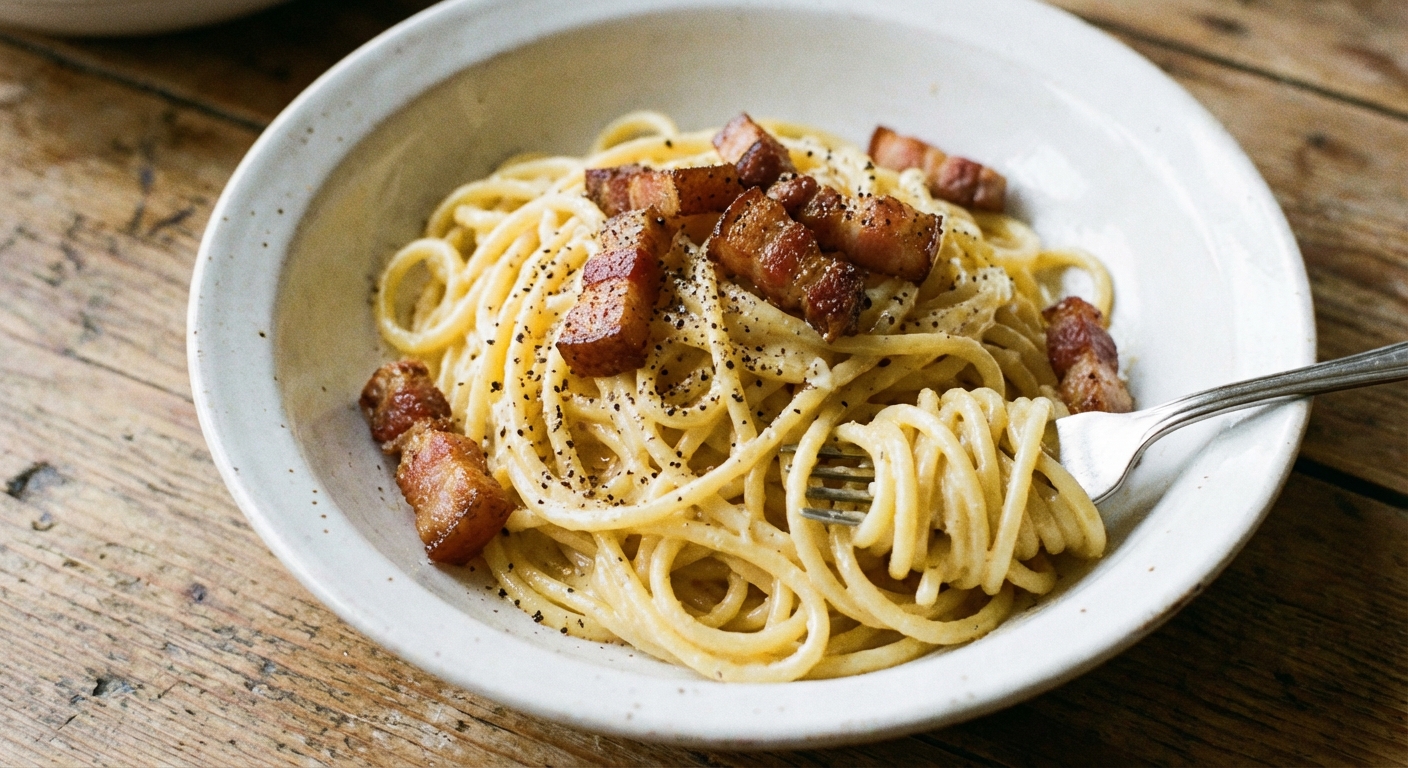
A close-up photograph of classic spaghetti carbonara in a white bowl with crispy guanciale and freshly ground black pepper

Carbonara is one of those recipes that feels like a magic trick you can eat: hot pasta turns raw eggs into a glossy sauce with zero cream, zero roux, and zero time for self-doubt. It is quick, it is cozy, and it has that signature punch of salty pork, sharp cheese, and black pepper that makes you take a second bite just to confirm it is really that good.

This is a classic spaghetti carbonara in the Roman style, meaning eggs, Pecorino Romano, guanciale (or pancetta in a pinch), and a scandalous amount of black pepper. The main skill here is temperature control, which sounds intimidating until you realize it is basically: turn off the heat, breathe, and stir like you mean it.
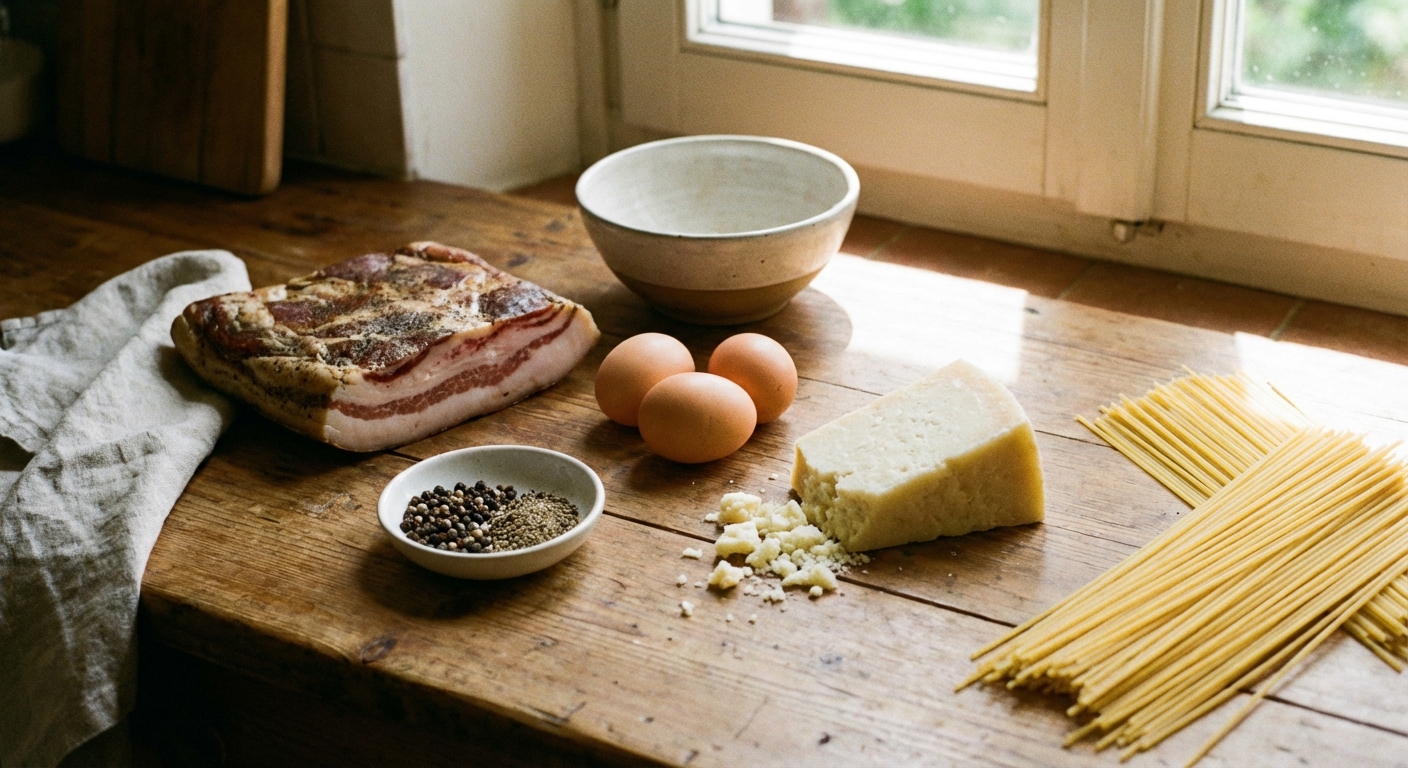
A real photograph of guanciale, eggs, Pecorino Romano, black pepper, and spaghetti arranged on a kitchen counter

Why It Works

  • No cream needed: The sauce comes from eggs plus cheese plus starchy pasta water, which emulsifies into that silky, clingy coating.
  • Crispy pork, tender centers: Rendering guanciale slowly gives you crisp edges and flavorful fat that becomes the base of the sauce.
  • Temperature is handled for you: Tossing off-heat (and using a mixing bowl if needed) keeps the eggs creamy instead of scrambled.
  • Big flavor, tiny ingredient list: When you use bold cheese, good pepper, and properly salted pasta water, carbonara tastes like you worked harder than you did.

Storage Tips

Carbonara is best the minute it is made, when the sauce is silky and the pepper is loud. But if you have leftovers (respect), here is how to keep them from turning into a sad noodle brick.

Refrigerate

  • Cool quickly, then store in an airtight container for up to 2 days.

Reheat gently (important)

  • Warm in a skillet over low heat with a splash of water.
  • Stir constantly until loosened and just warmed through. Do not crank the heat or the egg sauce can seize.
  • Microwave option: 50% power in short bursts, stirring often, adding a teaspoon or two of water as needed.

Freezing

I do not recommend freezing carbonara. The egg-and-cheese sauce can separate and go grainy after thawing.

Common Questions

Is there cream in authentic carbonara?

Nope. Classic Roman carbonara relies on eggs, Pecorino Romano, pork fat, and pasta water for creaminess. If you add cream, it can be tasty, but it is a different dish.

What is the best pork for carbonara?

Guanciale (cured pork jowl) is traditional and gives the most flavorful fat. Pancetta is the easiest substitute. Thick-cut bacon works if that is what you have, but choose a less sugary one and expect a smokier vibe.

How do I keep the eggs from scrambling?

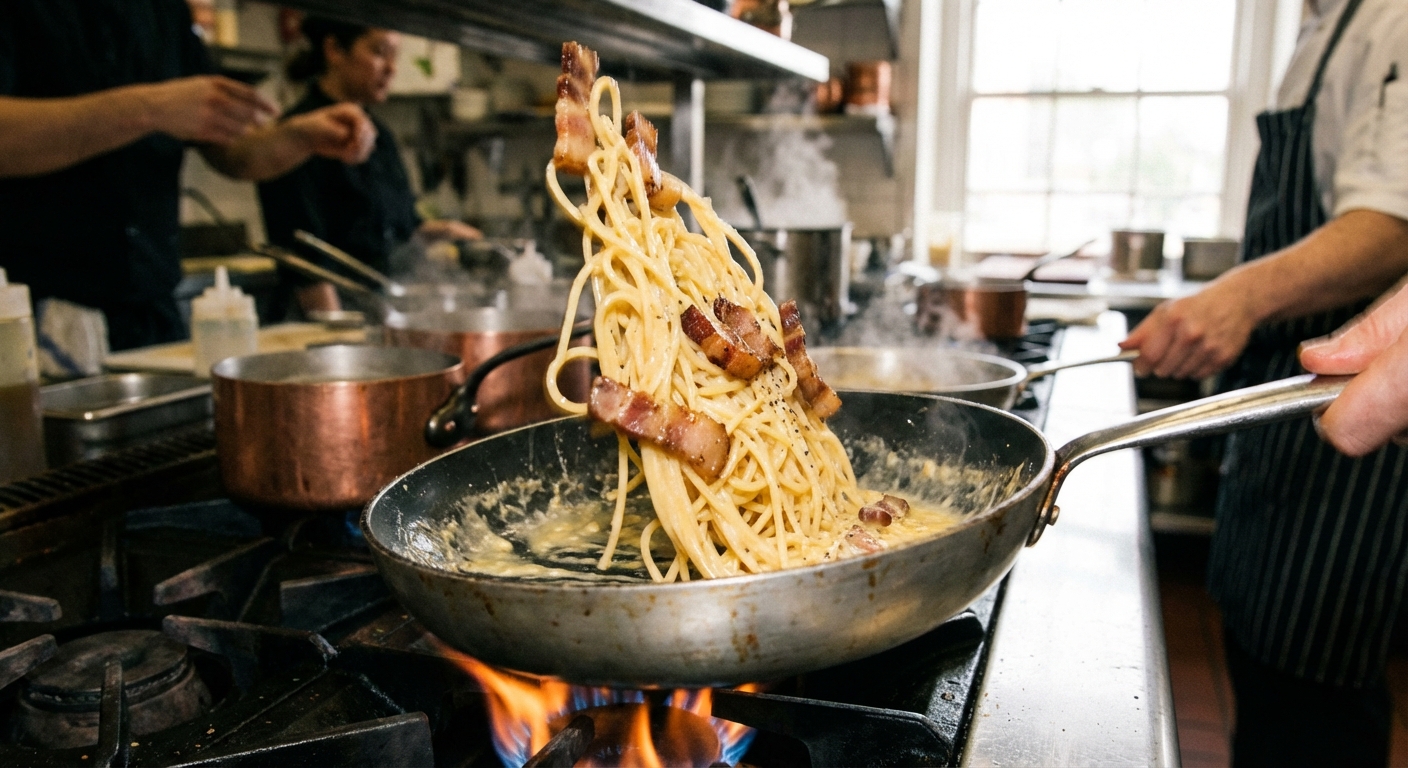
Turn off the heat before adding the egg mixture, toss quickly, and use pasta water to control the temperature and texture. If your pan runs hot, toss the pasta and sauce in a separate bowl instead of over the burner.

Do I use whole eggs or yolks?

Both approaches are common. This recipe uses whole eggs plus an extra yolk for a sauce that is rich but still easy to emulsify.

Can I use Parmesan instead of Pecorino Romano?

You can, but the flavor will be milder. For the closest classic taste, use all Pecorino Romano. A half-and-half blend is a nice compromise.

Why is my carbonara dry?

Usually it needs more pasta water, or the pasta cooled down before you tossed it. Keep a mug of hot pasta water nearby and add a splash at a time while stirring until glossy.

The first time I made carbonara, I treated it like a high-stakes chemistry lab. I hovered. I whispered threats at the eggs. And then, because I got impatient, I added the egg mixture over heat and made the world’s most expensive scrambled pasta. Lesson learned: carbonara is not hard, it is just allergic to panic.

Now it is my favorite “I have 20 minutes and a personality” dinner. When it turns out right, the sauce looks like satin, the pepper bites back, and the guanciale does that crisp-chewy thing that makes you consider eating it straight from the pan. Which I absolutely do, for quality control. Obviously.