Mom's Best Recipes
Recipe

Classic Tuna Salad Sandwich

Creamy tuna salad with crisp crunch and a lemony, peppery bite, stacked on toasted bread for a lunch that never gets old.

Author By Matt Campbell
4.8
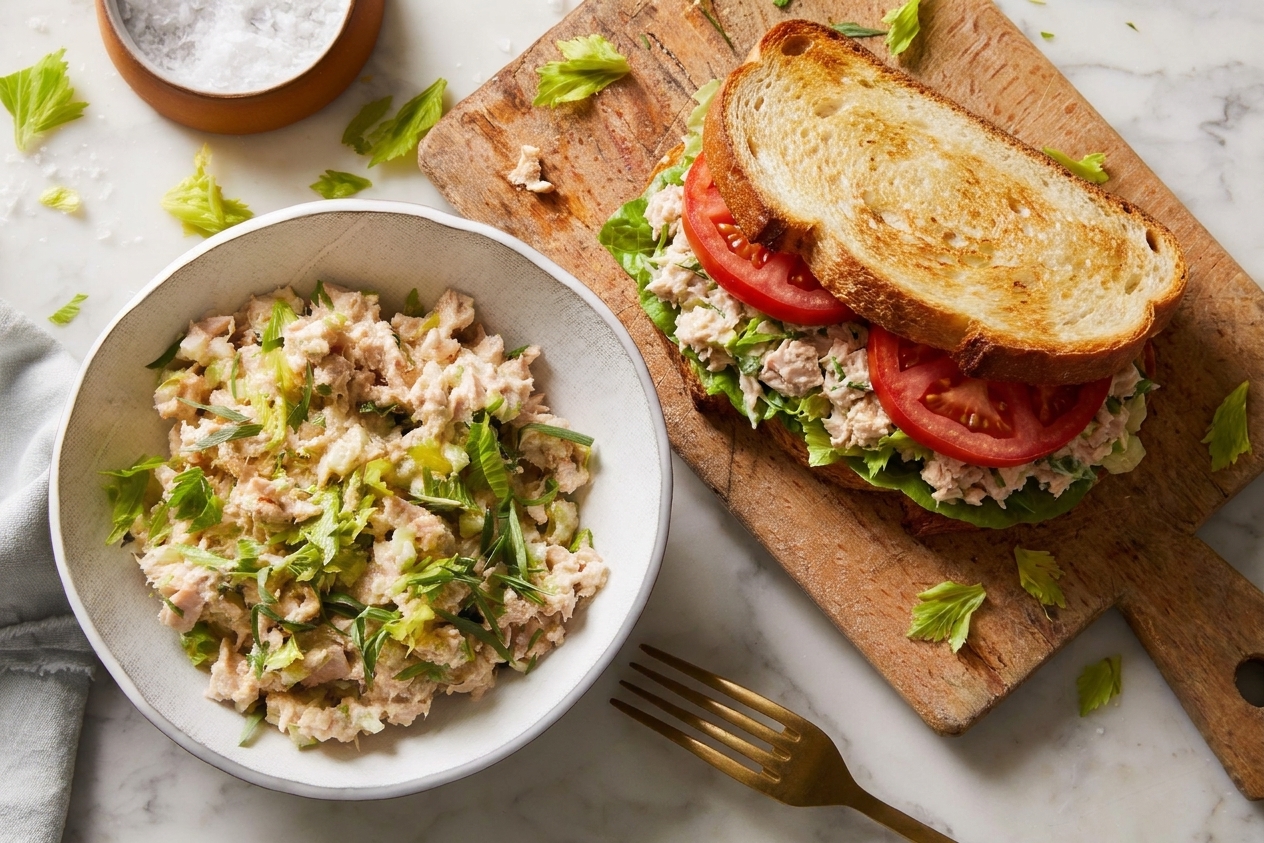
A freshly made tuna salad sandwich on toasted sourdough with lettuce and sliced tomato on a simple kitchen table in natural light

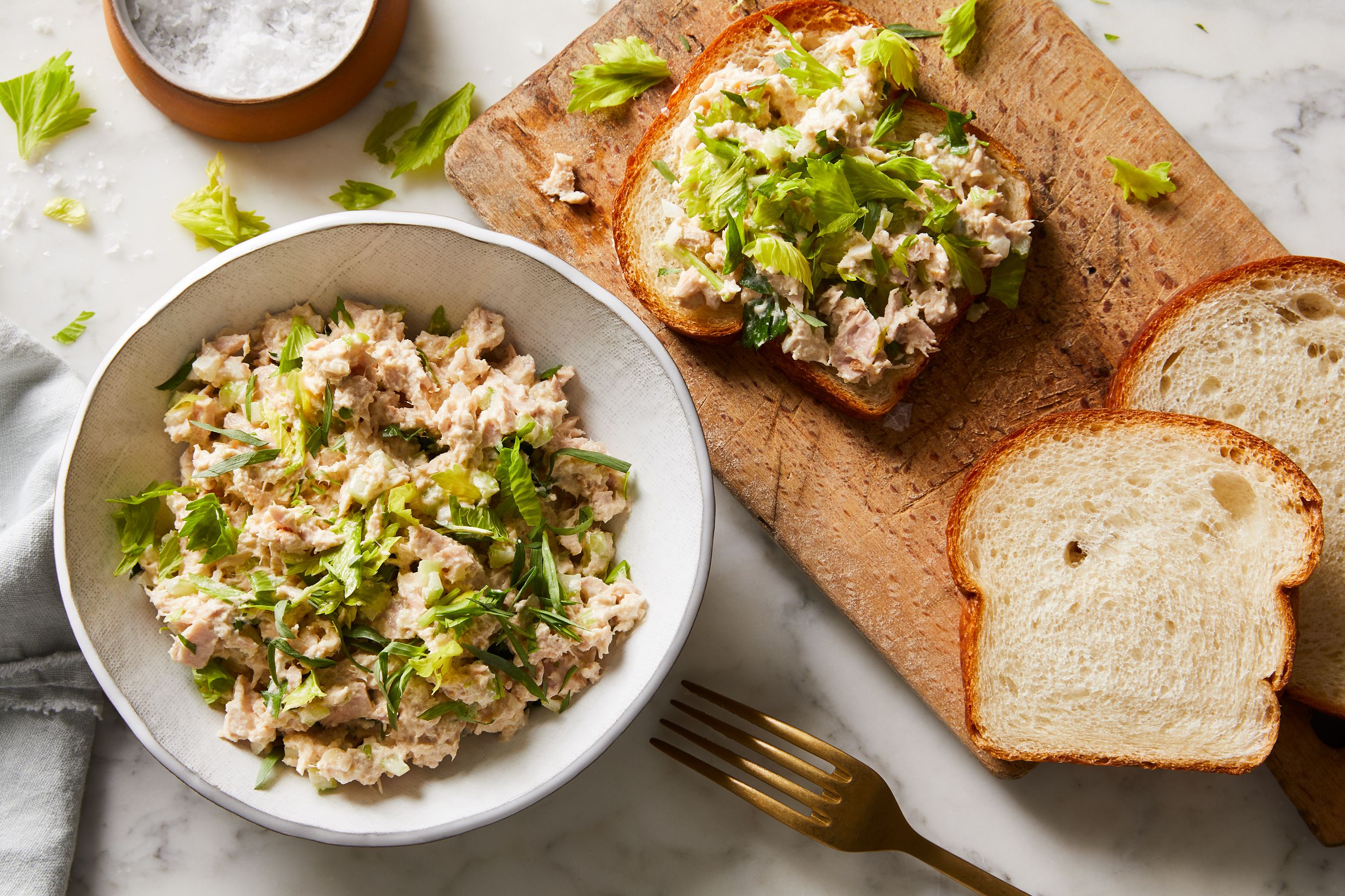
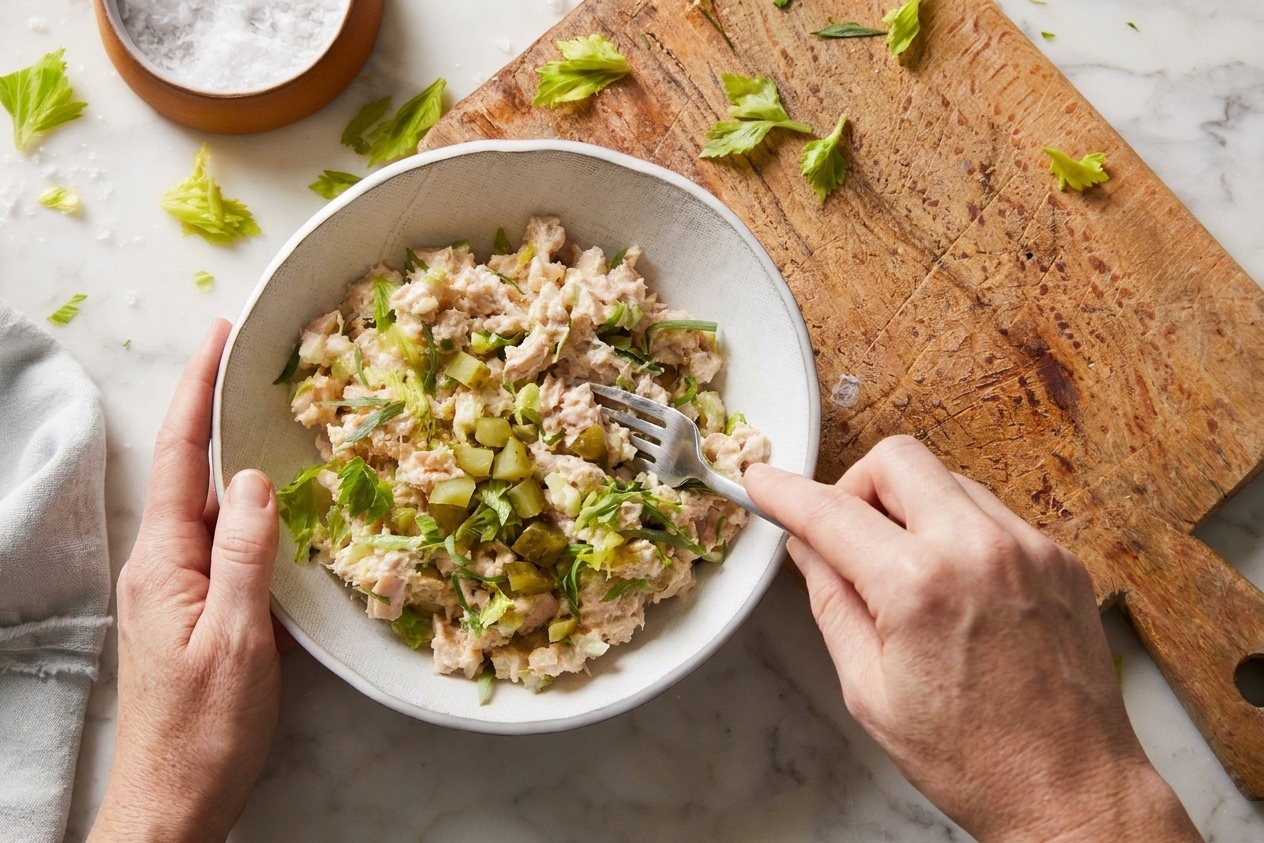
Tuna fish sandwiches are one of those lunches that can be either deeply satisfying or kind of sad, and the difference is usually texture and seasoning. This version is my forever baseline: creamy tuna, crisp celery, punchy pickle, a little Dijon, and a squeeze of lemon to wake the whole thing up.

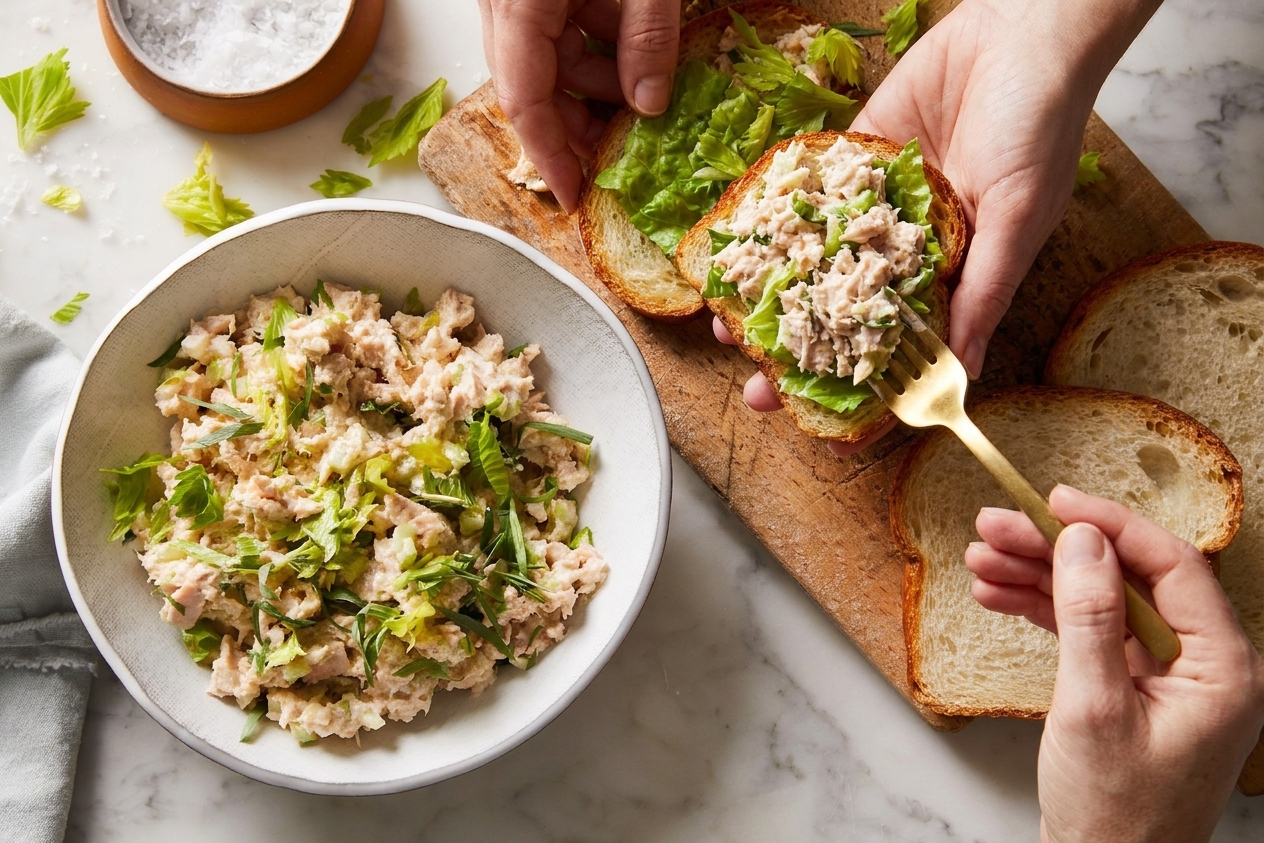
It is fast, low drama, and easy to tweak. Want it more deli-style? Add more mayo. Want it brighter? Add extra lemon and herbs. Want it crunchy in a way that makes you stop mid-bite? Toast the bread and do not skip the celery.

Canned tuna, mayonnaise, Dijon mustard, lemon, celery, pickles, salt, pepper, and bread arranged on a clean kitchen counter

Why It Works

  • Balanced tuna salad: mayo for creaminess, Dijon and lemon for lift, pickles for tang.
  • Crunch that lasts: celery and red onion give you that crisp bite so it does not eat like paste.
  • Toasted bread strategy: a quick toast helps prevent soggy sandwiches and adds flavor fast.
  • Totally adaptable: swap in Greek yogurt, add herbs, or make it spicy without changing the method.

Pairs Well With

Storage Tips

Best storage: Keep the tuna salad in an airtight container in the refrigerator (at or below 40°F / 4°C) and eat within 3 days.

Keep it from getting watery: If you are making it ahead, you can stir in the celery right before serving for maximum crunch. If it still loosens up, just mix in a spoonful of mayo or yogurt to bring it back.

Do not store assembled sandwiches: They get soggy fast. Pack the tuna salad and bread separately, then build right before eating. If it has been sitting out for more than 2 hours, play it safe and toss it.

Common Questions

What kind of tuna is best for tuna fish sandwiches?

Chunk light is mild and classic, and solid white albacore is firmer with a cleaner bite. Use what you like. Just make sure to drain it well so your sandwich does not turn into a slip and slide. Quick note: albacore is typically higher in mercury, so if you eat tuna often, chunk light is a solid everyday pick.

Water-packed or oil-packed tuna, which should I use?

Either works. Water-packed keeps the salad lighter and lets the lemon and Dijon shine. Oil-packed tastes richer and can mean you need a touch less mayo. Just drain it well either way.

How do I keep a tuna sandwich from getting soggy?

Toast the bread, drain the tuna thoroughly, and add a moisture barrier. A thin layer of mayo or butter on the bread helps. If you are adding tomato, tuck it between lettuce leaves so it does not soak the crumb.

Can I make tuna salad without mayo?

Yep. Swap mayo for plain Greek yogurt, mashed avocado, or a mix of yogurt and olive oil. You will want a little extra salt and lemon to keep it lively.

What can I add to tuna salad for more flavor?

Try one of these: chopped fresh dill or parsley, a pinch of paprika, capers, a splash of pickle brine, a dash of hot sauce, or finely diced jalapeño.

Is this safe for lunchboxes?

It can be, as long as it stays cold. Use an ice pack and keep the tuna salad under refrigeration until you are ready to eat. Food safety rule of thumb: do not leave it out at room temperature for more than 2 hours (1 hour if it is hot out).

I wanted to go to culinary school, but I ended up chasing the practical side of cooking instead. Tuna salad is exactly that kind of food for me. It is not flashy, but when you treat it like a real recipe and not an afterthought, it delivers every time. This is the version I make when I need lunch in ten minutes and I still want it to taste like I tried.