
Mom's Best Recipes
Recipe

Classic Vegetable Frittata

A simple one-pan frittata packed with vegetables and melty cheese, finished in the oven for fluffy slices and crisp edges. Perfect for meal prep, brunch, or a clean-out-the-fridge dinner.

Author By Matt Campbell
4.8
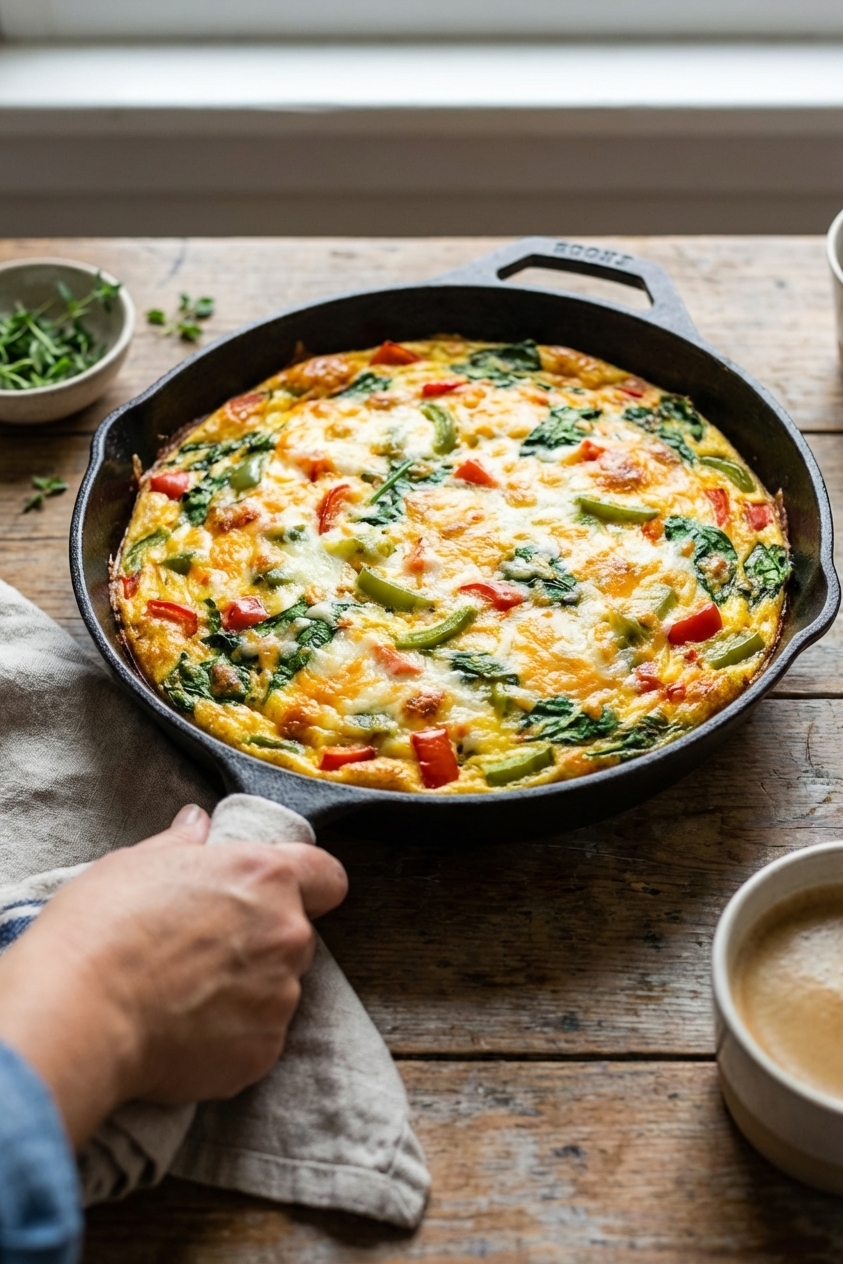
A golden baked vegetable frittata in a cast iron skillet on a wooden table, with visible bell peppers, spinach, and melted cheese on top, natural window light, photorealistic food photography

If quiche is the fancy cousin who shows up wearing a blazer, frittata is the friend who kicks their shoes off and immediately starts helping in the kitchen. No crust. No stress. Just eggs, vegetables, cheese, and one good pan doing the heavy lifting.

This classic vegetable frittata is my go-to when I want something that feels like brunch but behaves like meal prep. You saute the vegetables on the stovetop, pour in the seasoned eggs, then slide the whole thing into the oven to finish. The result is fluffy in the middle, lightly crisp at the edges, and sturdy enough to slice and reheat all week.
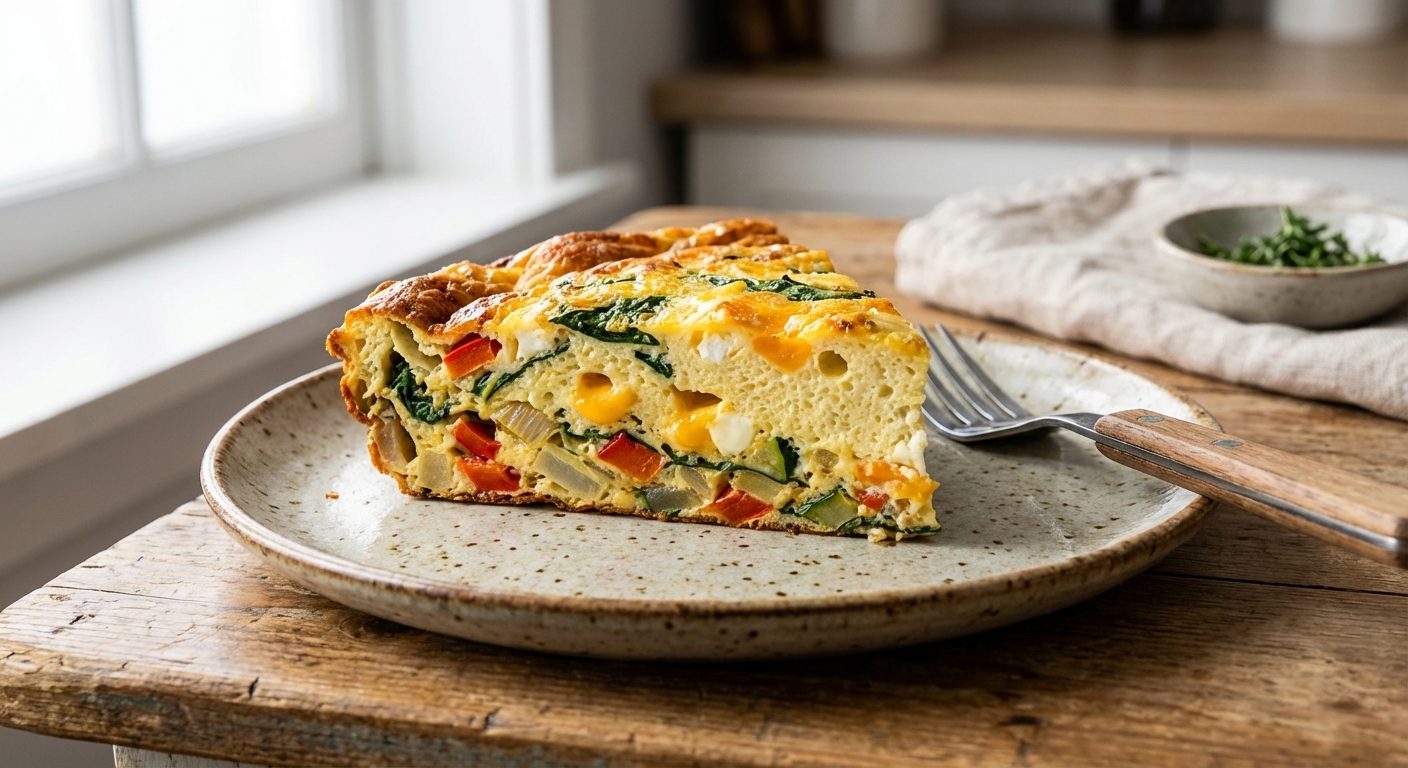
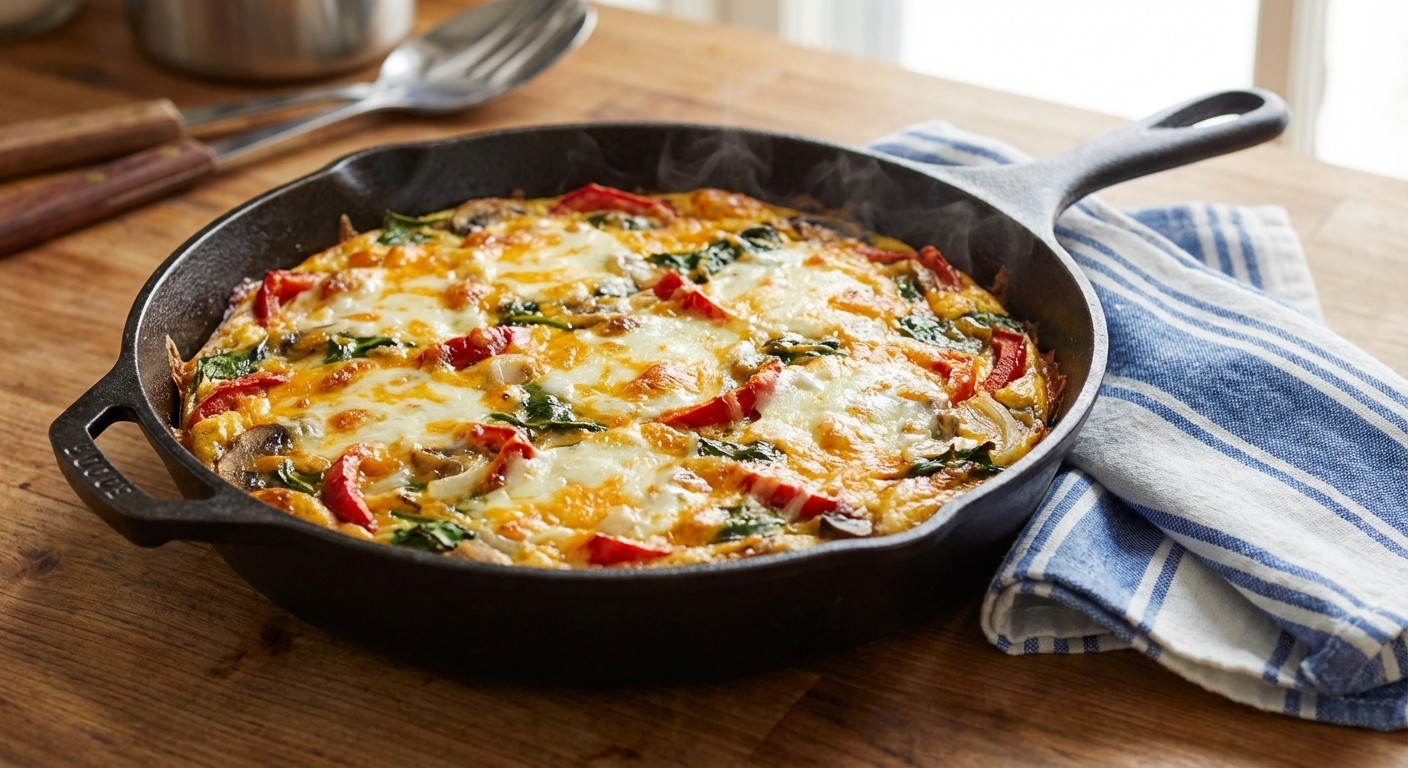
A single slice of vegetable frittata on a ceramic plate with a fork beside it, showing a fluffy egg interior with sautéed vegetables and pockets of melted cheese, close-up photorealistic food photography

Why It Works

  • Stovetop to oven method: You build flavor by sauteing vegetables first, then bake to set the eggs gently and evenly.
  • Clean slices: A short rest after baking helps the frittata firm up so you get neat wedges instead of egg scramble vibes.
  • Flexible and forgiving: Use what you have, just keep watery veggies under control so the eggs stay fluffy, not soggy.
  • Meal-prep friendly: Tastes great hot, warm, or cold, and it reheats without getting rubbery if you go low and slow.

Pairs Well With

Storage Tips

Cool and chill promptly: For best quality and food safety, let the frittata cool a bit, then refrigerate within 2 hours.

Refrigerate: Store cooled slices in an airtight container for up to 4 days.

Freeze: Wrap individual slices tightly (plastic wrap or parchment, then a freezer bag). Freeze up to 2 months. Thaw overnight in the fridge for best texture.

Reheat: For the best texture, warm slices in a 300°F oven for 8 to 12 minutes, or microwave at 50 percent power in 30-second bursts until heated through. If you want to be precise, reheat to 165°F. Eggs get tough when overheated, so gentle heat is your friend.

Meal prep tip: Store a couple of slices with a paper towel in the container if your veggies were extra juicy. It helps absorb condensation and keeps edges from going soft.

Common Questions

What is the difference between a frittata and an omelet?

An omelet is cooked quickly on the stovetop, folded, and usually served right away. A frittata is started on the stovetop, then finished in the oven and sliced like a pie, which makes it great for feeding a group or meal prep.

Do I have to use a cast iron skillet?

No. Any oven-safe nonstick or stainless skillet works. The key is that it can safely go from stovetop to oven. Check the manufacturer’s oven-safe temperature rating for your pan and handle.

Why is my frittata watery?

Usually it is the vegetables. Mushrooms, zucchini, tomatoes, and spinach release water. Saute them until the pan looks dry, and consider patting very juicy add-ins (like chopped tomatoes) with a paper towel before adding.

How do I know when a frittata is done?

The center should look set (no wet, shiny egg) and the edges should be lightly puffed. It is done when the middle is barely jiggly, not sloshy. For extra confidence, use a thermometer: aim for 160 to 165°F in the center.

Can I make this dairy-free?

Yes. Skip the cheese or use a dairy-free shreds option. You can also swap milk for unsweetened almond or oat milk. The texture will be slightly less rich but still solid. You can also skip the milk entirely if you prefer.

What if I only have a 12-inch skillet?

You can use a 12-inch skillet, but the frittata will be thinner and may bake faster. Start checking a few minutes early. If you want the same thickness, bump the eggs up to about 10.

I started making frittatas because I wanted “brunch energy” without brunch-level effort. It is the kind of dish that forgives a loud kitchen and a distracted cook. You saute whatever vegetables are hanging out in the crisper, whisk eggs like you mean it, and suddenly you have a hot, sliceable situation that feels way more put-together than it actually is. This is also the recipe I lean on when I am testing flavor combos for the someday restaurant dream. If a mix-in tastes great in a frittata, it usually belongs on a menu somewhere.