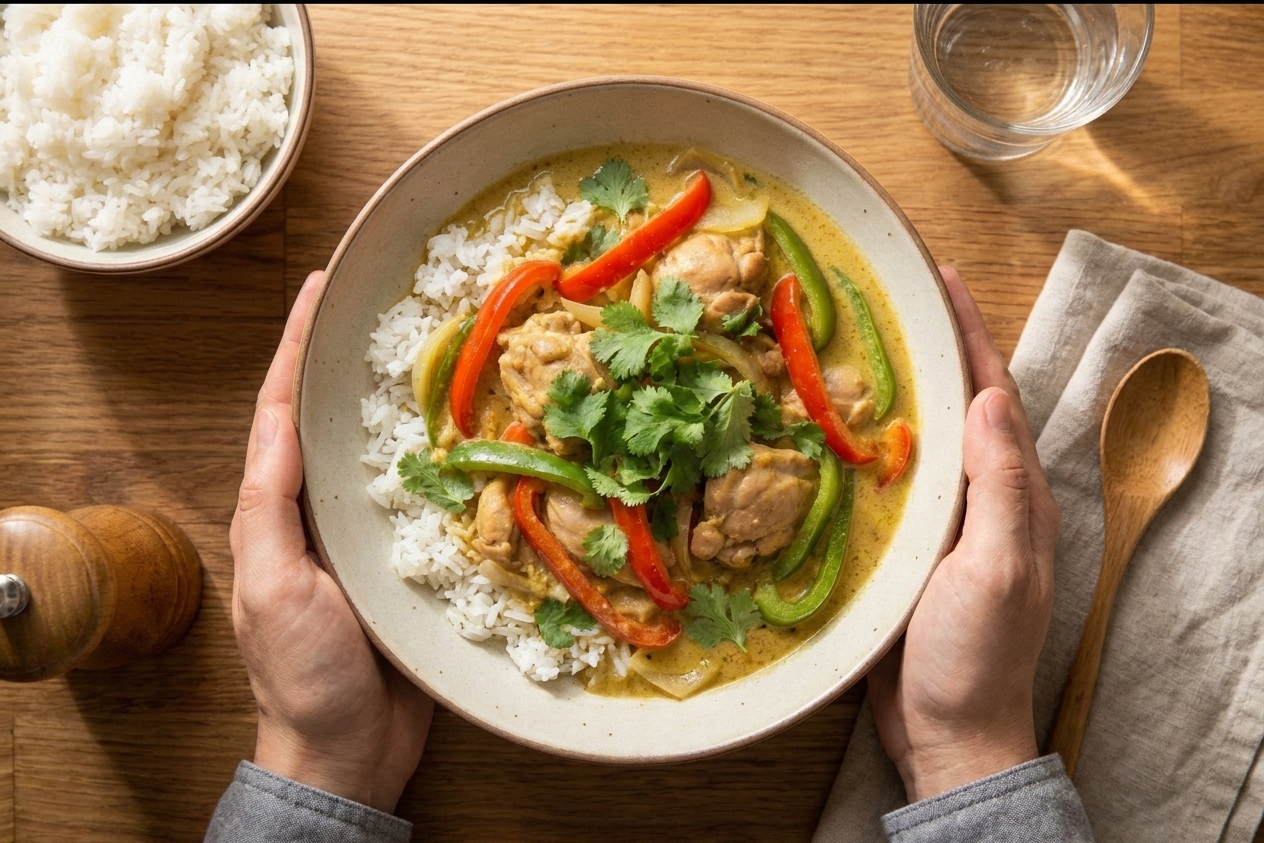
Should I use full-fat coconut milk or light?
Full-fat gives you the silky sauce that makes this dish feel special. Light coconut milk works, but the sauce will be thinner and less rich. If you use light, simmer a few minutes longer to reduce, or stir in a spoonful of peanut butter for body.
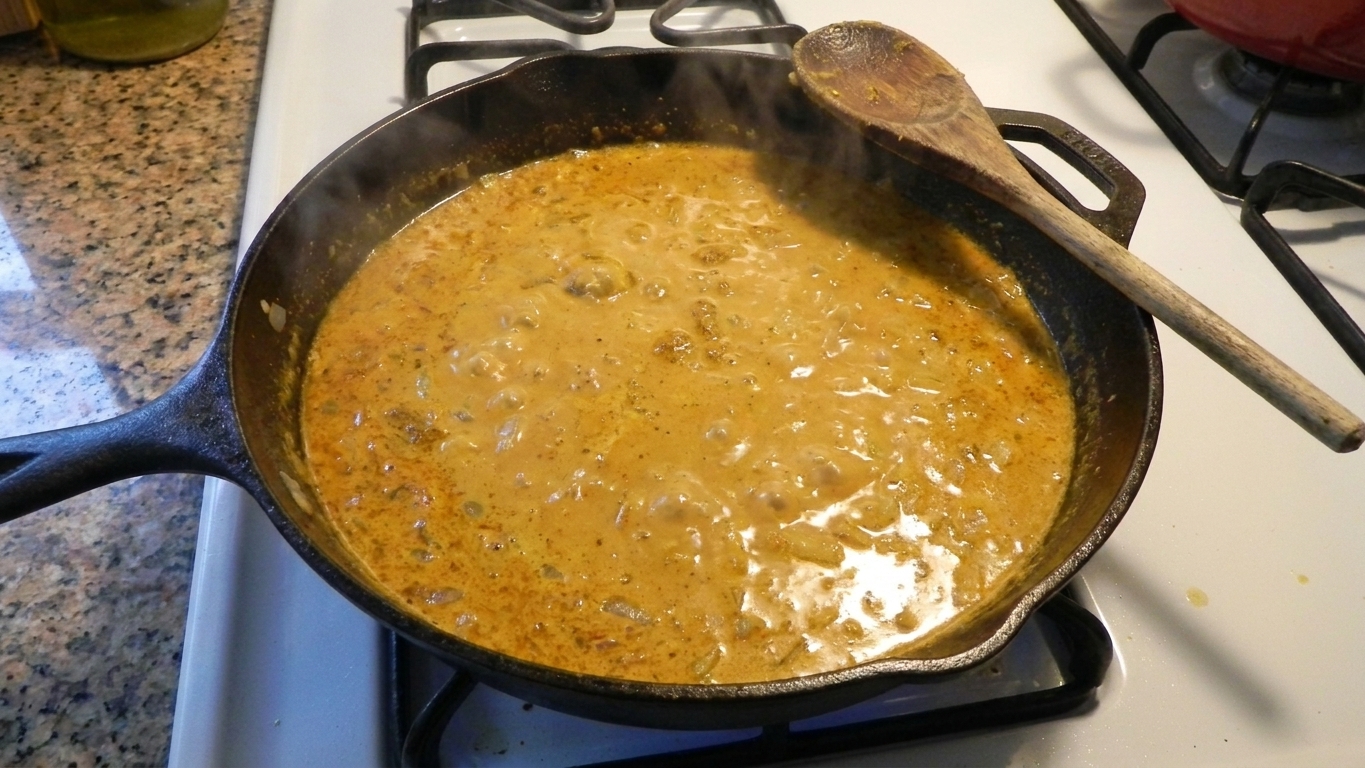
My coconut milk curry looks oily or separated. Did I ruin it?
Probably not. Separation happens if the sauce boils hard or the can has a higher fat content (some brands separate more than others). Turn the heat down and whisk, or add a splash of warm broth and stir steadily. It usually smooths out.
Can I use coconut cream instead of coconut milk?
Yes, but it will be thicker and richer. For a closer swap to one 13.5-ounce can of coconut milk, start with 1 cup coconut cream + 2/3 cup water or broth, then adjust with a splash more liquid if the sauce feels too thick. If you prefer an extra-lush curry, go ahead and use less water.
What kind of curry powder should I use?
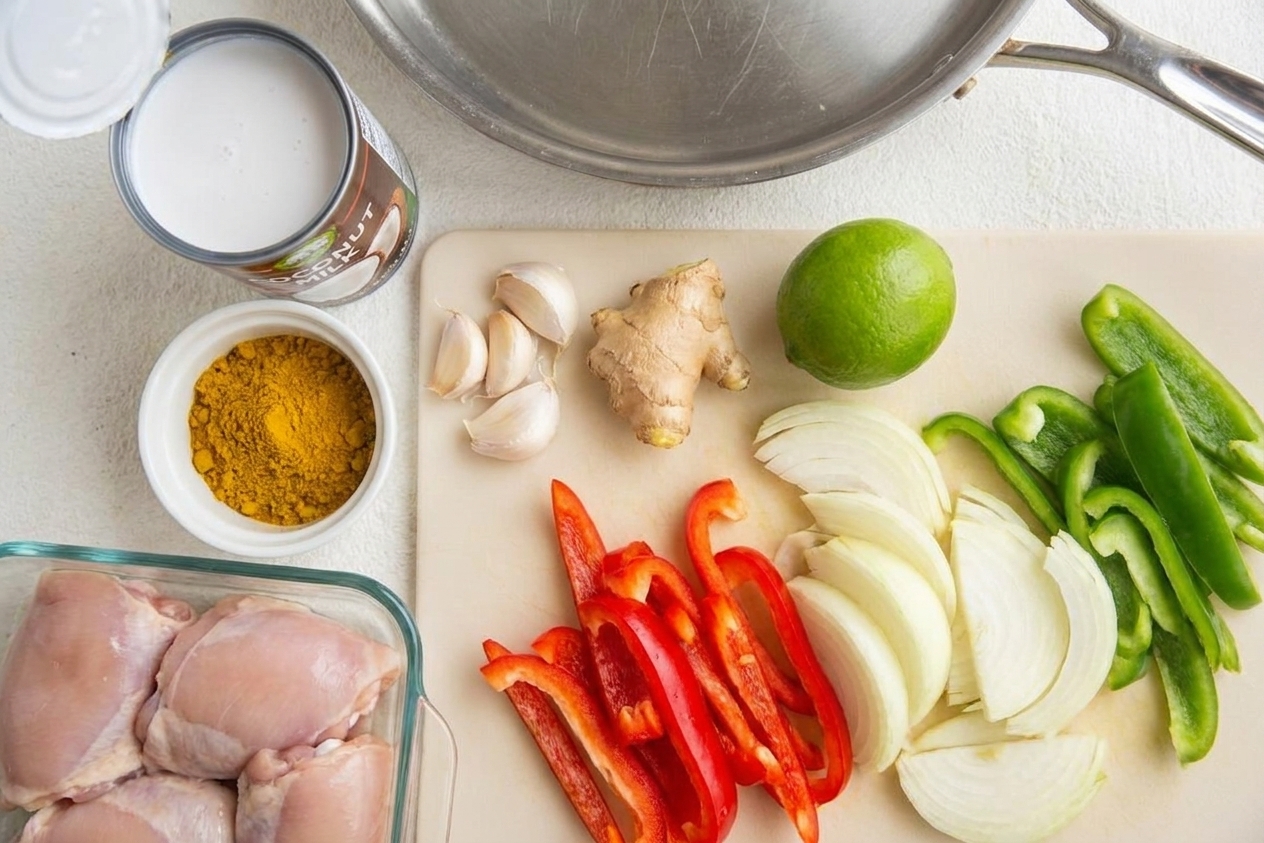
Use a mild yellow curry powder (the common grocery-store blend). Heat and intensity vary a lot by brand, so start with 1 Tbsp, taste after simmering, and add more if you want it bolder. If you are using a hotter blend like Madras, you may want to keep it closer to 1 Tbsp.
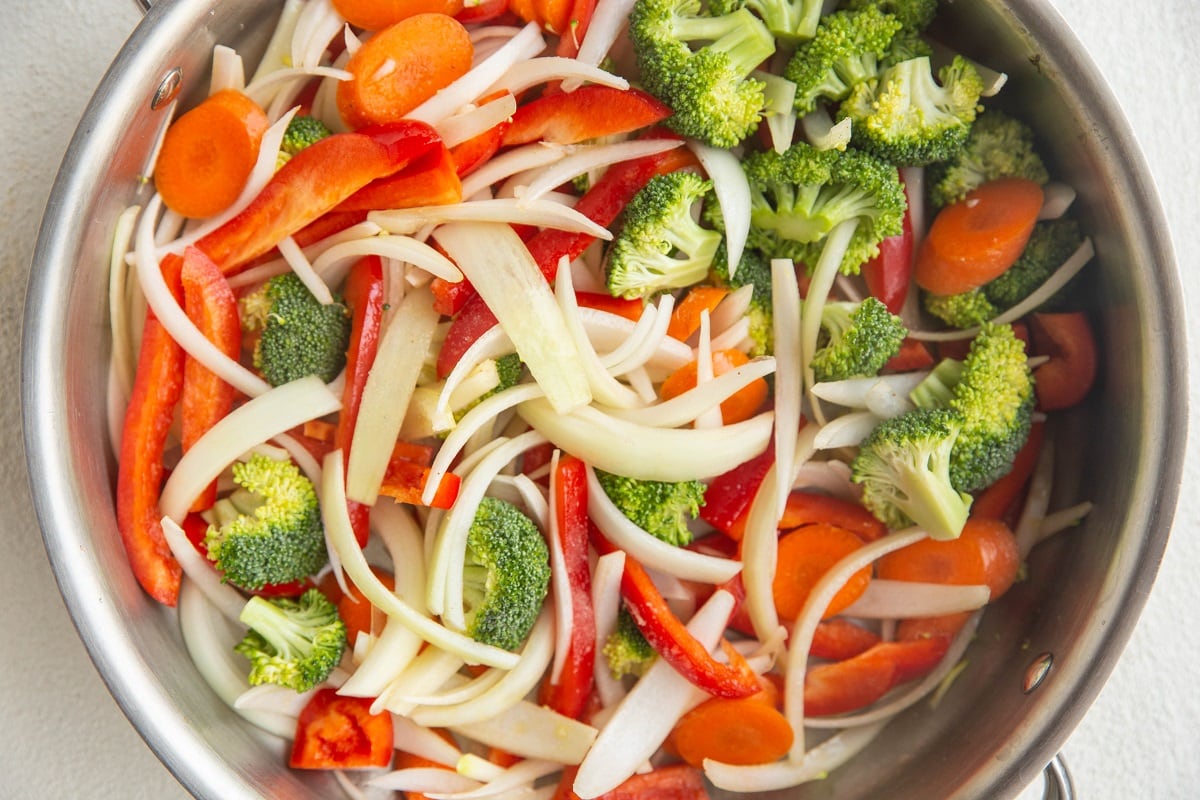
What veggies work best here?
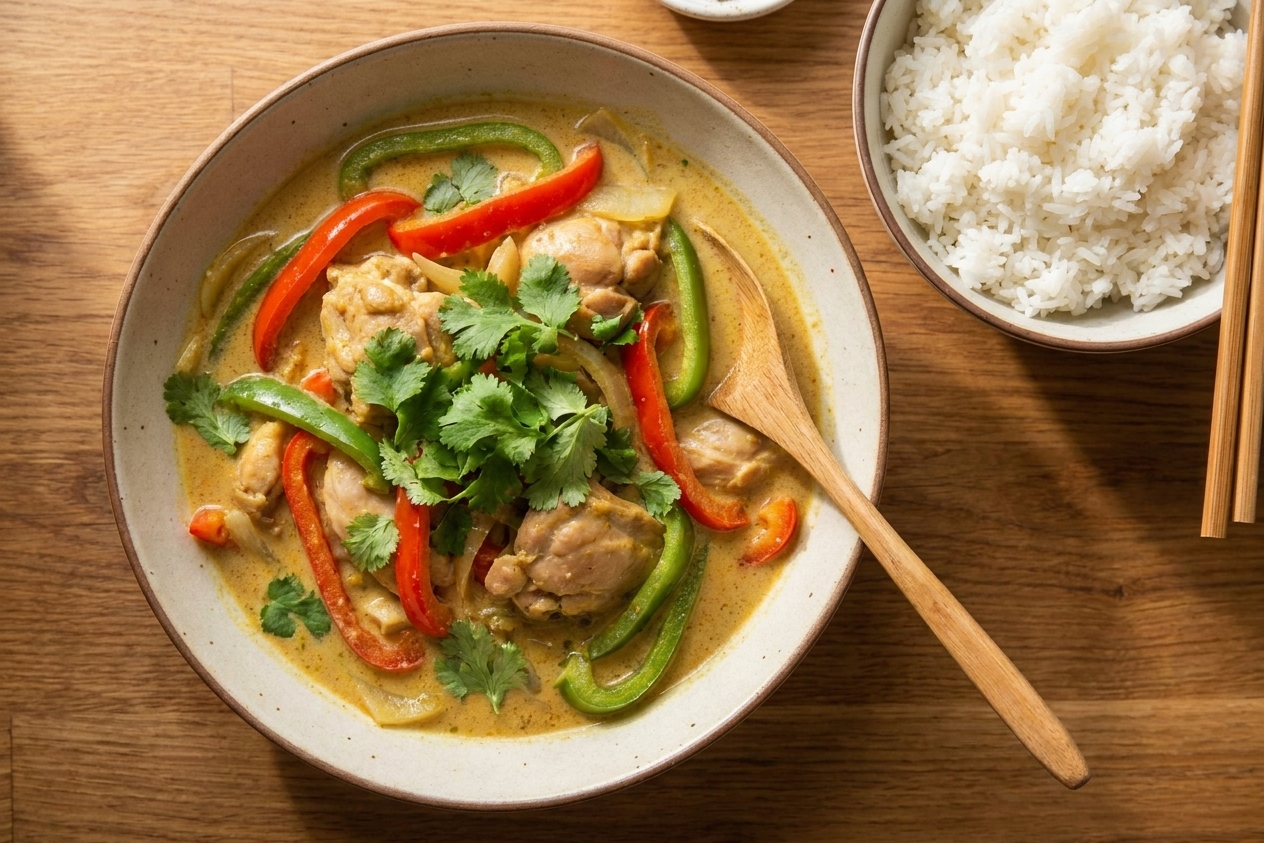
Bell peppers, spinach, snap peas, zucchini, and cauliflower are all great. Quick-cooking vegetables should go in near the end so they stay crisp-tender.
How do I make it spicier without wrecking the flavor?
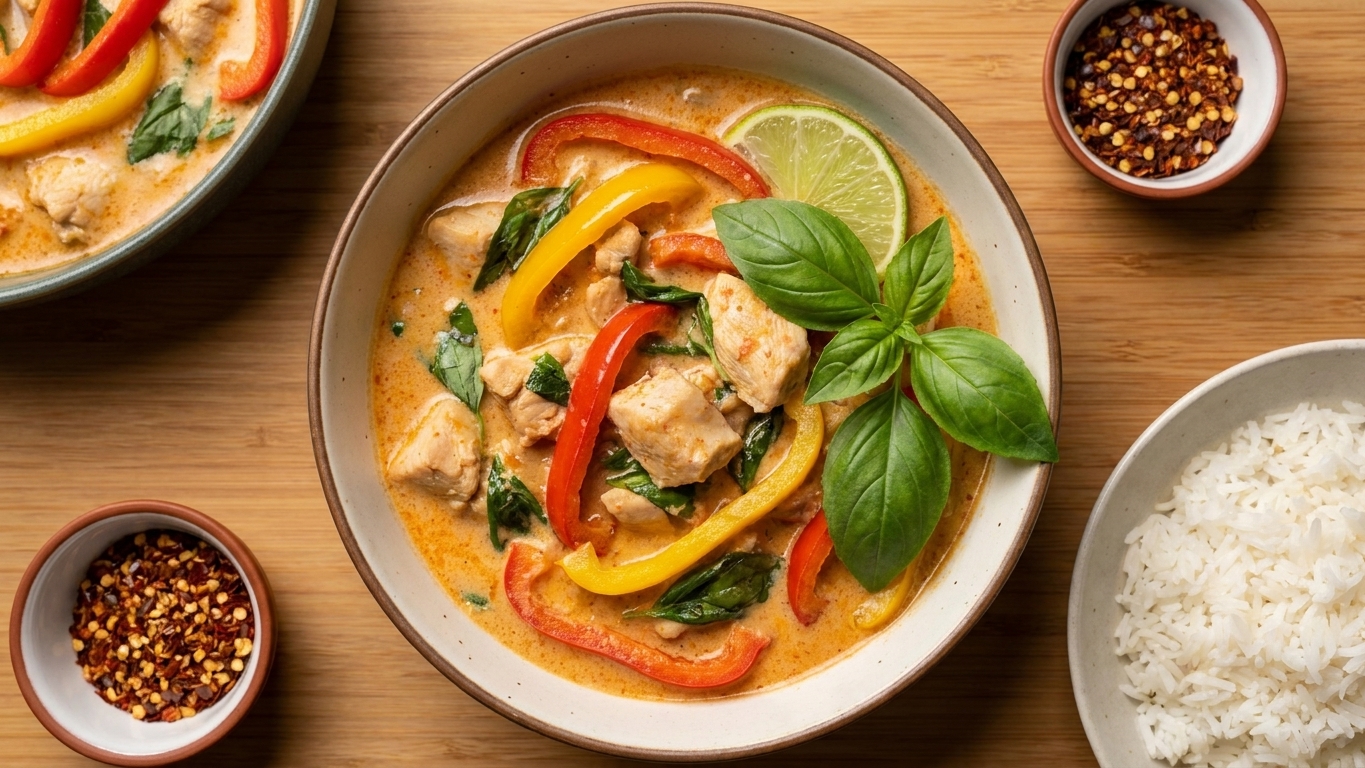
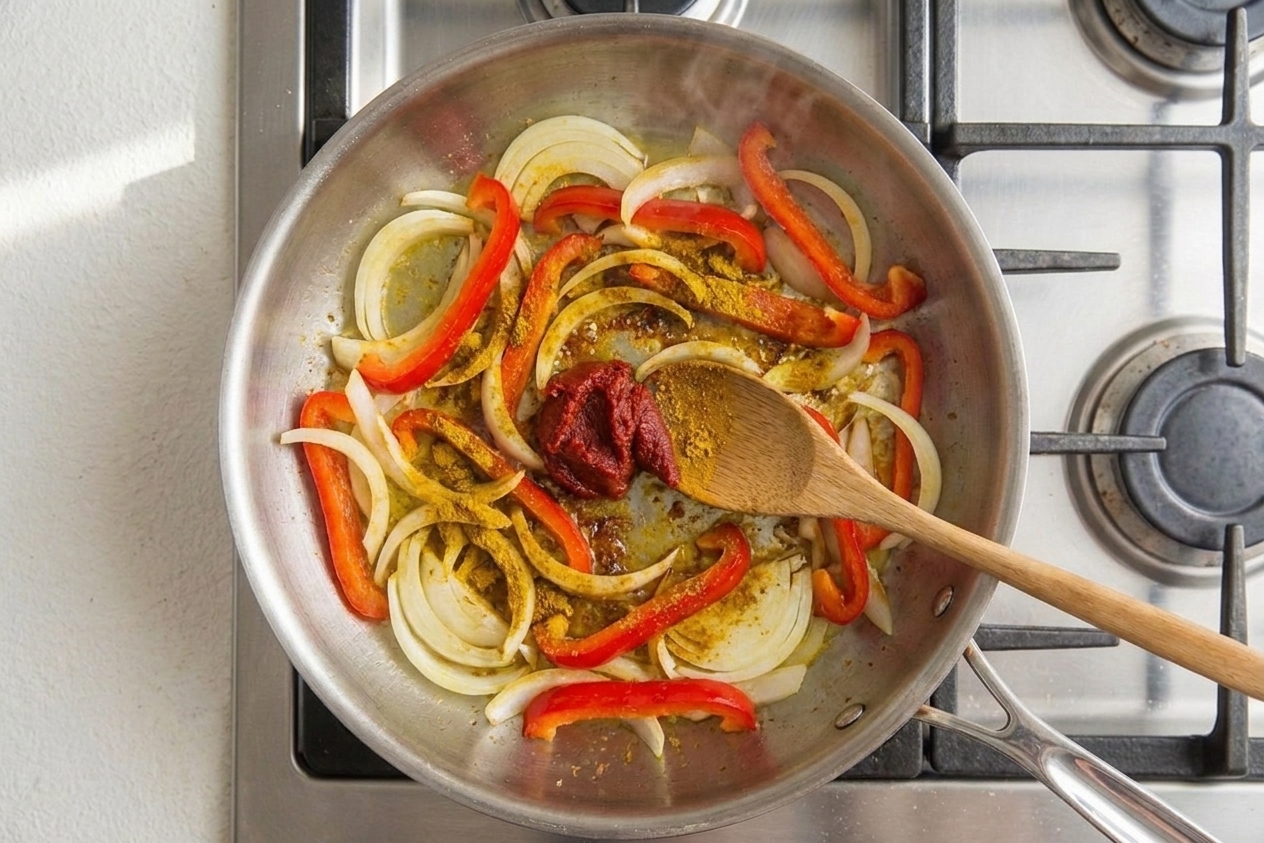
Add a sliced chili with the onion, or stir in chili crisp at the end. You can also add 1/4 to 1/2 tsp cayenne or 1/2 to 1 tsp red pepper flakes when you bloom the spices. Want a Thai-leaning twist? Add 1 to 2 Tbsp red curry paste with the garlic and ginger.