Mom's Best Recipes
Recipe

Comforting Coq Au Vin

A cozy French classic with crispy bacon, tender chicken, and a glossy red wine sauce you will want to spoon over everything.

Author By Matt Campbell
4.8
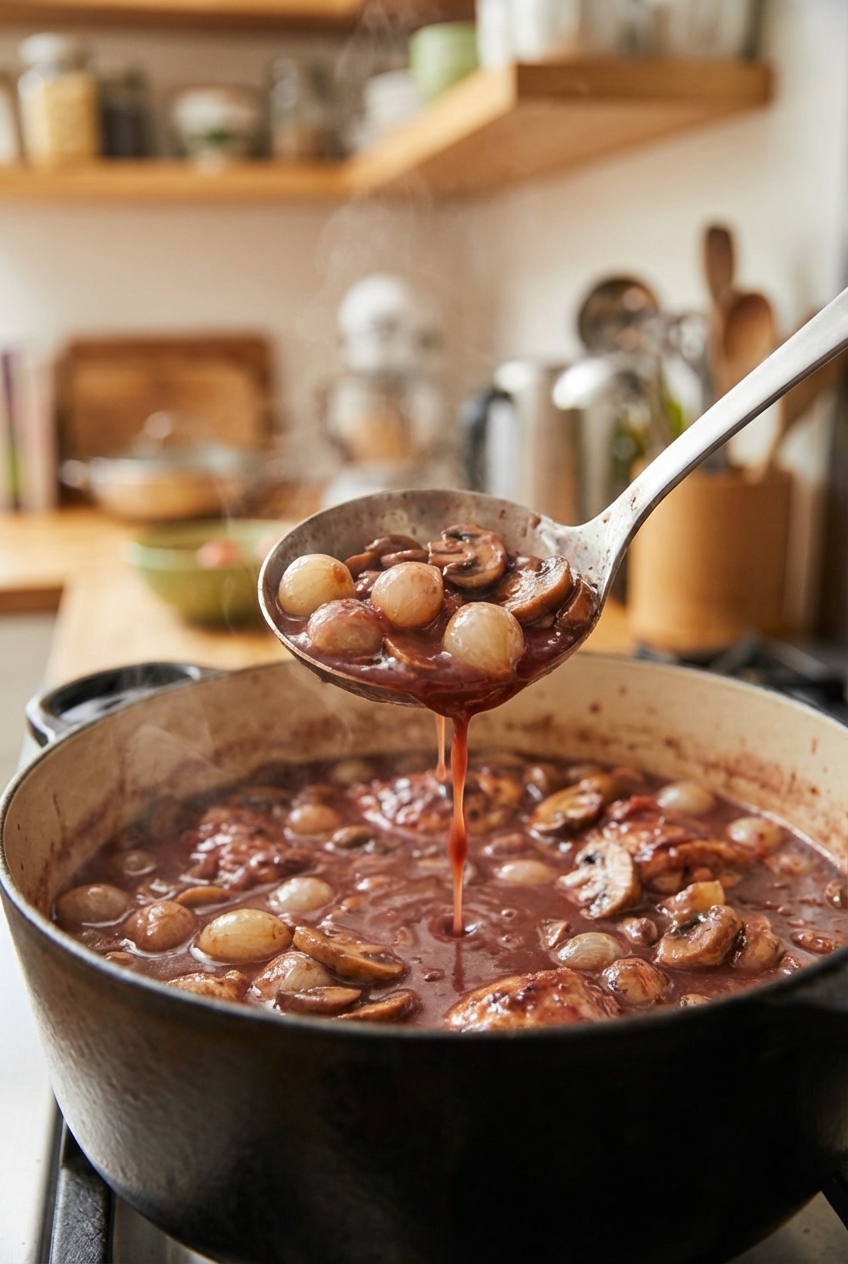
A Dutch oven filled with coq au vin with browned chicken thighs, mushrooms, pearl onions, and a glossy red wine sauce on a wooden table with a ladle

Coq au vin sounds like the kind of dinner that requires a beret, a three hour playlist, and a fear of butter. Good news. This version is weeknight friendly in spirit, weekend friendly in timing, and fully committed to the things we actually want: deep flavor, crisp edges, and a sauce that tastes like it has been working overtime.

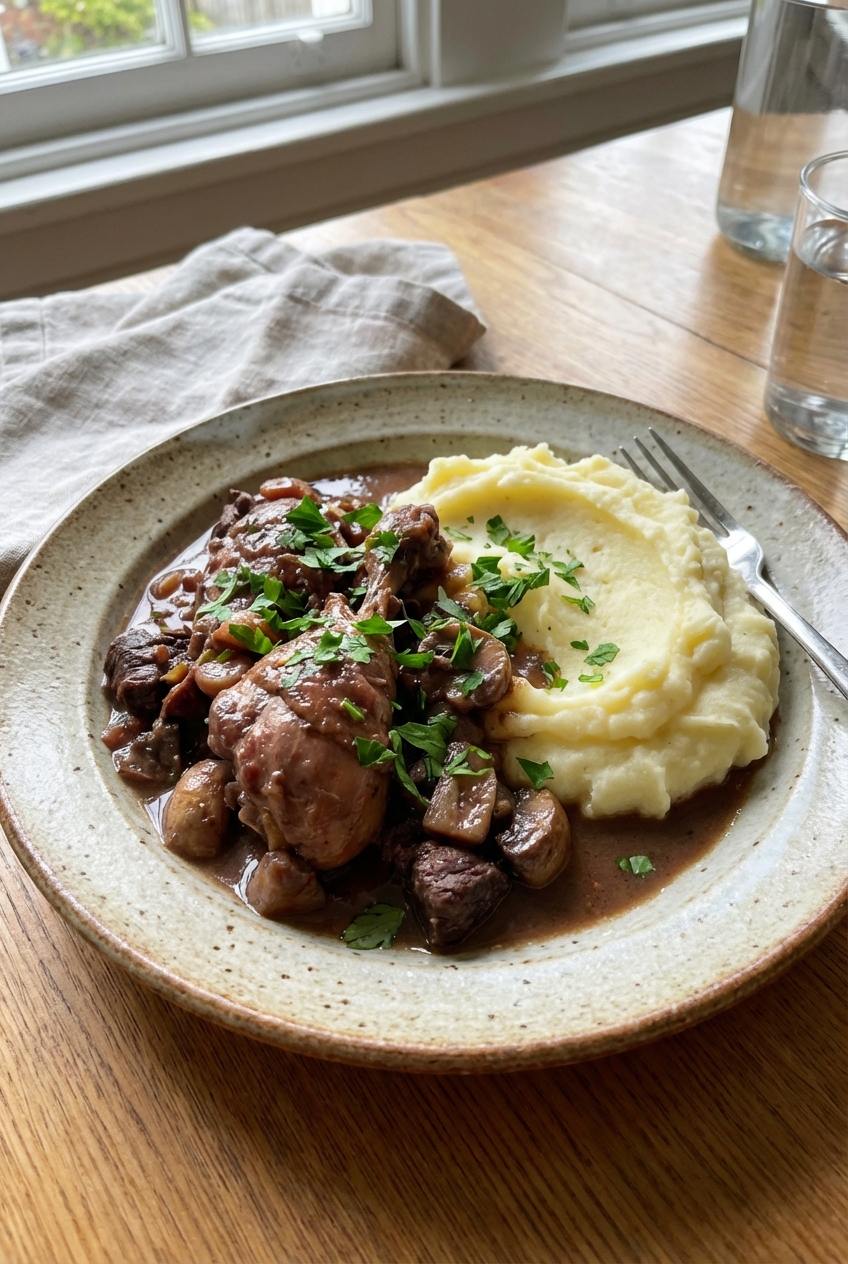
We are going to brown chicken until it is golden, build a cozy base with bacon, mushrooms, and onions, then let everything gently simmer in red wine until it turns into that warm, glossy, spoonable situation. Serve it with mashed potatoes, buttered noodles, or crusty bread, and suddenly your kitchen feels like a tiny bistro with better lighting.

A close-up photo of a spoon lifting red wine sauce with mushrooms and onion from a pot of coq au vin

Why It Works

  • Browning first equals flavor forever. A hard sear on the chicken and a quick crisp on the bacon create the foundation for that signature rich taste.
  • Accessible ingredients, classic payoff. No specialty poultry required. Bone-in chicken thighs deliver the traditional tenderness without the drama.
  • A sauce that fixes everything. Tomato paste, wine reduction, and a small flour thickening step give you a velvety sauce that clings to potatoes, noodles, and bread like it was made for them.
  • Better the next day. Like most braises, the flavor deepens after a rest, so leftovers are not a consolation prize.

Pairs Well With

Storage Tips

Refrigerate: Cool completely, then store in an airtight container for up to 4 days. Keep chicken tucked under the sauce so it stays juicy.

Freeze: Freeze in freezer-safe containers for up to 3 months. Thaw overnight in the fridge before reheating for the best texture.

Reheat: Warm gently in a covered skillet or saucepan over low heat, adding a splash of chicken broth or water if the sauce has thickened too much. Avoid a hard boil or the chicken can tighten up.

Bonus tip: If the sauce looks a little separated after chilling, just whisk it as it warms. It will come back together. You can also lift off any solidified fat before reheating if you want it a bit lighter.

Common Questions

What wine should I use for coq au vin?

Use a dry red wine you would actually drink. Pinot Noir is classic, but Merlot or a lighter Cabernet Sauvignon works too. Avoid sweet reds. If your wine tastes jammy and sugary in the glass, it will taste that way in the sauce. Also, very tannic wines can make the sauce feel a little harsh, so go for something smooth.

Do I have to use pearl onions?

Nope. Frozen pearl onions are easy and great here. Thaw and drain them so you are not adding extra water to the pot. If you cannot find them, chop 1 large yellow onion into wedges and call it a day.

Can I make this without alcohol?

You can make a very good wine-free braised chicken, but it will not taste exactly like coq au vin. Swap the wine for 2 cups extra chicken broth, then add 1 to 2 tablespoons balsamic vinegar (start with 1 tablespoon and add more gradually to taste) plus 1 extra tablespoon tomato paste. You will still get a cozy braise with a rich, tangy sauce, just a different flavor lane.

Why is my sauce bitter or too sharp?

A few common culprits: the wine did not reduce long enough, the fond (or garlic) got a little too dark, the wine is very tannic, or dried herbs went heavy. Fixes: let the wine simmer a few extra minutes before adding broth, keep the braise at a very gentle simmer, and if it still tastes sharp at the end, swirl in a small knob of butter. A tiny drizzle of honey also helps if the wine is extra assertive.

Can I use boneless, skinless chicken?

You can, but you will lose some richness. If you go boneless, reduce the simmer time and pull the chicken as soon as it is tender, usually 20 to 25 minutes, so it does not dry out.

How do I know the chicken is done?

You are looking for tender, pull-apart thighs. The easiest sign is that the meat yields easily when nudged with a fork. If you like numbers, aim for 175 to 195°F in the thickest part. Thighs get better as they go a little higher.

My pot looks a bit greasy. What should I do?

Totally normal with bacon and thighs. You can skim off excess fat with a spoon before serving. For the cleanest fix, chill leftovers and lift off the solid fat the next day.

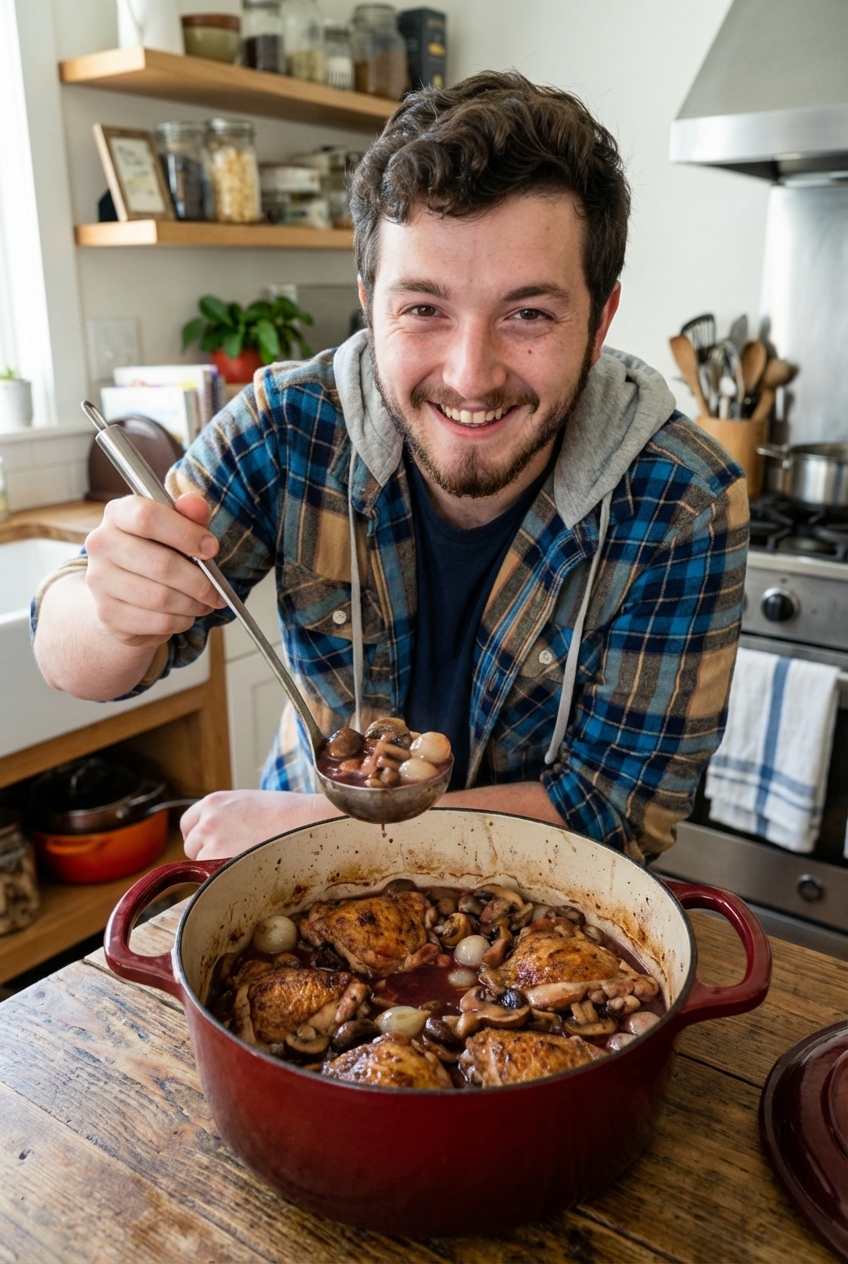
The first time I made coq au vin, I treated it like a sacred ritual and still somehow ended up with wine splatter on the stove and one mushroom that escaped to the floor. Classic. But the moment I tasted that sauce, I stopped trying to be fancy about it. This is comfort food with a French passport. Brown things well, simmer patiently, taste as you go, and you end up with a pot of dinner that makes the whole house smell like you have your life together, even if you absolutely do not.