
Mom's Best Recipes
Recipe

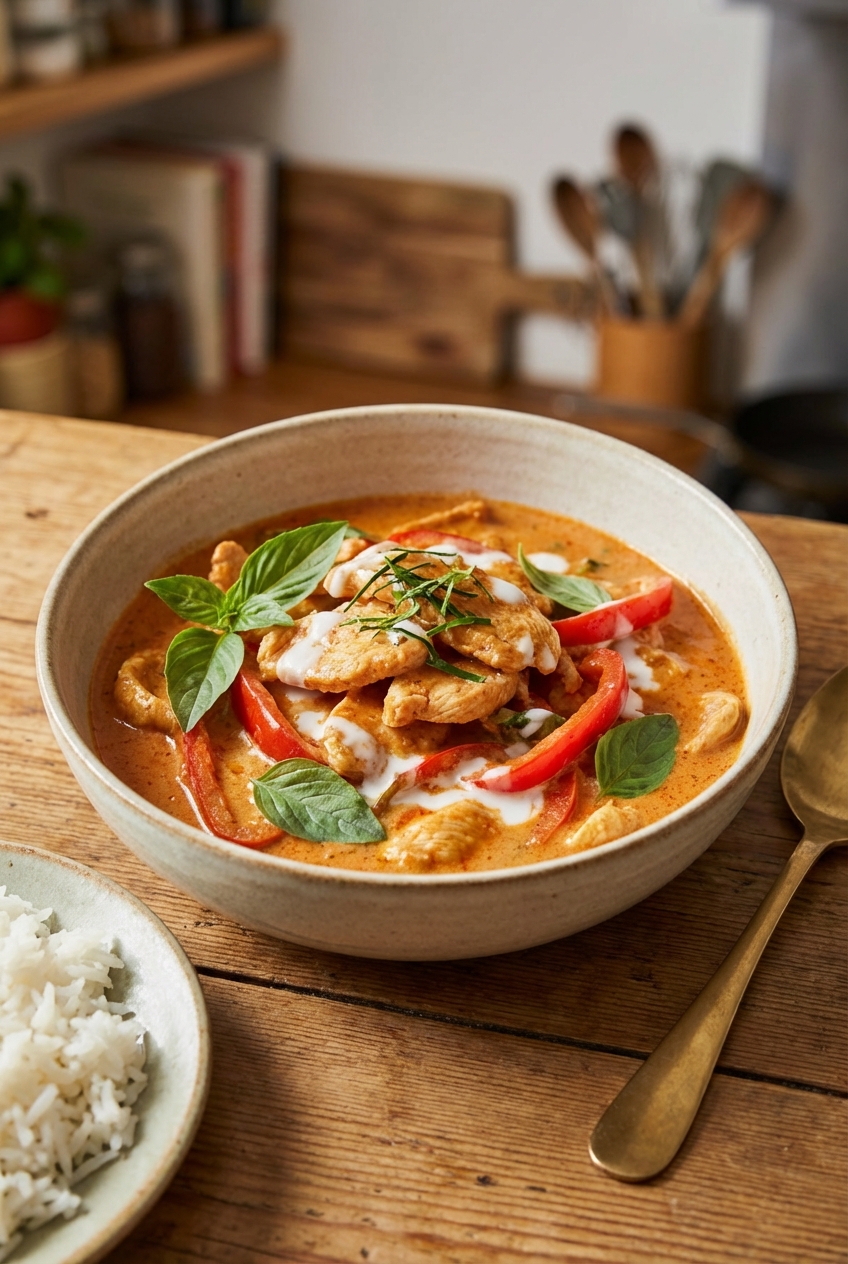
Warm Thai Red Curry

Creamy coconut, punchy red curry, and tender chicken with veggies in a fast, weeknight-friendly pot. Cozy, bright, and built for extra rice.

Author By Matt Campbell
4.8

When the weather is doing that thing where it cannot decide if it is fall, winter, or just rude, I reach for Thai red curry. It is the kind of dinner that feels like a blanket but still tastes awake. Coconut milk brings the cozy. Red curry paste brings the drama. Lime and herbs keep it bright so you do not feel like you just ate a bowl of beige.

This version is designed for real life: one pot, accessible ingredients, and a sauce you can tweak while you taste. Make it with chicken, tofu, shrimp, or whatever is hanging out in your fridge and needs a purpose.
Why It Works

  • Big flavor, low effort: Blooming the curry paste in oil wakes up all those aromatics fast.
  • Cozy but not heavy: Coconut milk gives richness, while lime and a touch of sugar keep the sauce balanced.
  • Weeknight flexible: Use any quick-cooking veg and your favorite protein. The method stays the same.
  • Sauce that clings: A little simmer time reduces the curry into that spoon-coating, pour-over-rice situation.

Pairs Well With

Storage Tips

Refrigerate: Cool completely, then store in an airtight container for up to 4 days.

Reheat: Warm gently on the stove over medium-low, stirring often. If the sauce thickens in the fridge, loosen with a splash of broth or water. Avoid a hard boil if you can, especially with coconut milk.

Freeze: You can freeze red curry for up to 2 months. For best texture, freeze without delicate veggies (like zucchini) and add fresh vegetables when reheating. Thaw overnight in the fridge before reheating.

Meal prep tip: Make the curry base (curry paste + aromatics + coconut milk + broth) ahead. Then cook protein and veggies fresh in the base when you are ready to eat.

Common Questions

How spicy is Thai red curry?

It depends heavily on the brand of red curry paste. Start with 2 tablespoons, then bump it up to 3 or 4 tablespoons while you are frying the paste. If you want more heat at the table, use fresh sliced chiles, chili flakes, or chili crisp instead of stirring in raw paste at the end.

Can I make it vegetarian or vegan?

Absolutely. Swap chicken for extra-firm tofu or chickpeas, use vegetable broth, and keep the fish sauce out. For that salty depth, use soy sauce or a vegan fish sauce substitute.

Do I need fish sauce?

Not strictly, but it adds a savory backbone that makes the curry taste restaurant-level. If you do not have it, use soy sauce or tamari and taste for salt at the end.

My curry looks a little separated. Did I break it?

Nope. Coconut milk can split if it boils hard. It will still taste great. Lower the heat and whisk in a splash of broth. Next time, keep it at a steady simmer.

What vegetables work best?

Bell peppers, snap peas, green beans, zucchini, mushrooms, and baby spinach are all great. Add quick-cooking veg near the end so it stays crisp-tender, not sad.

The first time I made Thai red curry at home, I treated curry paste like it was a garnish. I stirred it into coconut milk, hoped for the best, and got something that tasted like spicy sunscreen. The fix was simple: fry the paste for a minute or two, let it get fragrant, then build the sauce. Now this is my go-to when I need a dinner that feels like I tried, even when I absolutely did not. It is also the recipe that taught me the most important rule in my kitchen: taste early, taste often, and do not be afraid to adjust.