Mom's Best Recipes
Recipe

Copycat Raising Cane’s Chicken Fingers

Crisp-edged, juicy chicken fingers with a light, peppery breading, plus frying and air fryer instructions and oil temperature guidance for that fast food crunch at home. Includes a quick Cane’s-style sauce so this is truly a one-stop copycat.

Author By Matt Campbell
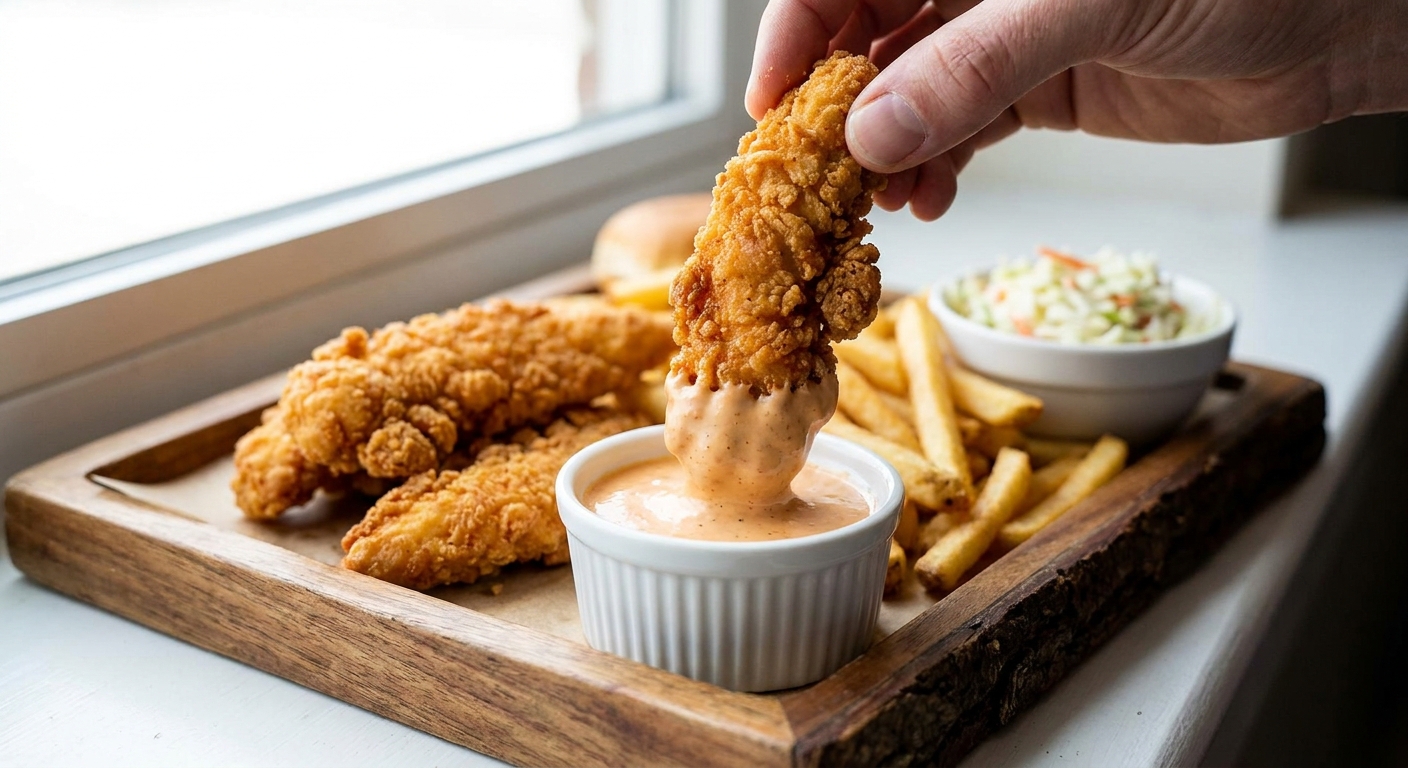
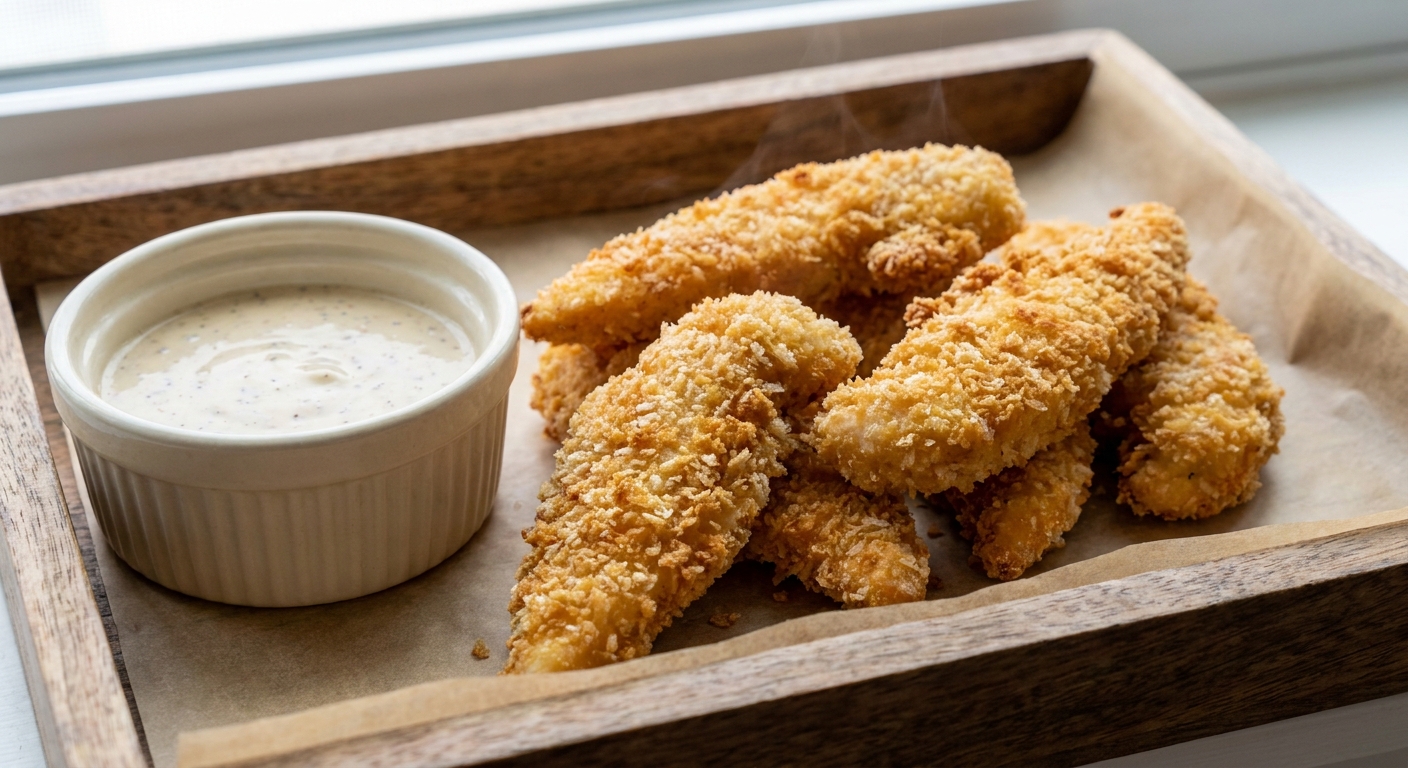
A close-up real photograph of golden crispy chicken fingers piled on a tray with craggy light breading and a small cup of creamy dipping sauce on the side, warm natural kitchen lighting

There are chicken fingers, and then there are Raising Cane’s-style chicken fingers. You know the vibe: not a heavy, bready crust, just a light, seasoned shell that shatters a little when you bite in, then straight into juicy chicken. Add that tangy, peppery sauce and suddenly you are “just grabbing a quick bite” with the energy of a full-on event.

This is my home-kitchen version, written for real life. Accessible ingredients, clear steps, and two paths to victory: classic frying for the closest copycat crunch, or air fryer for a less messy weeknight move. I will also give you the one thing that decides everything here: oil temperature. Nail that, and you are basically unstoppable.
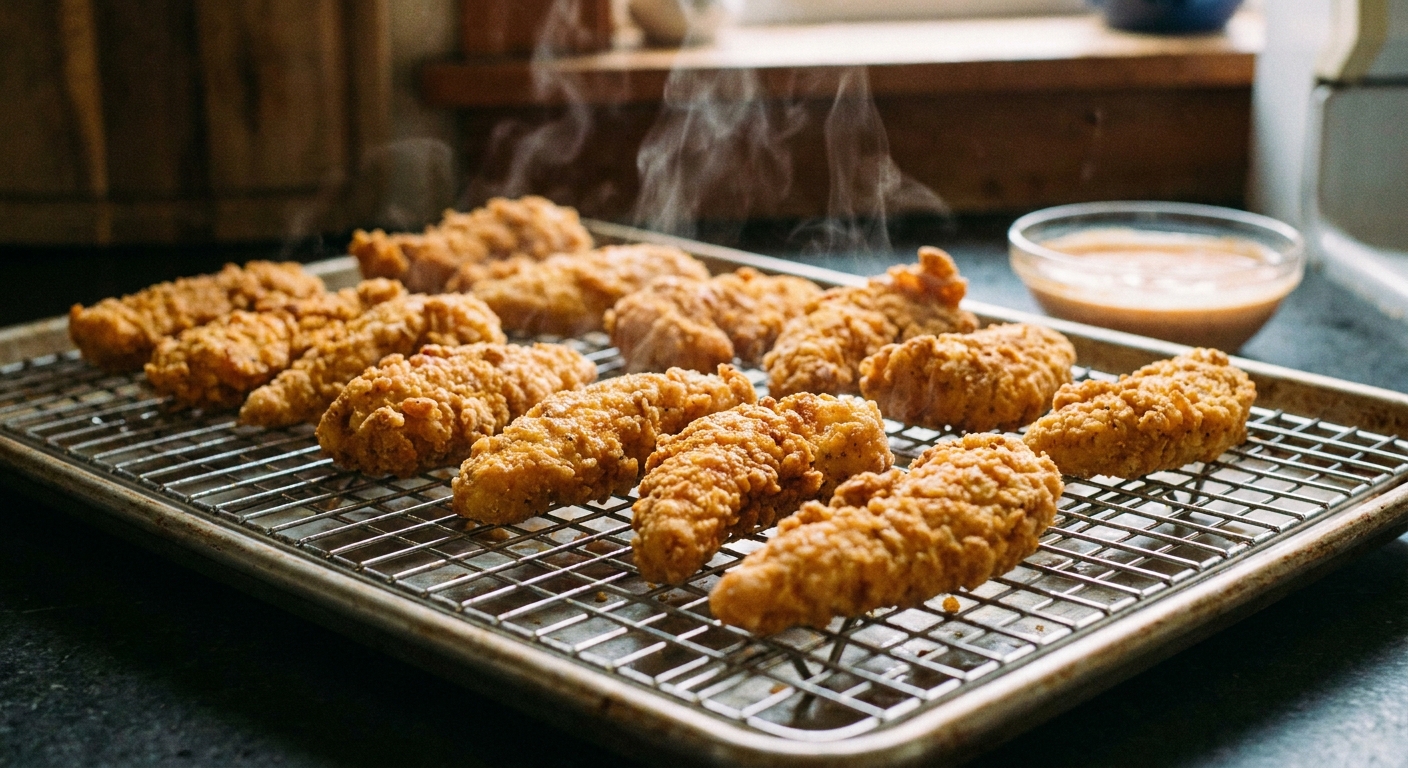
A real photograph of freshly fried chicken fingers resting on a wire rack over a sheet pan, with visible steam and a crunchy golden coating

Why It Works

  • Light, crisp coating: A flour and cornstarch blend gives you that thin, snappy crust instead of a thick bread blanket.
  • Juicy chicken: A quick buttermilk soak helps add flavor and tenderness.
  • Fry confidence: You get a specific oil temp target, what to do when it drops, and how to avoid greasy chicken fingers.
  • Air fryer option: Not identical to fried, but still crunchy and very good with the sauce.
  • Sauce included: A quick, peppery, tangy dip that pulls the whole copycat experience together.
  • Leftovers that re-crisp: Reheat tips so day-two chicken fingers do not turn sad and soft.

Pairs Well With

Storage Tips

How to Store and Reheat

Storing

  • Cool first: Let chicken fingers cool on a rack for 15 to 20 minutes so steam does not soften the crust.
  • Refrigerate: Store in an airtight container for up to 3 days. If possible, line with a paper towel and avoid stacking too tightly.
  • Freeze: Freeze on a sheet pan until firm, then transfer to a freezer bag. Best within 2 months.

Reheating for crisp results

  • Air fryer (best): 350°F for 4 to 6 minutes (refrigerated) or 8 to 10 minutes (frozen), flipping halfway.
  • Oven: 400°F on a wire rack set over a sheet pan for 10 to 12 minutes (refrigerated) or 18 to 22 minutes (frozen).
  • Skillet: Warm a thin layer of oil over medium heat and re-crisp 1 to 2 minutes per side.
  • Microwave: It works, but the crust will soften. If you must, microwave briefly, then crisp in a hot skillet for 30 to 60 seconds per side.

Sauce storage

Keep sauce refrigerated in a covered container and use within up to 7 days as typical food-safety guidance for mayo-based sauces, assuming proper refrigeration and clean utensils.

Quick safety notes

  • Raw chicken: Keep it cold, avoid cross-contamination, and wash hands and surfaces well.
  • Hot oil: Fry carefully, do not crowd the pot, and keep kids and pets clear.
  • Peanut oil: Great for frying, but choose another oil if you are cooking for someone with a peanut allergy.

Common Questions

Common Questions

What oil temperature should I aim for?

Target 350°F. That is the sweet spot for a crisp coating that browns before the chicken dries out. If your oil dips to below 325°F after adding chicken, pause and let it climb back up before frying the next batch.

How do I know the chicken is done?

The most reliable way is a thermometer. The thickest part should hit 165°F. If you do not have one, cut the thickest piece and make sure the center is opaque and the juices run clear.

Why is my breading falling off?

Usually one of three things: (1) the chicken went from marinade to flour without letting excess drip off, (2) you did not press the flour on firmly, or (3) the oil was not hot enough and the coating soaked before it set. Let excess marinade drip, press the coating, and keep oil near 350°F.

Do I need a double dredge?

Not for this style. A double dredge is great for thick, craggy fried chicken, but these are meant to have a light shell. One solid press into the flour mix is the move.

Can I make these gluten-free?

Yes. Use a 1:1 gluten-free flour blend in place of all-purpose flour. Keep the cornstarch. The texture will be slightly different but still crunchy.

Frying or air fryer, which is closer to Cane’s?

Frying is the closest match for that classic thin, crisp shell. The air fryer version is less messy and still very satisfying, especially with the sauce.

I love copycat recipes because they feel like a tiny kitchen heist. Like, no disrespect to the drive-thru, but I want to know why something tastes that good and how to pull it off in my own chaotic little workspace. The first time I tested these, I overcrowded the pot and tanked the oil temp. The chicken came out blond and a little sad, which is exactly when I remembered the rule: frying is mostly temperature management with snacks at the end.

Once I treated the thermometer like the boss, everything clicked. Light coating, crisp edges, juicy center, and the kind of dip-and-bite rhythm that makes you “accidentally” eat three more than planned. Not the official recipe, obviously, but the vibe is absolutely there.