Mom's Best Recipes
Recipe

Corned Beef with Cabbage and Potatoes

A cozy one-pot classic with fork-tender beef, buttery potatoes, sweet cabbage, and an optional mustard-butter sauce that wakes everything up.

Author By Matt Campbell
4.8
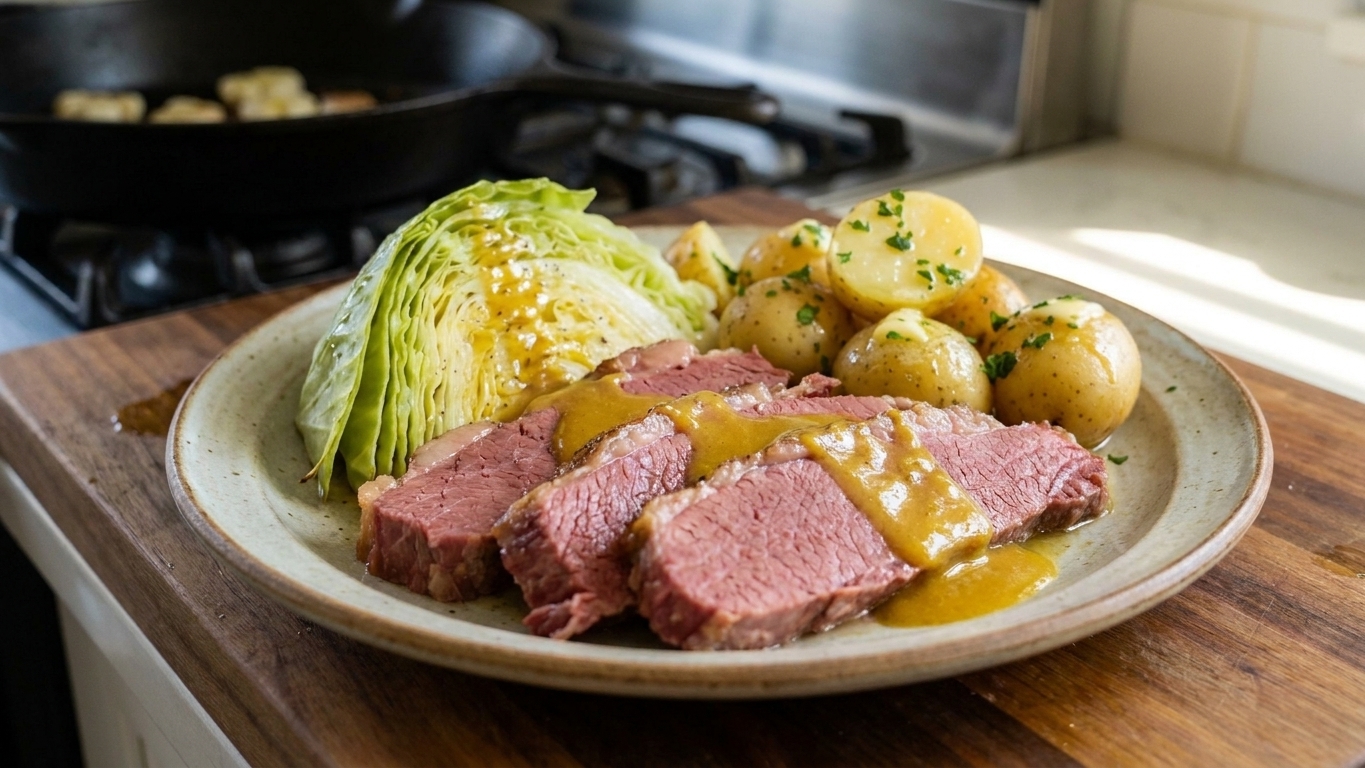
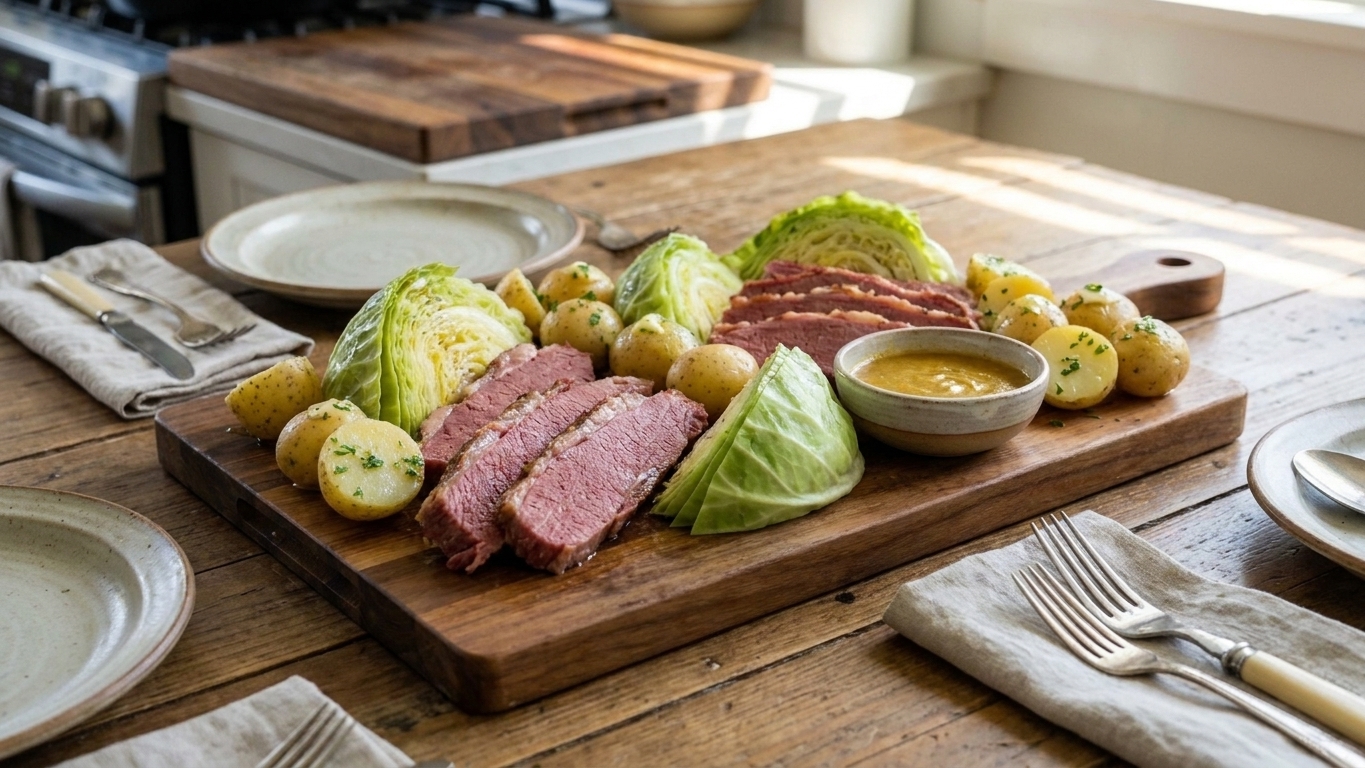
A platter of sliced corned beef with steamed cabbage wedges and boiled baby potatoes, served family-style on a wooden table with warm natural kitchen lighting

Corned beef with cabbage and potatoes is one of those dinners that feels like it has been around forever because it works. It is salty-savory, soft in the best way, and built for seconds. But here is the thing: it does not have to taste like boiled everything.

My move is simple. Simmer the brisket gently, add the vegetables at the right time so they stay buttery and sweet, then finish with a quick mustard-butter sauce that makes you stop for a second and go, wow. You get the cozy comfort and the bright, punchy flavor.

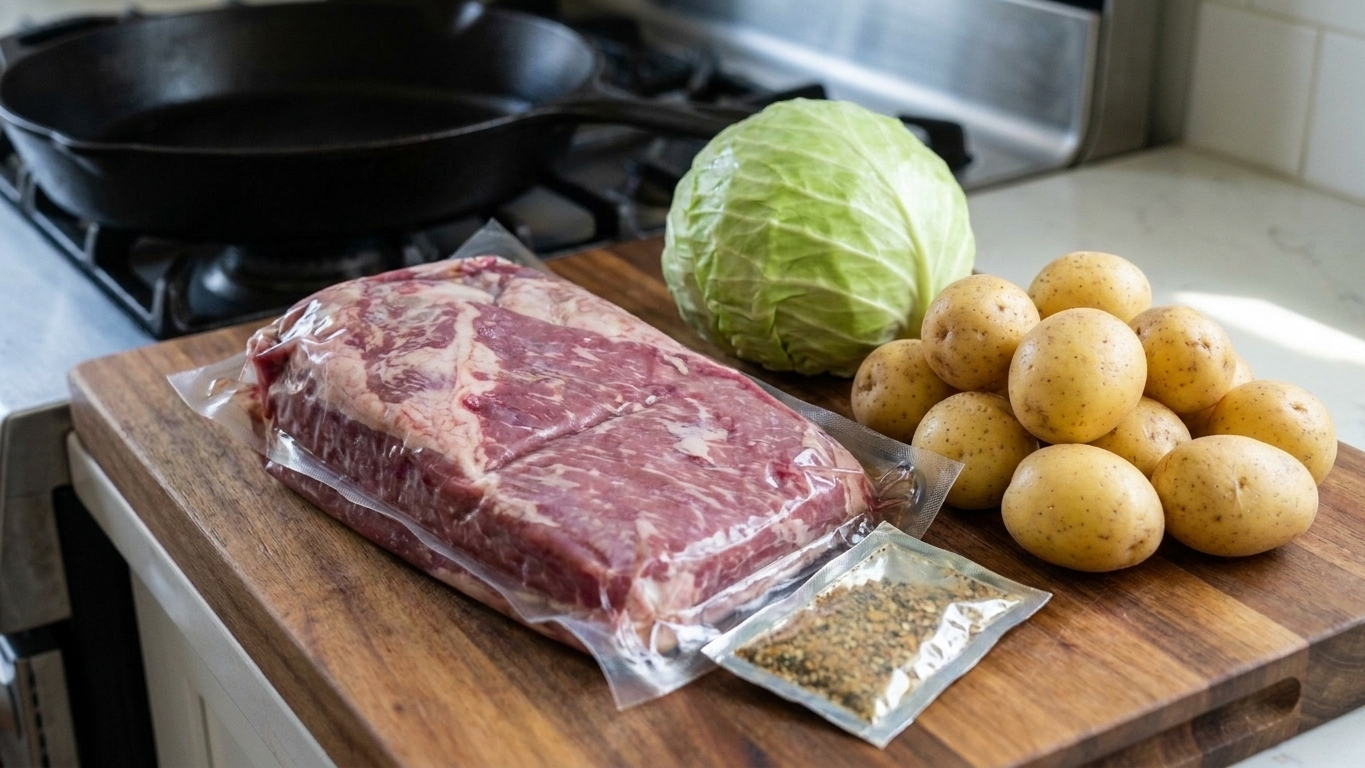
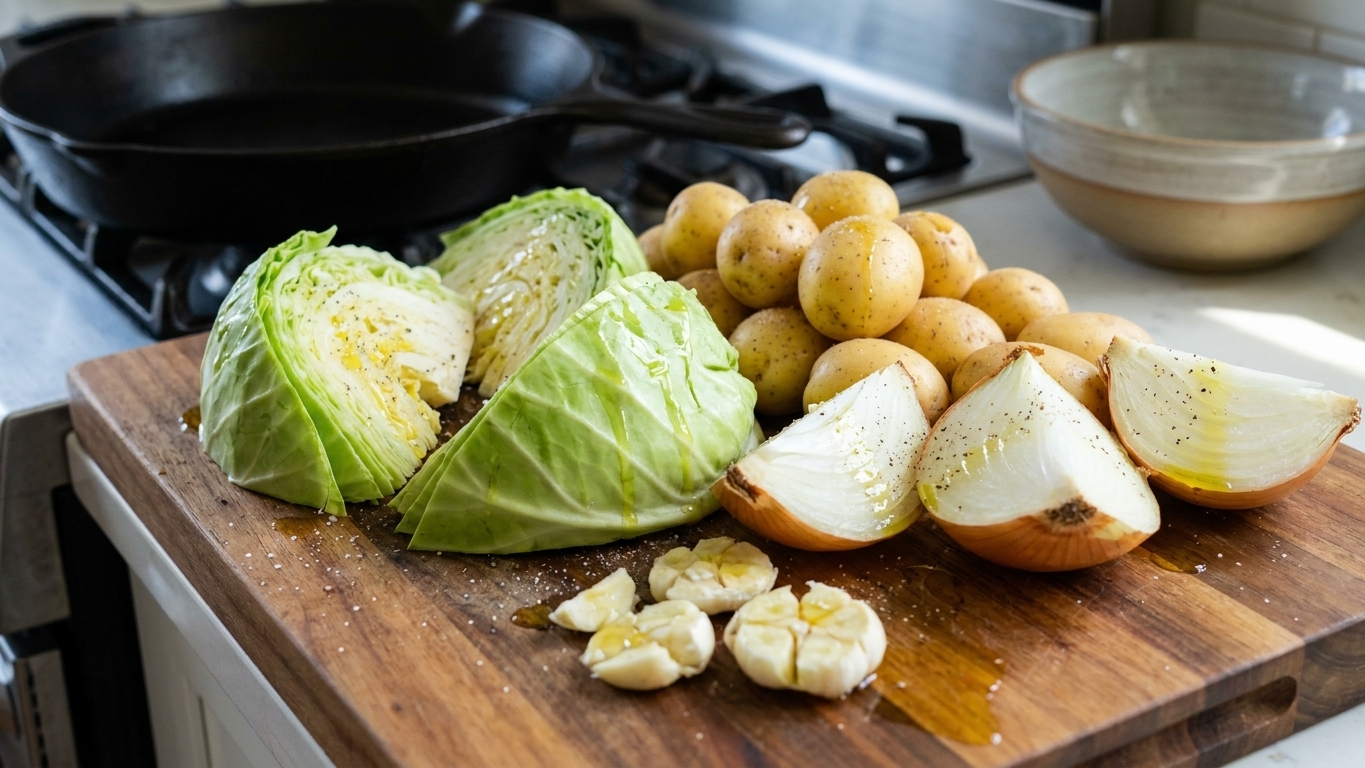
Corned beef brisket in packaging with a spice packet beside it on a clean kitchen counter, next to cabbage and potatoes ready for cooking

Why It Works

  • Fork-tender beef, not stringy. Low simmer keeps the brisket juicy and sliceable.
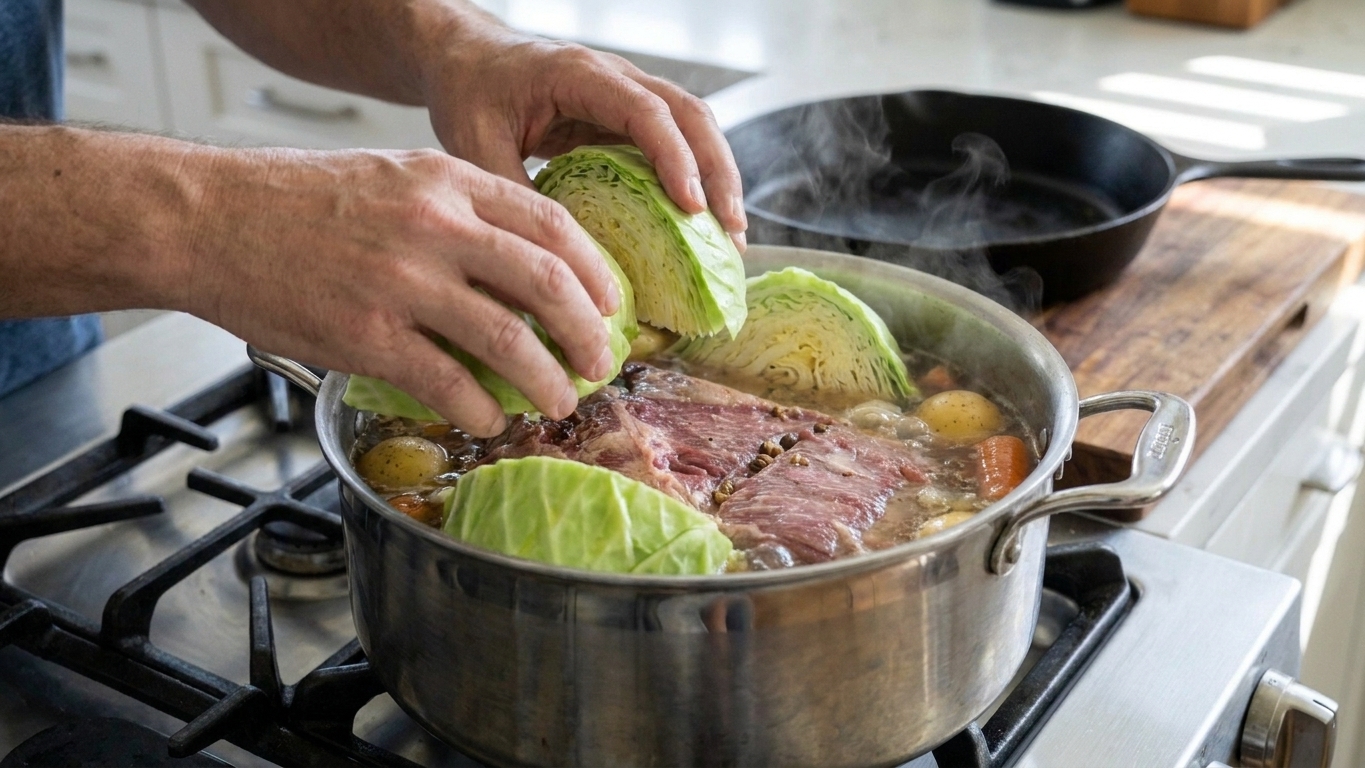
  • Vegetables that taste like themselves. Potatoes go in first, cabbage goes in last so it stays sweet and not mushy.
  • Flavor you can control. A quick rinse reduces excess surface salt, and the mustard-butter finish adds a bright, rich hit without extra work.
  • One pot, minimal dishes. Maximum payoff.

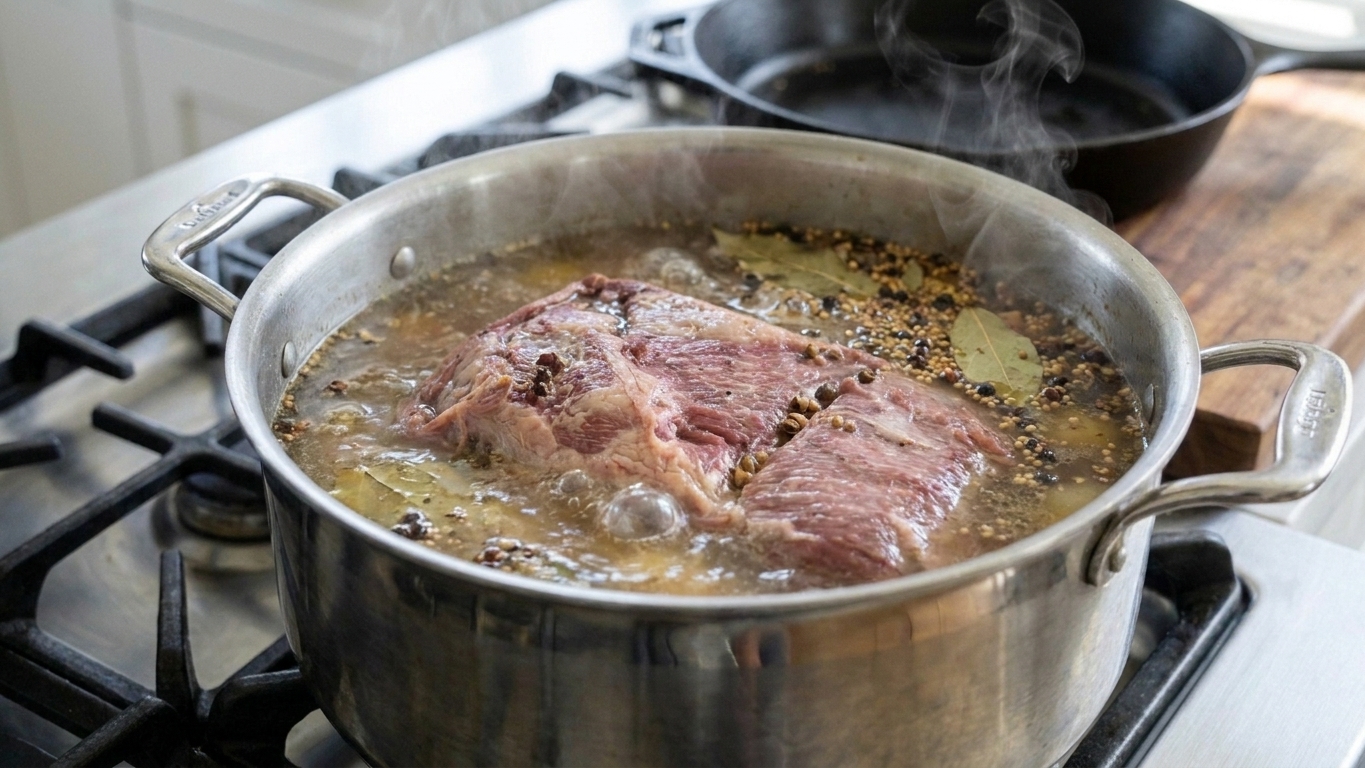
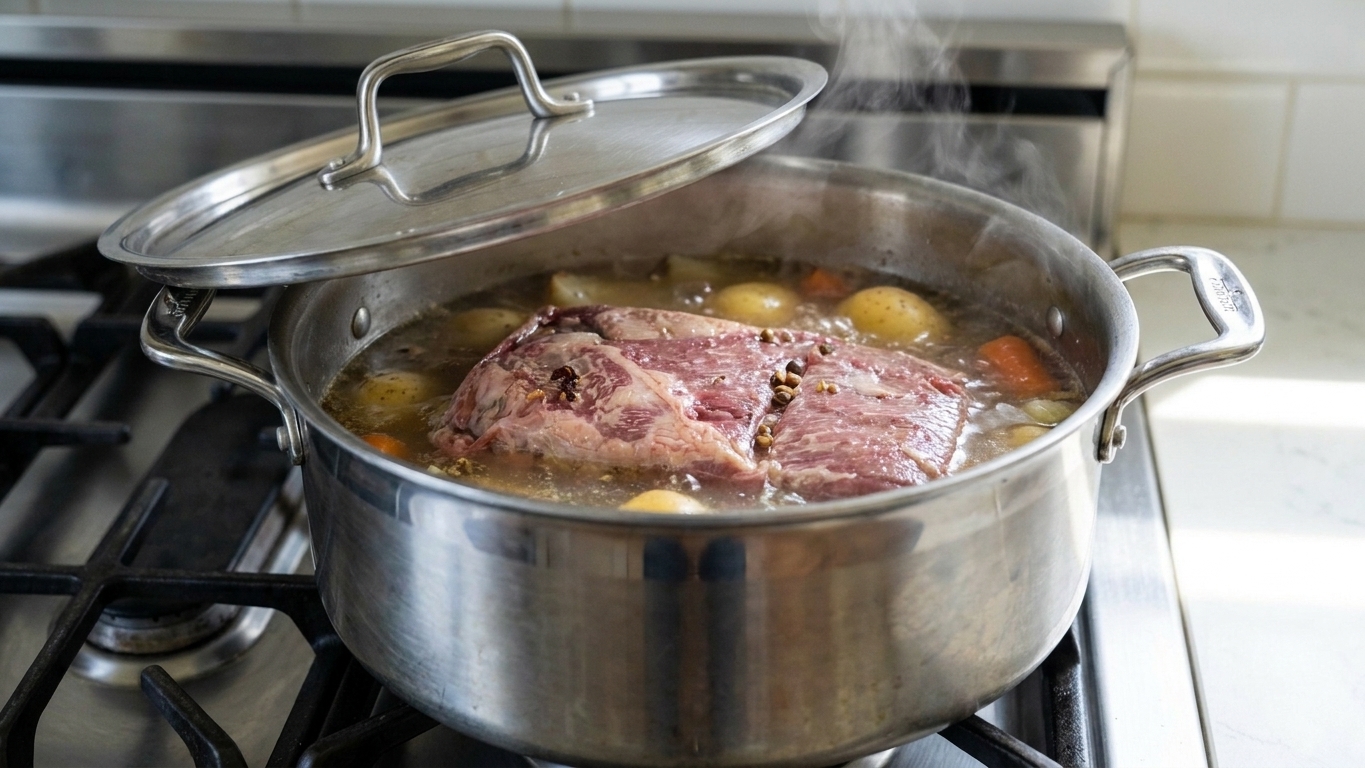
Corned beef brisket simmering in a large Dutch oven on a stovetop, with gentle bubbles and aromatic spices floating on the surface

Pairs Well With

Storage Tips

Refrigerator: Store sliced corned beef, cabbage, and potatoes in airtight containers for up to 4 days. I like keeping a little cooking broth with the beef so it stays moist.

Freezer: Corned beef freezes well for up to 2 months. Wrap slices tightly and freeze with a small splash of broth. Cabbage can get softer after freezing, so I usually eat that part fresh.

Reheat without drying out: Warm beef in a covered skillet with a few tablespoons of broth over medium-low heat until hot. Potatoes reheat really well in a skillet with butter for crisp edges. Cabbage just needs a quick steam or a quick microwave warm-up.

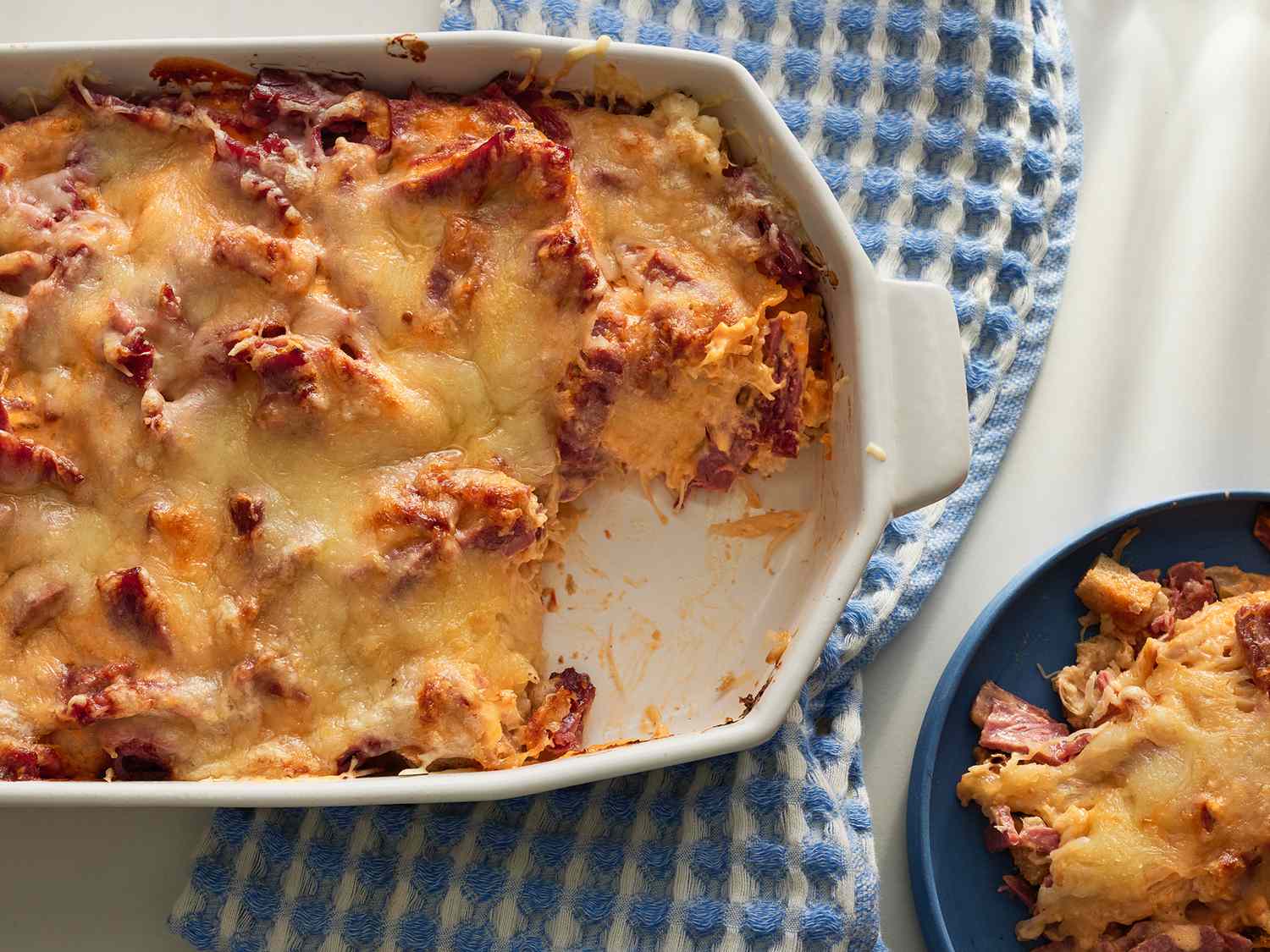
Leftover ideas: Chop beef and potatoes, crisp them in a pan, then top with a fried egg. Or go full sandwich mode with rye, Swiss, and mustard.

Common Questions

Common Questions

Do I need to rinse corned beef before cooking?

I recommend a quick rinse under cool water, especially if you are sensitive to salt. It will not undo the curing, but it can mellow some of the surface salt so the broth is not aggressively salty.

Fat side up or down?

If you are simmering on the stovetop, either is fine. I usually go fat side up so the fat slowly bastes the meat. If one side looks thinner or more exposed, put that side down so it stays protected in the liquid.

When do I add potatoes and cabbage?

Potatoes go in for the last 25 to 35 minutes so they get tender. Cabbage goes in the last 10 to 15 minutes so it stays sweet with a little bite.

How do I know the corned beef is done?

The best test is texture: a fork should slide in easily, and a slice should bend without snapping. If you like a number, many briskets turn properly tender around 190 to 205°F, but texture is still the real boss. If it still feels tight, give it another 20 to 30 minutes at a gentle simmer.

Why is my corned beef tough?

Usually one of two things: it was cooked at too hard a boil, or it needed more time. Keep it at a low simmer and cook until tender, not until the clock says so.

Should I slice it right away?

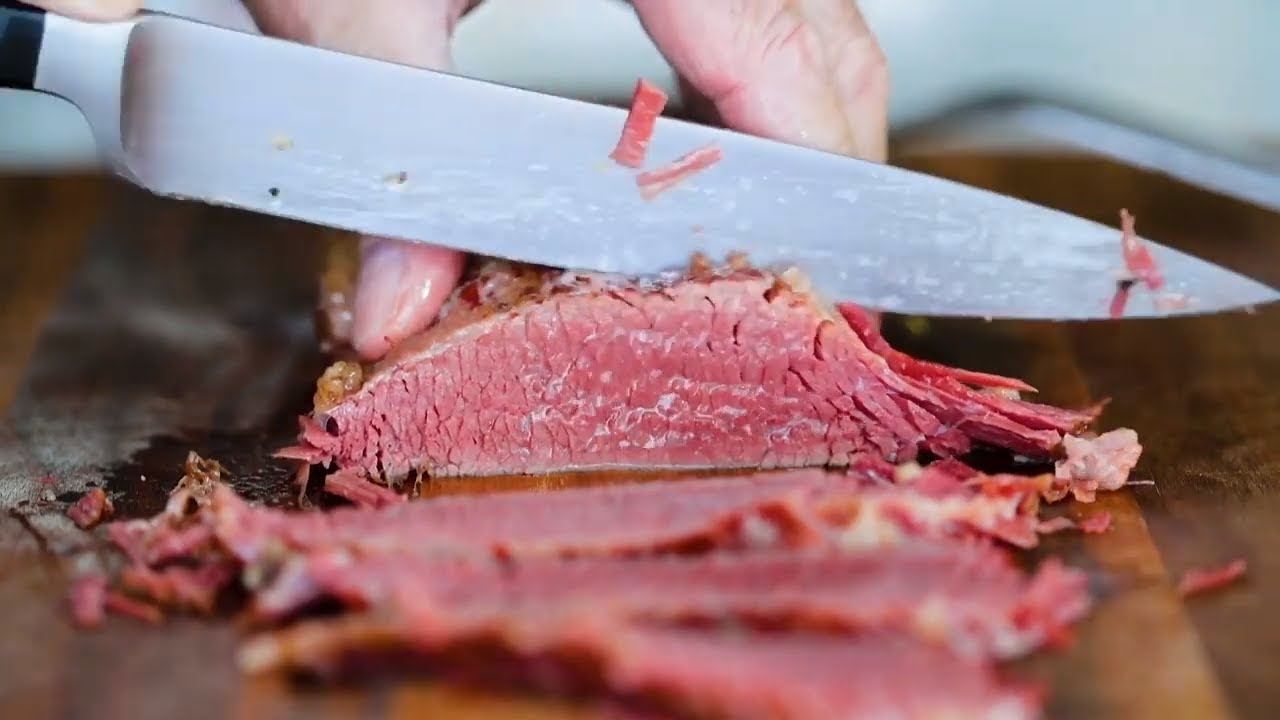
Let it rest 10 to 15 minutes, then slice against the grain. To find the grain, look for the long lines running across the meat, then cut perpendicular to those lines. That is the difference between tender slices and chewy ones.

Flat or point? Does it matter?

Most store-bought corned beef is the flat, which slices neatly. The point is fattier and often takes a bit longer to get fork-tender, but it is super juicy. Either works. Just cook to tenderness.

I used to think corned beef and cabbage was the kind of meal you made once a year, ate politely, and moved on. Then I started treating it like a real dinner, not a boiled obligation. A gentle simmer, veggies timed correctly, and one little sauce to pull it all together. Now it is in my rotation whenever I want comfort food that feels like a hug, but still has enough punch to keep me interested.

A cook’s hands slicing rested corned beef brisket against the grain on a wooden cutting board, with cabbage and potatoes waiting nearby