Mom's Best Recipes
Recipe

Country Skillet Chicken and Gravy

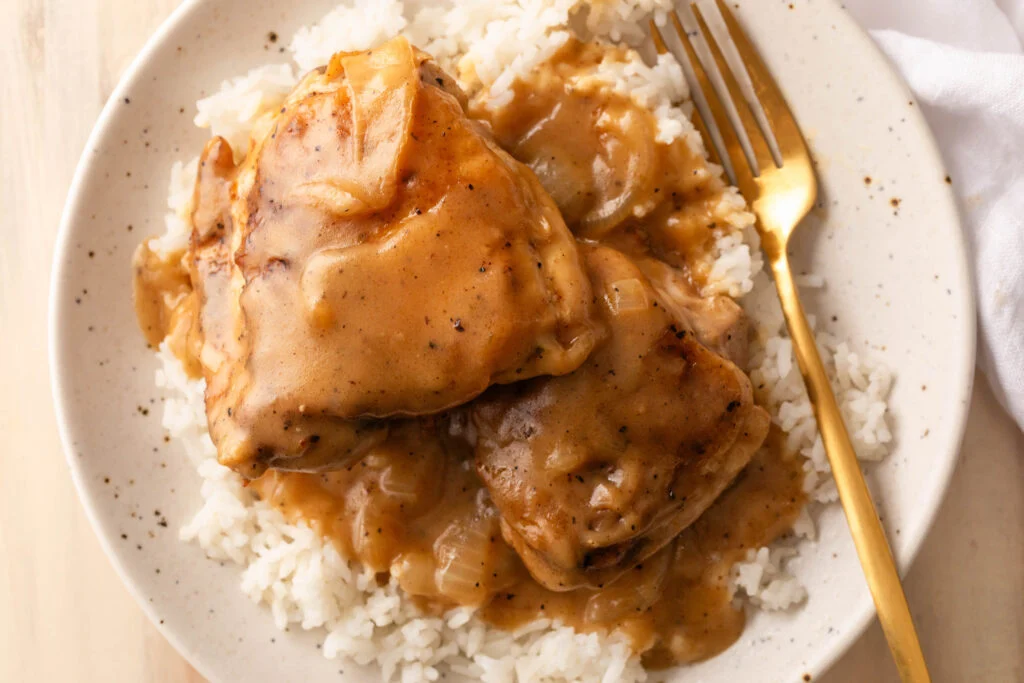
Golden, pan-seared chicken in a creamy black pepper gravy, built from simple pantry staples for peak country comfort.

Author By Matt Campbell
4.8
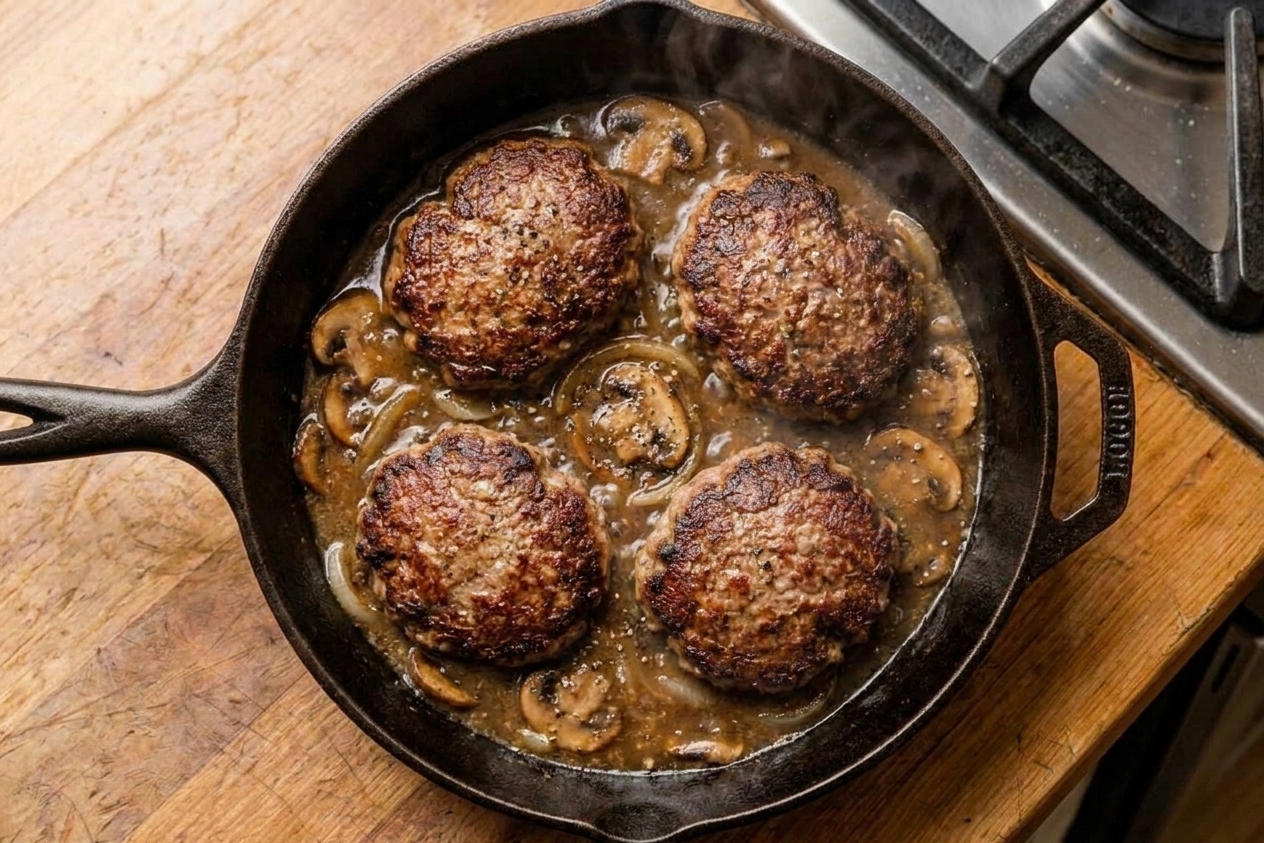
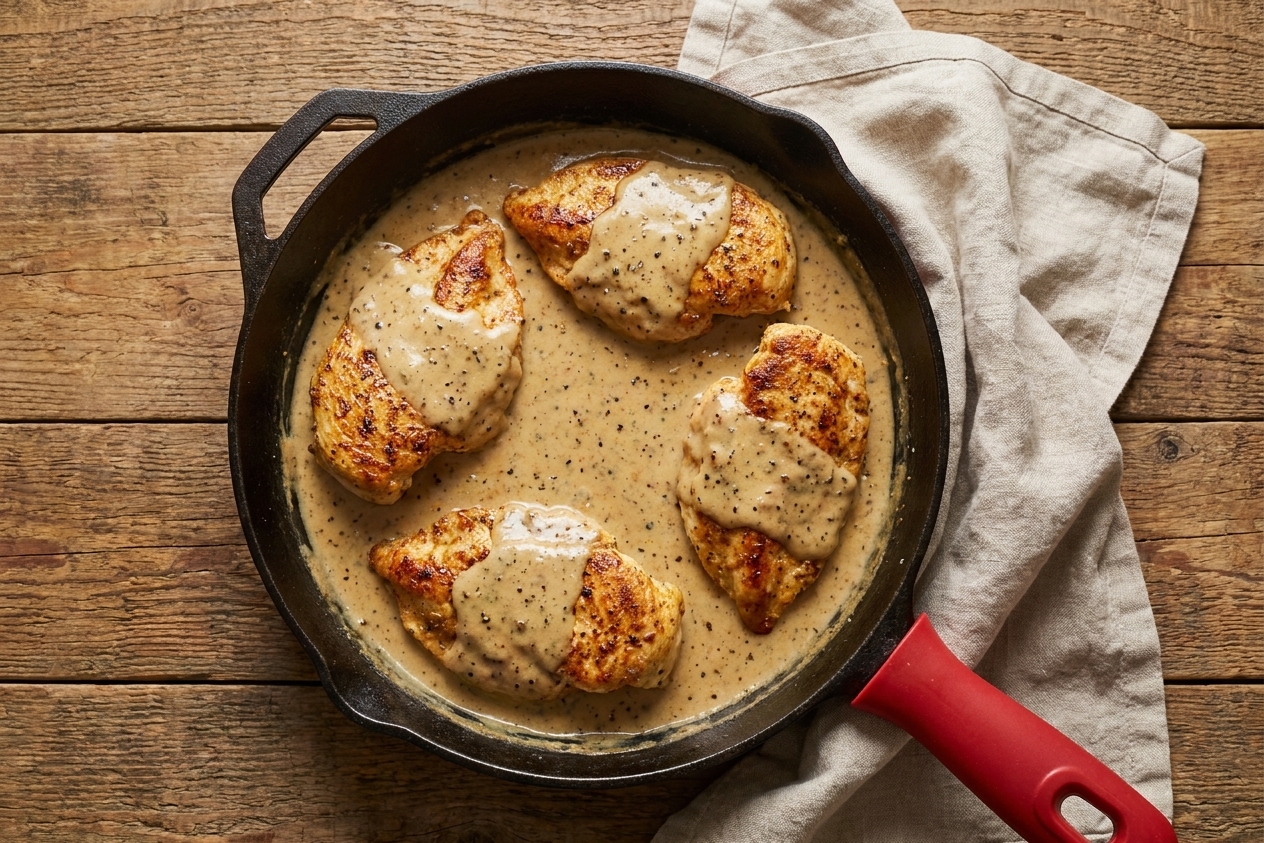
A cast iron skillet filled with golden pan-seared chicken cutlets smothered in creamy pepper gravy on a rustic wooden table with a linen napkin

Country living, to me, tastes like something you can make with what you have, while the wind is doing its thing outside and the kitchen is warm enough to pull you back in. This is that dinner: crispy-edged chicken and a peppery, silky gravy that comes together right in the same pan. No packets, no mystery powders, no stress.

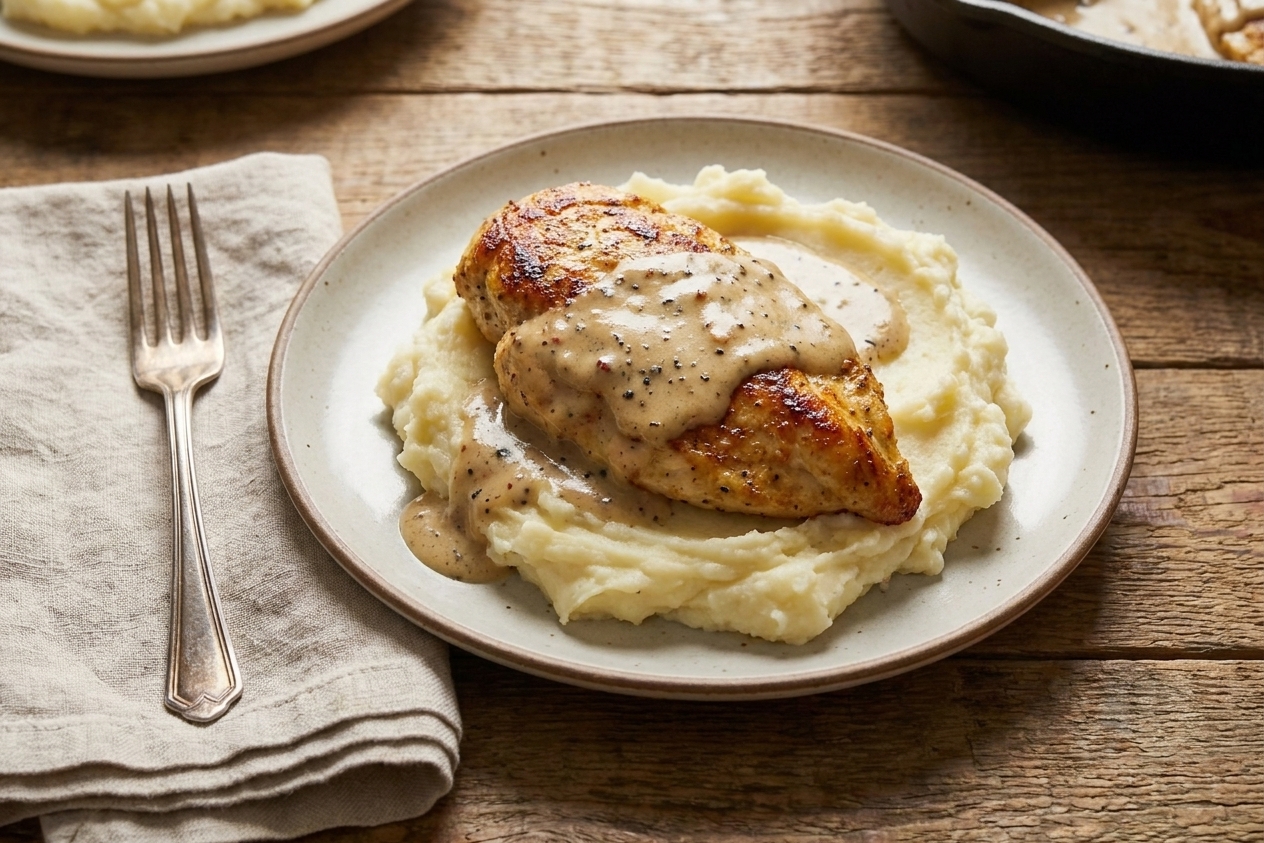
It is humble in the best way, but it is not bland. We season the flour, sear hard for color, then whisk up a gravy that tastes like it took all afternoon. Serve it over mashed potatoes, rice, biscuits, or even buttered egg noodles if you are feeling a little chaotic. I support you.
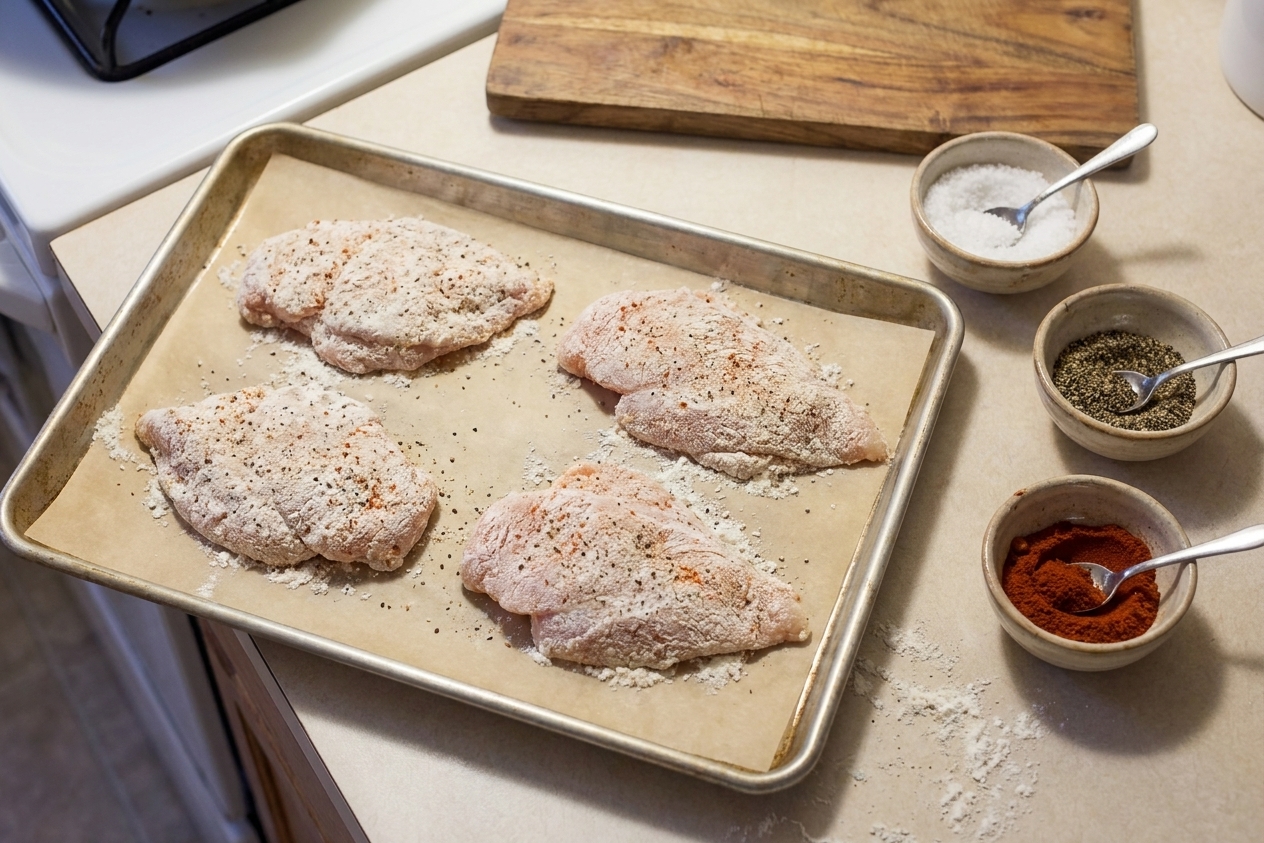

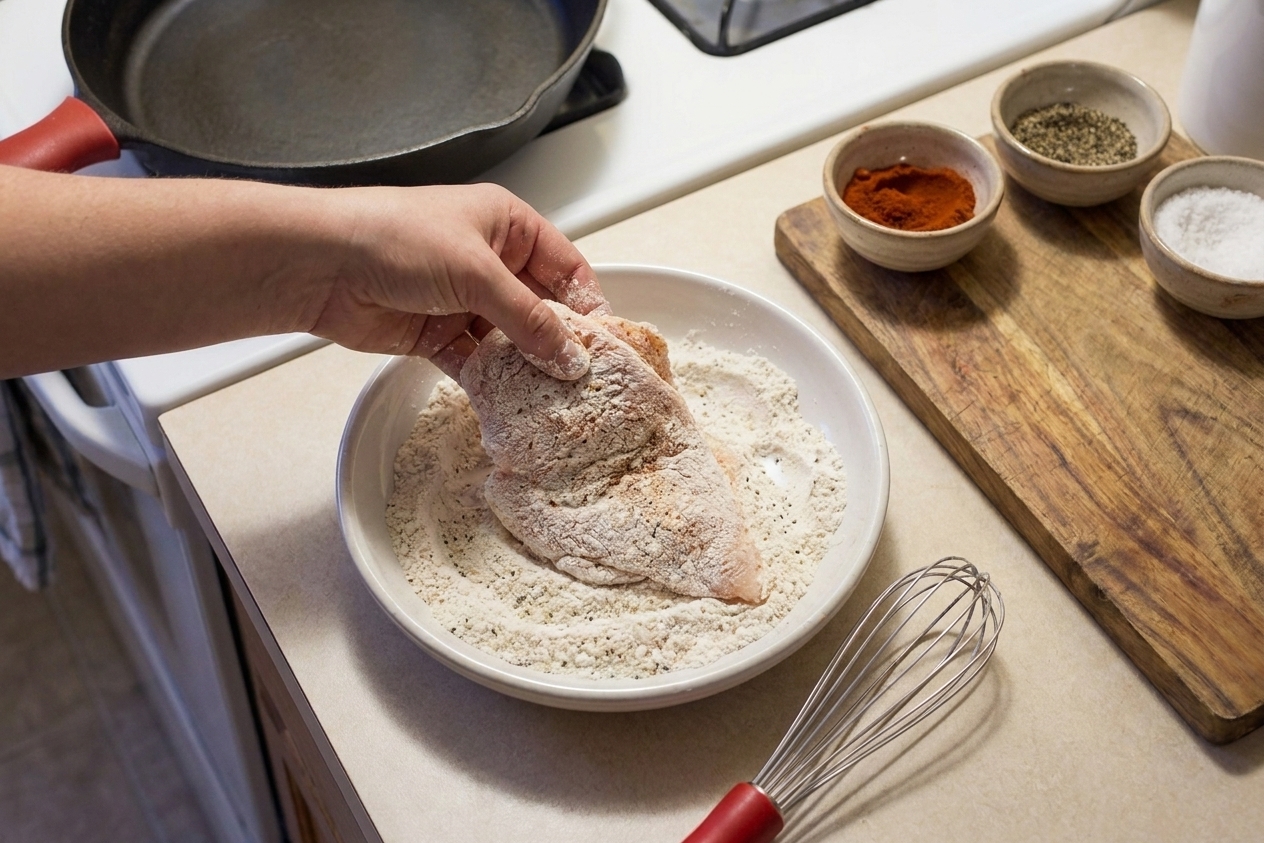
Chicken cutlets coated in seasoned flour on a parchment-lined sheet pan next to small bowls of salt, pepper, and paprika on a kitchen counter

Why It Works

  • Crisp edges without deep frying: A well-heated skillet plus a thin chicken cutlet gets you that golden crust fast.
  • Gravy with real flavor: Pan drippings, a quick roux, and a hit of black pepper make it taste like the countryside in a spoon.
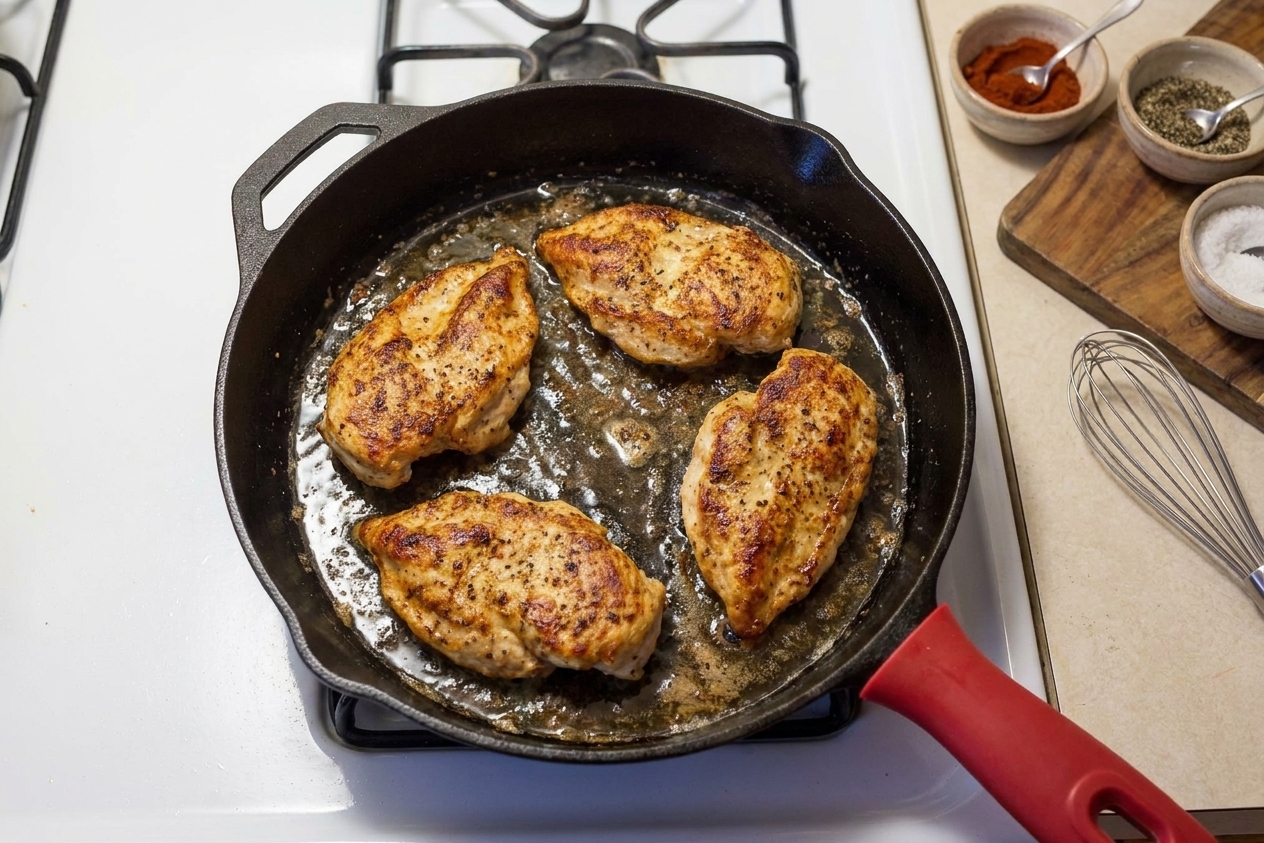
  • One pan, low drama: The chicken cooks, rests, then finishes in the gravy so everything stays juicy.
  • Flexible for what you have: Milk, half-and-half, or a splash of cream all work. Same with broth.

Pairs Well With

Storage Tips

Fridge: Store chicken and gravy together in an airtight container for up to 3 days. The gravy will thicken as it chills. That is normal and honestly kind of nice.

Reheat: Warm in a skillet over medium-low with a splash of broth or milk, stirring until silky again. Microwave works too, but go in short bursts and stir so the gravy stays smooth.

Freezer: You can freeze it for up to 2 months, but cream gravies can separate a bit. Reheating gently and whisking in a spoonful of warm milk can help bring it back together, even if it is not always perfectly like day one.

Common Questions

Can I use chicken thighs instead of breasts?

Yes. Use boneless, skinless thighs and give them a few extra minutes per side. If they are thick, lower the heat and cover the skillet for the last few minutes so they cook through gently without turning the fond into something too dark and bitter.

How do I keep the gravy from getting lumpy?

Whisk the flour into the fat first to make a smooth paste (hello, roux), then add liquid slowly while whisking. If you still get lumps, do not panic. Simmer a minute, whisk like you mean it, and if needed strain it. Country food forgives you.

What if the pan does not have enough fat after searing?

If your skillet looks a little dry after the chicken comes out, add 1 tablespoon butter before you add the flour. You will still get a great gravy, especially if you scraped up those browned bits.

Can I make it gluten-free?

For dredging, use a 1:1 gluten-free flour blend. For gravy, whisk in the same blend to make your roux. Just know results can vary a bit by brand. Some blends thicken fast or brown differently, so keep the heat gentle and whisk often.

How do I know the chicken is done?

The safest way is a thermometer. Aim for 165°F in the thickest part. If you do not have one, slice the thickest piece. It should be opaque with clear juices.

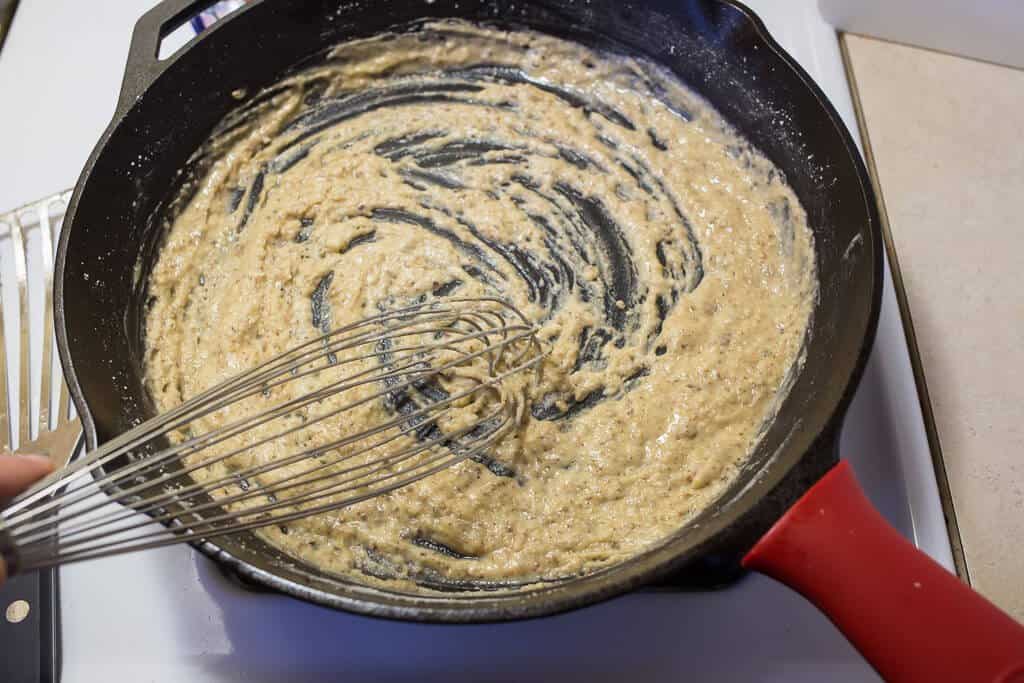
A hand whisking creamy pepper gravy in a cast iron skillet on a stovetop with browned bits dissolving into the sauce

I love big, ambitious kitchen projects, but country living energy is different. It is more like, “You hungry? Cool. Let us make something real.” This chicken and gravy is the meal I reach for when I want comfort without babysitting the stove all night. The first time I nailed the gravy, I did that thing where you taste a spoonful, stop, and just nod at yourself like you are your own proud grandparent. That is the vibe we are chasing here.