What is the difference between chana curry and chana masala?
They are close cousins. Chana masala often uses a chana masala spice blend (and tangy ingredients like amchur, and sometimes anardana) for that classic, punchy tang. Chana curry is a broader umbrella and can be made with a simpler set of spices and a saucier, more customizable gravy. This recipe sits right in the cozy, saucy zone and still tastes unmistakably like chana.
Do I need coconut milk?
Nope. The curry is great without it. Coconut milk makes the sauce rounder and a little sweeter. If you want a non-coconut creamy finish, a spoonful of plain yogurt works too. Add it off heat so it stays smooth and does not curdle.
How do I make it thicker?
Two easy moves: simmer uncovered a few extra minutes, and mash some chickpeas in the pot with the back of a spoon. You can also stir in 1 to 2 teaspoons of chickpea flour (besan) or a little cornstarch slurry, but mashing usually does the job.
How do I make it less spicy?
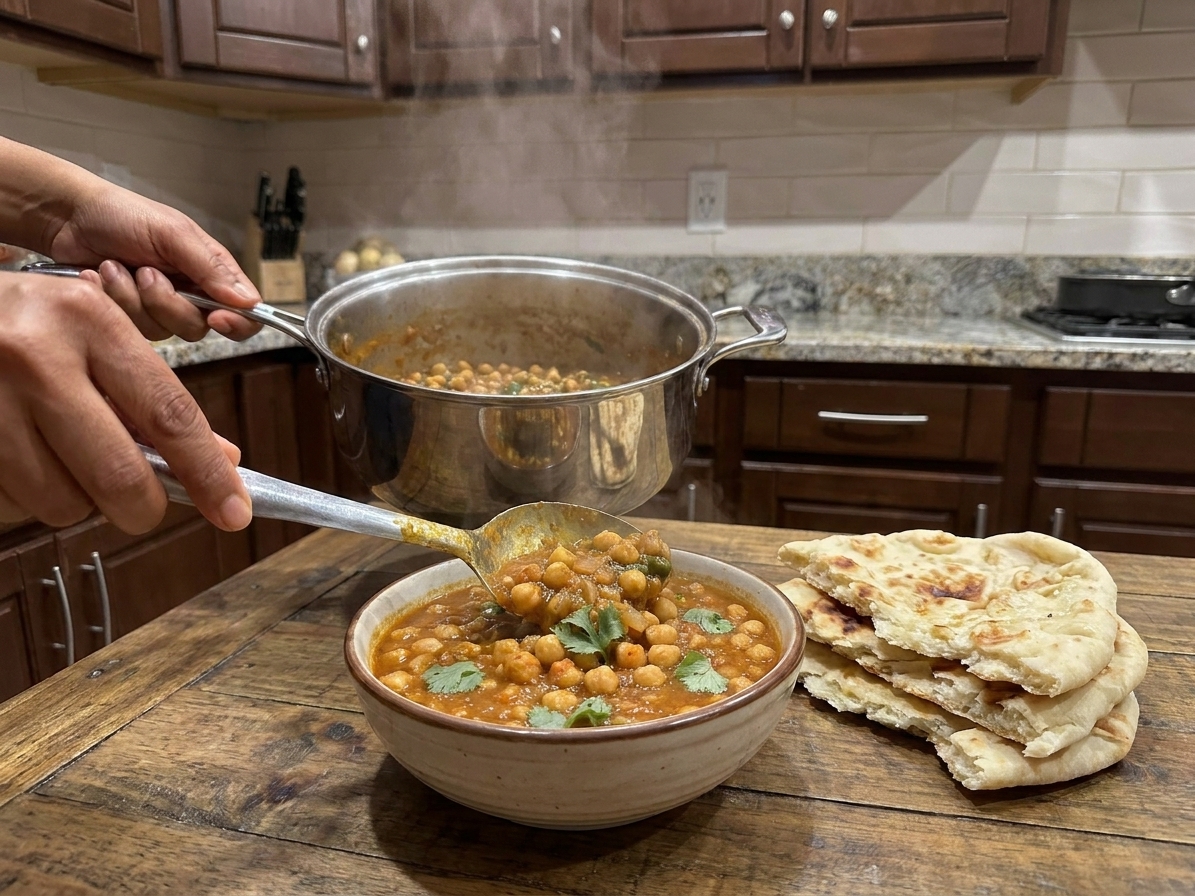
Skip the cayenne and use a mild chili powder. If it's already too spicy, add coconut milk or a dollop of yogurt, and serve with extra rice or naan to mellow it out.
Can I use dried chickpeas?
Yes. Cook them first until tender. You will need about 3 to 3 1/2 cups cooked, drained chickpeas to replace two 15-ounce cans.
Is this recipe vegan and gluten-free?
It's vegan if you use oil and coconut milk (or skip the creamy finish). Just make sure to use sugar or maple syrup instead of honey if you want to keep it fully vegan. It's naturally gluten-free, just double-check any store-bought spice blends.
Any easy add-ins?
Absolutely. Stir in a few handfuls of baby spinach at the end until it wilts, or simmer in diced bell pepper for a little sweetness and bite. Frozen peas work too, just add them in the last few minutes so they stay bright.