Common questions
Is étouffée Cajun or Creole?
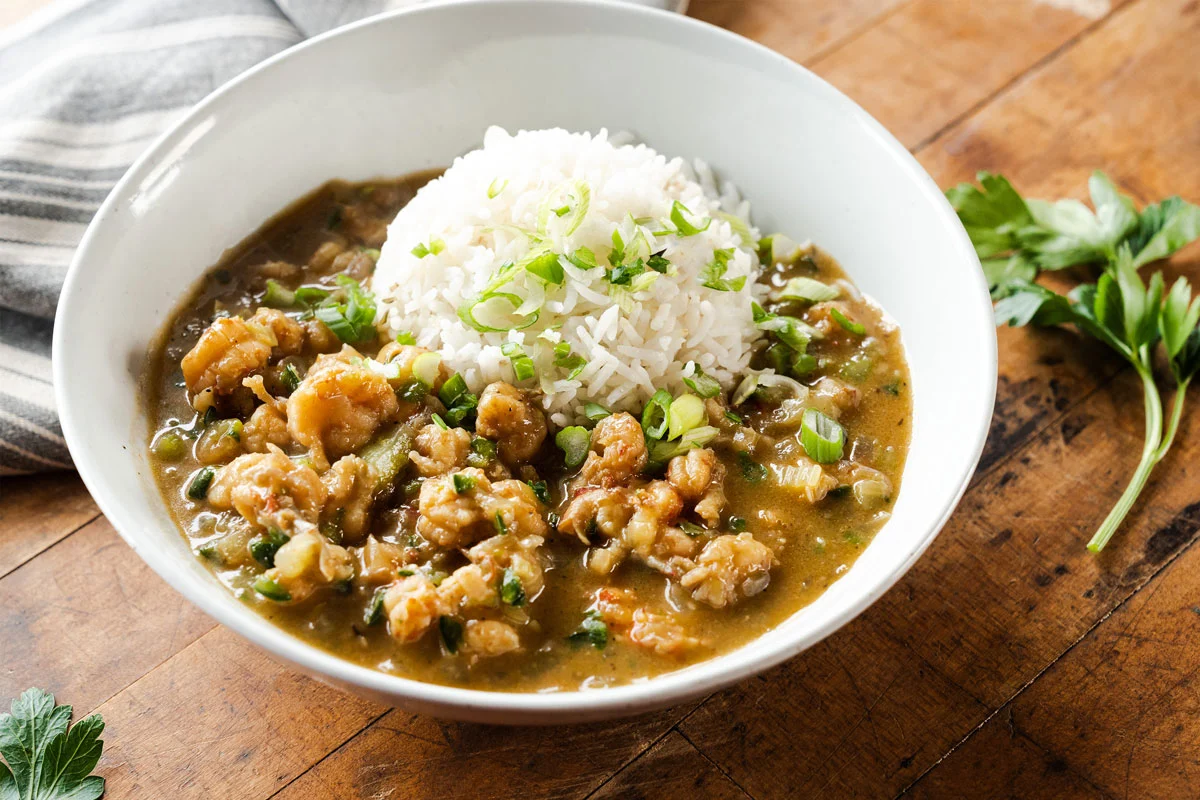
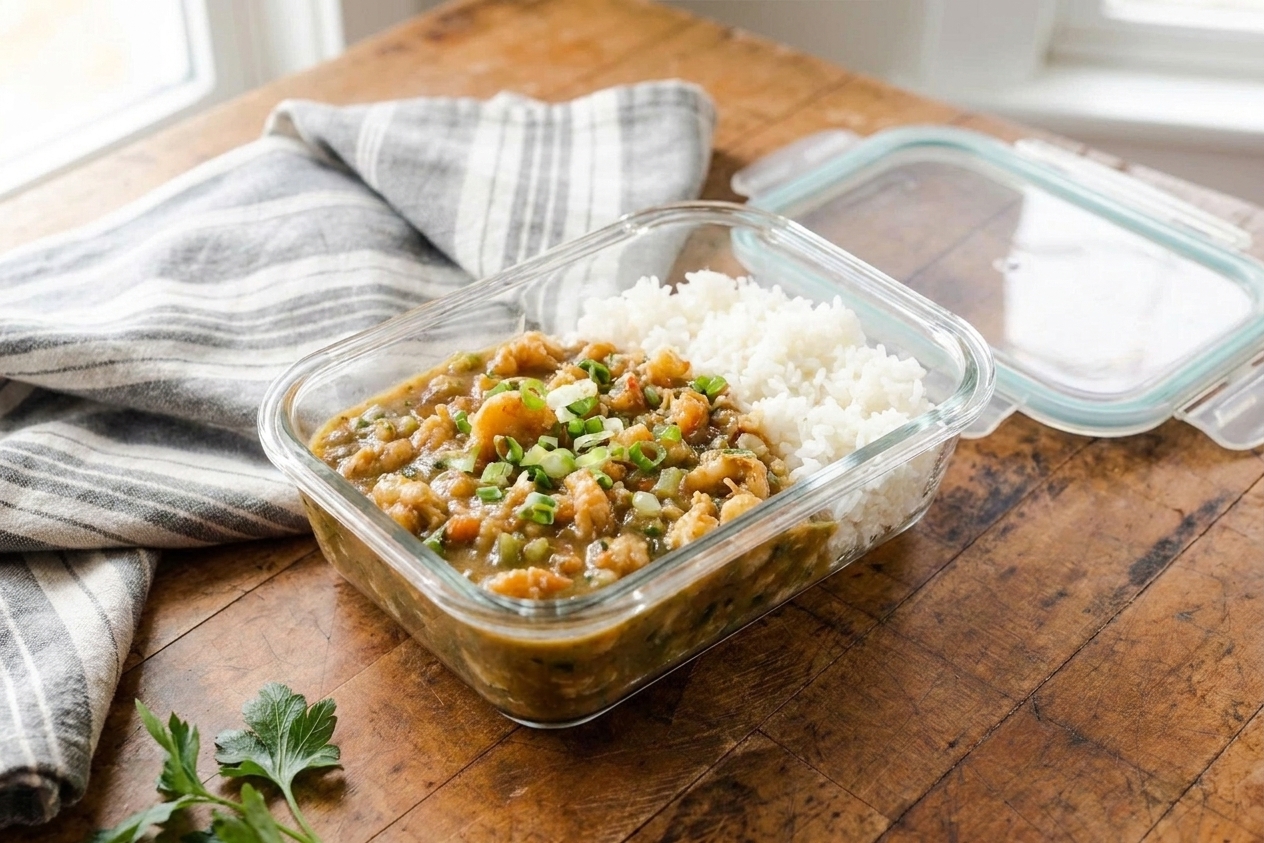
You will find both Cajun and Creole versions, and the ingredients and technique vary by cook and region. Many Cajun-style renditions lean hard on a roux and often skip tomatoes. Tomatoes are more common in some Creole-leaning takes, but it is not a strict rule either way. This recipe is roux-forward, with optional tomato paste if you want a little extra color and a hint of sweetness.
Can I use frozen crawfish tails?
Yes, and most home cooks do. Look for peeled cooked crawfish tails, thaw them in the fridge, drain well, and pat dry so your sauce stays rich instead of watery. If your package includes fat (often labeled crawfish fat), stir a spoonful into the sauce for extra flavor.
Any tips for buying crawfish tails?
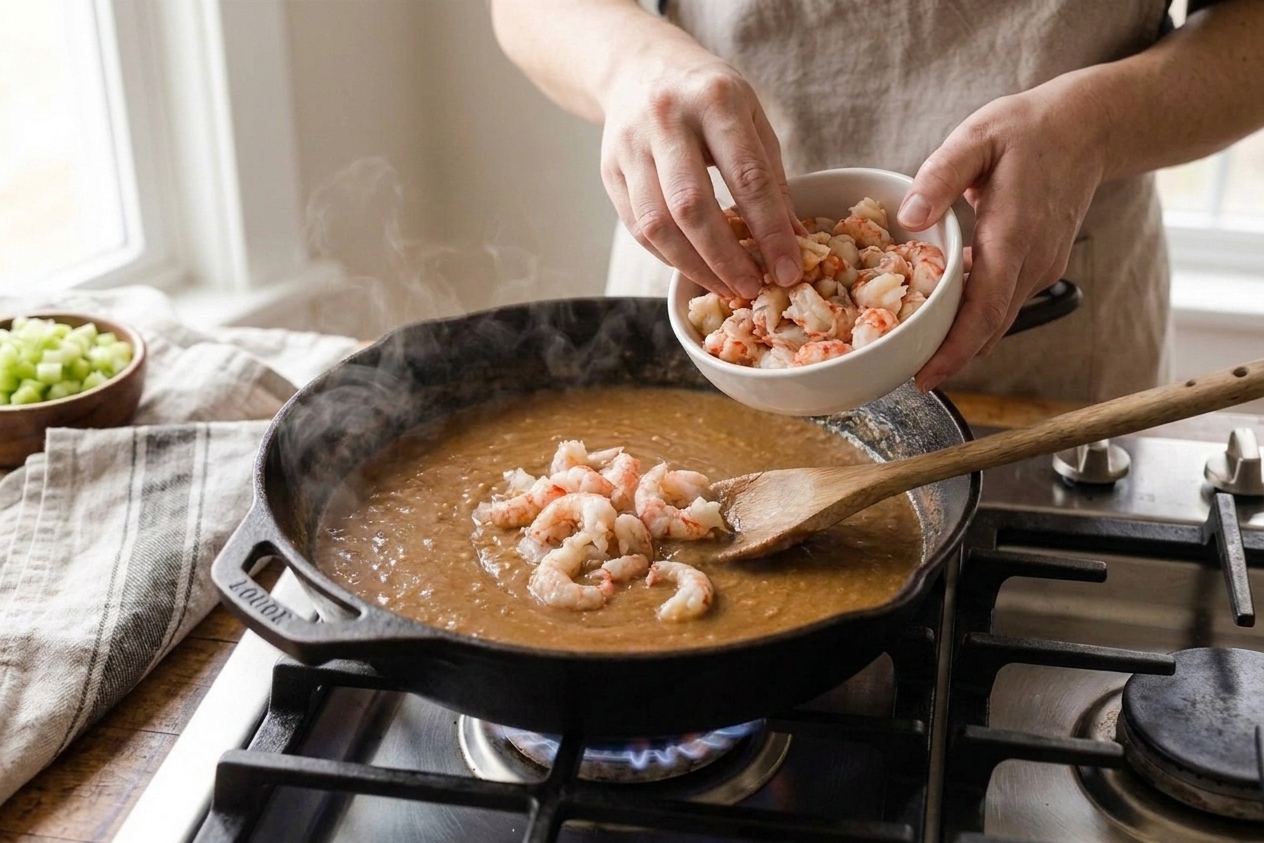
If you have a choice, Louisiana crawfish tends to have the best flavor. Imported tails can be milder and sometimes a bit watery, so draining and drying really matters. Either way, do not overcook them. Warm through is the goal.
My étouffée is too thick. How do I fix it?
Easy win: add stock a splash at a time while simmering until it coats the back of a spoon. Étouffée should be spoonable, not brick-like.
My étouffée is too thin. How do I fix it?
Simmer uncovered for 5 to 10 minutes to reduce. If it still needs help, make a small beurre manié (1 tablespoon softened butter mashed with 1 tablespoon flour) and whisk in a little at a time until it thickens.
Do I have to make a roux?
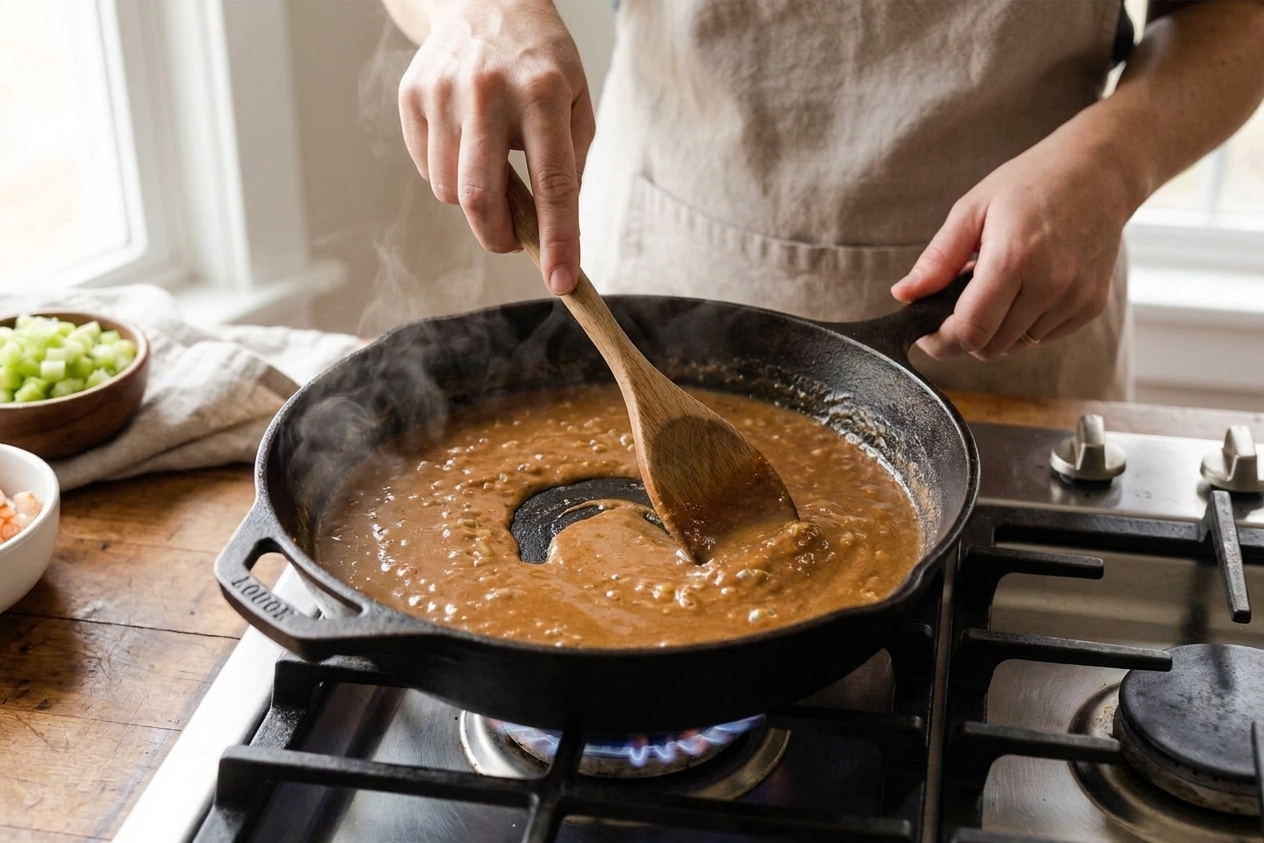
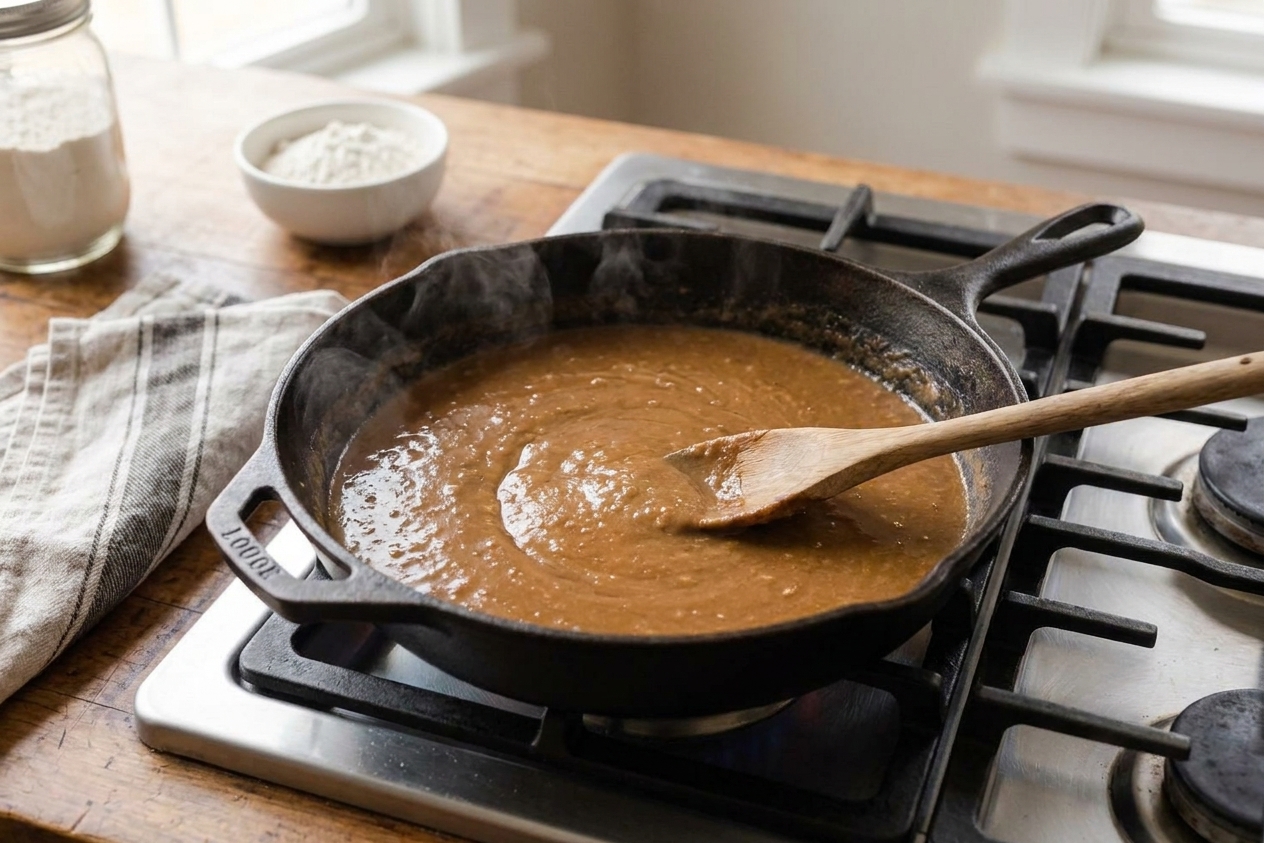
For étouffée, the roux is the backbone. The good news is this one is quick. Medium-brown is the goal, like peanut butter.
My Cajun seasoning is salty. What should I do?
Cajun seasoning varies a lot. If yours is salt-heavy, start with 1 tablespoon Cajun seasoning and hold back on extra salt until the end. Taste after the simmer, then adjust.
What should I serve with it?
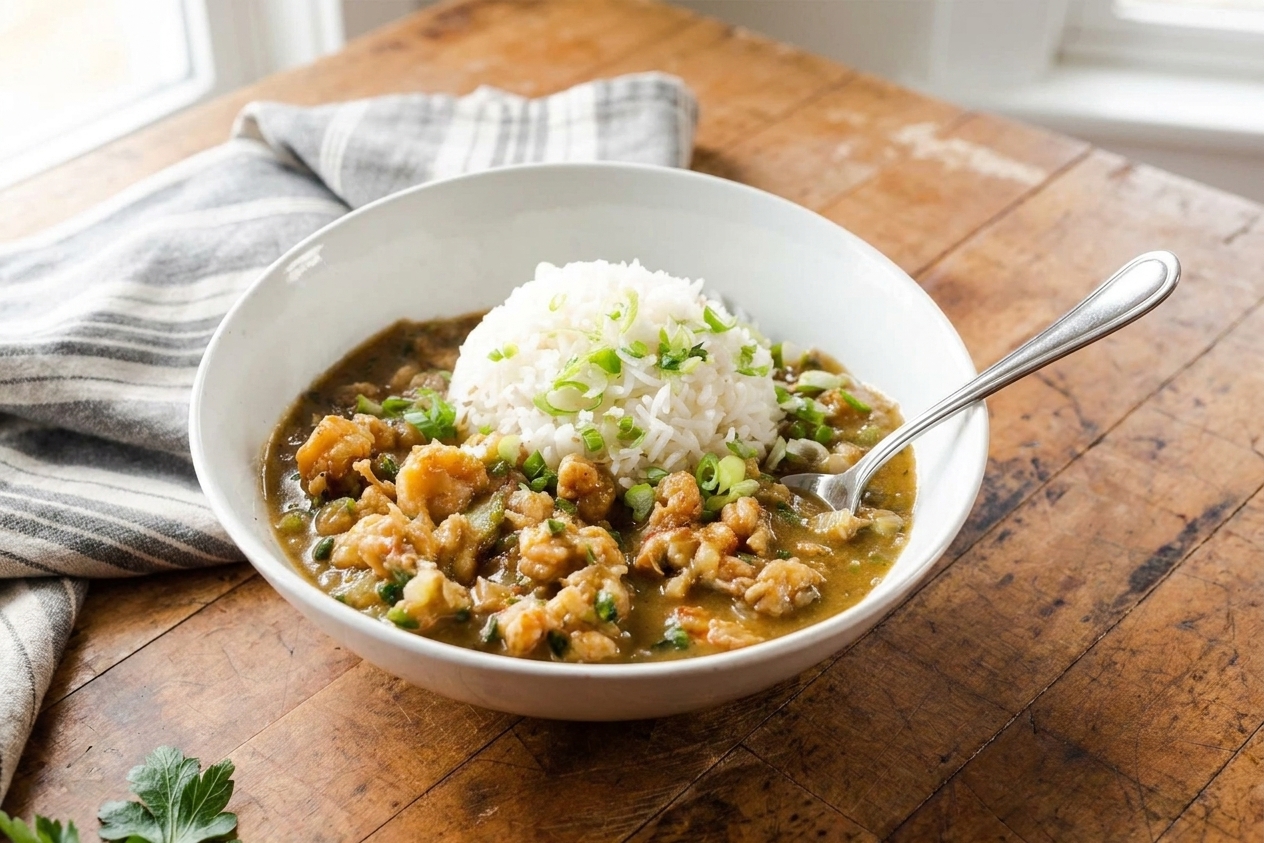
White rice is the classic. I also love it with buttery grits, crusty French bread, or even over mashed potatoes if you are in a cozy-carb mood.