Mom's Best Recipes
Recipe

Creamy Alfredo Sauce

A silky, garlicky Alfredo you can make in 15 minutes with butter, cream, and real Parmesan. No jars, no weird thickeners, just cozy pasta magic.

Author By Matt Campbell
4.9
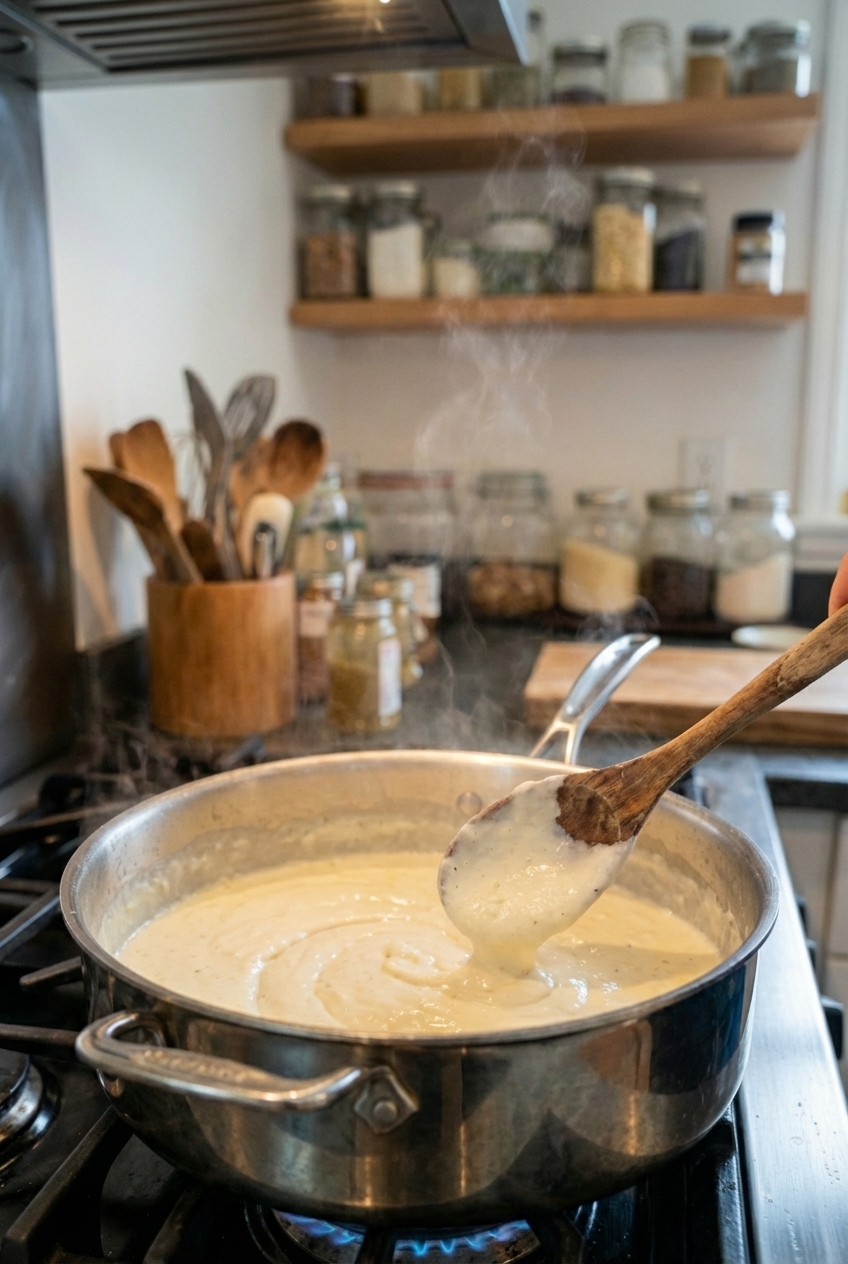
A saucepan of creamy Alfredo sauce being stirred with a wooden spoon on a stovetop

Homemade Alfredo sauce is one of those kitchen flexes that is secretly low effort. It tastes like you spent all day, but it is really just butter, cream, garlic, and a generous snowfall of Parmesan, whisked into something glossy and spoon-coating.

This is the version I make when I want dinner to feel like a warm hug, but I also want it fast. It is rich without being cloying, packed with savory cheese, and it clings to pasta the way a good sauce should. Bonus: once you learn the simple rhythm of gentle heat and steady whisking, you can make it on autopilot for weeknights and still feel a little fancy.

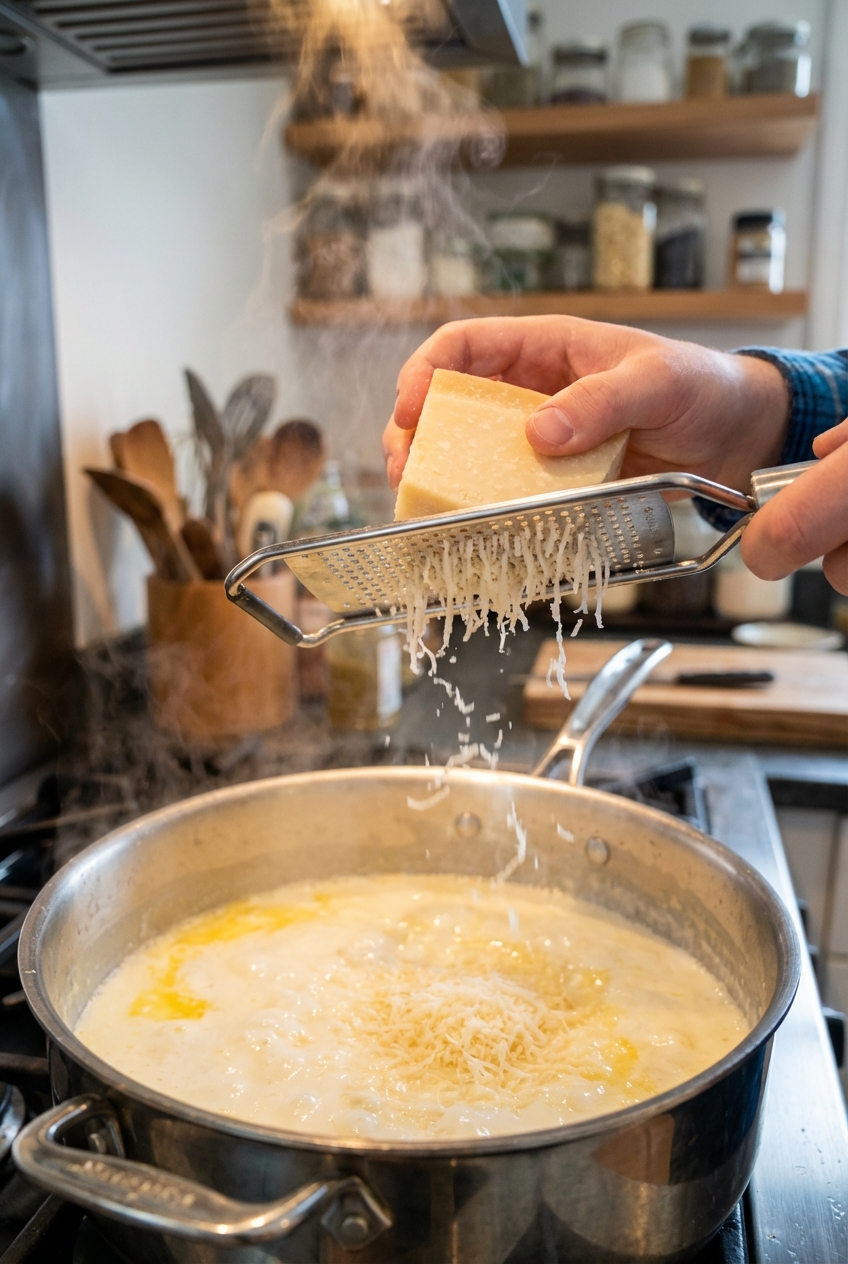
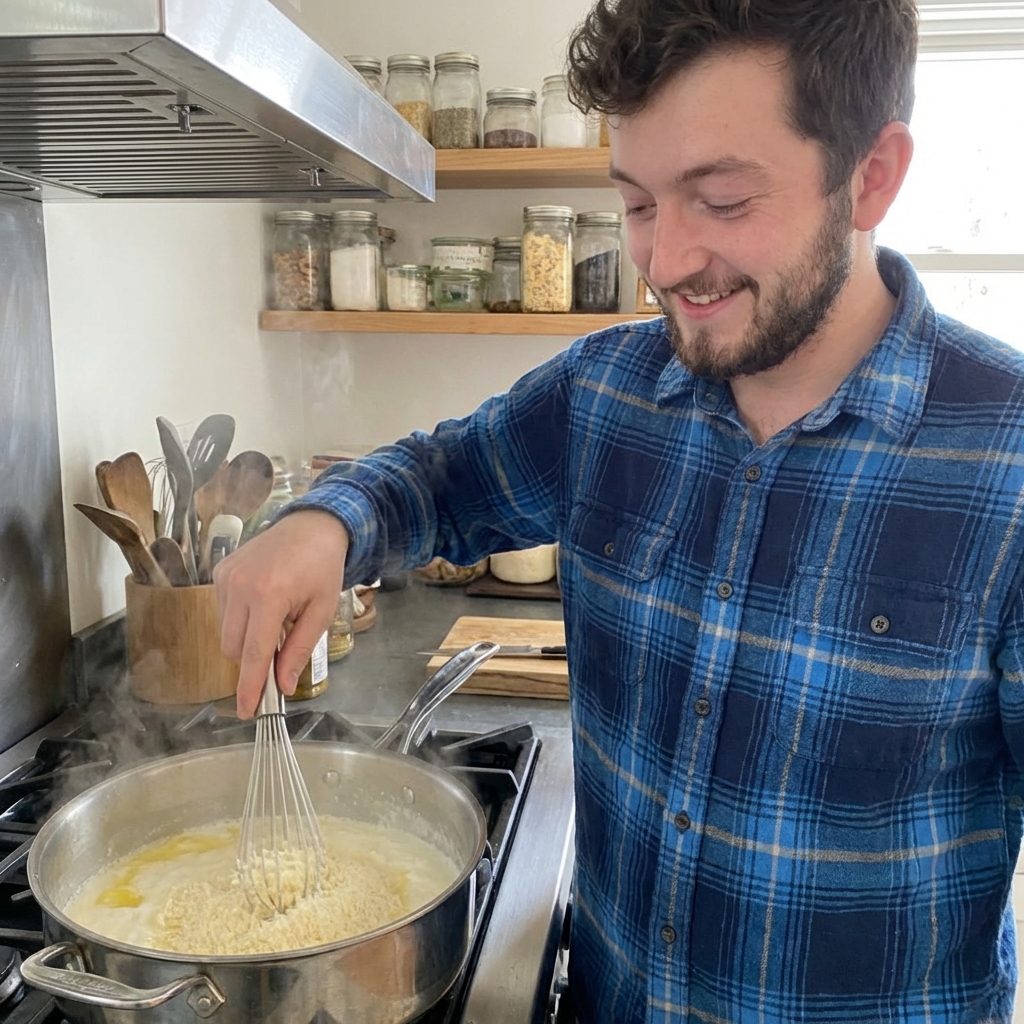
Fresh Parmesan being grated over a pot of warm cream and butter

Why It Works

  • Restaurant-level creaminess, no flour needed: Gentle simmering reduces the cream to thicken naturally, and it gets even silkier after a brief cool-down and a toss with pasta.
  • Big flavor from simple ingredients: Butter, garlic, and real Parmesan do the heavy lifting, so you do not need a long list.
  • Clings to pasta instead of sliding off: Finishing with a splash of starchy pasta water helps the sauce emulsify and grab noodles.
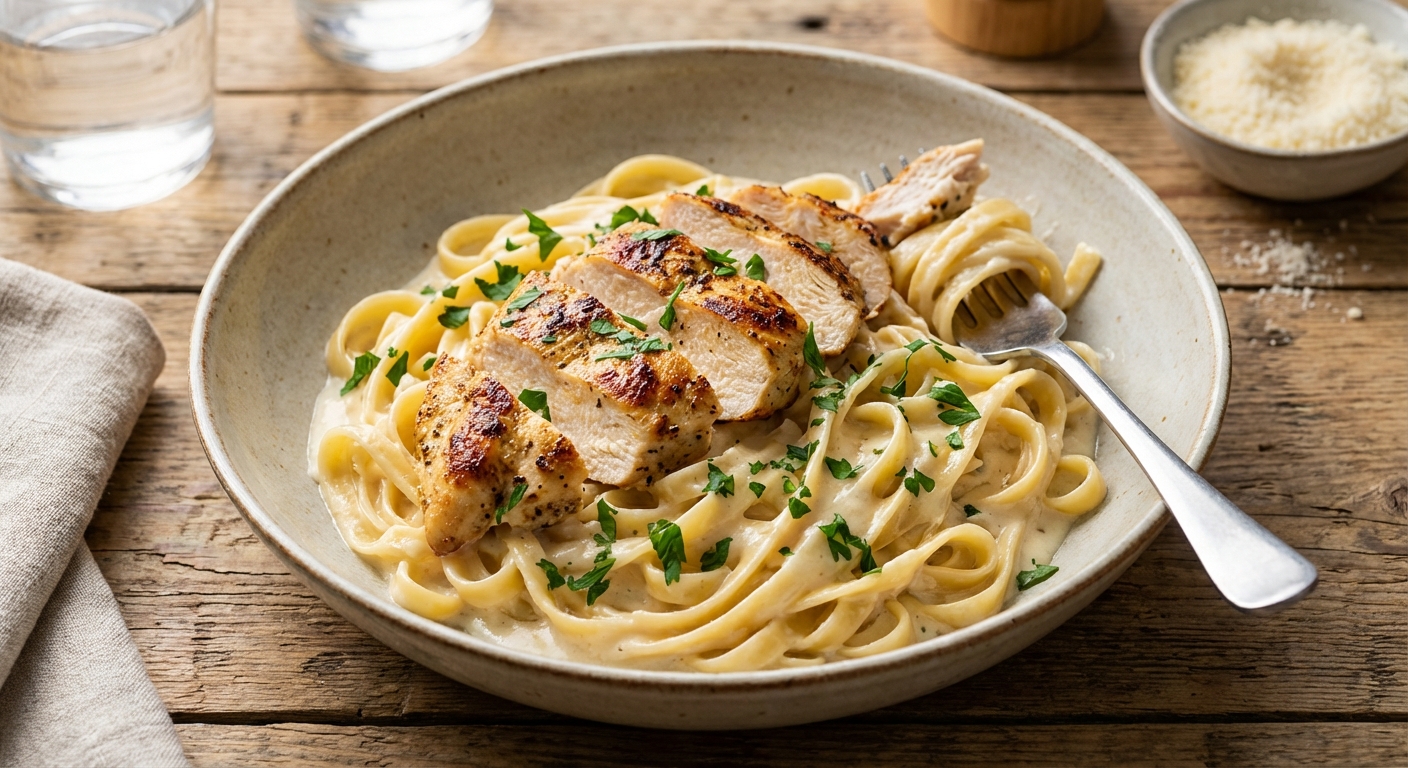
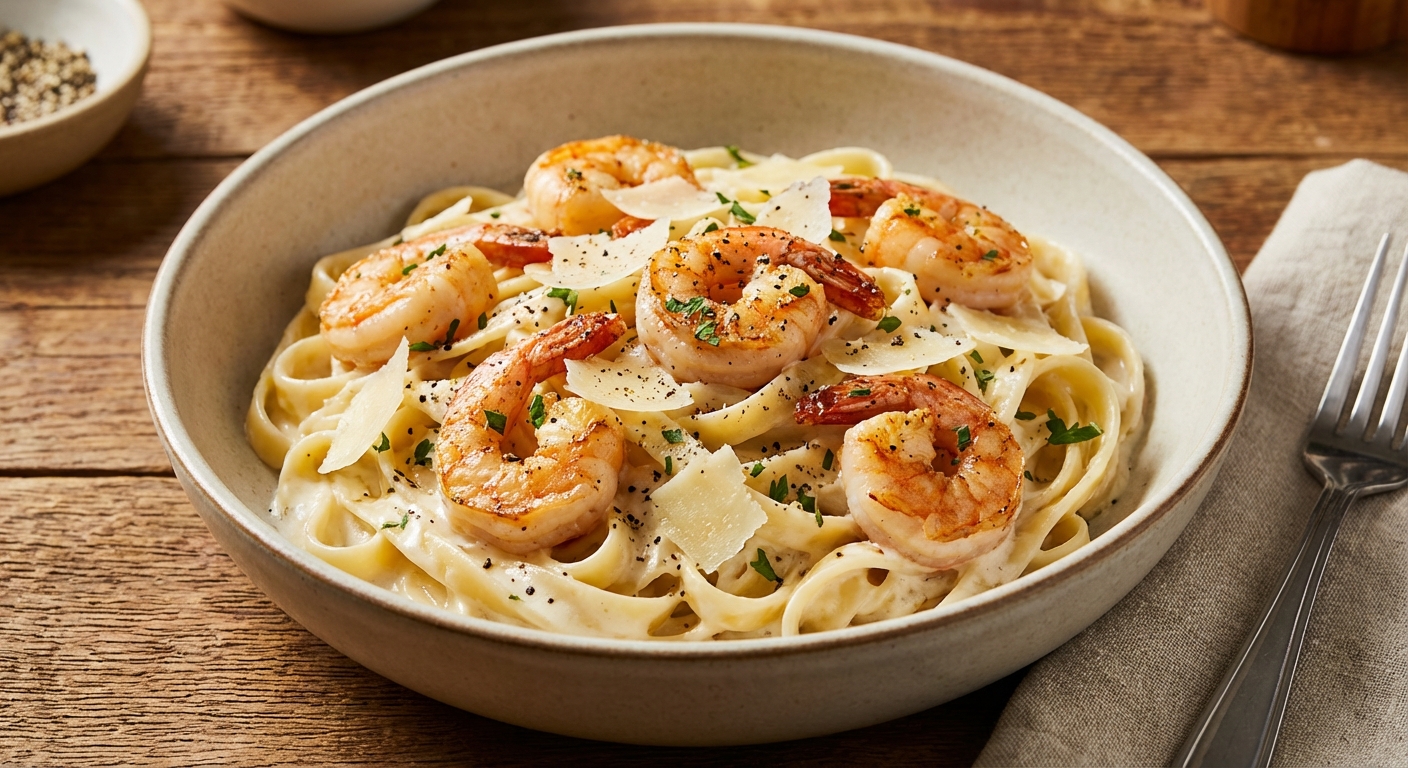
  • Easy to customize: Add chicken, shrimp, broccoli, mushrooms, or lemon zest without breaking the sauce.

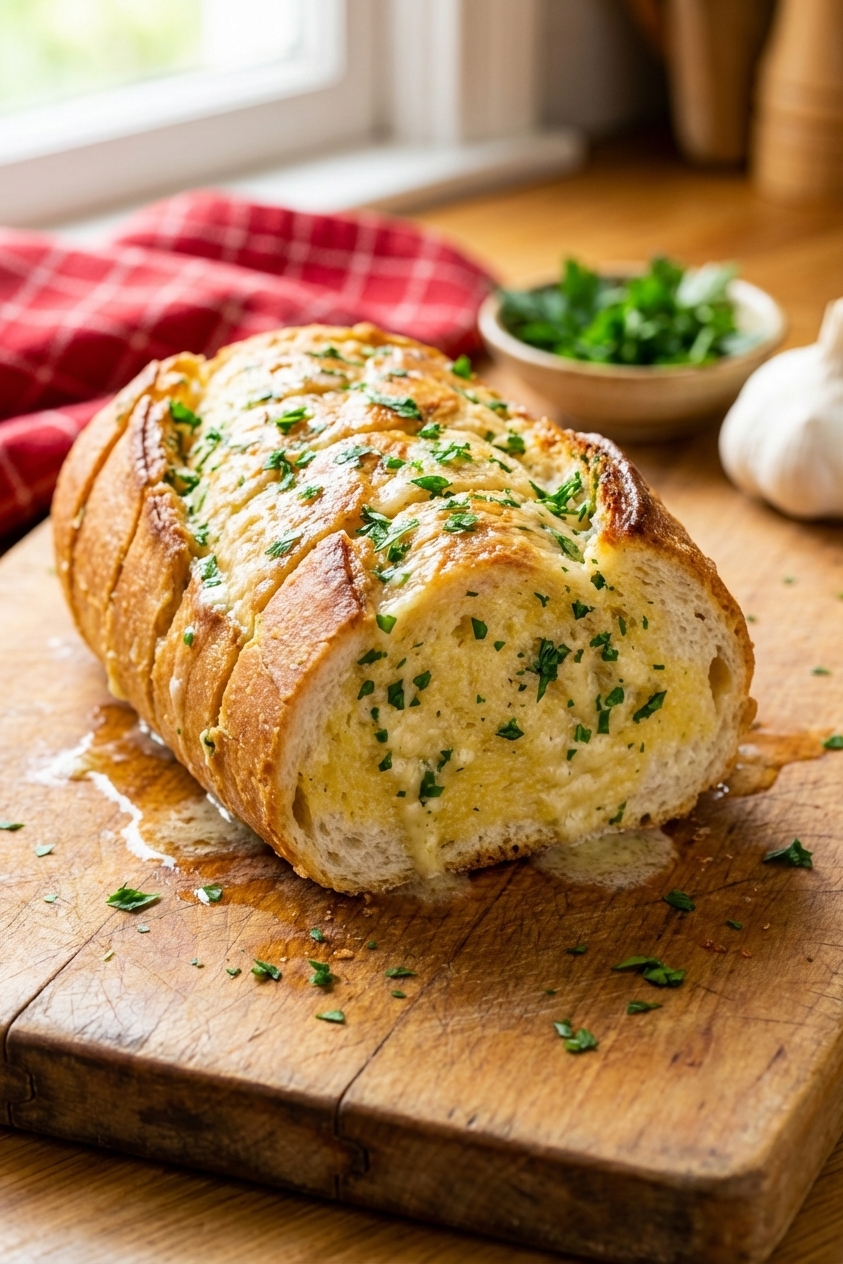
Pairs Well With

Storage Tips

Alfredo is best fresh, but leftovers can still be very good if you reheat them gently.

Refrigerator

  • Cool sauce quickly, then store in an airtight container for up to 3 to 4 days.

Reheating (the no-drama method)

  • Warm in a small saucepan over low heat.
  • Whisk in a splash of milk, cream, or water (start with 1 tablespoon at a time) until it turns silky again.
  • If you have it, add a spoonful of pasta water. It helps bring the sauce back together.

Freezing

I do not recommend freezing Alfredo. Cream-and-cheese sauces can separate and turn grainy after thawing. If you need a make-ahead option, make it earlier in the day and rewarm gently with a little extra cream.

Common Questions

Why did my Alfredo sauce turn grainy?

Usually it is one of two things: the heat was too high, or the Parmesan was added too fast. Keep the sauce at a gentle simmer, then take it off the heat (or keep it on the absolute lowest setting) before adding cheese. Add the Parmesan gradually while whisking. Also, finely grated Parmesan melts more smoothly than shredded.

How do I thicken Alfredo sauce?

Let it simmer for a few minutes to reduce, then add Parmesan. It also thickens a bit as it cools for a minute, and it tightens up even more once it hits hot pasta. If it still feels thin, simmer 1 to 2 minutes longer. If you are tossing with pasta, a little starchy pasta water helps it emulsify and cling better.

How do I fix a sauce that is too thick?

Whisk in warm milk, cream, or pasta water a splash at a time until it loosens up. Do not crank the heat to force it; that is how sauces split.

Can I use pre-grated Parmesan?

You can, but the melt is less smooth because many bags contain anti-caking agents. For the silkiest Alfredo, buy a wedge (Parmigiano-Reggiano if you can) and grate it finely. Skip the shelf-stable shaker cheese here. It will not melt the same.

Is Alfredo sauce the same as a roux-based white sauce?

No. The original Roman-style fettuccine Alfredo is essentially butter, Parmigiano-Reggiano, and pasta water. This is the American-style version that uses cream (and often garlic) for extra richness, but it still thickens by reduction and emulsification, not flour.

What pasta goes best with Alfredo?

Fettuccine is the classic, but this sauce loves anything with surface area. Try linguine, tagliatelle, penne, or even cheese tortellini.

The first time I made Alfredo from scratch, I was expecting a whole production. Turns out, the real skill is just not rushing. Low heat, steady whisk, and tasting like you mean it. Now it is my go-to when I want to feed people something that feels special without pulling every spice jar off the shelf. Also, I have learned the hard way that “just a little more cheese” is never the problem. The problem is adding it while the pan is screaming hot. Gentle heat, calm vibes, and a mountain of Parmesan. That is the deal.