
Mom's Best Recipes
Recipe

Creamy Crab Bisque

Rich, silky crab bisque with a tomato-kissed base, a little sherry, and plenty of sweet crab in every spoonful.

Author By Matt Campbell
4.8
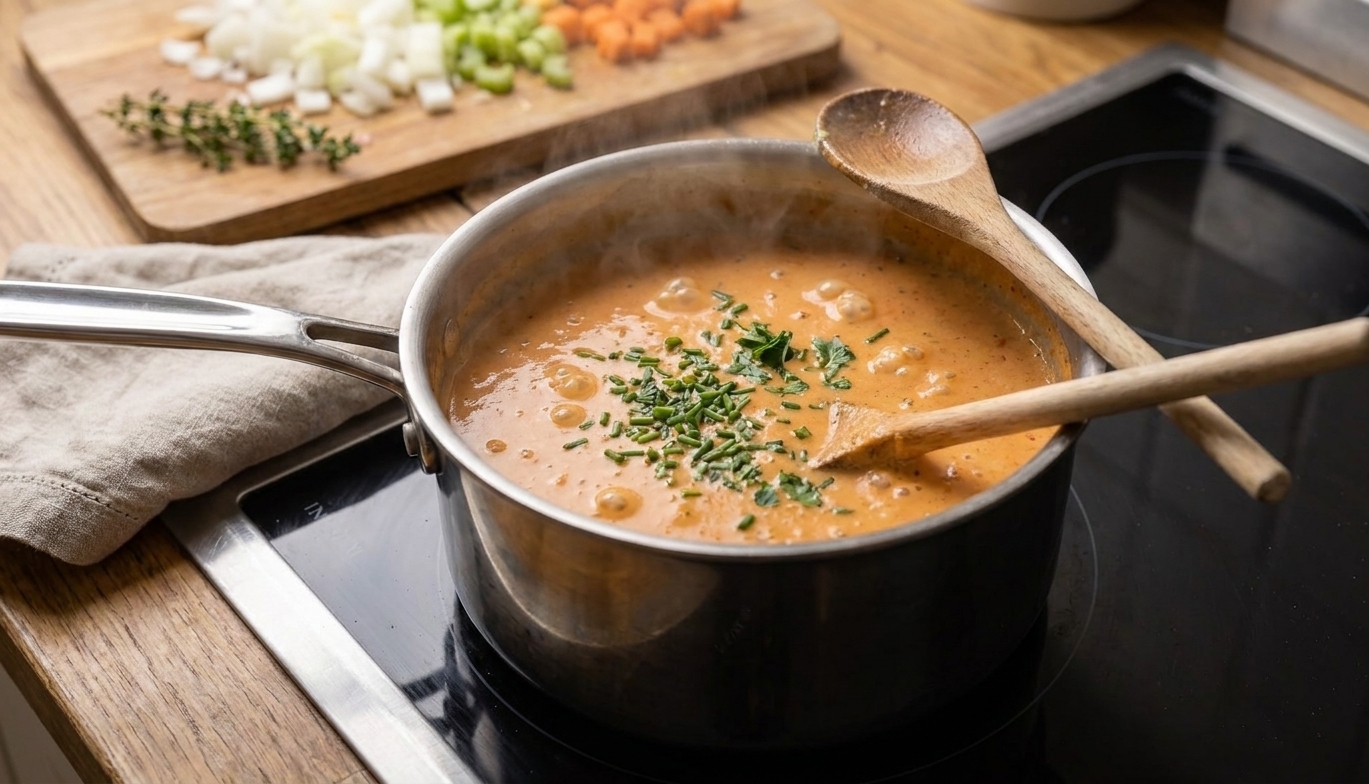
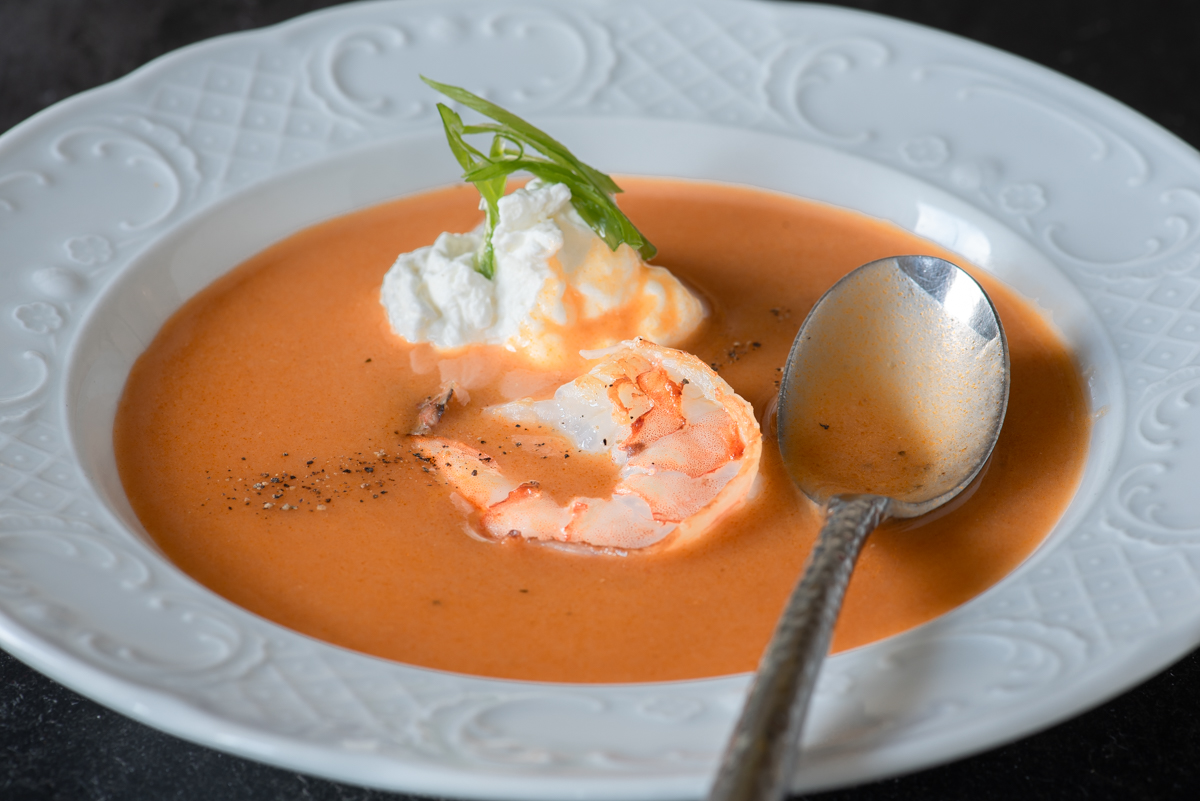
A shallow bowl of creamy crab bisque topped with a small mound of crab meat and chopped chives on a wooden table with a spoon beside it, warm natural kitchen lighting

Crab bisque is one of those meals that feels like you booked a white-tablecloth night out, except you are in socks, listening to whatever playlist makes you chop faster. It is rich, a little fancy, and deeply comforting. Also, it is not hard, as long as you treat it like a sauce first and a soup second.

This version keeps the ingredient list realistic, leans on a quick seafood stock boost, and uses a simple blending step to get that classic bisque texture without turning your kitchen into a culinary school final exam. If you have good crab, you are already most of the way there.

All the crab bisque ingredients arranged on a clean kitchen counter including crab meat, onion, celery, garlic, tomato paste, cream, broth, and herbs in small bowls

Why It Works

  • Big crab flavor without fuss: A little tomato paste, seafood stock, and a splash of sherry make the base taste like it simmered all day.
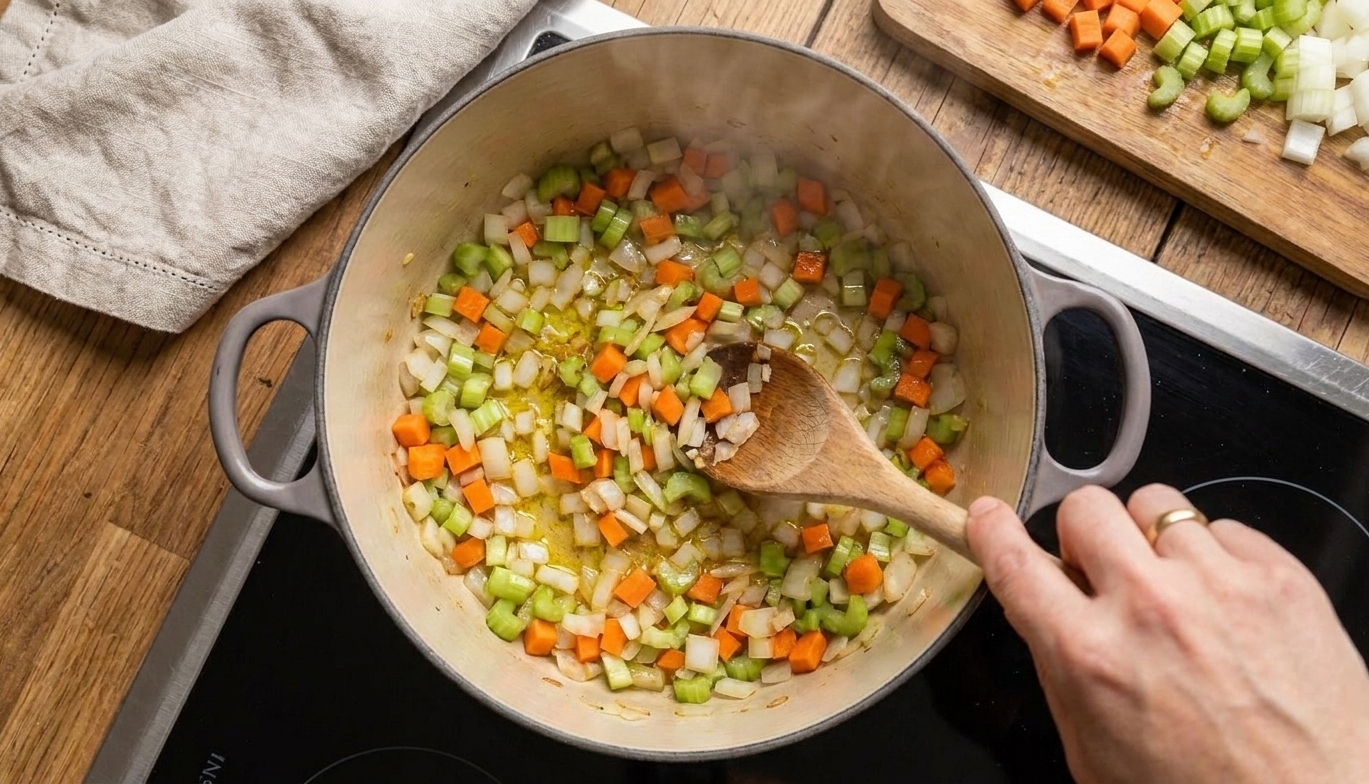
  • Silky texture: Blending the cooked veggies into the broth gives you that classic bisque body without needing a long roux-heavy process.
  • Crab stays sweet and tender: Most of the crab goes in at the end so it warms through gently.
  • Flexible finish: You can go extra creamy, keep it lighter, or add a pinch of cayenne if you like a gentle kick.

Pairs Well With

Storage Tips

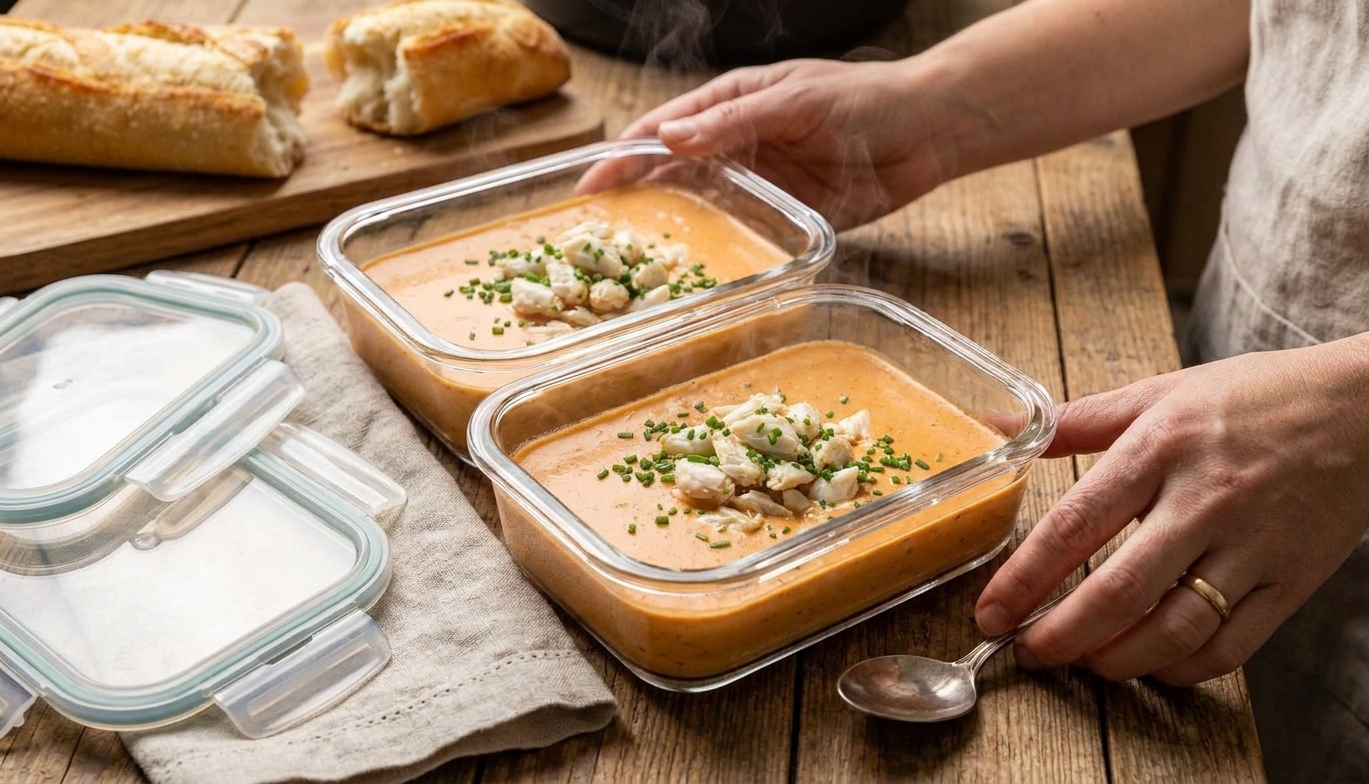
Refrigerator: Cool bisque quickly, then store in an airtight container. For best quality, enjoy within 1 to 2 days. It can keep up to 3 days, but seafood soups are happiest when eaten sooner rather than later.

Reheat: Warm gently over low heat, stirring often. Do not boil it. If it thickened in the fridge, loosen with a splash of stock or water.

Freezing: Cream-based soups can separate after freezing. If you want to freeze it anyway, freeze the bisque before adding cream, then add cream after thawing and reheating. Freeze up to 2 months.

Two glass meal prep containers filled with crab bisque cooling on a kitchen counter with lids nearby

Common Questions

What is the difference between crab bisque and crab soup?

In modern home cooking, bisque is often blended for a smooth, velvety texture and commonly finished with cream. Crab soup is usually brothier and chunkier, with ingredients like potatoes or vegetables left more intact. (Classic French-style bisques are traditionally shellfish-based and can be thickened in other ways too.)

Do I have to use sherry?

No, but it adds that classic restaurant aroma. You can swap in dry white wine, or skip it and brighten the soup at the end with a squeeze of lemon.

Can I make this with imitation crab?

You can, but the flavor is sweeter and less briny. If you do, use a good seafood stock and consider adding a tiny pinch of Old Bay plus lemon to balance it.

How do I keep the bisque from getting grainy?

Blend thoroughly, then simmer instead of boiling after adding cream. If your blender is not super powerful, strain the blended base through a fine mesh sieve for a perfectly smooth finish.

What crab is best?

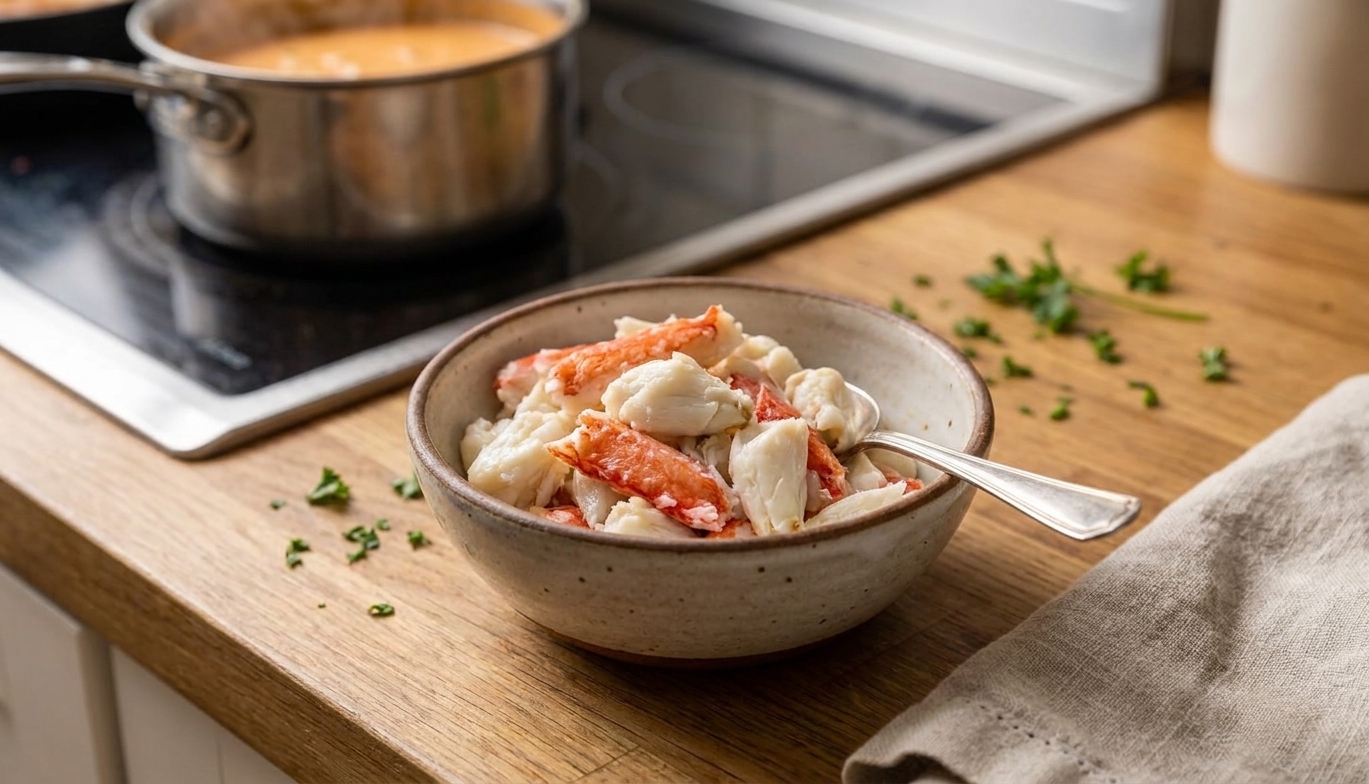
Fresh lump or claw meat is great. Lump gives you those dreamy bites, claw brings deeper crab flavor. A mix is honestly ideal. The recipe assumes picked crab meat by weight, not whole crabs in shells.

I used to think bisque was one of those “leave it to the pros” dishes. Then I realized most of the magic is just: build a seriously good base, blend it smooth, and treat the crab gently. The first time I made crab bisque at home, I went in way too confident and boiled it after adding cream. It separated and looked like a science project.

Now I keep it calm. Low heat, lots of tasting, and I save the crab for the end like it is the guest of honor. It turns out cozy, silky, and honestly kind of dramatic in the best way.