Mom's Best Recipes
Recipe

Creamy Dutch Oven Chicken and Noodles

A one-pot, homestyle dinner with tender chicken, cozy egg noodles, and a creamy broth that tastes like you worked harder than you did.

Author By Matt Campbell
4.8
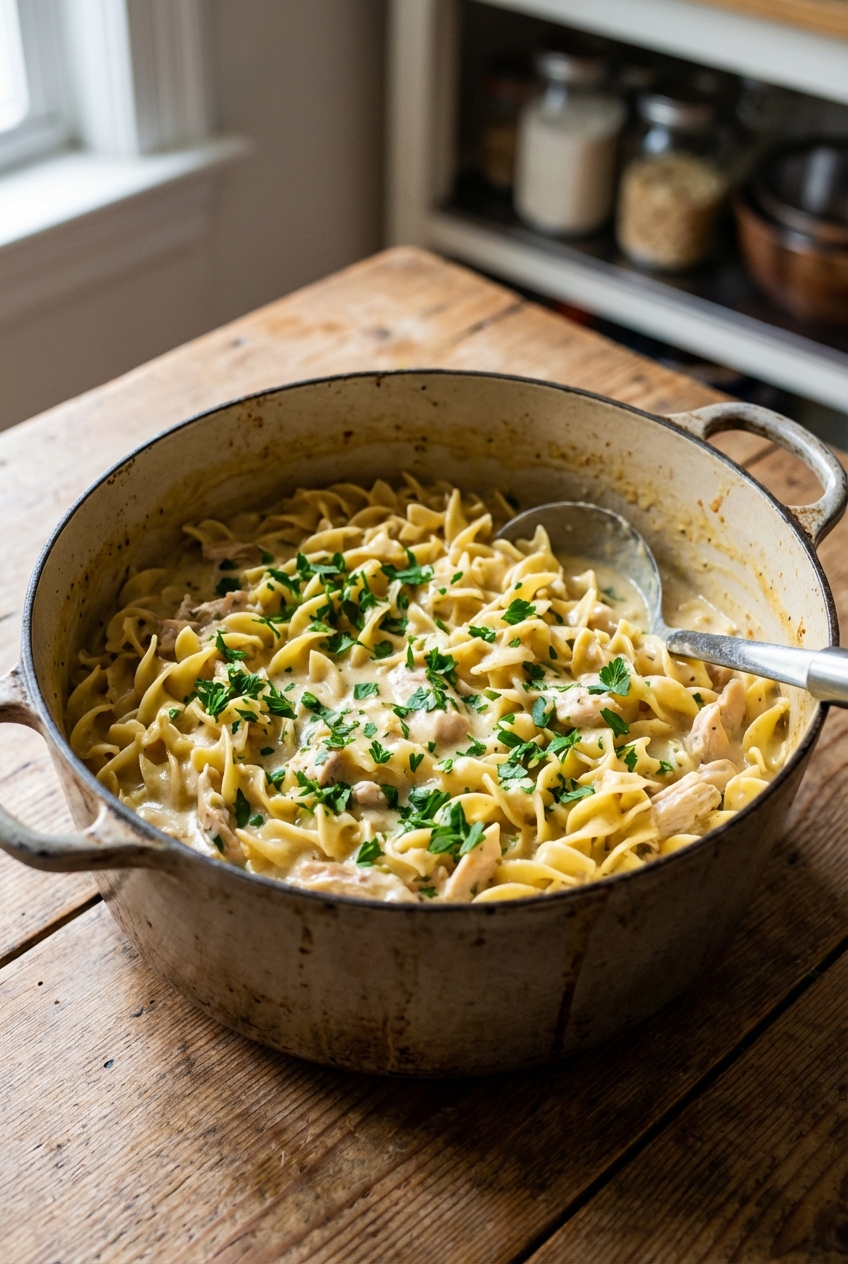
A real photograph of a Dutch oven filled with creamy chicken and egg noodles, topped with chopped parsley, sitting on a wooden table with a ladle nearby

Some dinners are loud. This one is quiet in the best way. It is a big Dutch oven, a creamy broth, noodles that drink up flavor, and chicken that stays tender because we are not trying to bully it with high heat.

This is the kind of homestyle comfort that feels like a reset button. It is weeknight-friendly, uses normal grocery store ingredients, and makes your kitchen smell like you have your life together. The secret is building a quick flavor base with onion, garlic, and herbs, then thickening just enough to turn the broth into that silky, spoon-coating situation we all want.
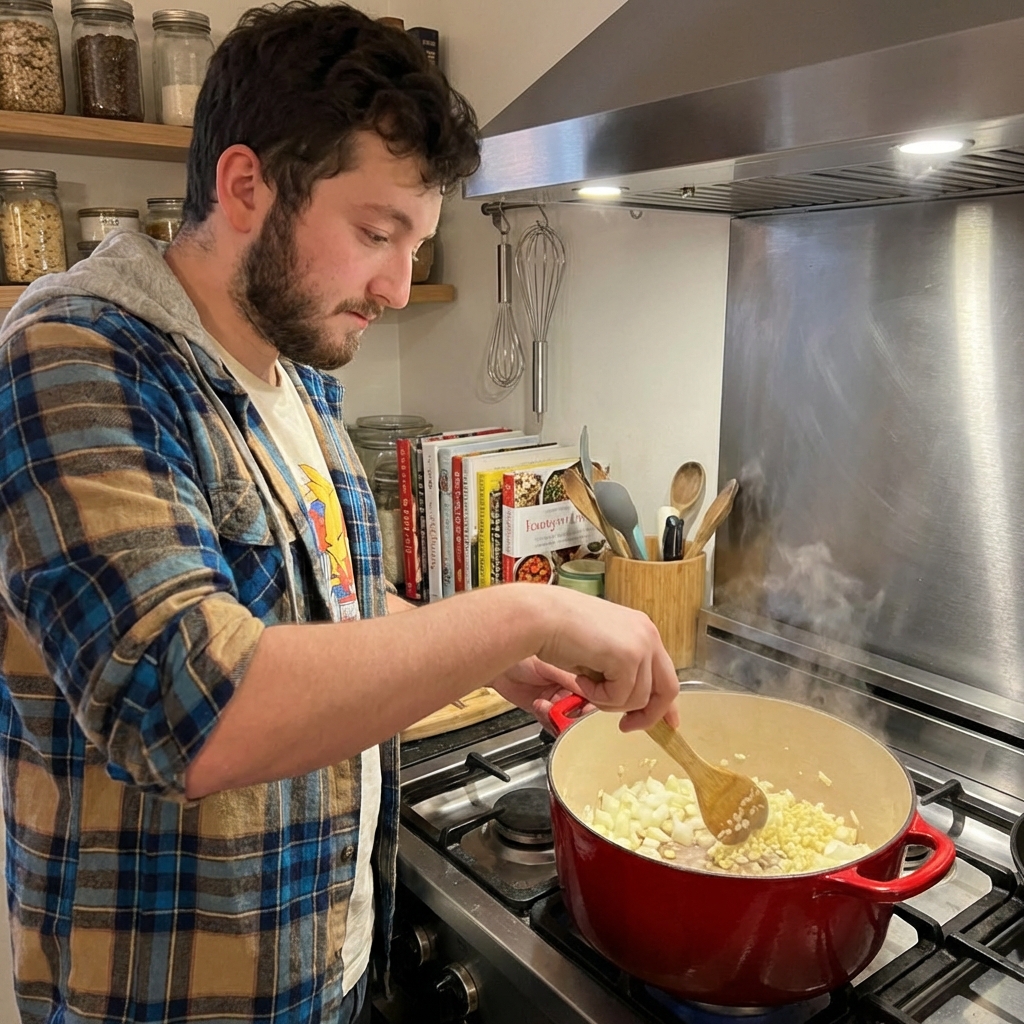
A real photograph of diced onions and minced garlic sautéing in a Dutch oven with a wooden spoon

Why It Works

  • One pot, real payoff: The Dutch oven goes from sauté to simmer to noodles with minimal dishes.
  • Creamy, not heavy: A light roux thickens the broth, then milk and a little sour cream finish it smooth and tangy.
  • Tender chicken every time: Gentle simmering keeps it juicy. Cook to 165°F/74°C, then shred it back in so every bite is seasoned.
  • Optional golden top: If you want a little crunch, broil buttered breadcrumbs for 2 to 3 minutes and call it cozy with a crispy edge.

Pairs Well With

Storage Tips

Refrigerator: Cool completely, then store in an airtight container for up to 4 days.

Freezer: Creamy noodle soups can get a little soft after freezing, but it still works. Freeze up to 2 months. For best texture, freeze before adding noodles (and ideally before adding sour cream), then cook fresh noodles and finish with dairy when reheating. Dairy can separate slightly after thawing, so reheat gently and stir well.

Reheating: Warm gently on the stove over medium-low, stirring often. Add a splash of chicken broth or milk as needed because noodles keep soaking up liquid.

Pro tip: If the broth looks curdled or separated, do not panic. Lower the heat, add a little broth or milk at a time, and stir until it smooths back out.

Common Questions

Can I use rotisserie chicken?

Yes. Skip the simmering step for cooking the chicken. Start by making the broth base, then stir in shredded rotisserie chicken after the noodles are tender, right before the sour cream goes in.

Why did my sauce turn grainy?

Usually it is heat. Sour cream can curdle if it boils. Keep the pot at a gentle simmer and stir sour cream in off heat (or on very low heat) once it has stopped bubbling.

Can I use heavy cream instead of milk?

Absolutely. Swap the milk for the same amount of heavy cream for an even richer finish. I would still keep the sour cream for that little tang.

What noodles work best?

Wide egg noodles are the classic. If you use pasta like rotini or shells, you may need a bit more broth and a few extra minutes of simmering.

How do I keep noodles from getting mushy?

Cook just until barely tender, then turn off the heat. The residual heat finishes the job. If you are meal prepping, cook noodles separately and add to bowls as you reheat.

Can I freeze it?

Yes, with a small heads up. Dairy can separate a little after thawing. For best texture, freeze the soup before adding noodles and sour cream, then add fresh noodles and finish with dairy when reheating. Reheat gently and stir well.

I love restaurant food, obviously, but I also love the meals that feel like someone handed you a blanket. This is one of those. I started making it when I wanted chicken noodle soup comfort but with a little more payoff, like a bowl that makes you stop mid-bite and go, okay, wow. The Dutch oven does what it always does best: it turns basic ingredients into something that tastes like it has been simmering all day, even when it has not.