
Mom's Best Recipes
Recipe

Creamy Greek Yogurt Mayo

A bright, homemade mayo you can tweak in minutes, with a lighter feel, clean ingredients, and big flavor for sandwiches, salads, and weeknight bowls.

Author By Matt Campbell
4.8
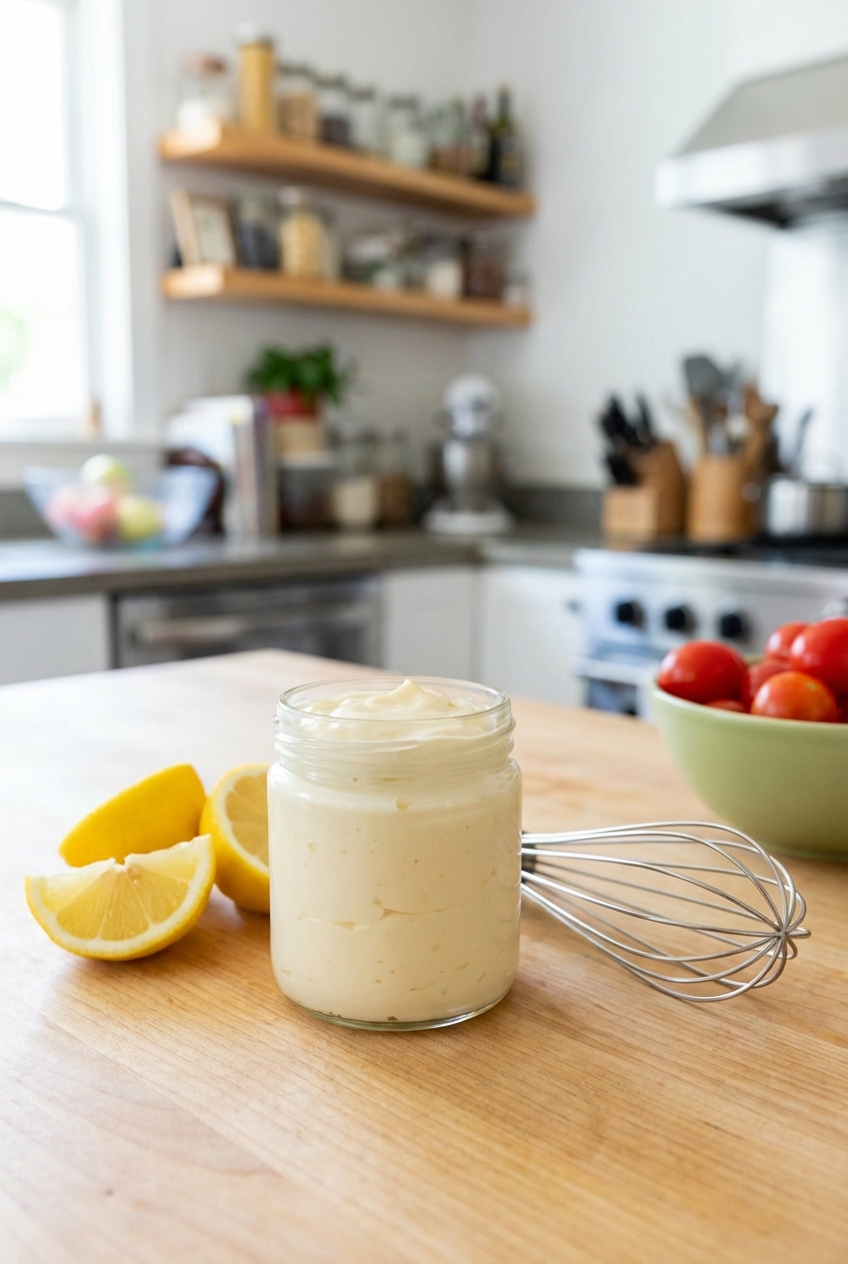
A small glass jar of creamy homemade mayo with lemon wedges and a whisk on a light kitchen counter

Homemade mayo sounds like one of those fussy kitchen flexes, but it is actually a minute-ish sauce that makes everything taste more intentional. This version keeps it wholesome with simple ingredients, a hit of lemon, and a little Greek yogurt for a lighter, tangier vibe. It still spreads like a dream, still clings to chicken salad, and still does that magical thing where your sandwich suddenly tastes like it came from a place with good lighting.

Even better, once you learn the base, you can go full choose-your-own-adventure: roasted garlic, chipotle-lime, herby green-goddess energy, or a kid-friendly honey mustard moment. You are in charge. Taste as you go, adjust as you go, and do not stress. If it breaks, we fix it. Promise.


Immersion blender in a tall jar emulsifying mayo using the all-in jar method, with the oil added to the jar before blending

Why It Works

  • Healthy-ish, not sad: Greek yogurt lightens the texture and adds a little extra protein, while still keeping the mayo creamy and spreadable.
  • Bright, clean flavor: Lemon juice, Dijon, and a pinch of salt give you that deli-counter pop without stabilizers.
  • Fast and foolproof: Immersion blender method emulsifies quickly with minimal cleanup.
  • Customizable: One base recipe becomes multiple sauces for bowls, wraps, roasted veggies, and dips.

Pairs Well With

Storage Tips

Refrigerate: Store in a clean jar with a tight lid for up to 5 days. Because this uses raw egg, keep it cold and do not leave it out longer than 2 hours total. Shelf life depends on egg freshness, jar cleanliness, and refrigerator temperature.

Do not freeze: Mayo can separate and turn grainy when thawed.

If it thickens too much: Stir in 1 to 2 teaspoons warm water or lemon juice to loosen it.

Keep it clean: Use a clean spoon each time to extend freshness.

Common Questions

Is homemade mayo safe to eat?

Homemade mayo is typically made with raw egg. To reduce risk, use a pasteurized egg if you can find one, keep the mayo refrigerated, and enjoy within 5 days. Shelf life can vary based on egg freshness, cleanliness, and how cold your fridge runs.

Can I make it without Greek yogurt?

Yes. Swap the yogurt for more oil for a classic mayo, or use a thick dairy-free yogurt if you want the same tang and body.

What oil is best for “healthy” mayo?

Choose a neutral oil you like the flavor of. Avocado oil is a popular option for a clean taste. Light olive oil works too, but avoid extra-virgin olive oil in large amounts because it can taste bitter when blended aggressively.

My mayo broke. Now what?

Easy rescue: add 1 teaspoon Dijon and 1 teaspoon warm water to a clean jar. With the blender running, slowly blend in the broken mayo mixture a little at a time until it turns thick and glossy again. Warm water helps reset the emulsion without making it overly sour.

Can I make it without an immersion blender?

Yes. Use a whisk and a bowl, but you must add the oil very slowly. It takes longer, but it works.

Why is my mayo thin?

Most of the time, the blender head did not fully cover the yolk at the bottom, or it got lifted too soon. Use a narrower jar, start with the blender planted on the bottom, and hold it there until you see a thick, pale base form. Also, very small eggs can make a looser mayo. If needed, blend in a bit more oil, 1 tablespoon at a time.

How can I make flavored mayo for picky eaters?

Try honey mustard (stir in 1 teaspoon honey and 1 teaspoon mustard) or ranch-style (add dried dill, garlic powder, and a squeeze of lemon). Keep it familiar, keep it creamy.

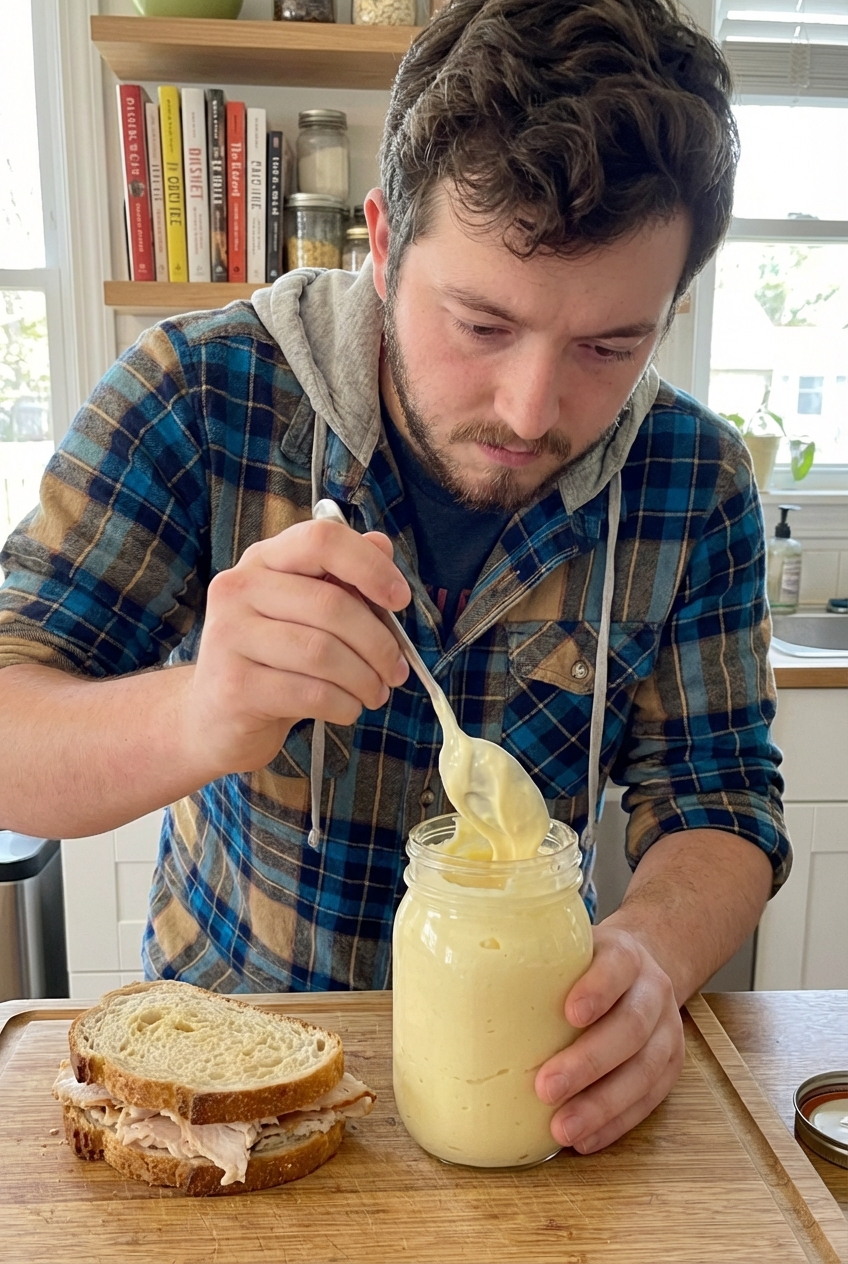
I used to think mayo was either store-bought or a culinary school rite of passage. Then I started chasing practical skills, the kind that actually make weeknights easier, and homemade mayo jumped to the top of the list. It is quick, it teaches you how emulsions behave, and it makes leftovers feel brand new. The first time I made a lemony batch and swiped it on a turkey sandwich, I stopped mid-bite like, okay wow. Now I keep a jar in the fridge and treat it like a blank canvas for whatever the week needs.