Mom's Best Recipes
Recipe

Creamy Stovetop Mac and Cheese

Velvety, stovetop creamy mac and cheese with real cheddar flavor, silky sauce, and no-graininess when you follow the steps. Weeknight-friendly, kid-approved, and dangerously scoopable.

Author By Matt Campbell
4.8
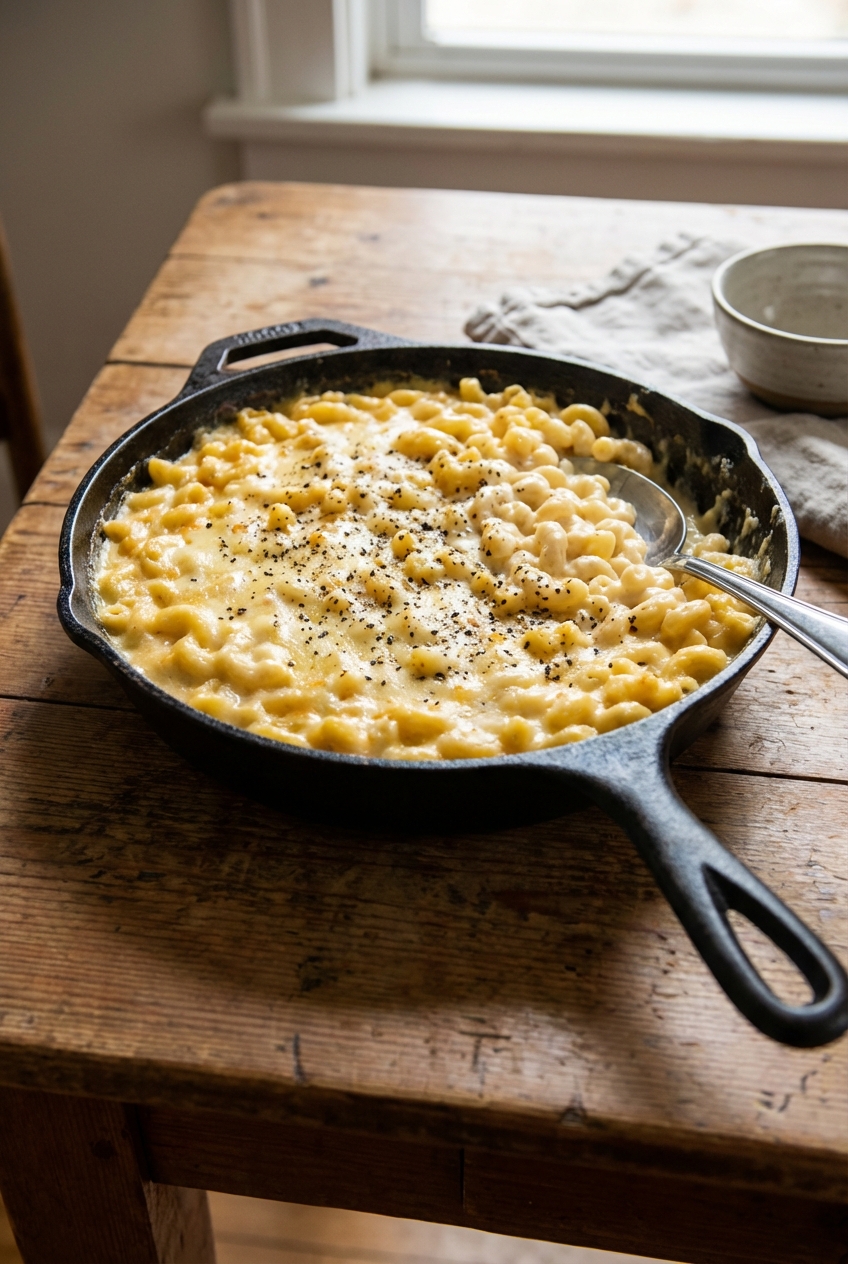
A real photograph of a cast iron skillet filled with creamy macaroni and cheese, topped with freshly cracked black pepper on a wooden kitchen table with a spoon nearby

If you have ever made mac and cheese that looked promising in the pot and then turned gritty, clumpy, or weirdly thick the second it hit the bowl, welcome. This is the fix. This creamy stovetop mac and cheese is my go-to: glossy sauce, real cheese pull, and that cozy, buttery vibe that makes everyone hover near the stove “just to taste.”

Quick note, because the internet is the internet: this is not the viral baked casserole version you may have seen floating around. This is my stovetop method that delivers the same ultra-creamy energy without turning dinner into a project.

The trick is not fancy cheese science. It is a few small moves that stack the odds in your favor: cook the pasta just right, build a smooth base, and add cheese off the heat so it melts like a dream instead of seizing.
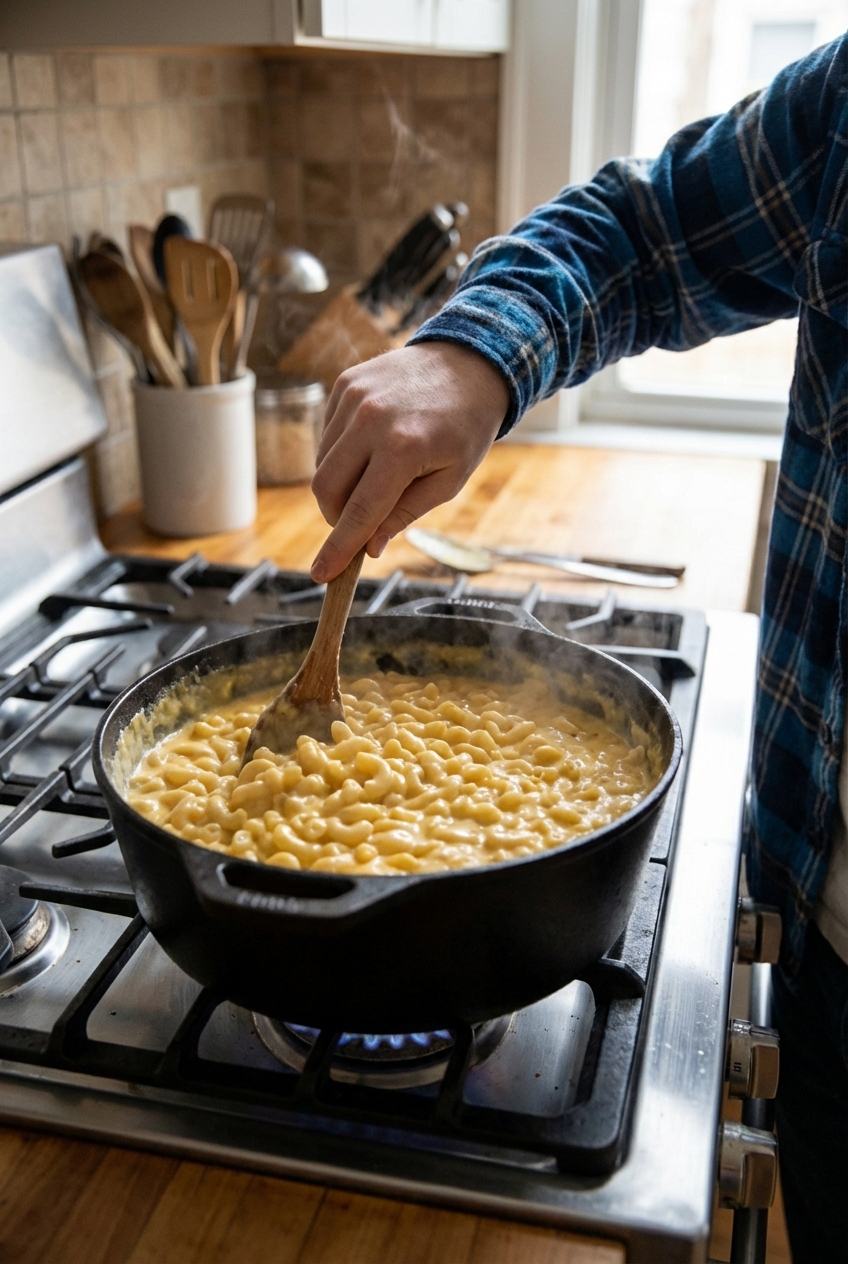
A real photograph of a hand stirring elbow macaroni in a pot of creamy cheese sauce on a stovetop

Why It Works

  • Extra creamy texture from a simple roux plus evaporated milk for stability and silkiness.
  • Big cheddar flavor without the grainy sauce when you follow the heat and cheese tips.
  • Weeknight-friendly with two pans (one pot for pasta, one pan for sauce) and no oven required.
  • Stays creamier than most as it cools, and a splash of milk brings leftovers right back.

Pairs Well With

Storage Tips

Refrigerate: Cool completely, then store in an airtight container for up to 4 days.

Reheat (best method): Warm in a saucepan over low heat with 1 to 3 tablespoons milk per serving, stirring often until glossy again. Microwave works too, but do it in 30-second bursts and stir well.

Freeze: You can, but the texture can soften and the sauce may separate a bit depending on the cheese. For best texture, freeze in portioned containers and use within 1 month (up to 2 months is fine if you are not picky). Thaw overnight in the fridge, then reheat with a splash of milk.

Pro tip: If it thickens a lot in the fridge, it is not “ruined,” it is just cold. Add liquid and heat gently, and it will loosen back up.

Common Questions

Is this the viral baked “Tini” mac and cheese?

No. This is my stovetop version with a silky, stable sauce. It is inspired by that ultra-creamy vibe people love, but it is not the baked casserole method.

Why did my cheese sauce turn gritty?

Most commonly: the heat was too high when the cheese went in, the pan held a lot of heat, or the cheese was pre-shredded (often coated with anti-caking agents). For this recipe, take the pan off the heat before adding cheese, let it sit about 30 seconds if your pan runs hot, and use freshly grated cheese.

Also worth noting: very aged, extra-sharp cheddars can be more prone to graininess. If that keeps happening, try a sharp (not ultra-aged) cheddar and keep the heat gentle.

Can I use regular milk instead of evaporated milk?

Yes. Use 2% or whole milk. Evaporated milk adds extra body and stability, but all-milk still works. Just keep the heat gentle and add cheese off the heat.

What is the best pasta shape for creamy mac and cheese?

Elbows are classic, but shells and cavatappi hold sauce like champs. If you go with a larger shape, keep an eye on doneness and salt the pasta water well.

Can I make it gluten-free?

Yes. Use your favorite gluten-free pasta and swap the flour for a 1:1 gluten-free flour blend (choose one that includes xanthan gum if possible). Cook the roux for 1 to 2 minutes and whisk well to prevent lumps and any floury taste.

How do I make it a little spicy?

Add 1/4 to 1/2 teaspoon cayenne or stir in 1 to 2 teaspoons hot sauce. A pinch of smoked paprika also plays nice with cheddar.

What cheeses can I swap in?

You have options. For the melty cheese slot (the mozzarella/Jack/fontina), try Colby, young gouda, or pepper jack. Keep at least some cheddar for that classic mac flavor, and grate it yourself for the smoothest melt.

I started making mac and cheese the way a lot of us do: crank the heat, dump in cheese, pray. Sometimes it was perfect. Sometimes it turned into a gritty, neon tragedy that still got eaten because, well, cheese.

This stovetop version is what I landed on after chasing that creamy, restaurant feel without turning dinner into a science fair. It is the mac I make when I want people to feel taken care of, including myself. Also, yes, I “taste for seasoning” approximately 700 times while making it. It is called quality control.