What noodles work best?
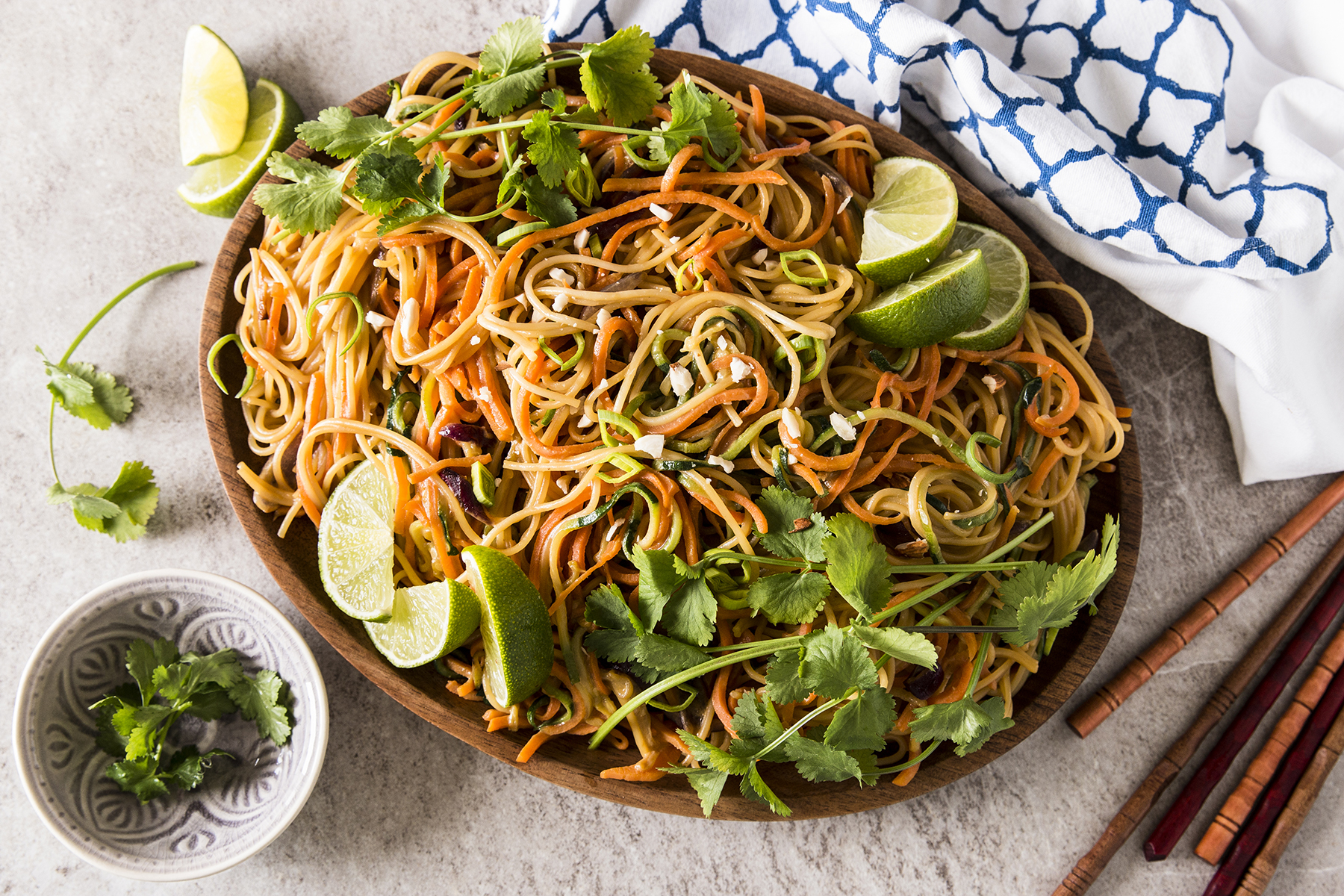
Rice noodles (Pad Thai style) are a great fit for this Thai-inspired situation, but soba, spaghetti, ramen noodles, or udon all work. The main rule is: pick something that grabs sauce. Cook just to al dente so it stays springy after tossing.
Do I serve these warm or cold?
Both work. I love them warm (freshly tossed, veggies still crisp), but they are also excellent at room temp or cold like a noodle salad. If serving cold, you may want an extra splash of lime or a little warm water to loosen the sauce before eating.
How do I keep peanut sauce from getting thick and clumpy?
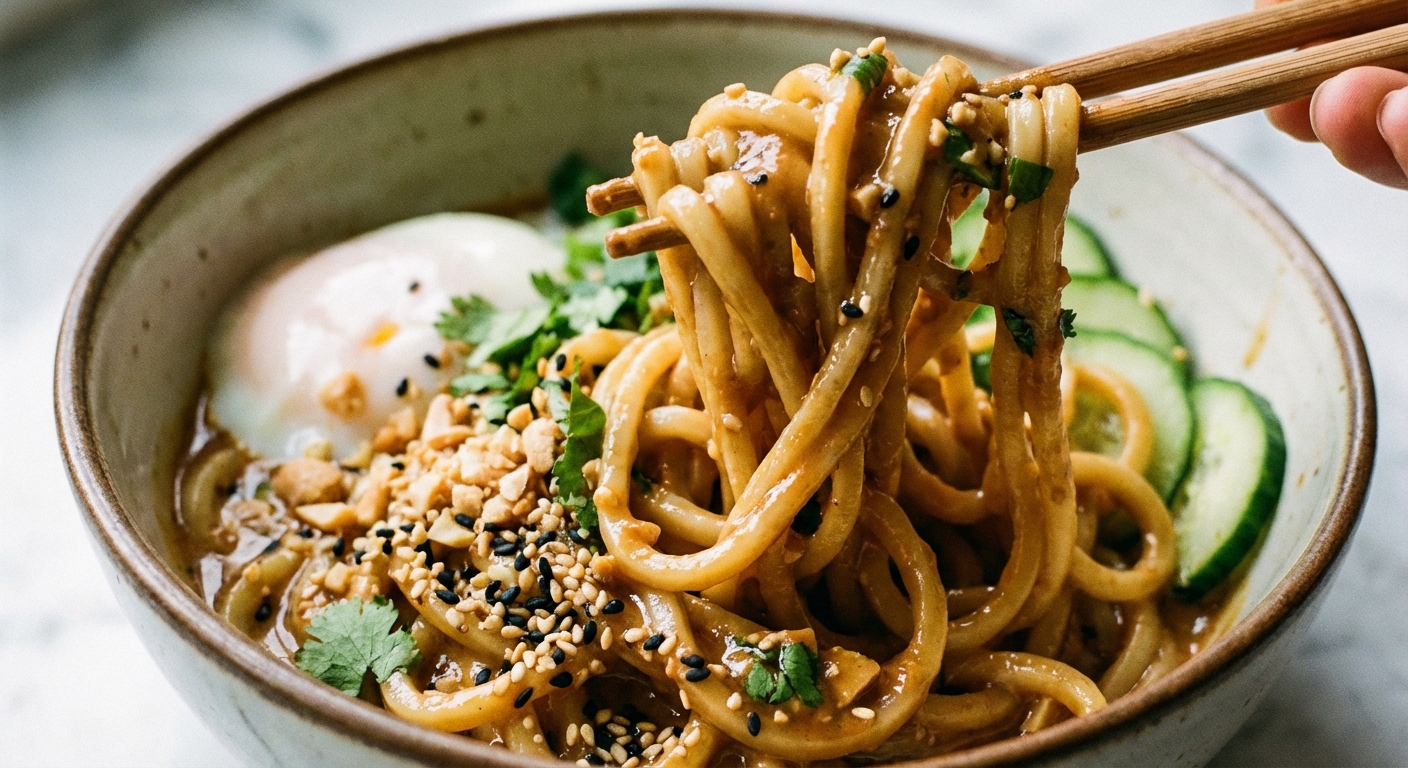
Use hot water, ideally reserved noodle water, and add it gradually while whisking. Peanut butter-based sauces often tighten up once you add acidic and salty ingredients (lime, soy). Warm water helps it emulsify and loosen into a smooth, glossy sauce.
Is this spicy?
It can be. Start with 1 teaspoon chili garlic sauce or sriracha, then adjust. You can also add crushed red pepper or a pinch of cayenne.
Can I make it gluten-free?
Yes. Use rice noodles and swap soy sauce for tamari or gluten-free soy sauce. Double check your chili sauce label too.
Can I make it nut-free?
You can swap peanut butter for sunflower seed butter and skip the peanut topping. Flavor shifts a bit, but you still get that creamy, savory vibe.
Any allergen notes?
This recipe contains peanuts, soy, and sesame (if using sesame oil or seeds). Adjust as needed for your kitchen.