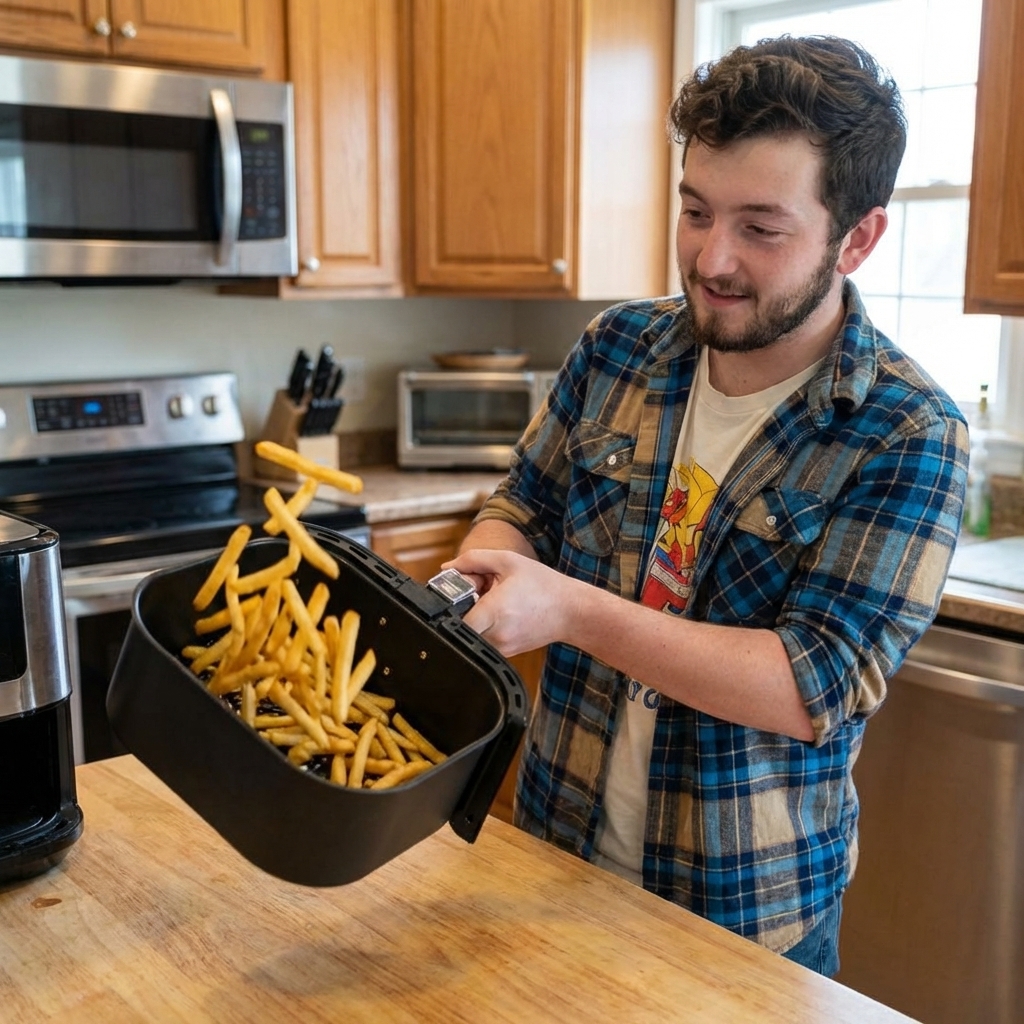
Which potatoes make the best air fryer fries?
Russet potatoes are the classic choice. They are higher in starch and lower in moisture, which helps you get that fluffy interior with a crisp shell. Yukon Gold fries are slightly creamier and a little less crunchy, but still excellent. If you use red potatoes, expect more of a firm, waxy bite and slightly less crisping.
Do I really have to soak the potatoes?
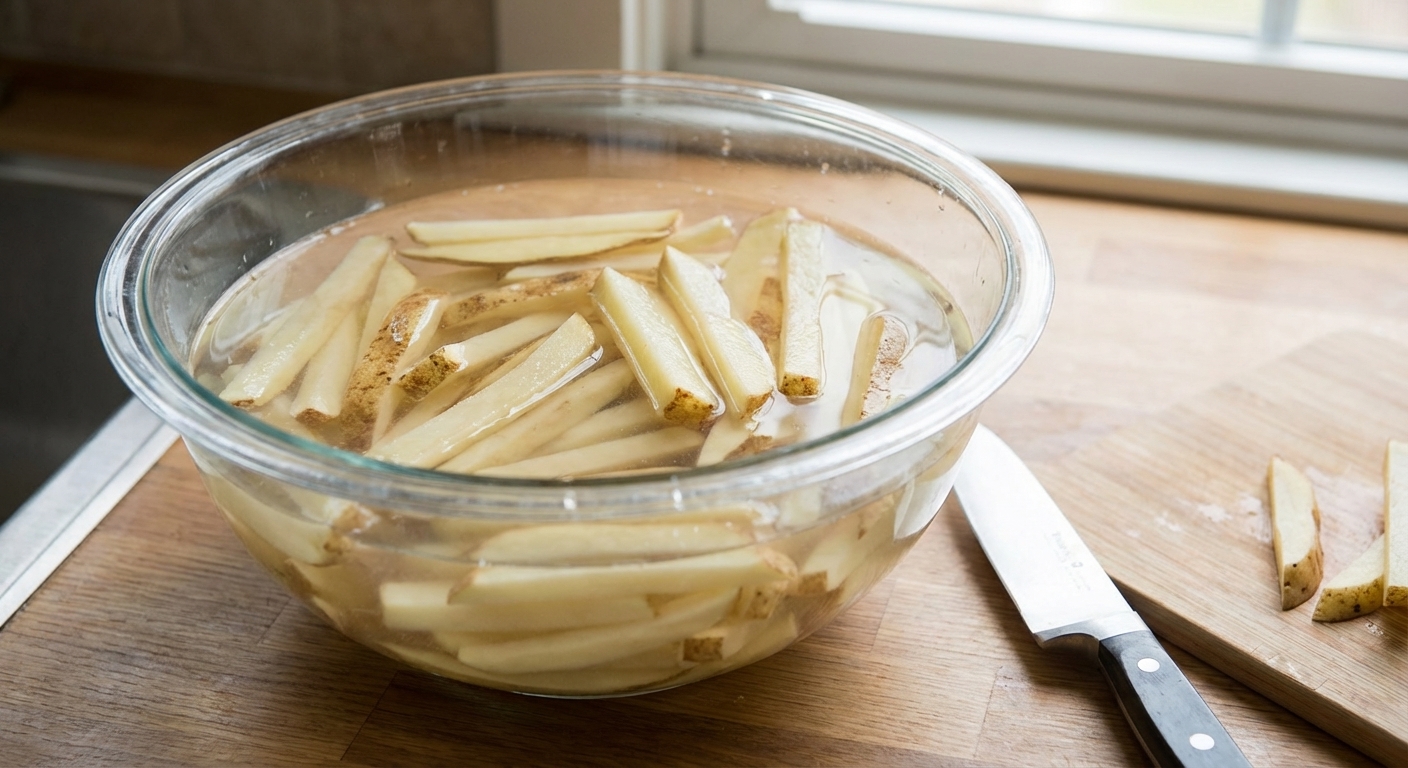
You do not have to, but it is the easiest upgrade you can make. Soaking removes surface starch so fries brown better and do not fuse together. If you are in a rush, do a 15 minute soak. If you have time, 30 minutes is great. You can also soak them longer (up to a few hours) in the fridge.
Can I cut the fries ahead of time?
Yes. To prevent browning, keep cut potatoes submerged in cold water in the fridge for up to 8 hours. When you are ready to cook, drain, rinse, and dry very well before adding oil.
Why are my air fryer fries soggy?
- Too much moisture: not dried enough after soaking.
- Overcrowding: piled fries trap steam instead of letting hot air circulate. Aim for no more than 1/2 to 2/3 full in the basket.
- Not enough heat: air fryers vary, but 380°F to 400°F is the crisp zone.
- Oil is not evenly coated: you want a light, even coat for browning. Too much can make fries greasy and cook unevenly.
Should I salt before or after air frying?
For the best texture, salt right after cooking. Salt draws moisture to the surface. That is great for seasoning, not great for crisping.
When should I add seasonings?
Delicate toppings like Parmesan, herbs, and truffle oil should go on after cooking. Sturdy dry spices like garlic powder, paprika, or Cajun seasoning can go on before or after. If you love extra-toasty flavor, add them before. If you are worried about burning, add them after.
Do I need to preheat the air fryer?
It helps with browning, especially if your air fryer runs a little cool. If yours has a preheat function, use it. If not, run it empty for 3 minutes at 400°F.