Mom's Best Recipes
Recipe

Japanese-Style Crispy Chicken Katsu

Ultra-crunchy panko crust, juicy chicken, and a tangy-sweet katsu sauce you will want to put on everything.

Author By Matt Campbell
4.8
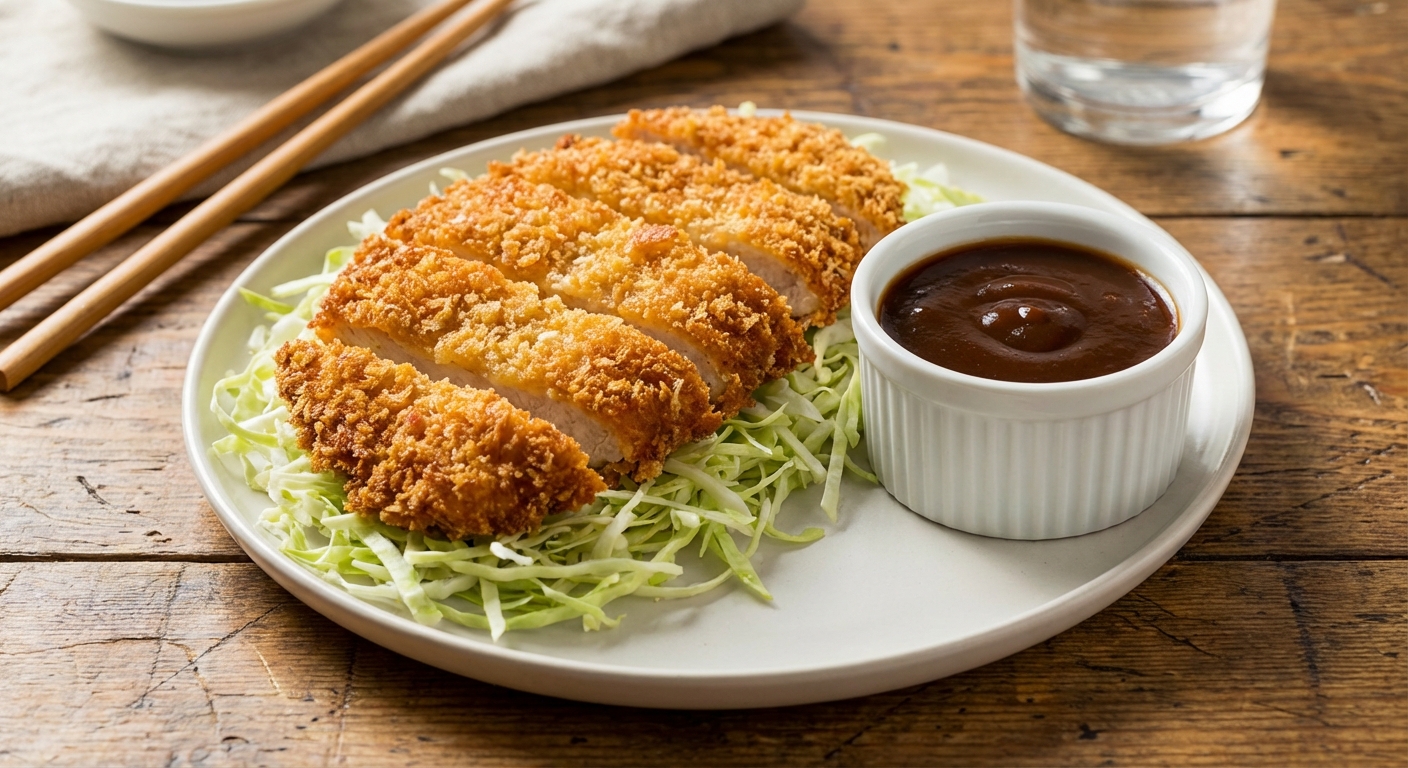
A real photograph of sliced crispy chicken katsu with a deep golden panko crust served over shredded cabbage with a small ramekin of katsu sauce on a wooden table

If you are chasing that crispy, crunchy Japanese-style bite that shatters a little when you cut into it, chicken katsu is the move. It is the kind of dinner that feels like a treat, but it is secretly a very doable weeknight situation once you learn the rhythm: season, bread, fry, sauce, inhale.

This is a Japanese-style approach using panko for that signature airy crunch, plus a simple homemade katsu sauce that hits the sweet, tangy, savory trifecta. It is a quick home version inspired by classic tonkatsu sauce flavors, and it absolutely gets you that cozy restaurant plate at home. Serve it with rice and shredded cabbage and you are in business, no reservations required.

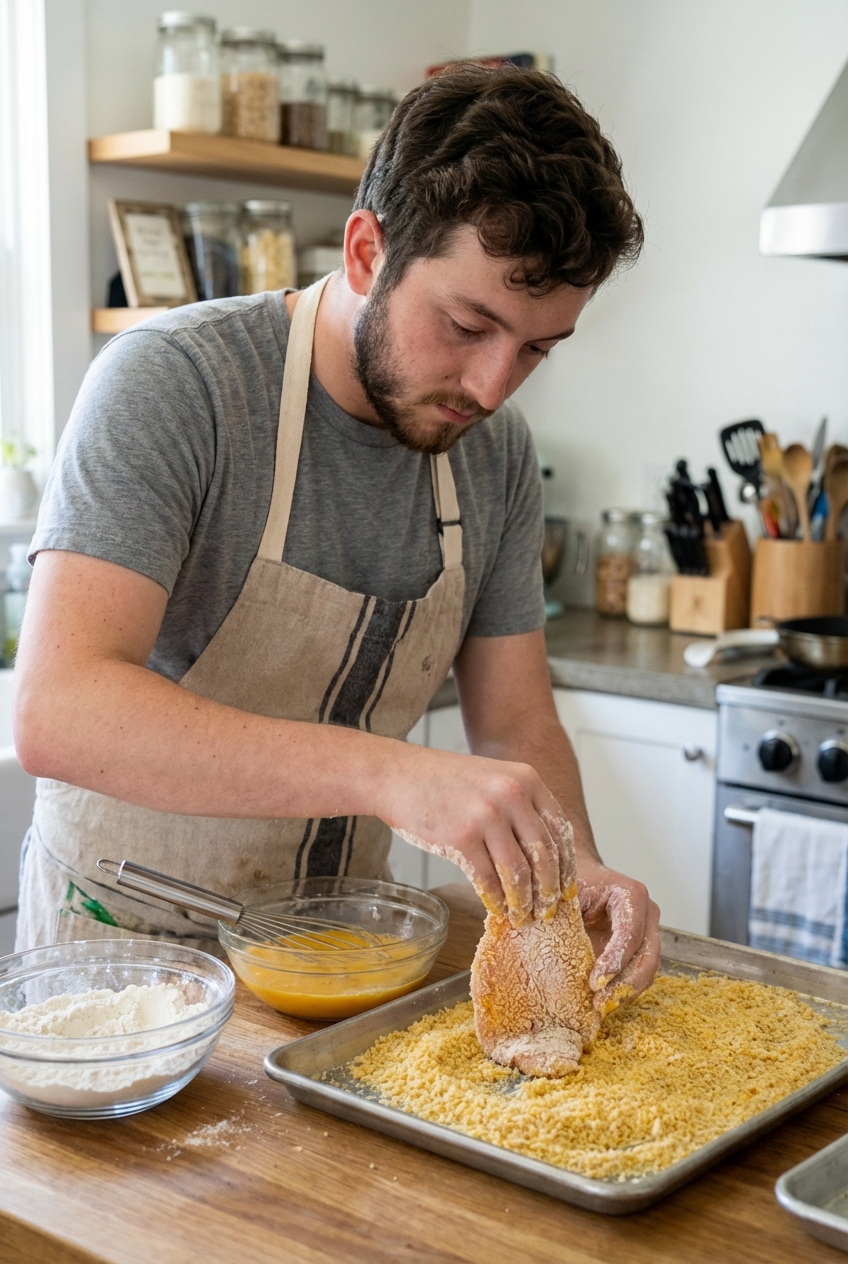
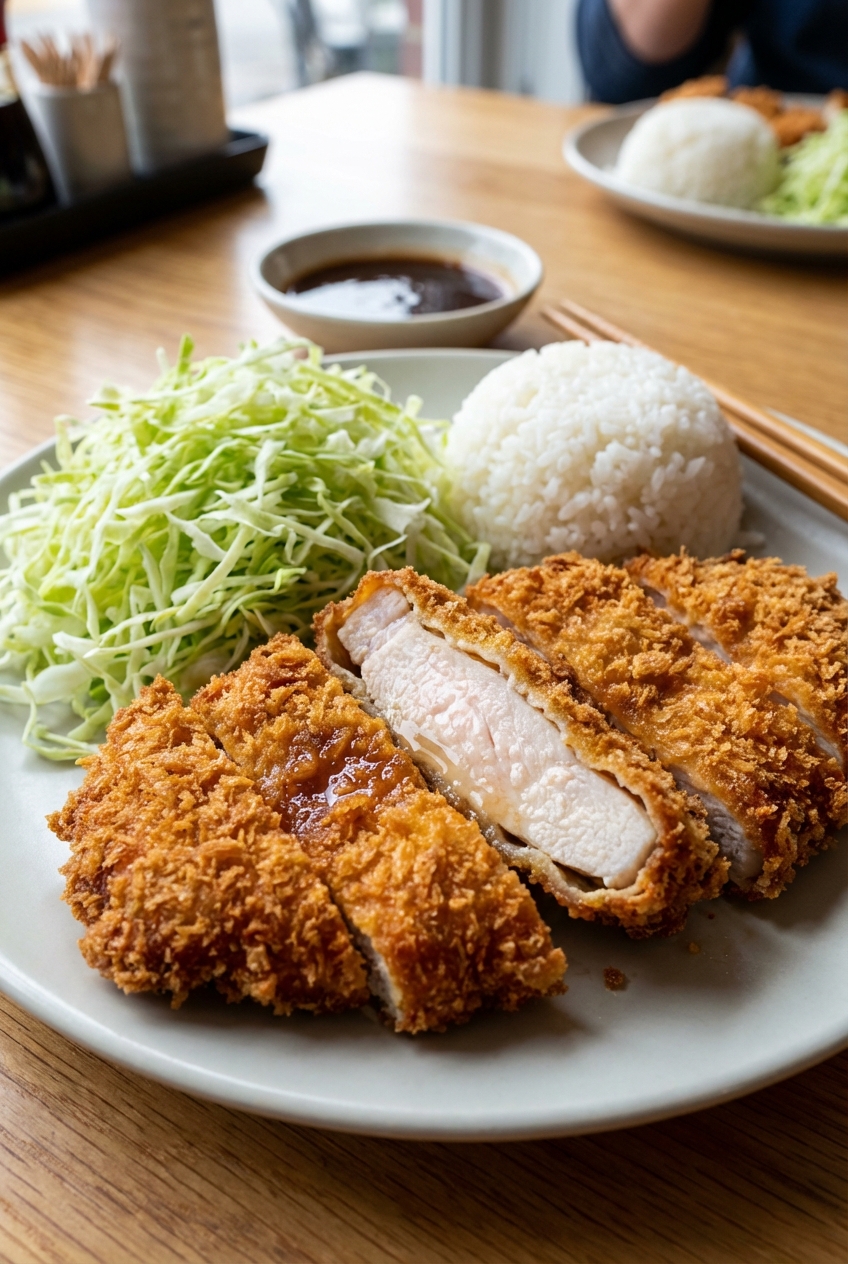
A real photograph of a cook dipping a chicken cutlet into panko breadcrumbs in a shallow tray on a kitchen counter

Why It Works

  • Panko = louder crunch. Panko breadcrumbs are larger and airier than standard crumbs, so they fry up crisp instead of dense.
  • Thin cutlets cook fast and stay juicy. Pounding chicken to an even thickness prevents dry edges and undercooked centers.
  • Resting the breading helps it stick. A short rest before frying sets the coating so it does not slide off in the oil.
  • Steady oil temperature = golden, not greasy. 340 to 350°F gives you crisp crust and fully cooked chicken without soaking up oil.
  • Quick sauce, big payoff. The classic katsu sauce vibe comes from a sweet-tang base with a little umami, and it takes about 60 seconds to stir together.

Pairs Well With

  • Steamed white rice or short-grain Japanese rice
  • Shredded cabbage with a squeeze of lemon or a drizzle of sesame dressing
  • Miso soup with tofu and scallions
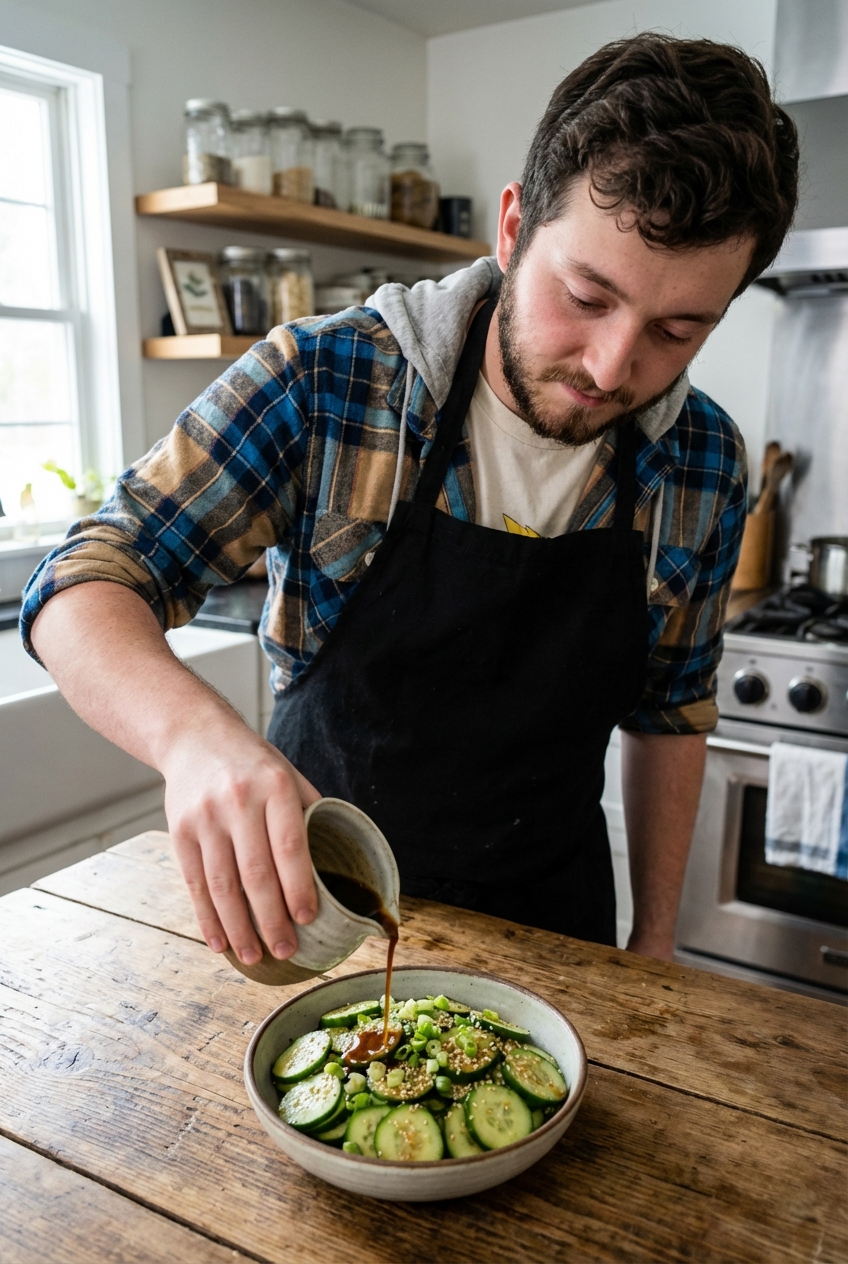
  • Quick cucumber sunomono (rice vinegar, sugar, salt)

Storage Tips

How to Store Leftovers

Best tip: keep the cutlets and sauce separate. Sauce is a crunch killer.

  • Fridge: Store cooked katsu in an airtight container for up to 3 days. Keep cabbage separate so it stays crisp.
  • Reheat for crunch: Bake on a wire rack over a sheet pan at 400°F for 10 to 12 minutes, flipping once. An air fryer at 375°F for 6 to 8 minutes also works great.
  • Avoid the microwave: It will make the breading soft. If you must, do short bursts and then crisp in a hot skillet.
  • Freeze: Freeze cooked, cooled cutlets on a sheet pan, then bag. Freeze up to 2 months. Reheat from frozen at 400°F for 18 to 22 minutes on a rack.
  • Sauce storage: Store the katsu sauce in a sealed jar in the fridge for 1 to 2 weeks. Stir before using.
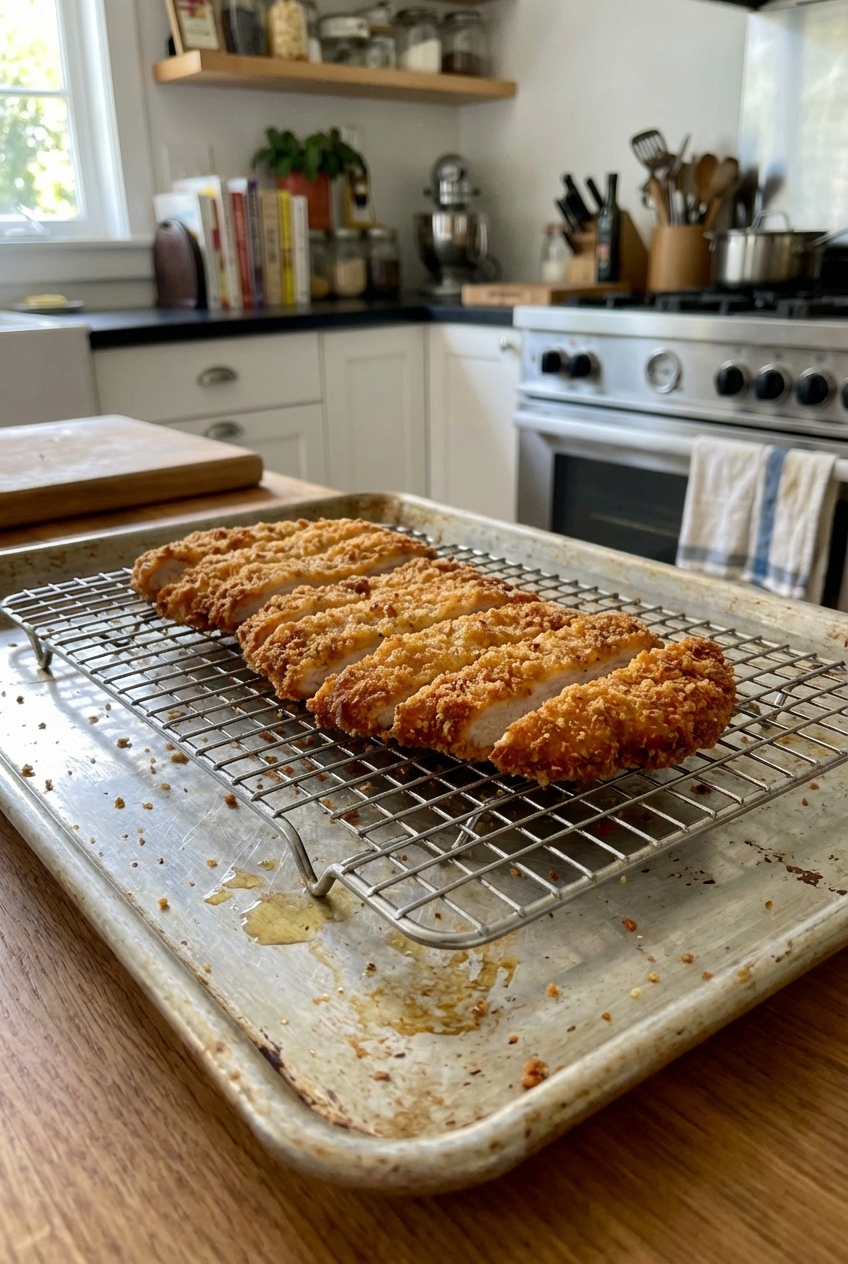
A real photograph of leftover sliced chicken katsu cooling on a wire rack over a baking sheet in a home kitchen

Common Questions

Common Questions

Is chicken katsu Japanese?

Yes. Katsu is a Japanese yōshoku classic (Japanese Western-style comfort food): breaded cutlets, crunchy panko, usually served with shredded cabbage and a tangy sauce. Chicken is very common, along with pork (tonkatsu).

Is this recipe “authentic”?

It is Japanese-style and very true to the home-cook vibe. For the sauce, this is a quick homemade version inspired by the classic tonkatsu sauce flavor. If you want the most traditional shortcut, you can also use a store-bought tonkatsu sauce.

Can I bake chicken katsu instead of frying?

You can, but the crunch is a little different. For the closest baked version, toast panko in a skillet with 1 to 2 tablespoons neutral oil until light golden, then bread the chicken and bake at 425°F until the chicken hits 165°F. If your cutlets are about 1/2-inch thick, start checking at 12 to 15 minutes (often 15 to 18 minutes total).

What oil should I use for frying?

Use a neutral oil with a higher smoke point like canola, vegetable, peanut, or grapeseed. Extra-virgin olive oil is not ideal here.

How do I keep the breading from falling off?

Pat the chicken dry, press the panko on firmly, and let the breaded cutlets rest 10 minutes before frying. Also, do not move the cutlet too early in the oil. Let it set and brown.

Do I need a thermometer?

It helps a lot. Aim for 340 to 350°F oil. If you do not have one, test with a panko crumb. It should sizzle immediately and float, not sink and sulk.

Can I make this with pork instead?

Absolutely. Swap chicken for boneless pork loin chops, pounded to about 1/2-inch thick, and cook the same way.

Any allergy notes?

This recipe includes wheat (flour, panko) and egg. Worcestershire sauce often contains fish (anchovy), so check the label if that matters for you.

The first time I tried to make katsu at home, I treated panko like regular breadcrumbs. I pressed too lightly, fried too hot, and ended up with a cutlet that looked golden but tasted greasy and kind of flat. After a few rounds, I found the sweet spot: thinner chicken, a quick rest after breading, and oil that stays calm and steady. Now it is one of my favorite comfort meals because it is both satisfying and kind of fun. There is something therapeutic about that crisp crackle when the knife goes through.