Mom's Best Recipes
Recipe

Best Chicken Parmesan

Golden, crunchy cutlets, a bright garlicky tomato sauce, and a mozzarella blanket that actually melts. This is the chicken parm you make when you want restaurant vibes without restaurant stress.

Author By Matt Campbell
4.9
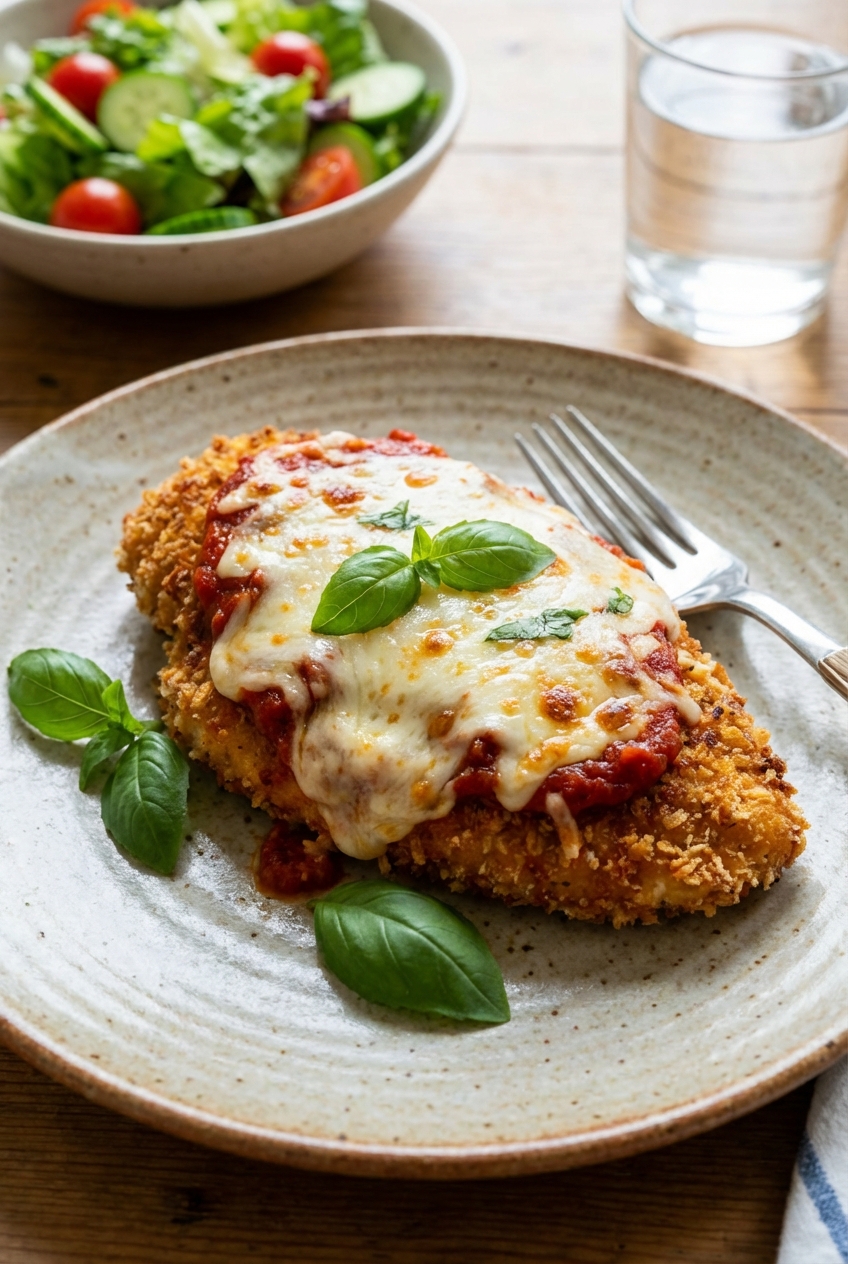
A real photo of crispy chicken Parmesan on a plate with bubbling melted mozzarella and marinara sauce, garnished with basil, with a fork and a simple salad in the background

Chicken Parmesan is one of those dishes that feels fancy until you remember it is basically: crispy chicken + tomato sauce + cheese. Which is great news for us, because those are all things we can absolutely nail at home.

This version is built for maximum crunch and maximum melt. We fry the cutlets just long enough to get that deep golden crust, then finish them in the oven so the cheese turns gooey without steaming the breading into sadness. The sauce stays bright and punchy, not watery, not sugary, and it does not drown the chicken. That last part is the difference between “pretty good” and “wait, why is this so good?”
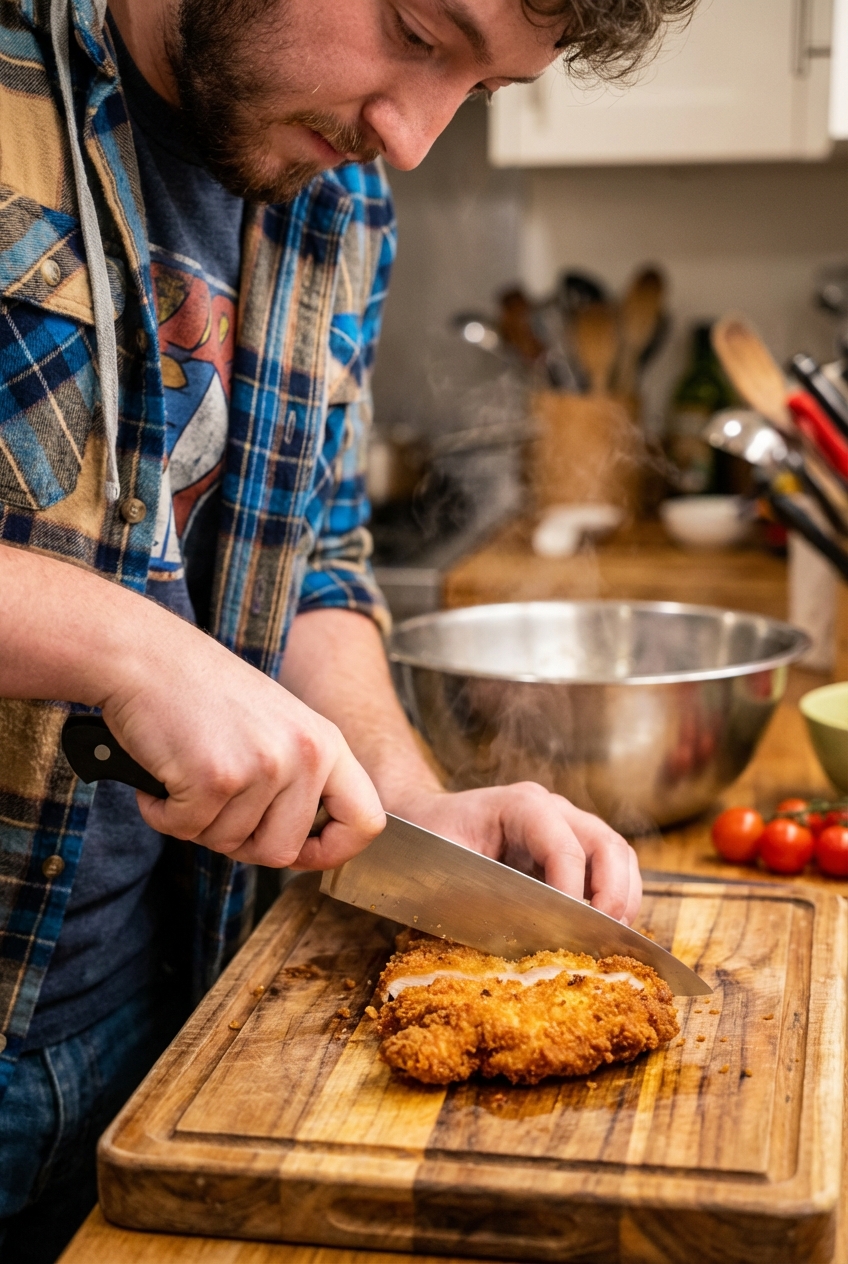
A real photo of a crispy breaded chicken cutlet being sliced on a wooden cutting board with a chef's knife

Why It Works

  • Crisp edges that stay crisp: We keep the sauce under control and only sauce what will be eaten.
  • Juicy chicken, not dry: Pounded to an even thickness so it cooks fast and evenly.
  • Cheese that actually melts: Low-moisture mozzarella plus a little Parmesan for salty, nutty depth.
  • Flavor-built breading: Panko for crunch, Parmesan for savoriness, and a hit of garlic and Italian seasoning so every bite tastes seasoned, not just coated.
  • Weeknight-friendly workflow: Quick sauce while the cutlets rest, then a short bake to finish.

Pairs Well With

Storage Tips

Best move: store the chicken and sauce separately when you can. It is the easiest way to protect the crunch.

Meal prep tip

If you anticipate leftovers, fry all the cutlets, but only sauce, cheese, and bake the ones you plan to eat right away. Refrigerate the remaining fried cutlets plain, with sauce and cheese stored separately. Future you gets maximum crunch.

  • Fridge: Keep in airtight containers for up to 3 to 4 days.
  • Freezer: Freeze cooked cutlets (ideally without sauce) up to 2 months. Wrap well and store in a freezer bag.

Reheating (for crispy results)

  • Plain cutlets (best crunch): Reheat in a 375°F oven or air fryer until hot and crisp, about 8 to 12 minutes (air fryer is usually faster). Add sauce and cheese near the end, then heat until melted. Confirm the chicken reaches 165°F.
  • Already sauced and cheesed: Reheat at 350 to 375°F until the center is hot and the chicken reaches 165°F. If the top browns too fast, loosely tent with foil.
  • Microwave: Works in a pinch, but the breading will soften. If you microwave, finish in a hot skillet or toaster oven to bring back some crunch.

Leftover hack: Turn it into a chicken parm sandwich on toasted rolls with extra sauce on the side for dipping.

Common Questions

How do I keep chicken parm crispy?

Do not drown it. Sauce goes lightly on top, and only right before baking. Also, bake on a rack if you have one so the bottom does not steam.

Do I have to fry it?

Frying gives the best crunch. If you want a lighter method, bake the breaded cutlets on a wire rack at 425°F with a generous spray of oil, flipping once, until golden and 165°F inside. It will be good, just a little less shatter-crisp.

What mozzarella is best?

Low-moisture mozzarella melts beautifully without turning watery. If you want to use fresh mozzarella, slice it and blot it very dry (paper towels), then use a lighter hand so it does not go soupy.

Can I make this gluten-free?

Yes. Use a gluten-free flour blend for dredging and gluten-free panko or crushed gluten-free crackers for the breading. The rest should be gluten-free, but verify labels on cheese and seasoning blends (some include anti-caking agents or additives).

How do I know the chicken is done?

Use an instant-read thermometer. Pull it when the thickest part hits 165°F. If you do not have one, slice the thickest cutlet: the center should be no longer pink and the meat should look opaque and feel firm. Color and juices are not a reliable safety test, so use a thermometer whenever you can.

The first time I made chicken parm on my own, I did what a lot of us do: I treated sauce like a comfort blanket and smothered everything. It tasted fine, but the crunch disappeared faster than my patience. After that, I started cooking it like a teammate: crisp the chicken first, keep the sauce bright and controlled, then let the oven do the cheesy finishing move. Now it is my go-to when I want a dinner that feels like I tried harder than I did. The trick is simple, and I promise it works: light sauce, hot oven, and taste as you go.