Why is my challah not crispy?
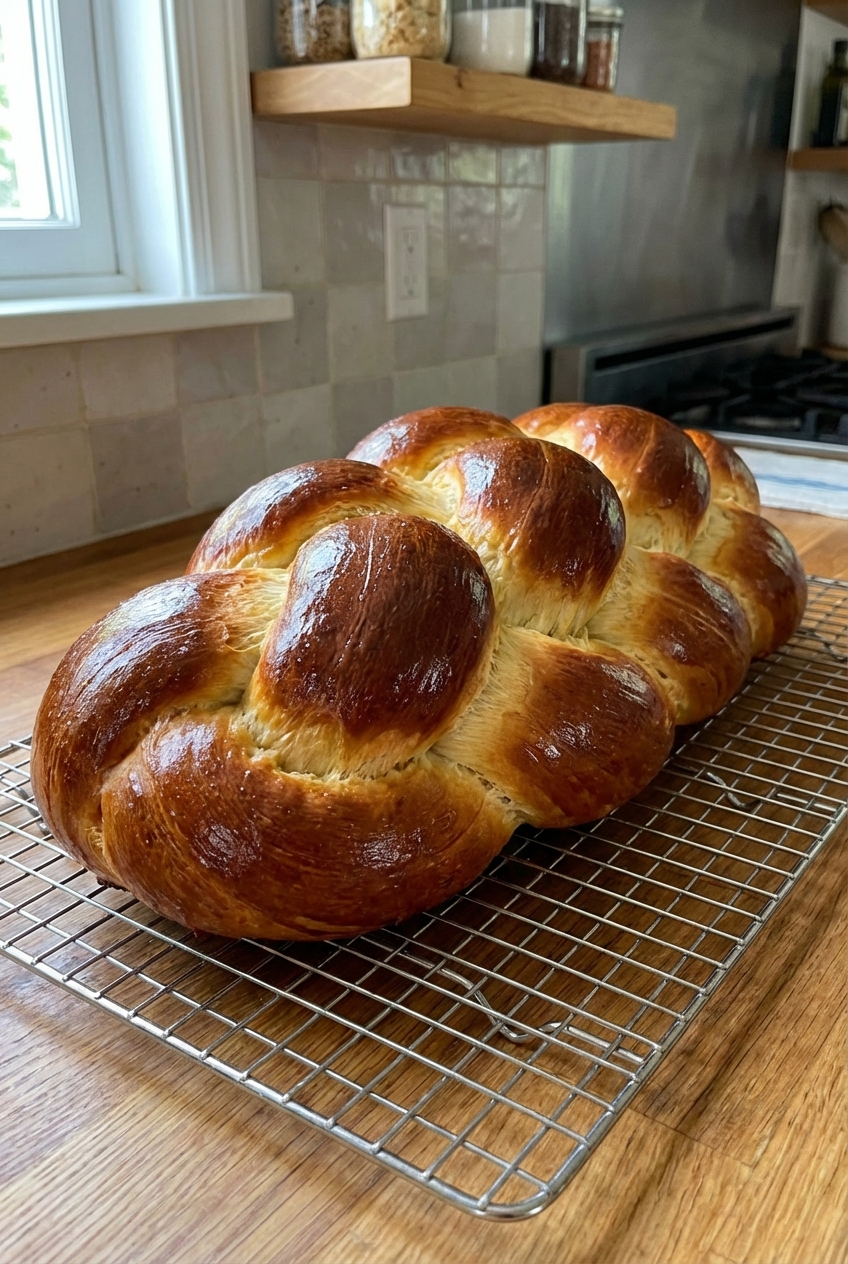
Most often it’s one of three things: the oven wasn’t hot enough at the start, the loaf was underbaked, or it was stored in plastic while still warm. Use the hot-start bake below, and cool fully before wrapping. Also, set expectations: challah is meant to be tender. You can get a crisp, deeply browned crust, especially day-of, but it won’t eat like a baguette.
Can I make challah without a stand mixer?
Absolutely. Mix with a wooden spoon until shaggy, then knead by hand for 8 to 10 minutes until smooth and elastic. If it feels sticky, resist the urge to dump in lots of flour. Lightly oil your hands and keep kneading.
What is the best flour for challah?
Bread flour gives a chewier, taller loaf. All-purpose works too and stays a bit more tender. If you’ve got bread flour, use it. If you don’t, don’t let that stop you.
Can I make it dairy-free?
Traditional challah is typically dairy-free already. This recipe uses oil, not butter. Just make sure your sugar and toppings fit your needs.
How do I know it’s done baking?
The crust should be a deep golden brown and the loaf should sound slightly hollow when tapped underneath. If you’ve got a thermometer, aim for 195°F to 205°F in the center. If you prefer a slightly softer set (and you know your oven runs hot), 190°F to 195°F can work, but go for the higher end for a fully set, sliceable crumb.
Can I refrigerate the dough overnight?
Yes, and it often tastes even better. After the first rise, gently deflate, cover, and refrigerate up to 18 hours. Let it sit at room temp until it’s cool but pliable, typically 60 to 90 minutes depending on your kitchen, then shape and do the final rise.