Mom's Best Recipes
Recipe

Crispy Double-Fried French Fries

Golden, crunchy fries with fluffy centers using a simple double-fry method, a smart salting trick, and a couple of safety-first best practices.

Author By Matt Campbell
4.8
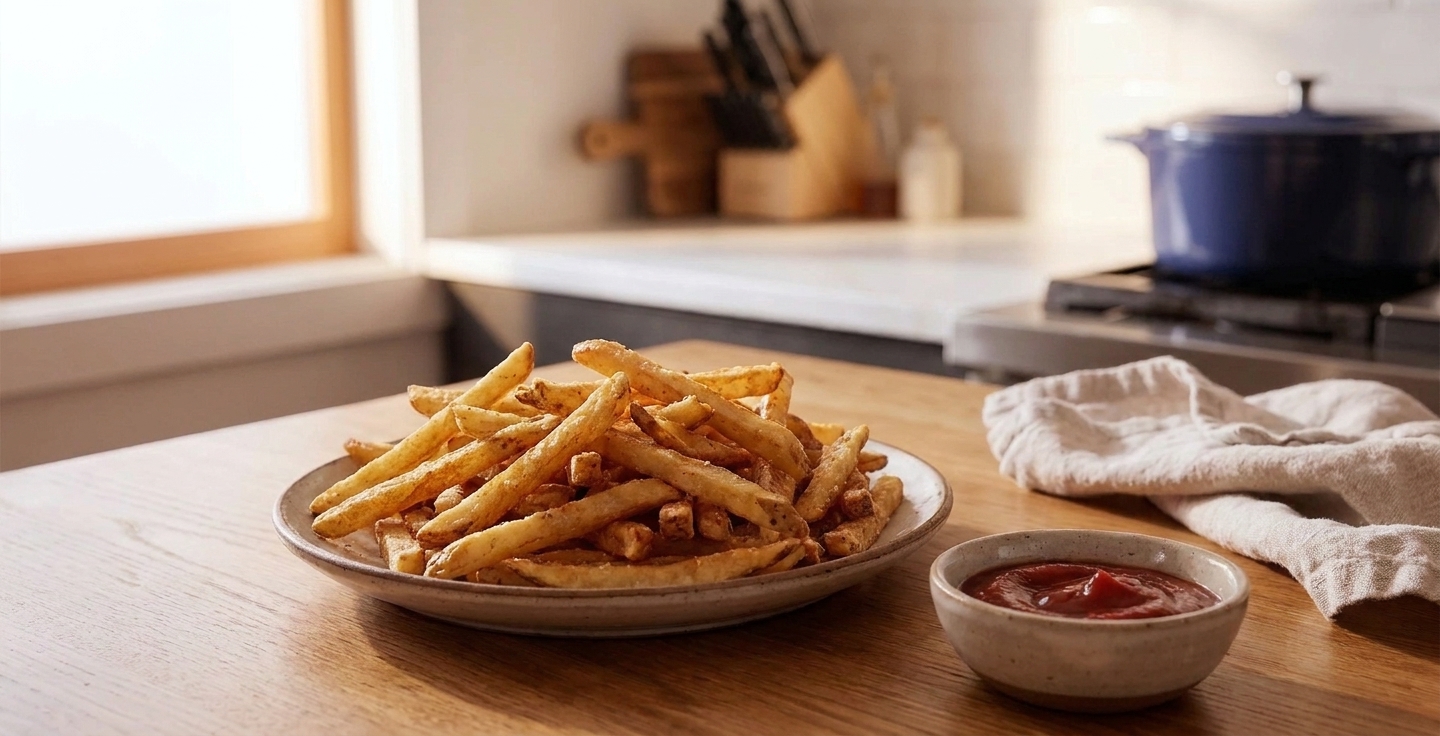
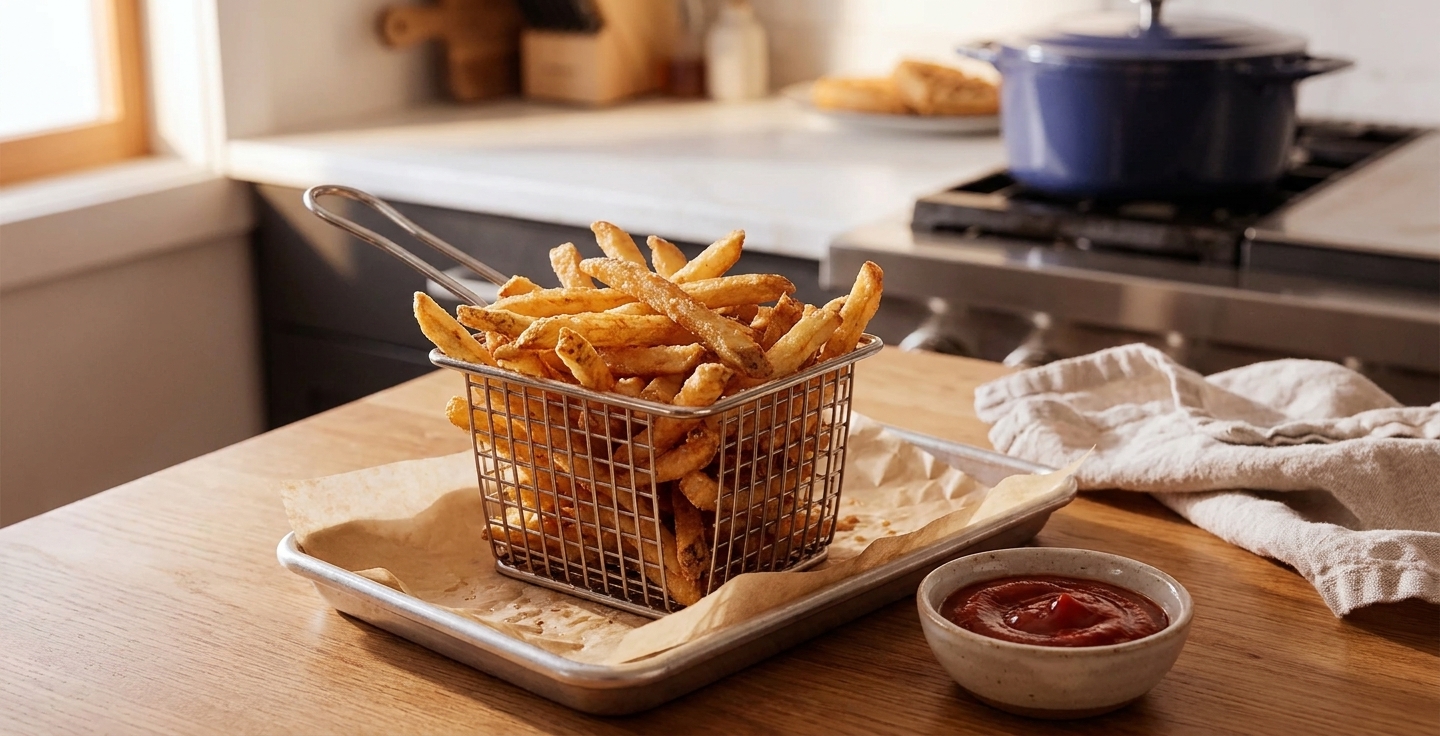
A basket of golden, crispy double-fried French fries on a small parchment-lined tray with a bowl of ketchup on a cozy kitchen table

French fries are one of those foods that seem easy until you try to make them really good. Not just brown and edible. I mean crisp edges that crackle, fluffy potato centers, and that perfect salty hit that makes you steal one off the tray “for quality control” and then suddenly half the batch is gone.

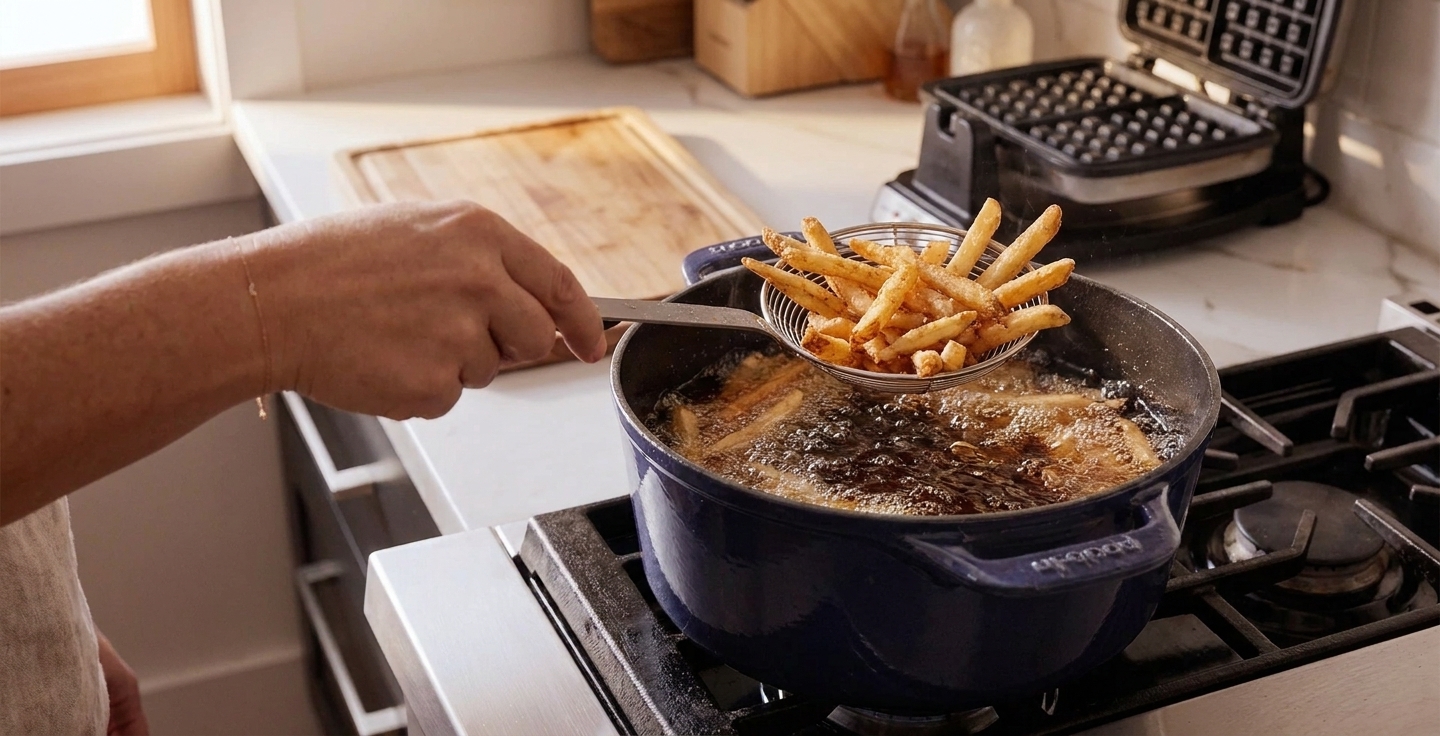
This recipe is my go-to: the classic double-fry. First fry cooks the potato through gently. Second fry turns the outside into a crispy, golden shell. It is not fussy, but it does ask one thing from you: pay attention to oil temperature. Do that, and you are basically running a tiny, delicious fry shop from your kitchen.
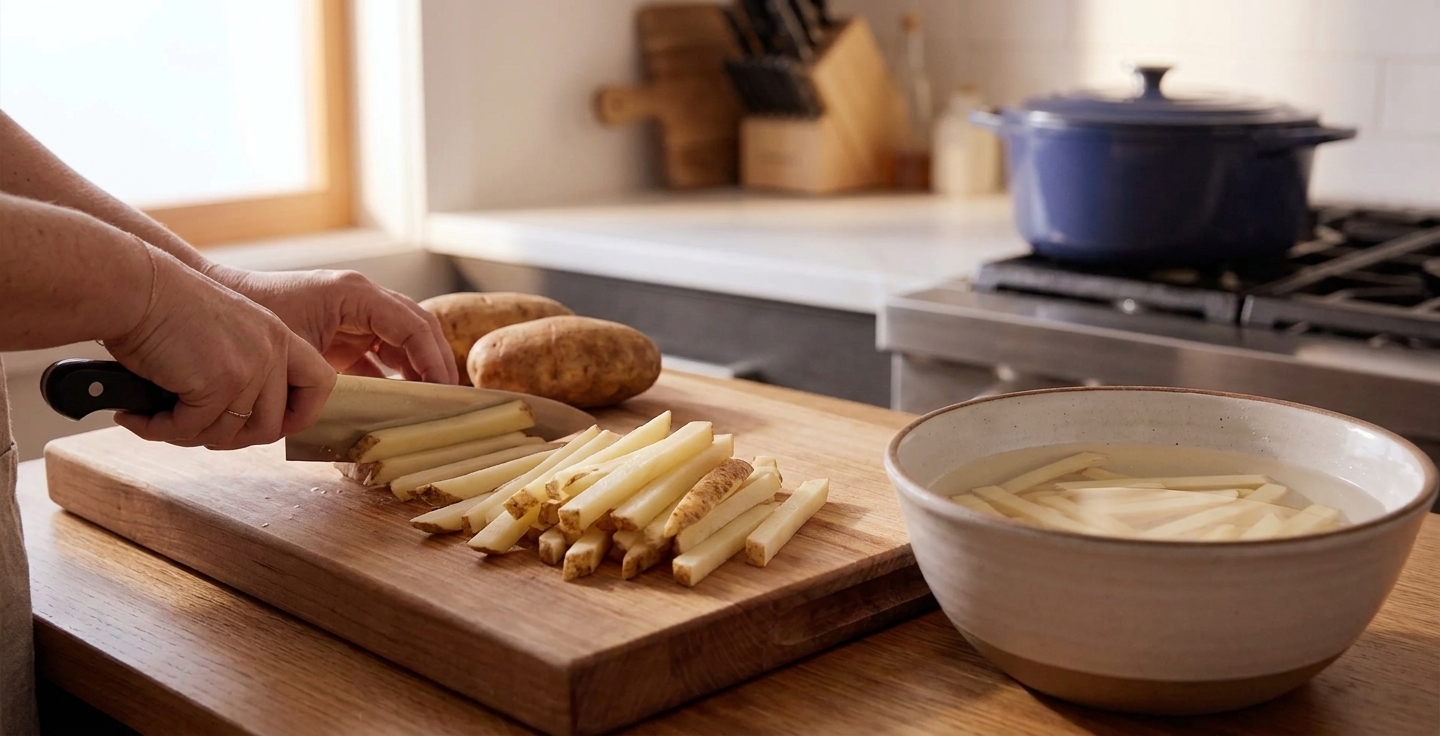
Raw russet potatoes being sliced into even fry sticks on a wooden cutting board next to a bowl of cold water

Why It Works

  • Crisp that lasts: The first fry sets the structure, the second fry brings the crunch.
  • Fluffy centers: Russets plus a gentle first fry equals tender, steamy insides.
  • Even browning: Soaking removes excess surface starch so you get fries that crisp instead of turning gummy.
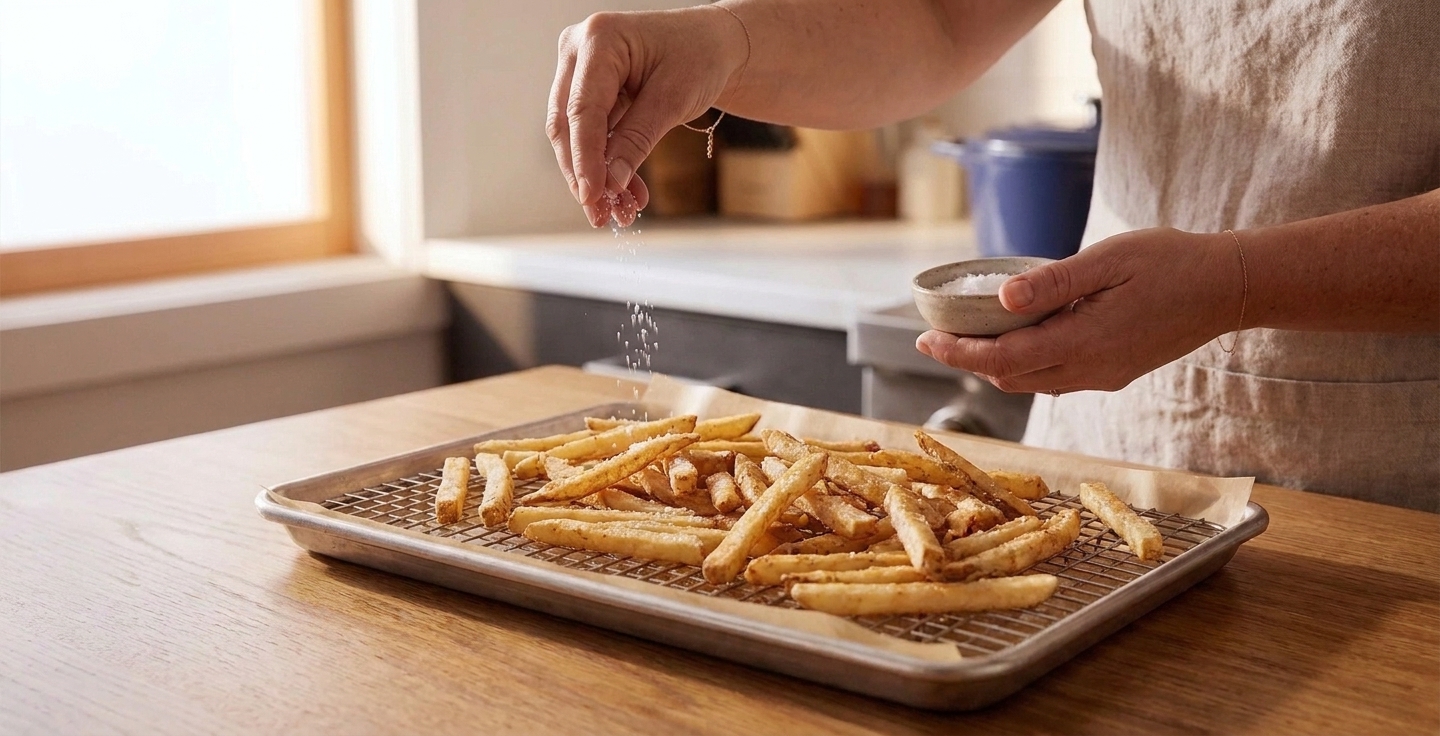
  • Better seasoning: Salting right after the second fry means it sticks and tastes bright, not dusty.

Pairs Well With

Storage Tips

Fries are at their best fresh, but leftovers can still be great if you reheat them the right way.

To store

  • Cool fries completely, then store in an airtight container lined with a paper towel.
  • Refrigerate for up to 3 days.

To reheat (best options)

  • Oven: Spread fries on a sheet pan. Bake at 425°F for 8 to 12 minutes, flipping once.
  • Air fryer: Air fry at 380°F for 4 to 7 minutes, shaking halfway.
  • Skillet: Re-crisp in a dry nonstick skillet over medium heat, tossing until hot and crisp.

Skip the microwave unless you like fries with the texture of a warm sponge.

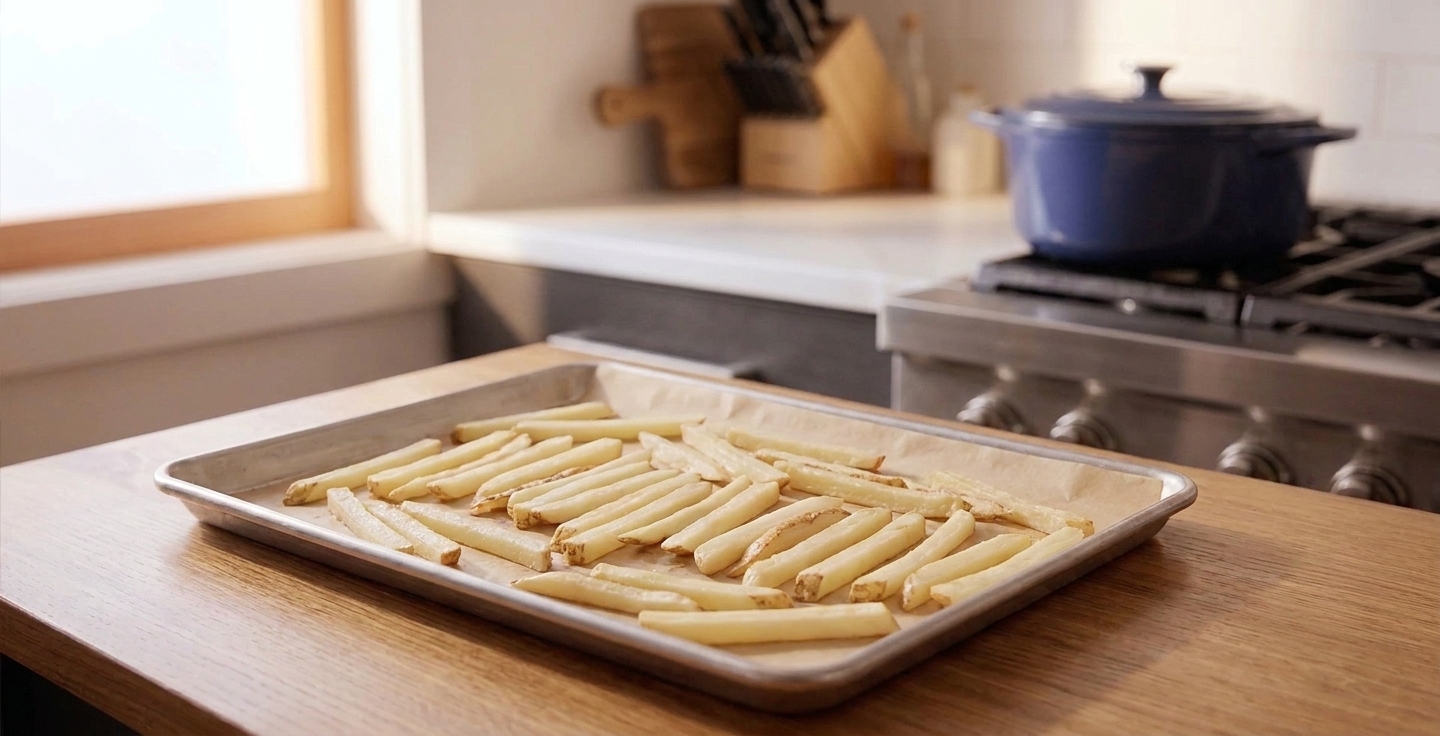
Leftover French fries spread in a single layer on a metal sheet pan ready to reheat in a home oven

Common Questions

What potatoes are best for French fries?

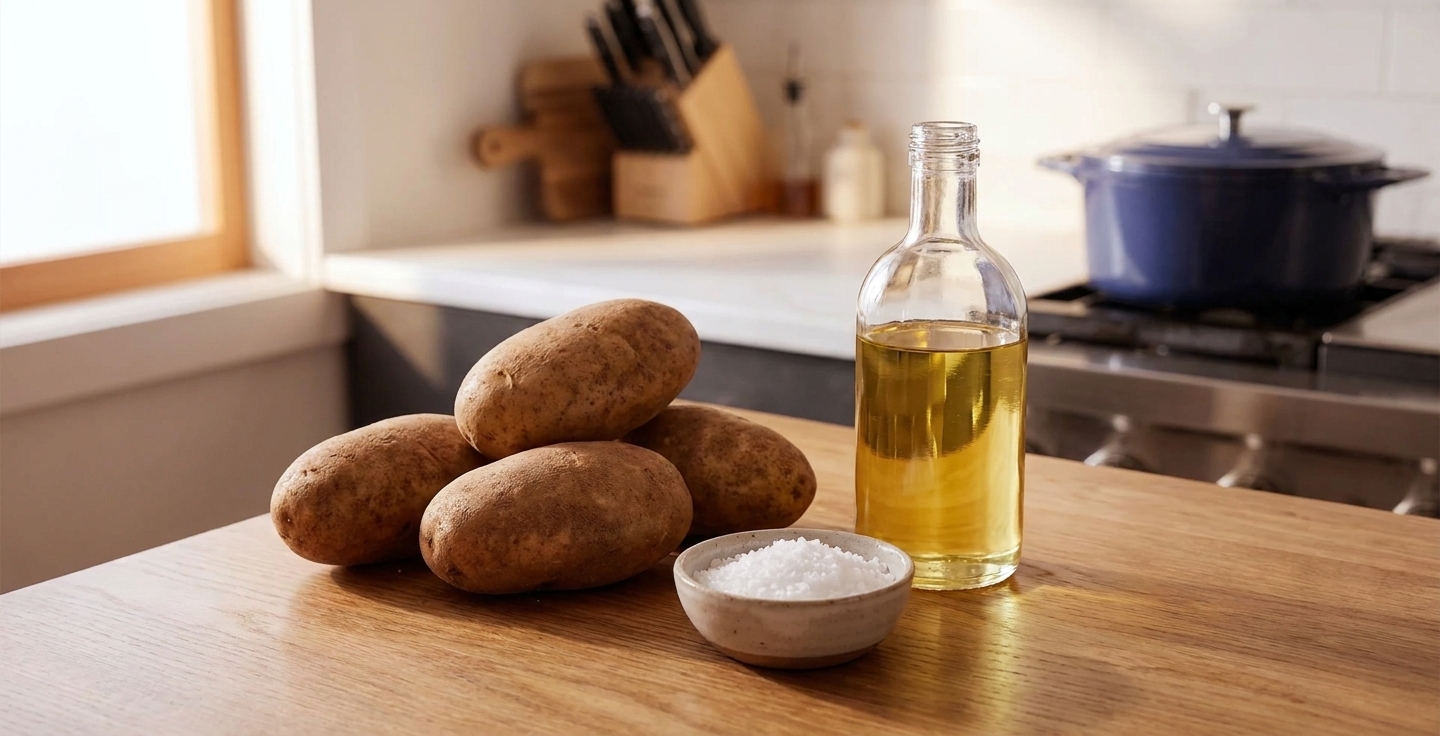
Russet potatoes are the classic choice. They are high-starch and low-moisture, which helps you get that fluffy center and crisp exterior. Yukon Golds work, but they tend to come out a bit creamier and less shatter-crisp.

Do I really have to soak the potatoes?

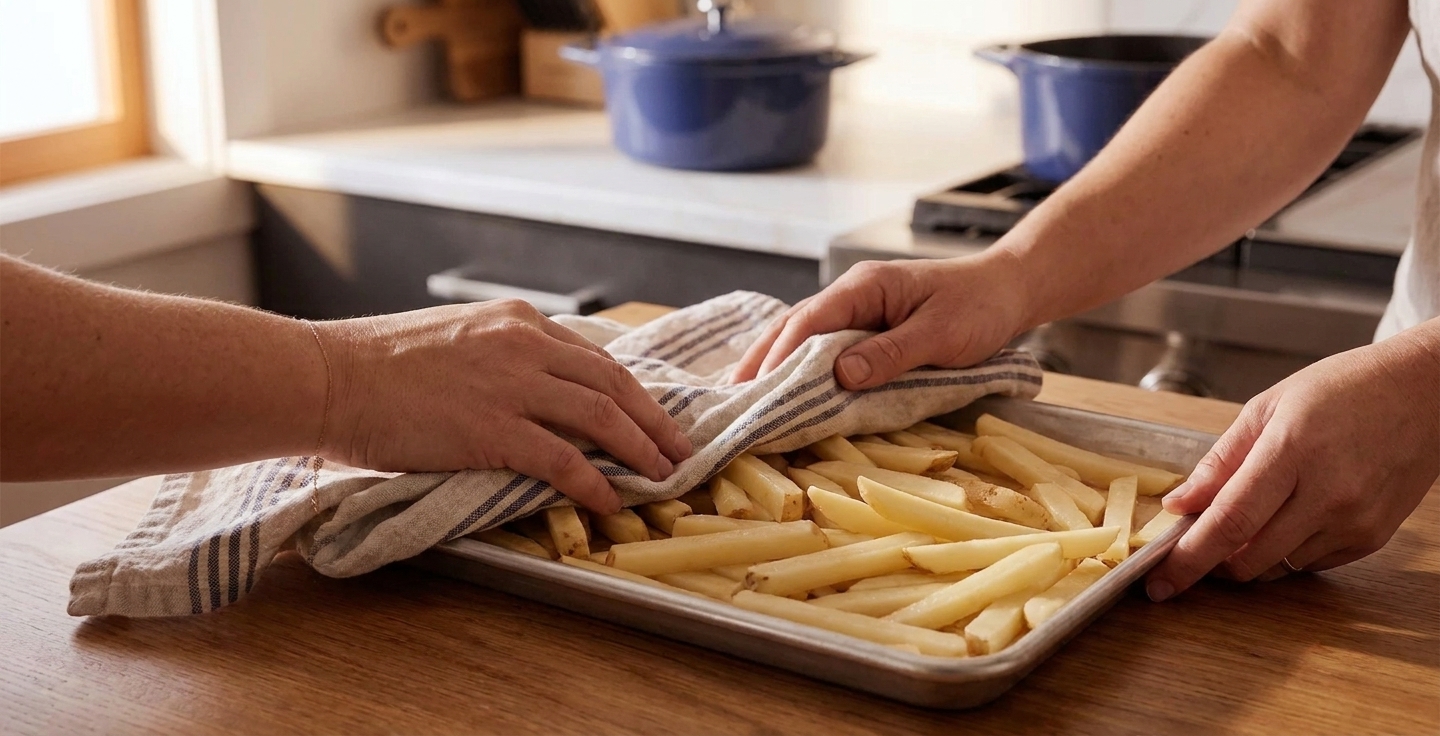
You do not have to, but soaking helps a lot. It rinses off excess starch so fries brown more evenly and crisp better. If you are short on time, do a quick 10-minute soak and then dry them extremely well.

Why are my fries soggy?

The usual culprits are: oil not hot enough, overcrowding the pot, or not drying the potatoes well. Also, if you salt too early and let them sit, salt can draw moisture to the surface.

Can I bake these instead of frying?

You can, but it is a different vibe. If you want oven fries, toss cut potatoes with oil and bake at 450°F on a preheated sheet pan, flipping halfway. They will be tasty, just not quite the same crisp as deep-fried.

What oil should I use?

Use a neutral oil with a high smoke point like peanut, canola, vegetable, or avocado oil. Extra-virgin olive oil is not ideal for deep frying because of its lower smoke point and stronger flavor. Refined or light olive oil has a higher smoke point and can work, but the flavor is still more noticeable than neutral oils.

Can I make these ahead?

Yes. Do the first fry, cool completely, then refrigerate (covered) for up to 24 hours. When you are ready to eat, bring the oil back to 375°F and do the second fry until crisp and golden.

I used to think great fries were a restaurant-only flex, like the kind of thing that required a dedicated fryer and someone yelling “behind” every 30 seconds. Then I started chasing that perfect bite at home, the one where the outside is crisp and the inside is basically potato clouds. The double-fry method was the moment it clicked.

Now fries are my favorite “I’ve had a day” dinner side. I put on a playlist, slice some russets, and accept that I will probably eat a few standing over the sheet pan. That is not a flaw in the process. That is the process.

A pair of hands sprinkling fine salt over freshly fried French fries resting on a wire rack in a warm home kitchen