Mom's Best Recipes
Recipe

Crispy Fried Calamari with Marinara

Golden, crunchy calamari that stays tender inside, served with a quick marinara for dipping, lemon wedges, and a shower of parsley.

Author By Matt Campbell
4.8
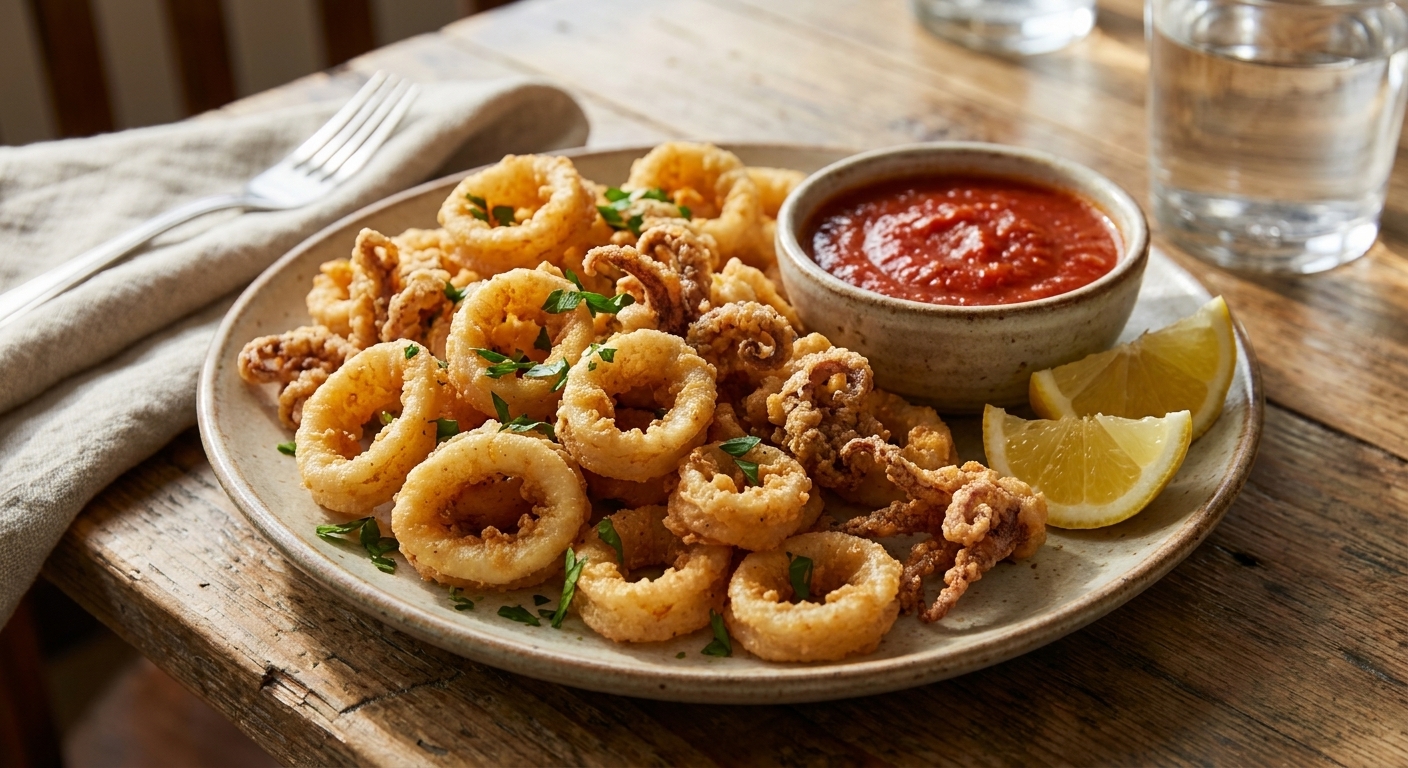
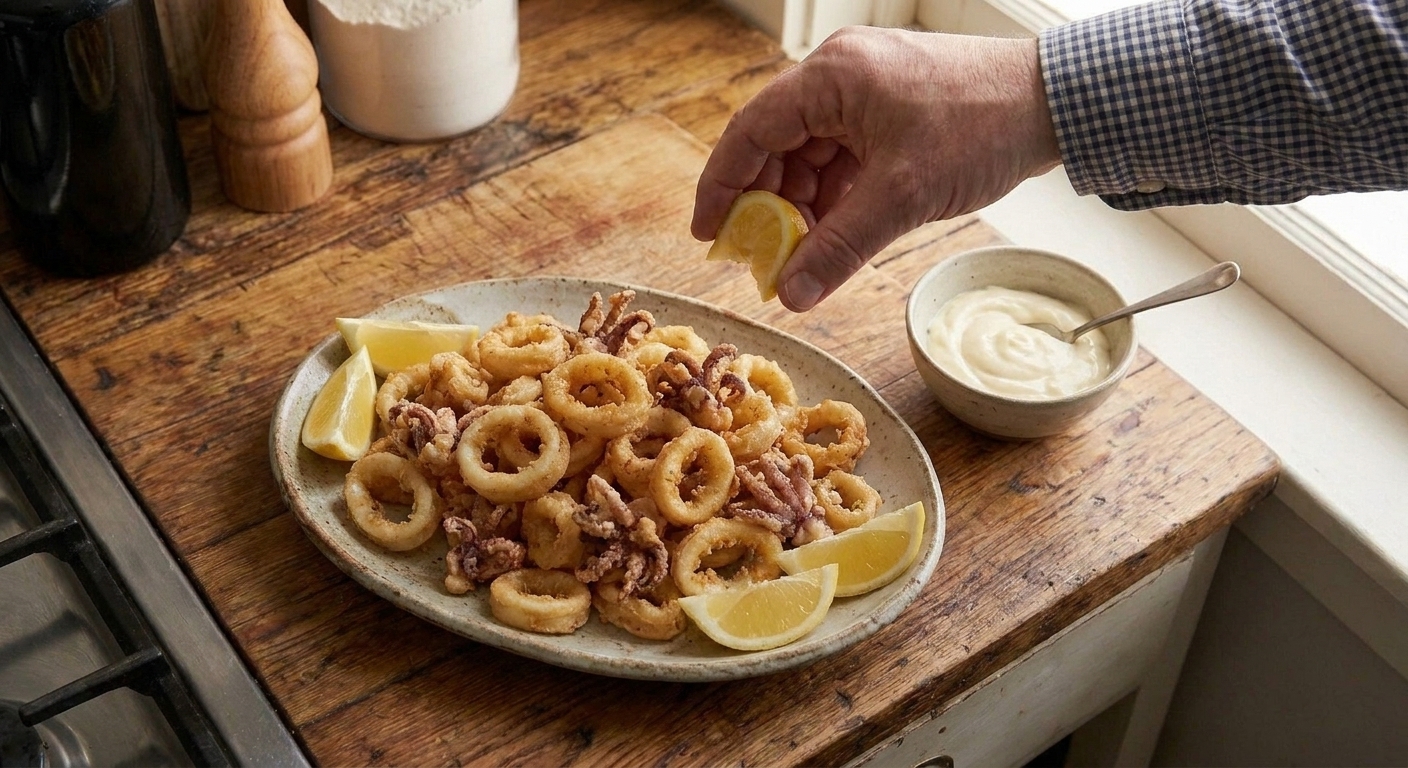
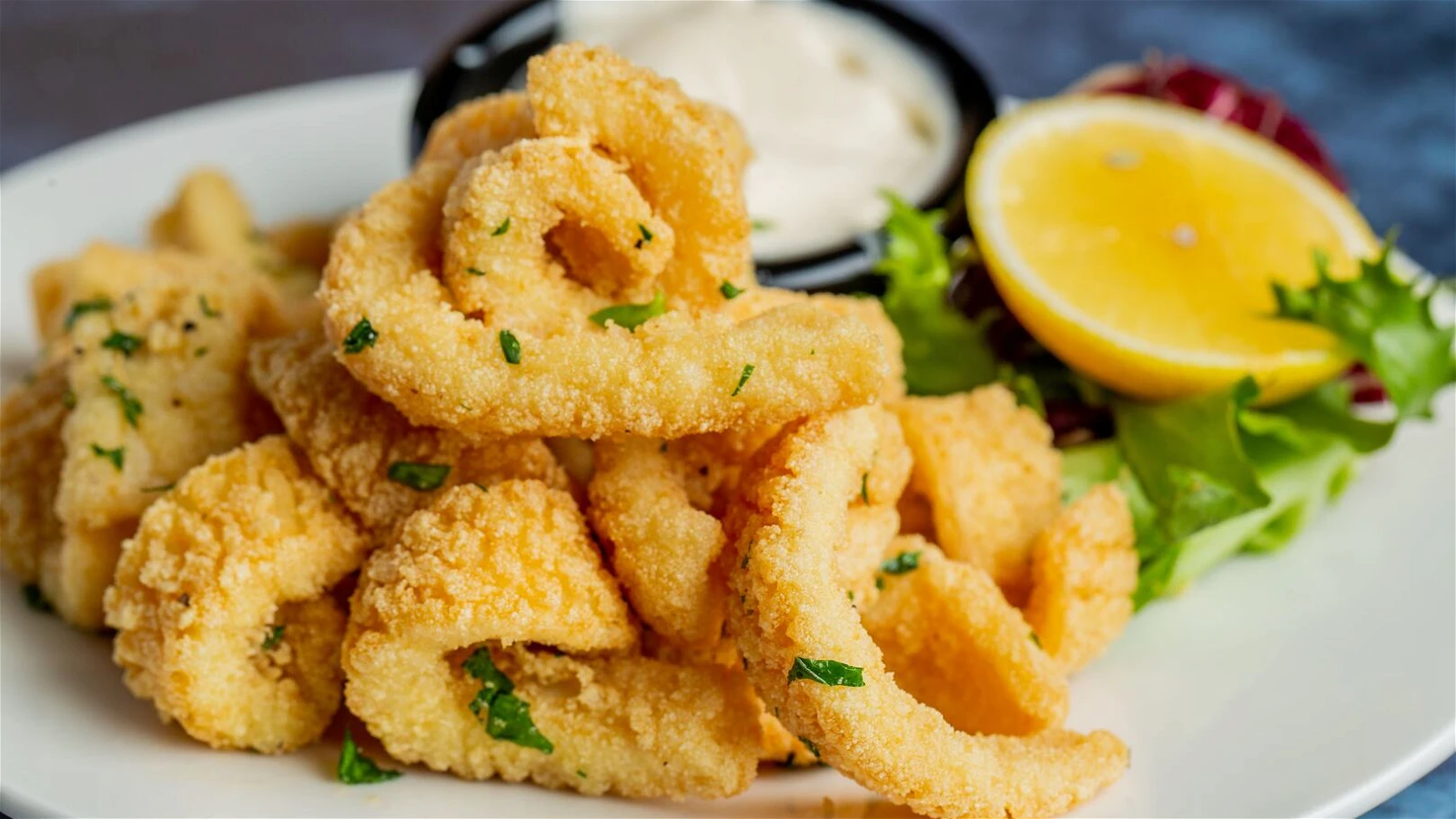
A single plate of golden crispy fried calamari rings and tentacles with a small bowl of marinara sauce for dipping, lemon wedges, and chopped parsley, natural window light, restaurant-style photography

Fried calamari is one of those appetizers that makes you feel like you are winning at life. It hits every note I care about: crisp edges, cozy-salty crunch, a bright dip, and that little squeeze of lemon that wakes the whole thing up.

The secret is not a secret at all. High heat, quick cook, and a light coating that stays crunchy. Do that, and calamari goes from "why is this chewy" to "wait, who made this" in about three minutes.

We are going restaurant-style with a seasoned flour and cornmeal breading, plus a simple marinara that tastes like it simmered all afternoon but absolutely did not. You will finish with lemon and parsley because we are civilized like that.
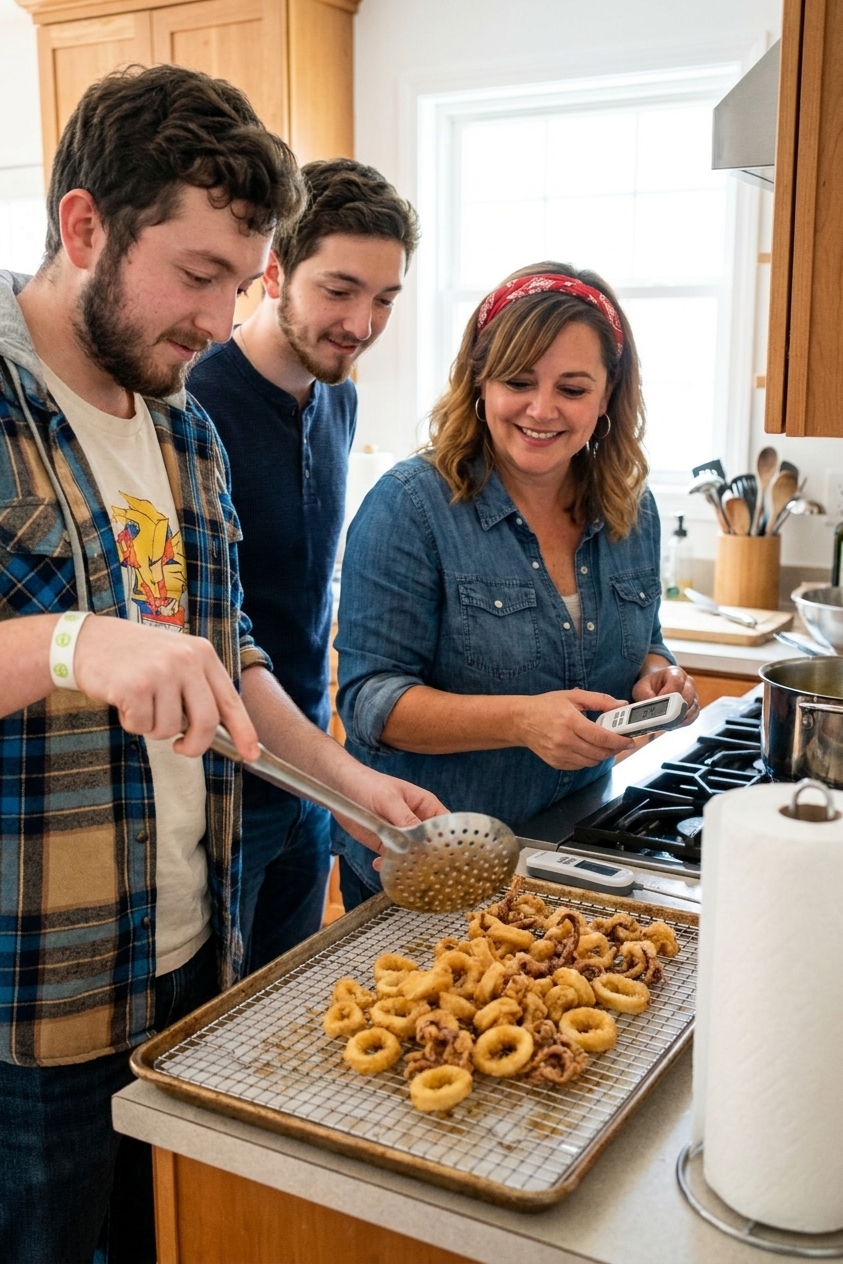
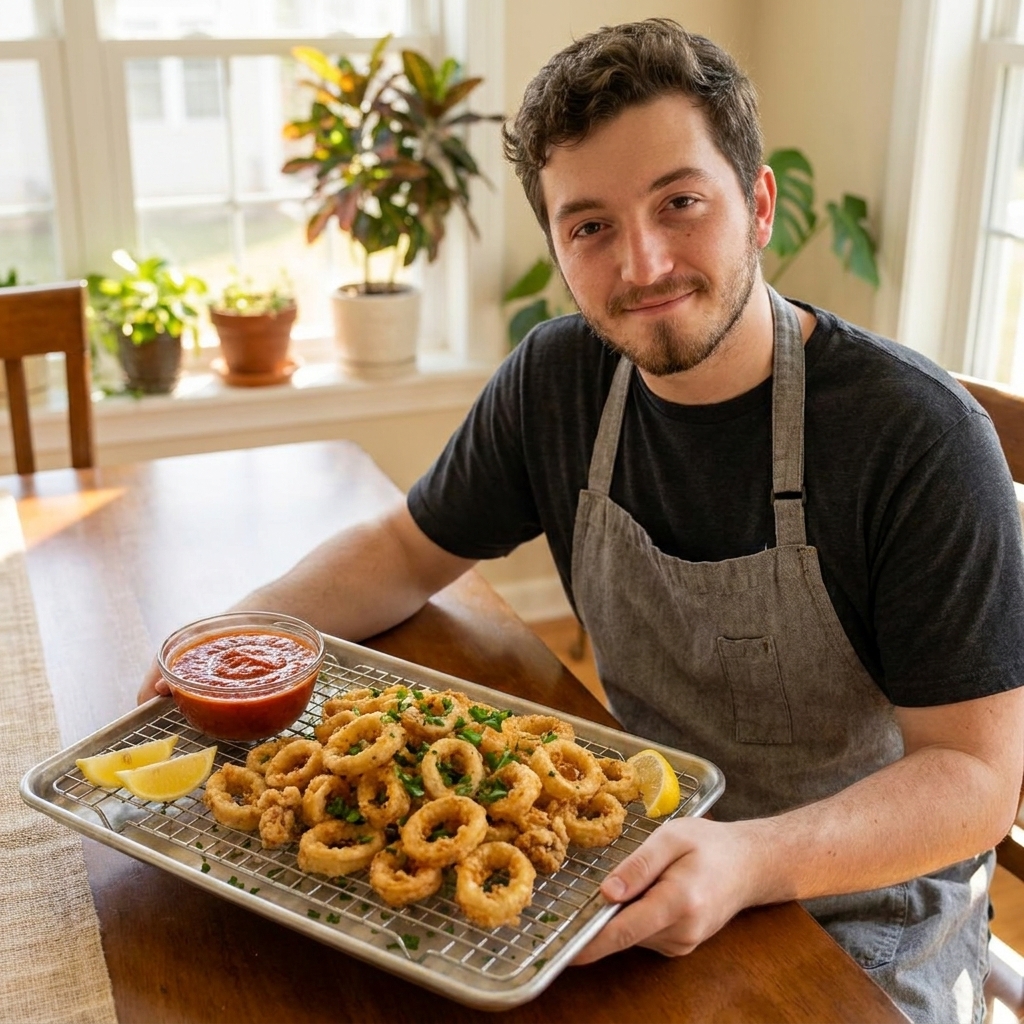
Freshly fried calamari rings and tentacles draining on a wire rack set over a sheet pan next to a slotted spoon and a thermometer, home kitchen counter, candid cooking photo

Why It Works

  • Crisp, light coating: A flour and cornmeal mix gives you that crackly bite without feeling heavy.
  • Tender squid, not rubber: We fry fast at the right oil temperature so the calamari stays soft inside.
  • Flavor that shows up: Seasoning goes in the breading, plus a finishing hit of salt, lemon, and parsley.
  • Dipping options built in: Quick marinara included, and an easy spicy aioli variation if you want a little extra kick.

Pairs Well With

Storage Tips

How to Store and Reheat

Fried calamari is best right away, but if you have leftovers (rare, but it happens), here is how to keep them from turning sad.

Storing

  • Cool completely, then store in an airtight container lined with paper towels.
  • Refrigerate up to 2 days.

Reheating for crunch

  • Oven: 425°F for 6 to 10 minutes on a wire rack over a sheet pan.
  • Air fryer: 400°F for 3 to 6 minutes, shaking halfway through.
  • Avoid the microwave: It turns crisp into chew.

Marinara

  • Store marinara in a sealed container for up to 5 days.
  • Reheat gently on the stove or microwave until warmed through.

Common Questions

Troubleshooting and Questions

Why is my calamari rubbery?

Rubbery calamari usually means it cooked at the wrong pace. Squid is tender when it is cooked very quickly over high heat or very slowly for a long braise. Frying is the quick route, so aim for hot oil and short cook times. If you fry at a low temp, the squid sits in the oil longer and tightens up.

What oil temperature should I use for frying calamari?

Target 350°F to 365°F. If it drops below 340°F, your coating absorbs oil and goes heavy. If it runs much above 375°F, the coating can brown before the squid cooks through evenly.

How do I keep the breading from falling off?

  • Pat the squid very dry before dredging. Moisture prevents the coating from adhering.
  • Work in small batches and dredge right before frying.
  • Let excess flour mix fall off before it hits the oil.
  • Do not overcrowd the pot, which cools the oil and causes sticking.

Can I use frozen calamari?

Yes. Thaw overnight in the fridge, then rinse and dry it extremely well with paper towels. Moisture is the enemy of crunch and also makes oil splatter.

Do I need to soak calamari in milk or buttermilk?

Not required, but it can help the coating cling and adds a little tenderness. This recipe uses a quick buttermilk dip. If you do not have it, regular milk plus a squeeze of lemon works fine.

What is the difference between rings and tentacles?

Rings come from the body tube, tentacles are the arms. Both fry up great. Tentacles get extra crispy little edges, which is always a good thing.

How do restaurants get calamari so crisp?

Hot oil, small batches, and a dry dredge that is seasoned properly. Also, they salt it immediately after frying. Do that part at home and you will taste the difference.

The first time I tried making calamari at home, I did what every brave, overconfident home cook does. I guessed the oil temp, dumped in a big batch, and then wondered why everything went pale, soggy, and oddly chewy. It was like biting into a rubber band that had dreams of being seafood.

Now I treat calamari like a quick little sprint. Dry it, coat it, fry it hot, and get it out fast. Then I hit it with salt, lemon, and parsley like I am finishing a mic drop. It is a tiny appetizer that makes the whole kitchen feel like a fun night out.