Mom's Best Recipes
Recipe

Crispy Fried Chicken

Golden, crunchy, and ridiculously juicy with a seasoned buttermilk soak and a crisp flour coating that actually stays crispy.

Author By Matt Campbell
4.8
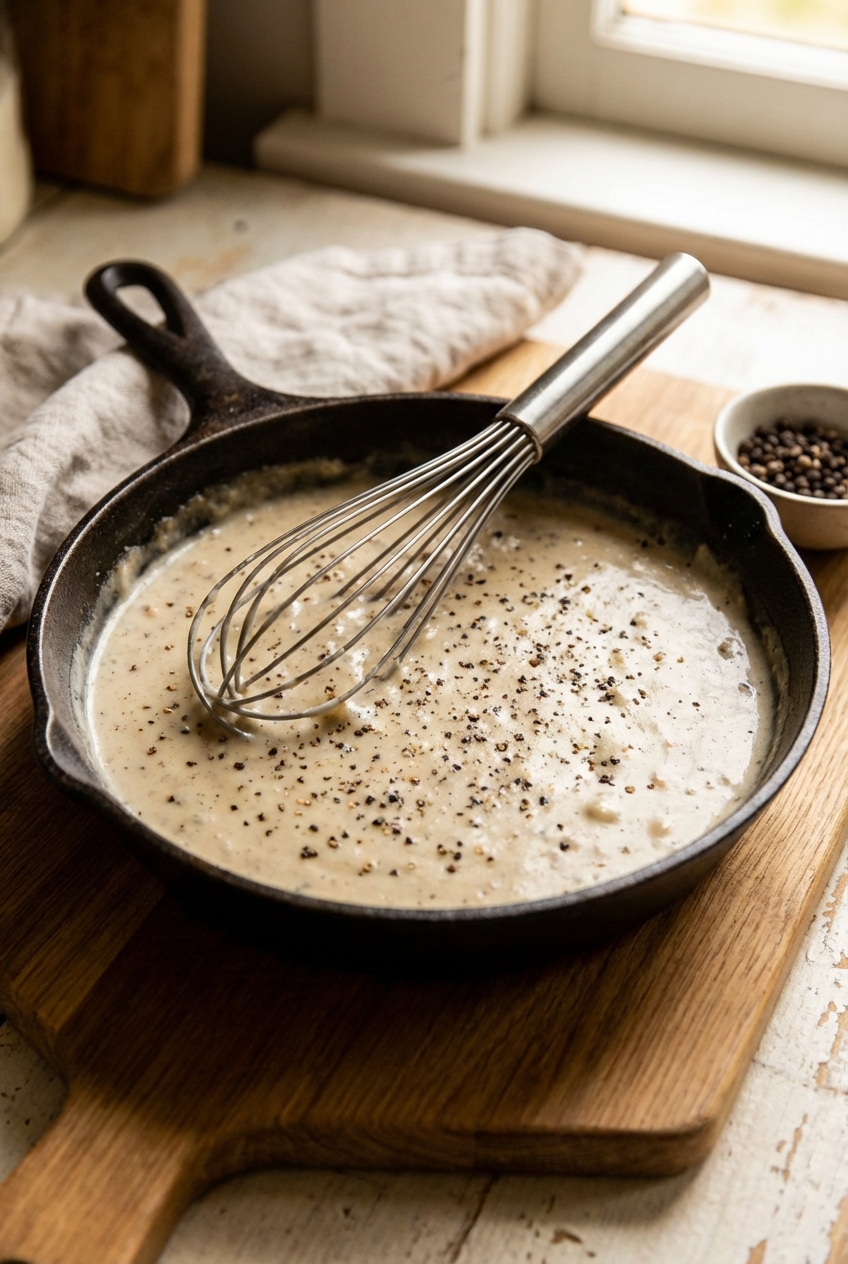
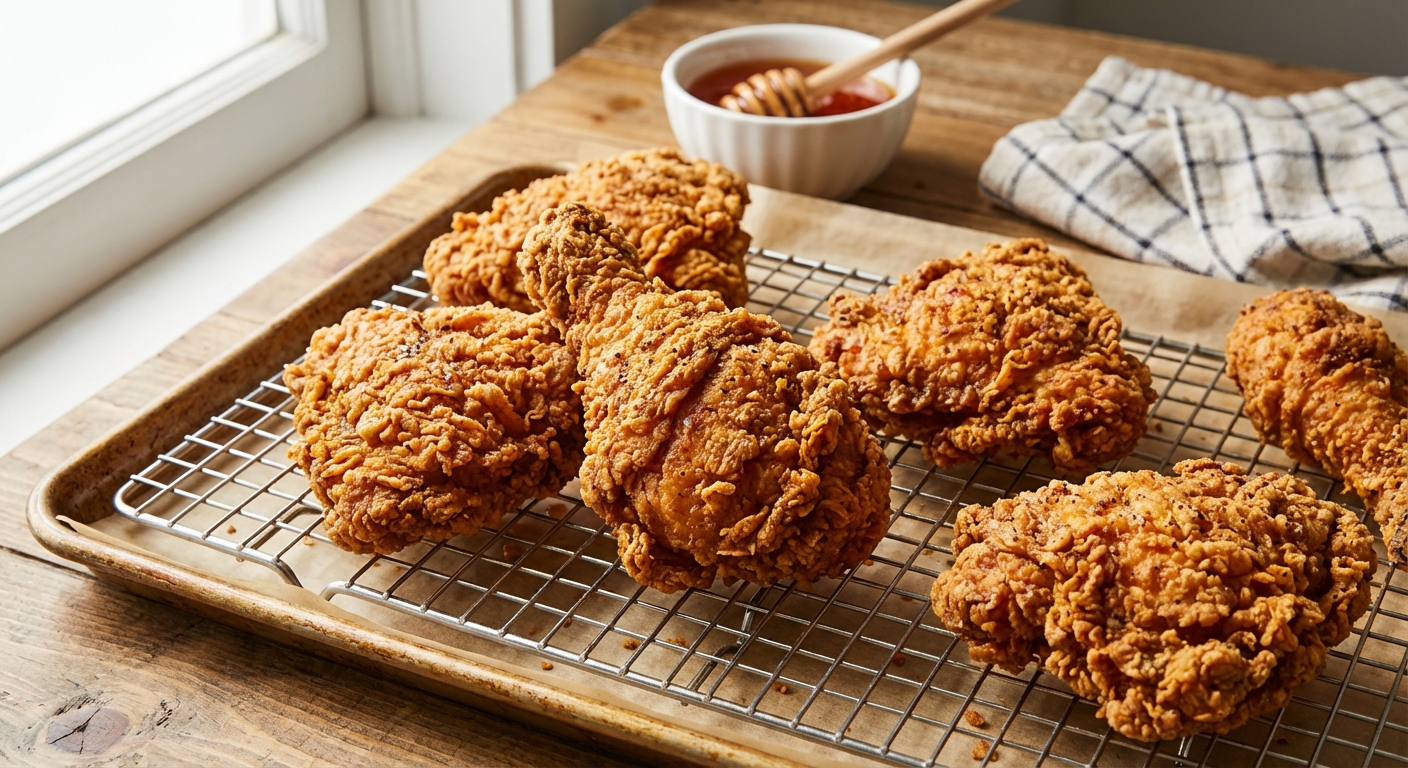
A real photo of golden brown crispy fried chicken pieces on a wire rack set over a baking sheet, with visible crunchy craggy coating and a small bowl of hot honey in the background

If your fried chicken dream is crisp edges, juicy meat, and a crust that crackles when you tap it with tongs, you are in the right kitchen. This recipe is my no-drama path to that classic golden crunch, without needing fancy tools or a deep fryer the size of a small bathtub.

The game plan is simple: a buttermilk soak for tenderness and flavor, a well-seasoned flour coating that fries up rugged and crunchy, and a steady oil temperature so the chicken cooks through without turning your crust into sadness. You will end up with fried chicken that tastes like you put in way more effort than you did, which is basically my favorite kind of cooking.
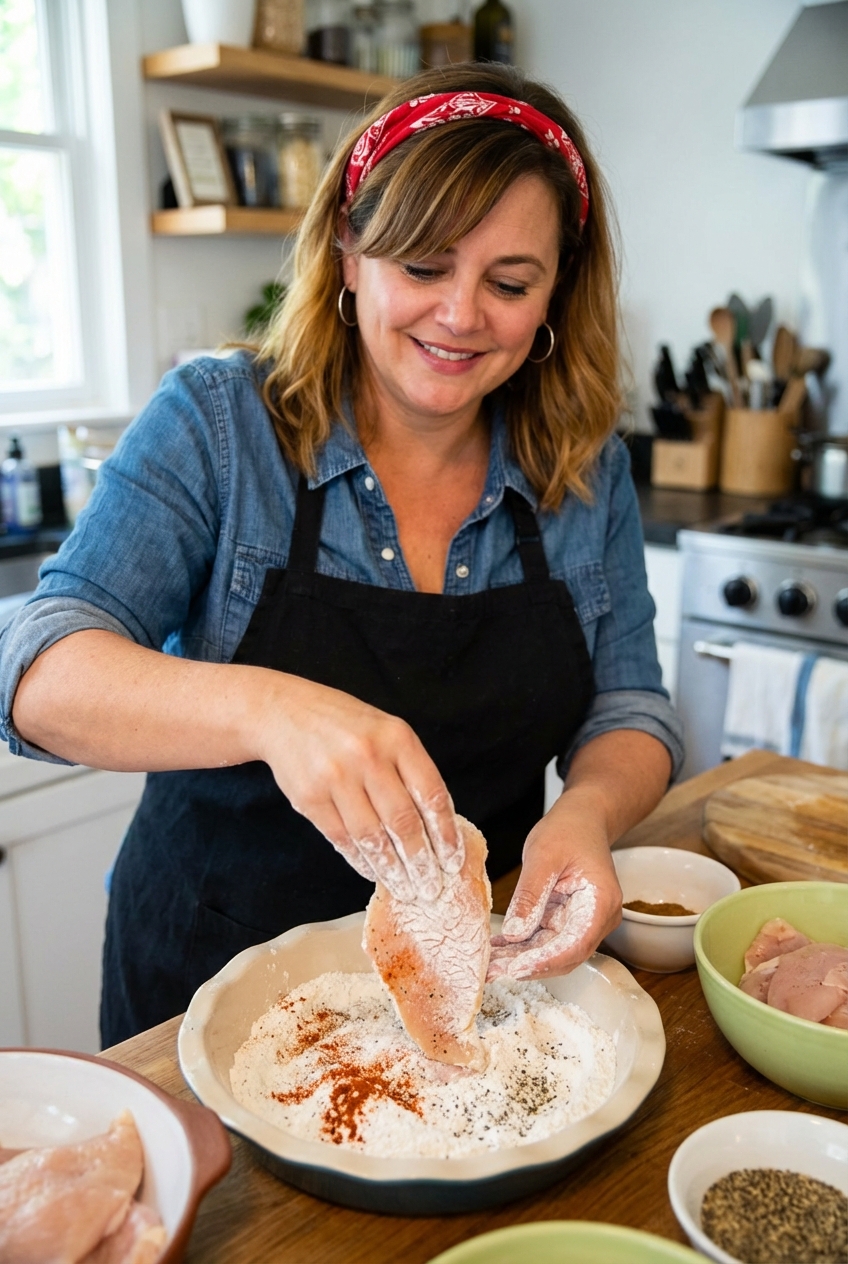
A real photo of a cook dredging a piece of chicken in seasoned flour in a shallow dish on a home kitchen counter

Why It Works

  • Buttermilk + a little hot sauce helps tenderize the chicken and seasons it beyond the surface, especially with a longer soak.
  • Double-dredge option (flour, dip, flour) creates those craggy bits that fry up extra crisp.
  • Cornstarch in the flour helps the coating fry lighter and crunchier.
  • Resting the coated chicken for at least 10 minutes helps the breading cling, so it is less likely to slide off in the oil.
  • Frying to temperature (not just color) keeps the meat juicy while the crust stays golden.

Pairs Well With

Storage Tips

Cool first: Let leftover chicken cool on a rack (not a plate) so steam does not soften the crust.

  • Refrigerate: Store in an airtight container lined with paper towel for up to 3 days.
  • Freeze: Wrap pieces tightly and freeze up to 2 months. Thaw overnight in the fridge for best texture.

Best reheat for crispiness: Oven at 400°F on a wire rack for 12 to 18 minutes (until hot and crispy). Air fryer works great too: 375°F for 6 to 10 minutes.

Avoid: Microwaving if you can. It heats the meat, but the crust turns soft fast.

Common Questions

What oil is best for frying chicken?

Use a neutral oil with a high smoke point like peanut, canola, vegetable, or refined avocado oil. Peanut oil is classic, but canola and vegetable are totally solid and easy to find. If you have a peanut allergy in the house, skip peanut oil.

What temperature should the oil be?

Aim to fry between 325°F and 350°F. To make that easier, I recommend heating the oil to 360°F to 375°F before the first batch. Raw chicken drops the oil temperature fast, and starting higher helps you land in the sweet spot instead of the greasy zone.

How do I know when the chicken is done?

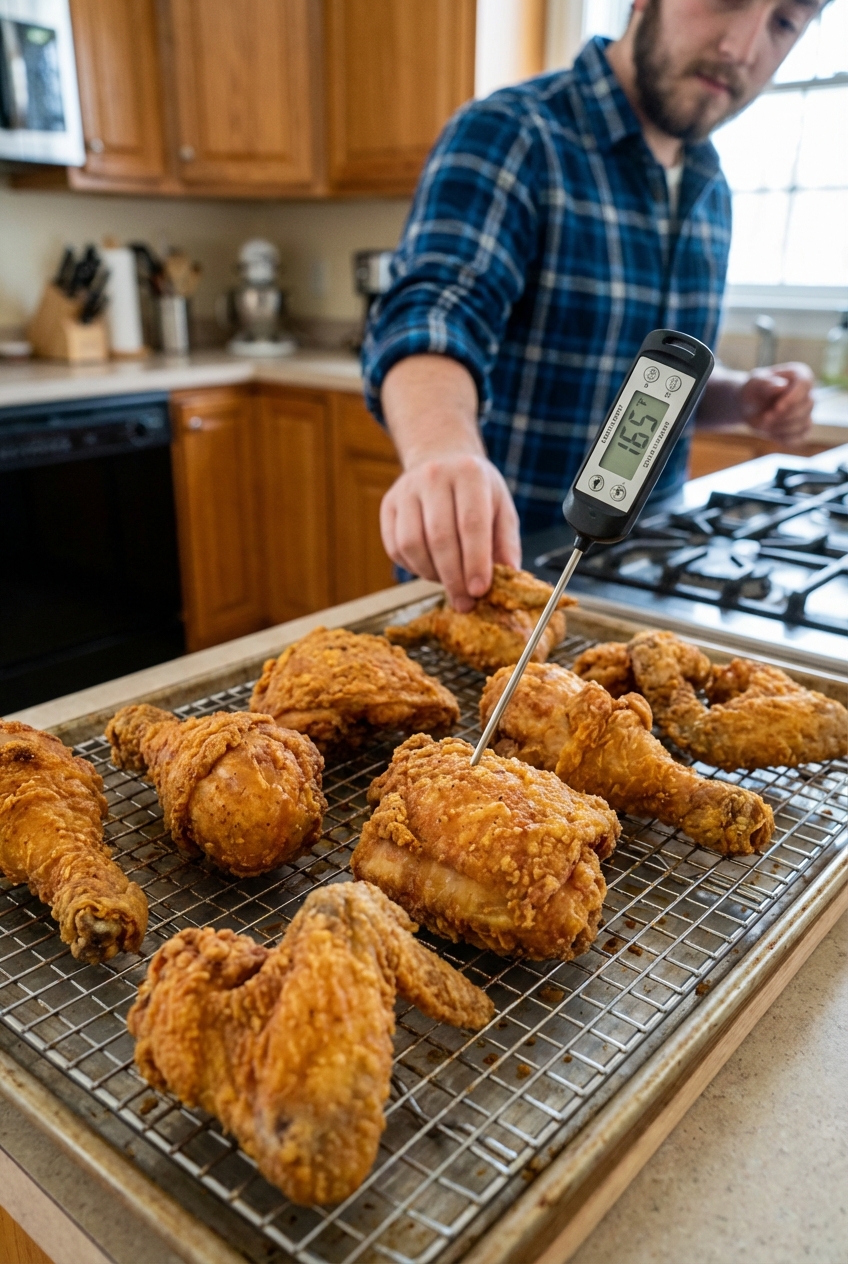
Go by internal temp, not just color. Breasts are done at 165°F. Dark meat is best around 175°F to 185°F (tender and juicy).

Why is my breading falling off?

Common culprits: the chicken was too wet going into the flour, you skipped the rest after dredging, or the oil was not hot enough. Let excess marinade drip off, press the coating on firmly, and let the breaded chicken sit at least 10 minutes (10 to 20 is even better) before frying.

Can I make it less spicy?

Yes. The hot sauce in the buttermilk adds tang more than heat. Use a mild hot sauce, or swap it for 1 to 2 tablespoons pickle juice for flavor without spice.

The first time I made fried chicken at home, I treated it like a big dramatic event. Too much flour. Oil too hot. Smoke alarm doing its lead vocalist thing. The chicken was somehow both dark and undercooked, which is an impressive failure if you think about it.

Now I keep it friend-level simple: season the buttermilk like it matters, season the flour like it matters more, and let the thermometer be the adult in the room. When you nail that first batch and hear the crust crackle as it hits the rack, it is hard not to feel like you just leveled up as a home cook.