Mom's Best Recipes
Recipe

Crispy Oven Chicken Wings

Crackly, deeply browned oven wings tossed in a bright garlic-butter hot sauce with a few pro tricks for real crispness.

Author By Matt Campbell
4.8
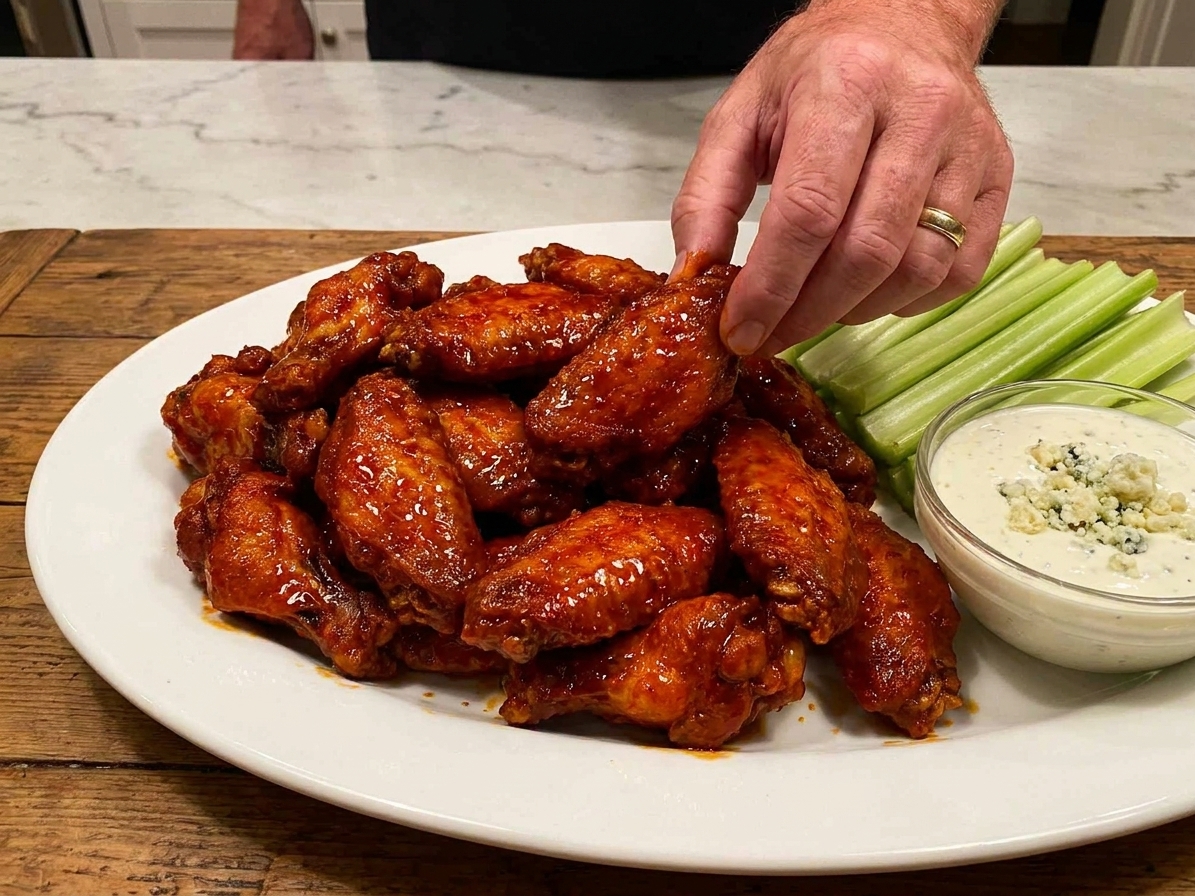
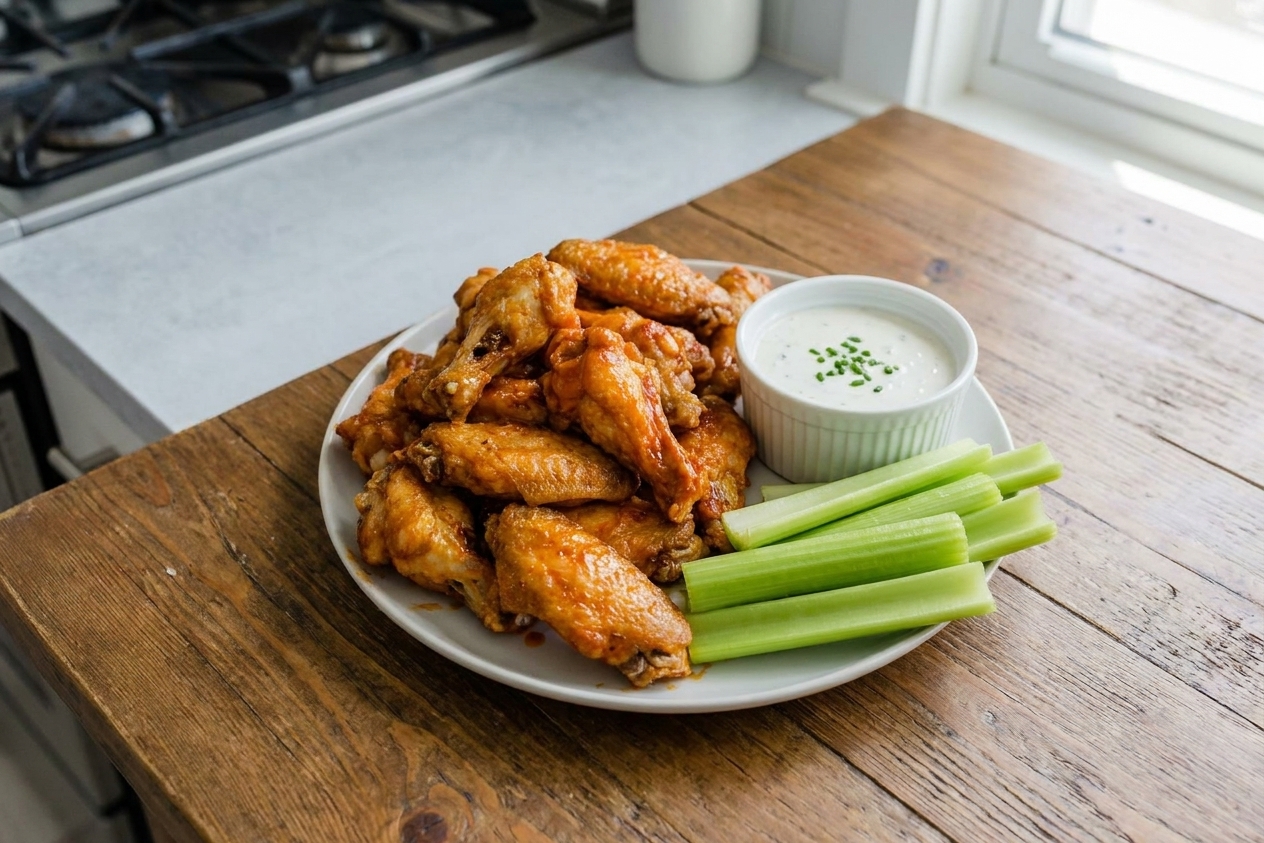
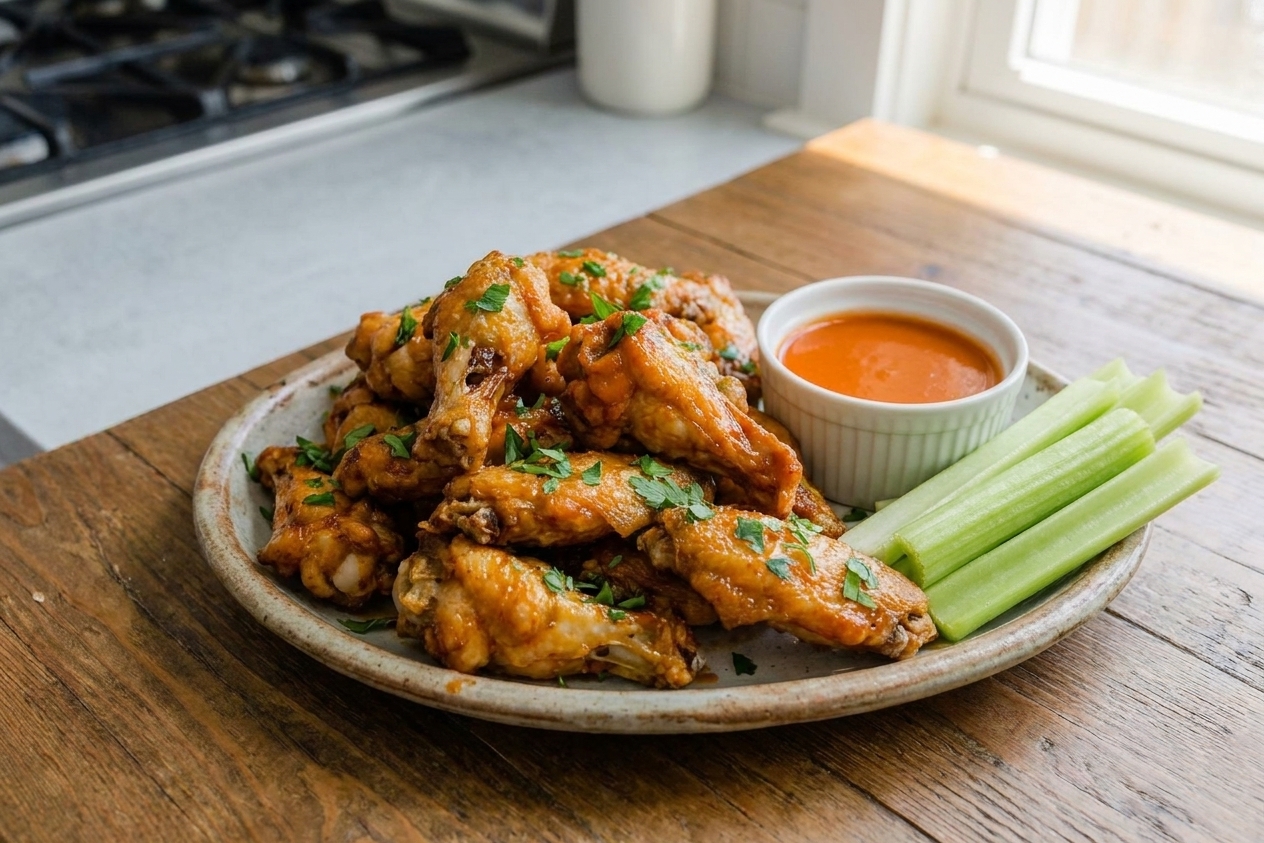
A platter of crispy oven-baked chicken wings with golden brown skin, scattered with chopped parsley, served with a small bowl of buffalo-style sauce and celery on a wooden table

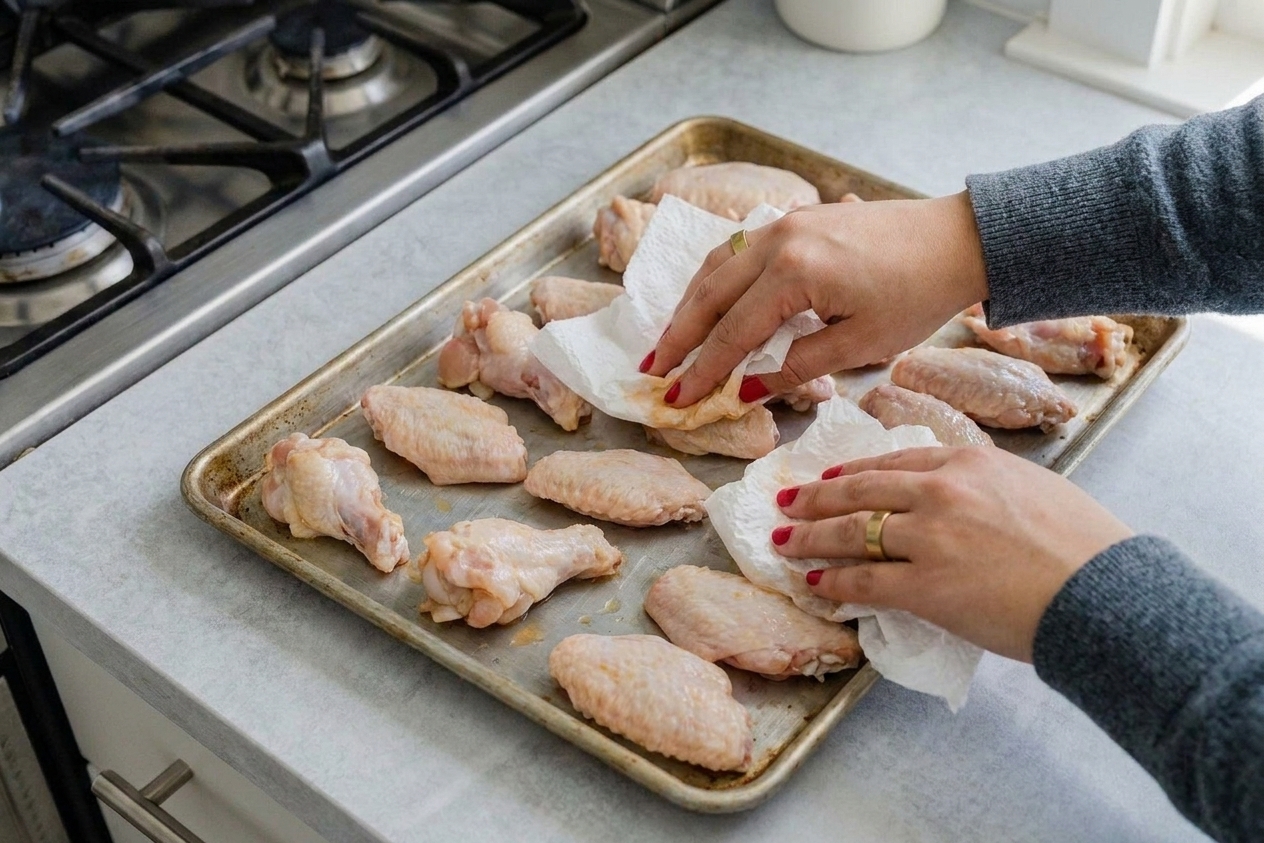
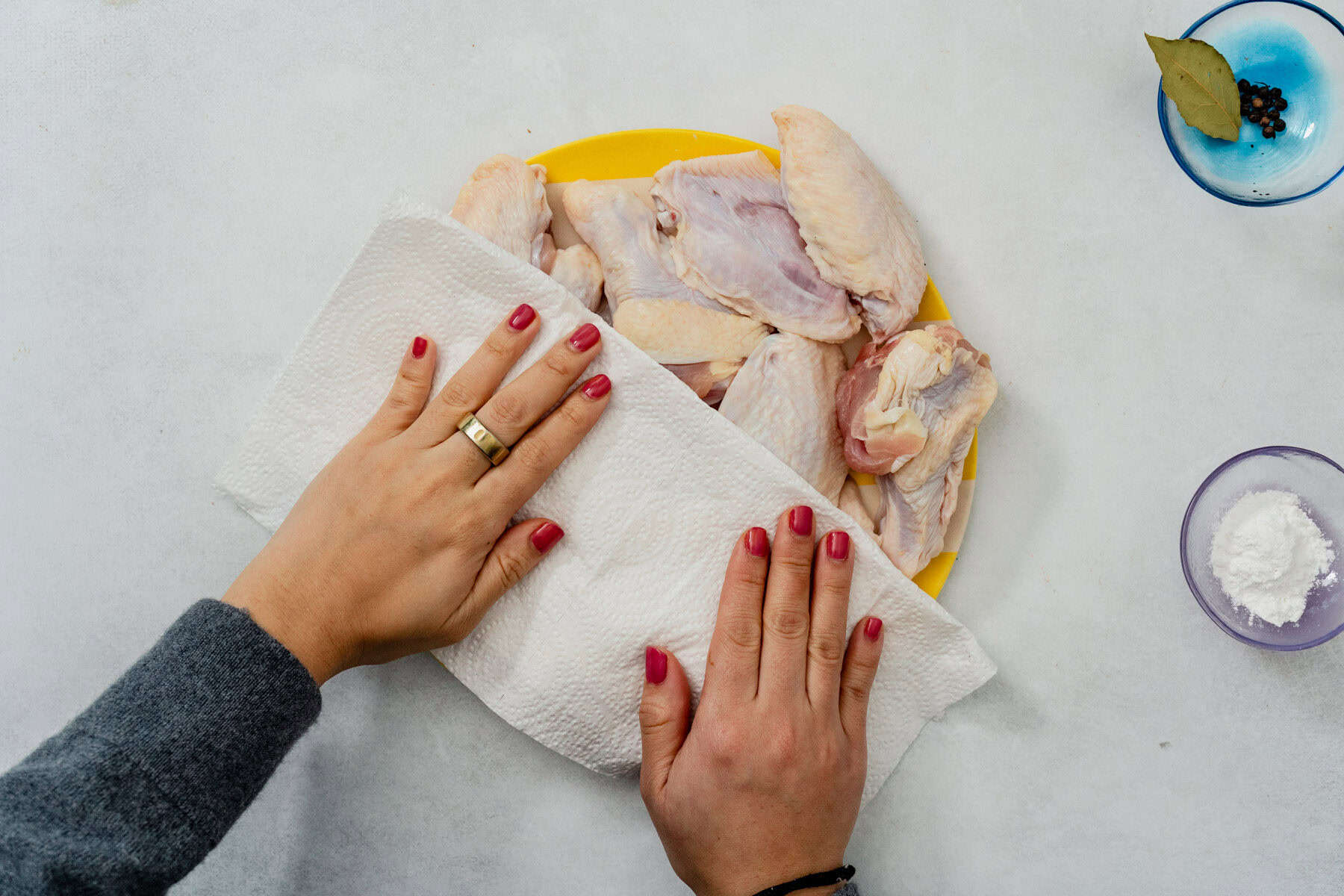
If you have ever pulled wings out of the oven and thought, why are you soft, you are not alone. The good news is you do not need a deep fryer to get that shattering, crisp-edged skin. You just need two things: dry wings and smart heat.

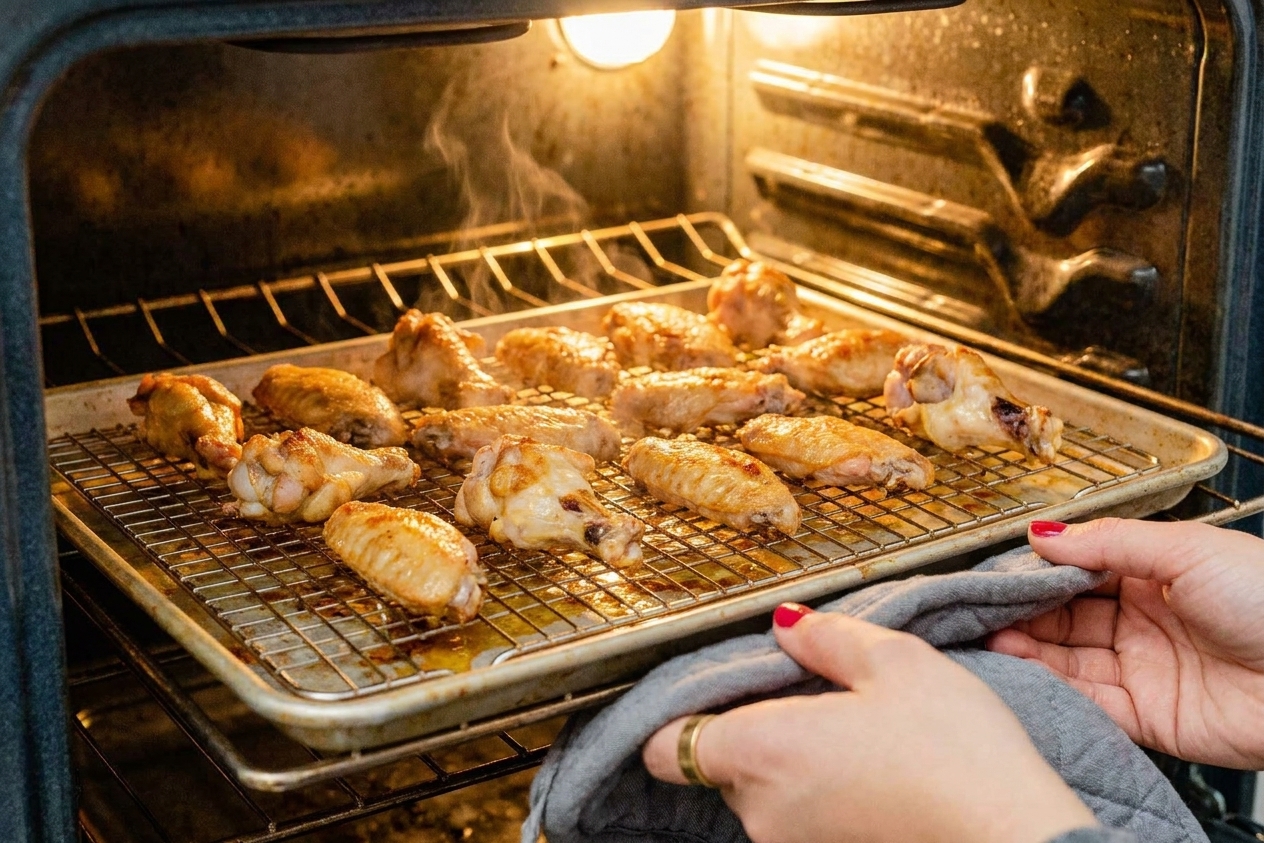
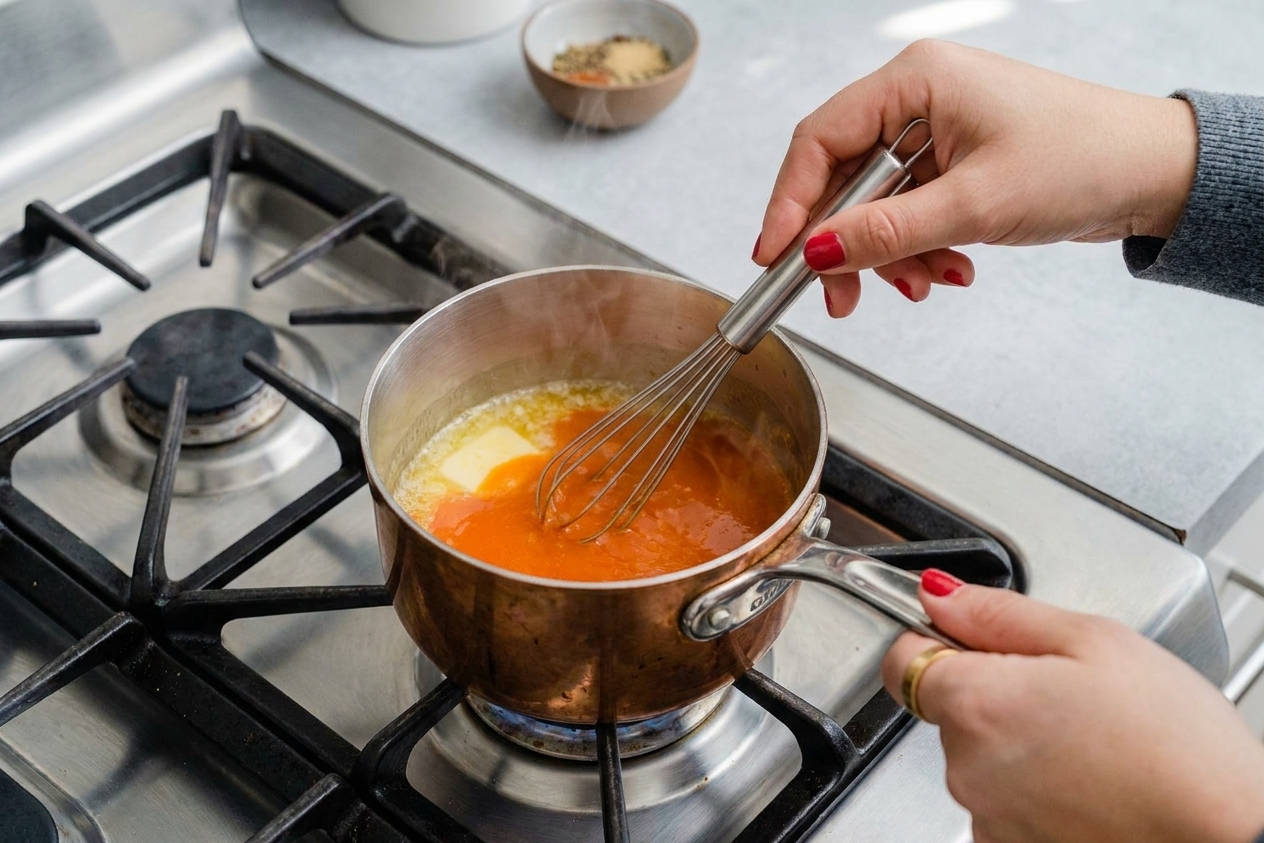
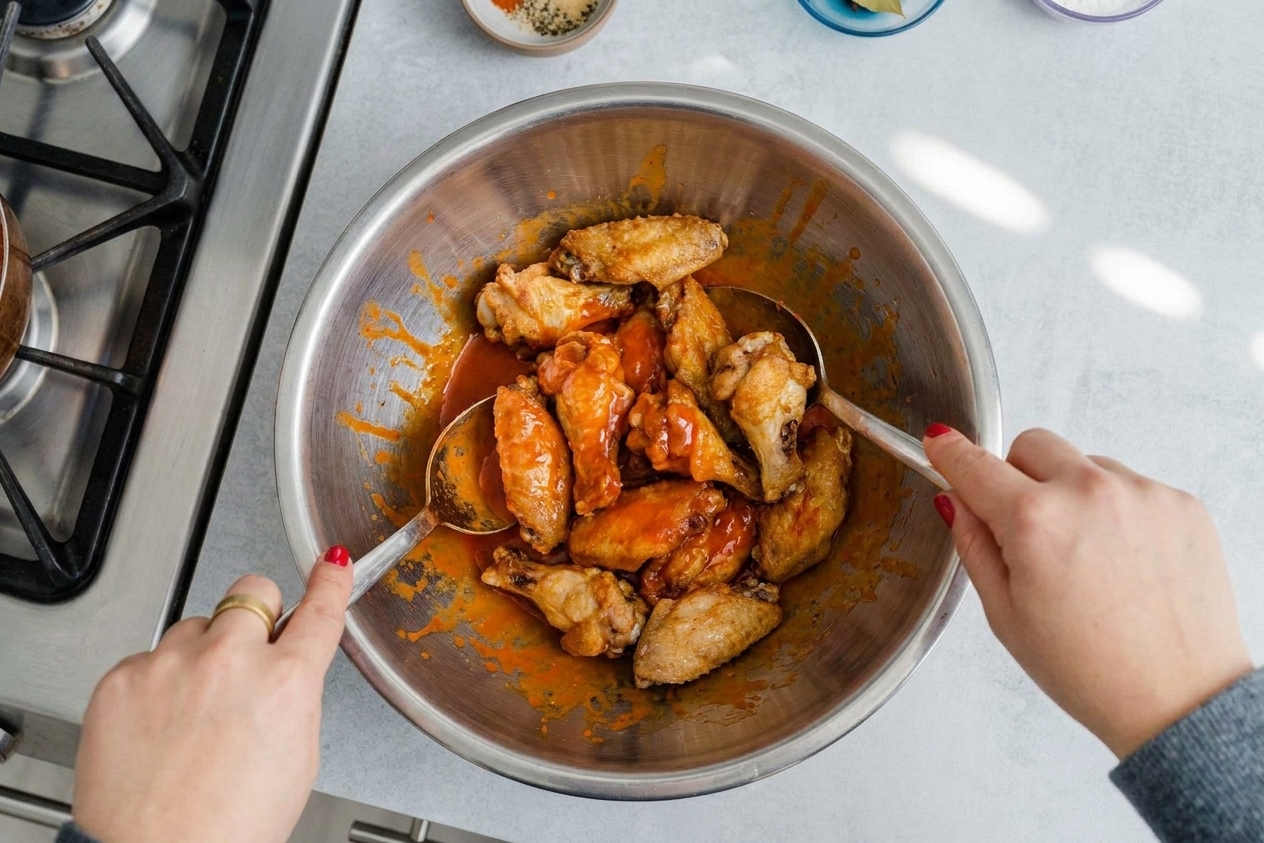
This is my weeknight-friendly, no-fuss method for crispy oven chicken wings that actually deliver. We bake them on a rack so hot air can hit every angle, then finish with a quick broil for that final bronzed snap. After that, we toss them in a garlicky butter hot sauce that is bright, spicy, and dangerously good.

Raw chicken wings being patted very dry with paper towels on a sheet pan in a home kitchen

Why It Works

  • Crispy skin without frying: Baking powder (not baking soda) plus a wire rack helps render fat and dry the surface for better browning.
  • Juicy meat: Moderate-high oven heat cooks the wings through while the fat slowly renders, so the inside stays tender.
  • Easy sauce options: Toss in the garlic-butter hot sauce, or keep them dry-rub style and serve sauce on the side.
  • Low mess: Foil under the rack catches drips and makes cleanup way less annoying.

Pairs Well With

Storage Tips

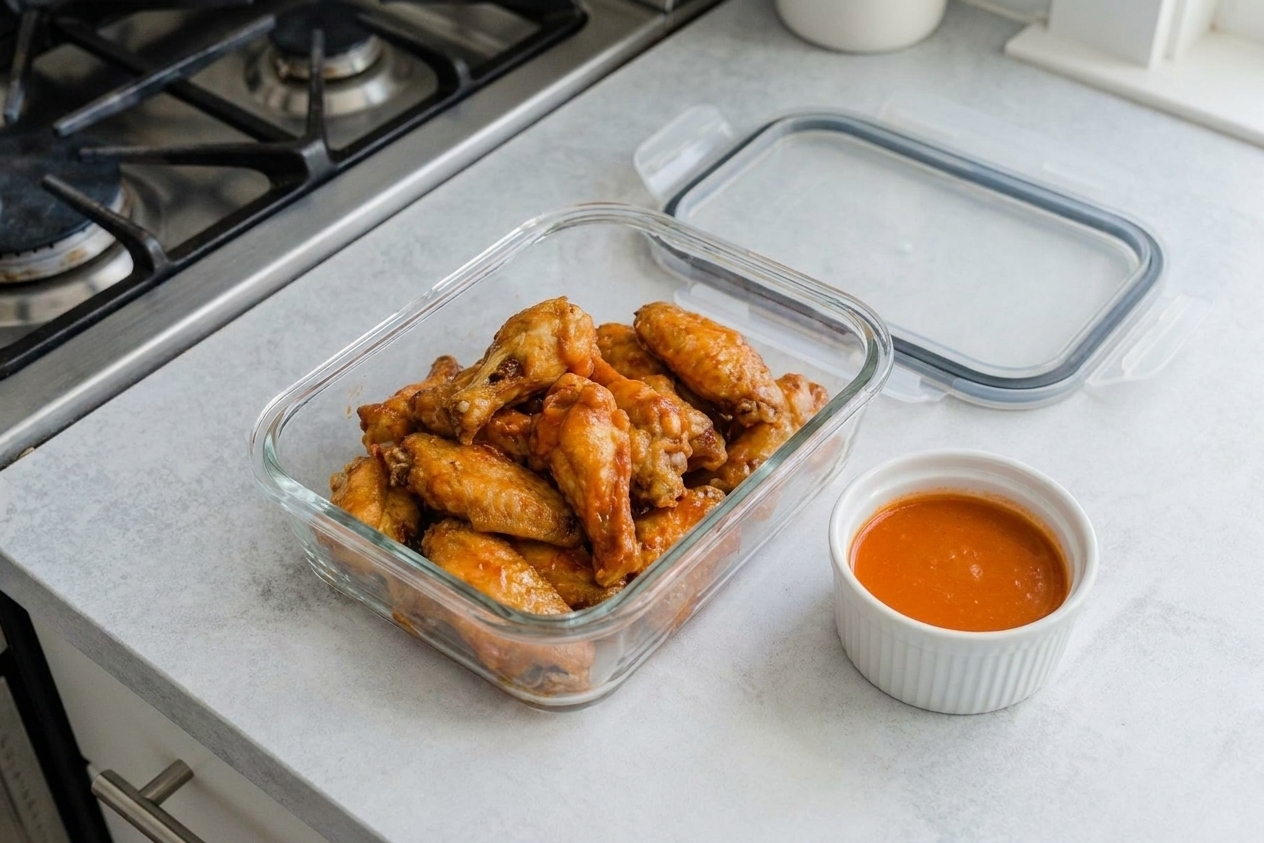
Fridge: Cool wings completely, then store in an airtight container for up to 4 days. Keep sauce separate if you want maximum crisp later.

Freezer: Freeze cooled wings on a sheet pan until solid, then transfer to a freezer bag for up to 2 months. Thaw overnight in the fridge for best texture.

Reheat for crisp: Bake on a rack at 400°F for 10 to 15 minutes (a little longer if cold from the fridge), then broil 1 to 2 minutes to re-crisp. If sauced, reheat first, then toss with warmed sauce after.

A glass meal prep container holding leftover baked chicken wings next to a small container of sauce on a kitchen counter

Common Questions

Do I really need baking powder?

You do not need it, but it is one of the easiest and most reliable ways to get crisp skin in the oven. Baking powder raises the surface pH and helps the skin brown and blister. Use aluminum-free baking powder if you have it.

Can I use baking soda instead?

I do not recommend it here. Baking soda is much stronger than baking powder, and it can taste soapy or harsh if you use too much. If you are after easy, consistent results, stick with baking powder.

Should I bake wings on foil or parchment?

Neither directly. For best crisp, use a wire rack over a foil-lined sheet pan. Foil catches drippings. The rack keeps wings lifted so they do not steam in their own fat.

What temperature is best for oven wings?

425°F is my sweet spot for crisp skin and reliable timing. If your oven runs hot, 415°F works too. If it runs cool, give them a few extra minutes and rely on the final broil.

How do I know chicken wings are done?

Look for deeply golden, blistered skin and fat that has clearly rendered. If you use a thermometer, insert it into the thickest part near the bone without touching bone. Aim for at least 165°F for safety, but wings get noticeably better texture closer to 175 to 185°F.

Can I sauce them and still keep them crispy?

Yes, but sauce softens crispness over time. My move: toss right before serving, or serve sauce on the side for maximum crunch.

Can I make these ahead for a party?

Absolutely. Bake them until crisp, cool, refrigerate, then re-crisp on a rack at 400°F and broil briefly. Toss with warm sauce right before they hit the table.

Can I use frozen wings?

Yes, but thaw them fully first, then dry them thoroughly. Frozen wings release a lot of moisture, and moisture turns crisp dreams into steamed sadness.

Wings are one of those foods that turn a regular night into a small event. The first time I tried to do them in the oven, I basically made spicy, delicious rubber. So I started chasing the why: airflow, dry skin, rendered fat, and that last blast of heat that turns “pretty good” into “wait, these are baked?” Now this is the method I use when friends come over and I want something fun, loud, and snacky that still feels like real cooking.