Mom's Best Recipes
Recipe

Hearty Crispy Scallops With Panko

Golden, crisp-edged scallops with a crunchy panko coating and a bright lemon butter drizzle. Big comfort energy, restaurant vibes, weeknight doable.

Author By Matt Campbell
4.8
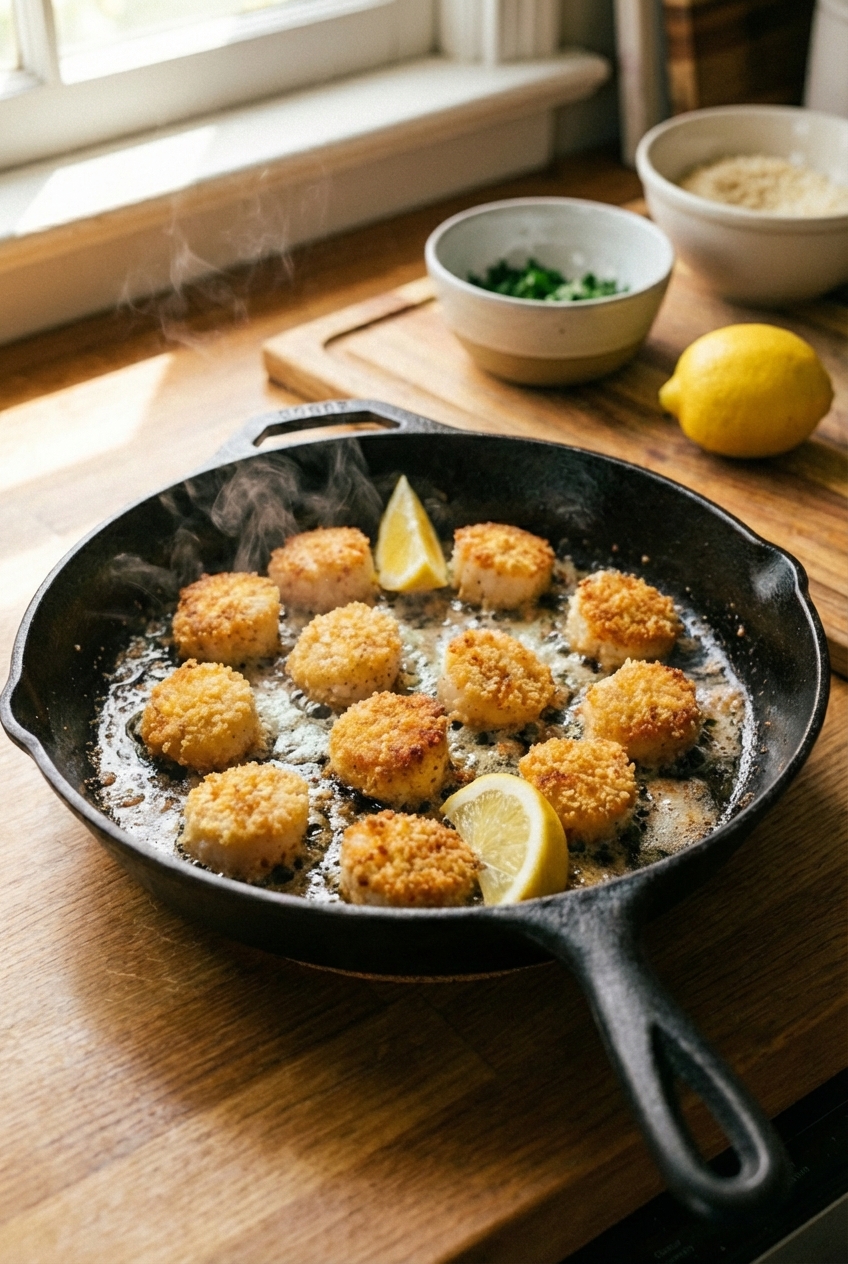
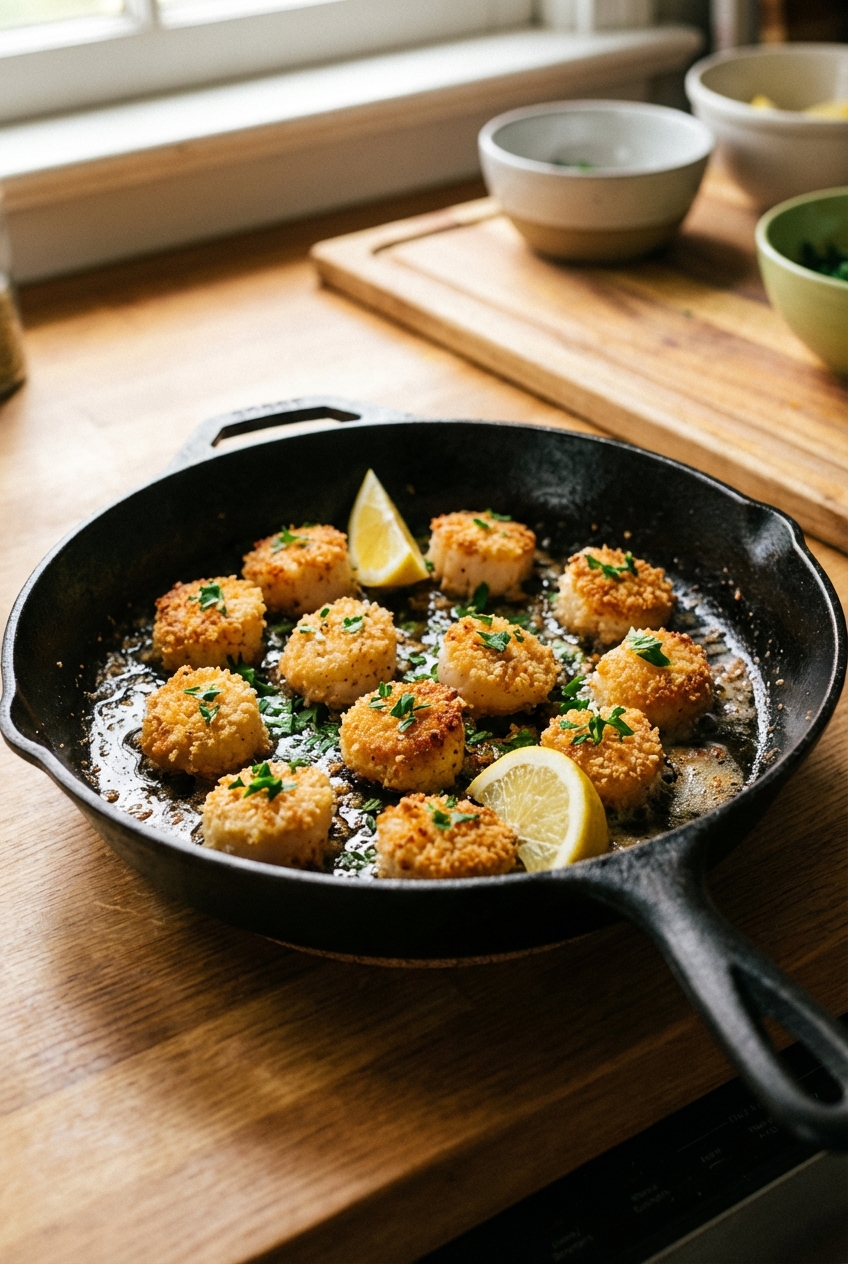
A cast iron skillet filled with golden brown, panko-crusted sea scallops with lemon wedges and chopped parsley

If scallops feel like a “special occasion only” ingredient, this is your permission slip. We are going for crispy, crunchy, and hearty, not fussy. Think: a quick panko crust, a hot pan, and that perfect moment when the edges turn deeply golden and you hear that quiet kitchen sizzle that basically means dinner is going to be great.

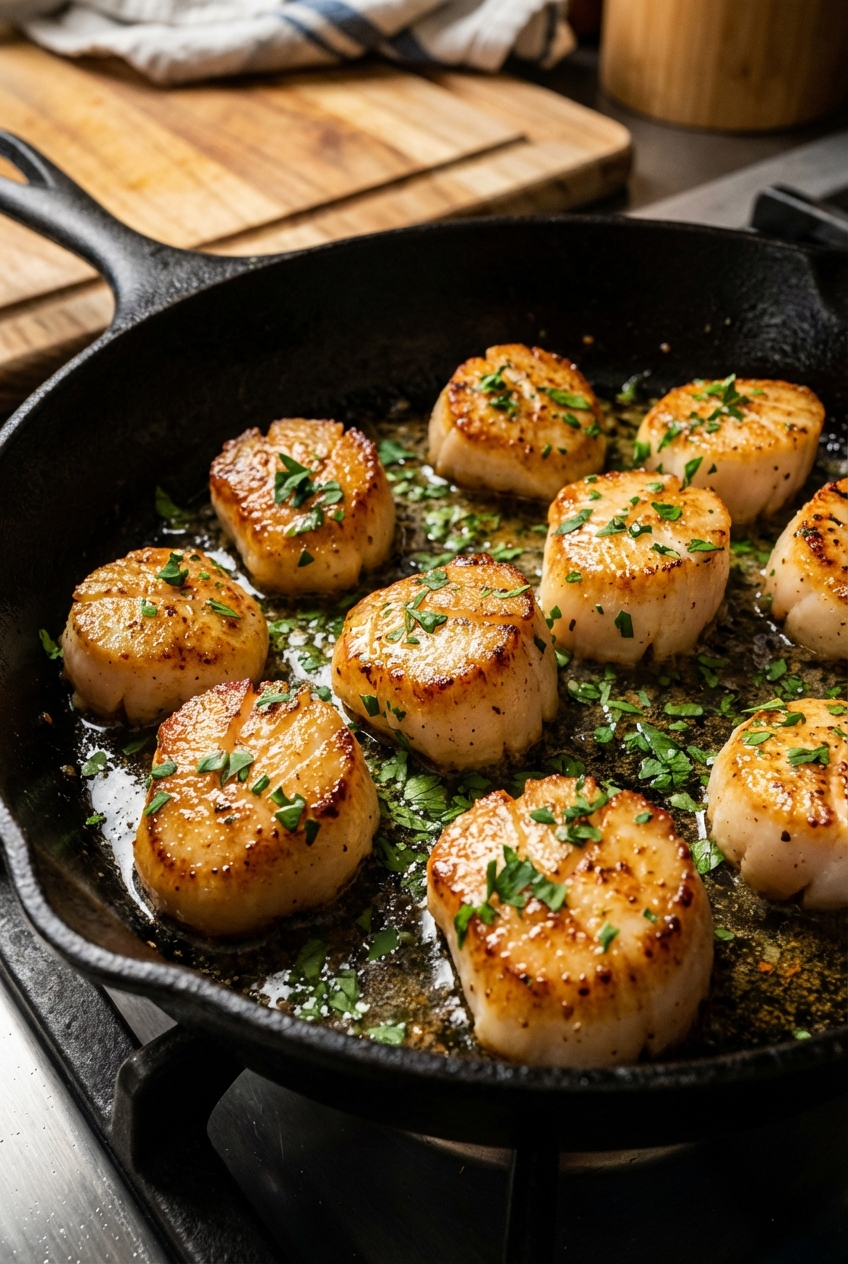
This recipe keeps the ingredient list approachable, but still delivers that steakhouse-style payoff. The trick is simple: dry scallops + high heat + don’t crowd the pan. Add a lemony butter drizzle at the end and suddenly you are the person who “just makes scallops” on a random Tuesday.
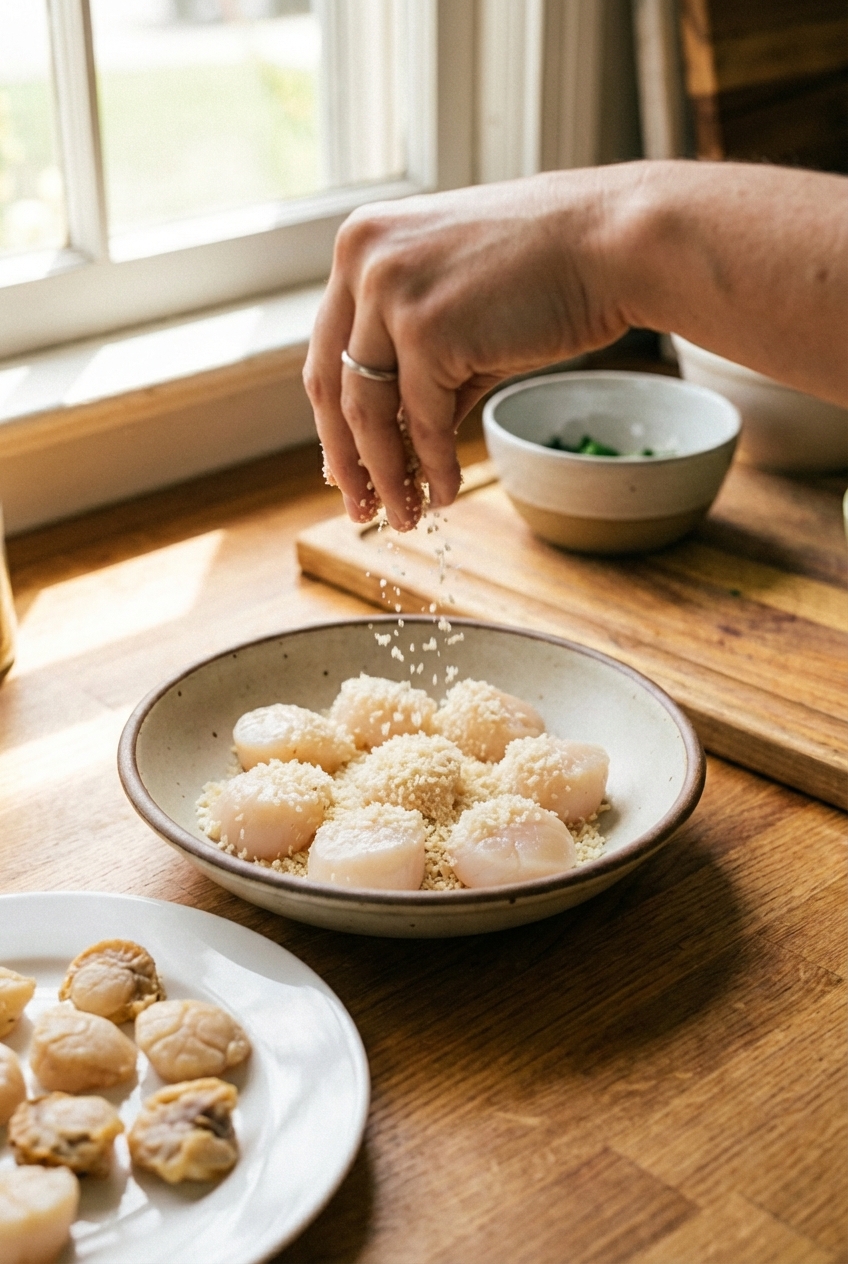
A hand sprinkling panko breadcrumbs into a shallow bowl next to a plate of dried sea scallops

Why It Works

  • Crispy and crunchy exterior thanks to a light flour dip, egg, and panko that actually sticks.
  • Juicy, tender centers because we sear fast over medium-high heat and pull them right on time.
  • Hearty, satisfying bite with bigger sea scallops and a quick lemon butter drizzle that makes it feel like a full meal.
  • Minimal drama cleanup since it is one skillet plus a simple breading station.

Key success move: pat the scallops very dry and let them sit uncovered in the fridge for 10 to 20 minutes if you have time. Less surface moisture means more crisp, less steaming.

Pairs Well With

Storage Tips

Scallops are at their best right out of the pan, but leftovers can still be good if you store them like you mean it.

Refrigerator

  • Cool leftovers quickly, then store in an airtight container for up to 2 days.
  • If possible, keep the lemon butter drizzle separate so the coating stays crunchier.

Reheat (best options)

  • Oven or toaster oven: 400°F for 6 to 8 minutes on a wire rack over a sheet pan until hot and crisp.
  • Air fryer: 375°F for 4 to 6 minutes, checking early.
  • Skillet: medium heat with a tiny bit of oil, 1 to 2 minutes per side. Do not walk away.

Freezer

I do not recommend freezing cooked panko-crusted scallops. The coating tends to go soft and the scallops get a little bouncy. If you want to prep ahead, bread them and refrigerate (covered) for a few hours on a rack (not stacked), then cook fresh.

Common Questions

Should I use bay scallops or sea scallops?

Use sea scallops for this one. They are larger, easier to sear without overcooking, and feel “hearty.” Bay scallops cook so fast that breading and crisping can turn into overcooking in a blink.

What does “dry-packed” scallops mean, and do I need them?

Dry-packed scallops are typically not treated with sodium tripolyphosphate. Translation: they sear better and taste cleaner. You can still make this with wet scallops, but pat them aggressively dry and expect a little less browning.

Why is my coating falling off?

Usually one of three things: (1) scallops were too wet, (2) you skipped the flour layer, or (3) you flipped too early. Pat dry, do flour then egg then panko, and wait until the bottom is truly golden before turning.

How do I know when scallops are done?

They should be opaque on the sides and slightly springy when pressed, not rubbery. If you use a thermometer, many cooks pull scallops around 120°F to 130°F for tenderness and let carryover heat finish the job. For a more conservative food-safety style endpoint, some guidelines suggest cooking seafood to 145°F. Either way, avoid overcooking, it is the fast track to bouncy scallops.

Can I bake these instead of pan-frying?

Yes. You will lose a little of the dramatic crust, but it works. For large sea scallops, bake on a greased rack at 425°F for 10 to 12 minutes, or until the sides are opaque and the centers are warm. Broil 1 to 2 minutes for extra color, watching closely.

The first time I tried to cook scallops at home, I treated them like chicken. Too much moving, not enough heat, and a pan that was basically crowded like a concert. They did not crisp. They politely simmered in their own moisture and I learned a lesson I still preach: dry food browns, wet food steams.

Now I make these when I want something that feels a little fancy but still hits like comfort food. The crunchy panko gives you that satisfying bite, and the lemon butter at the end is my favorite kind of kitchen chaos: messy, fast, and completely worth it.