Why did my dumplings turn out gummy?
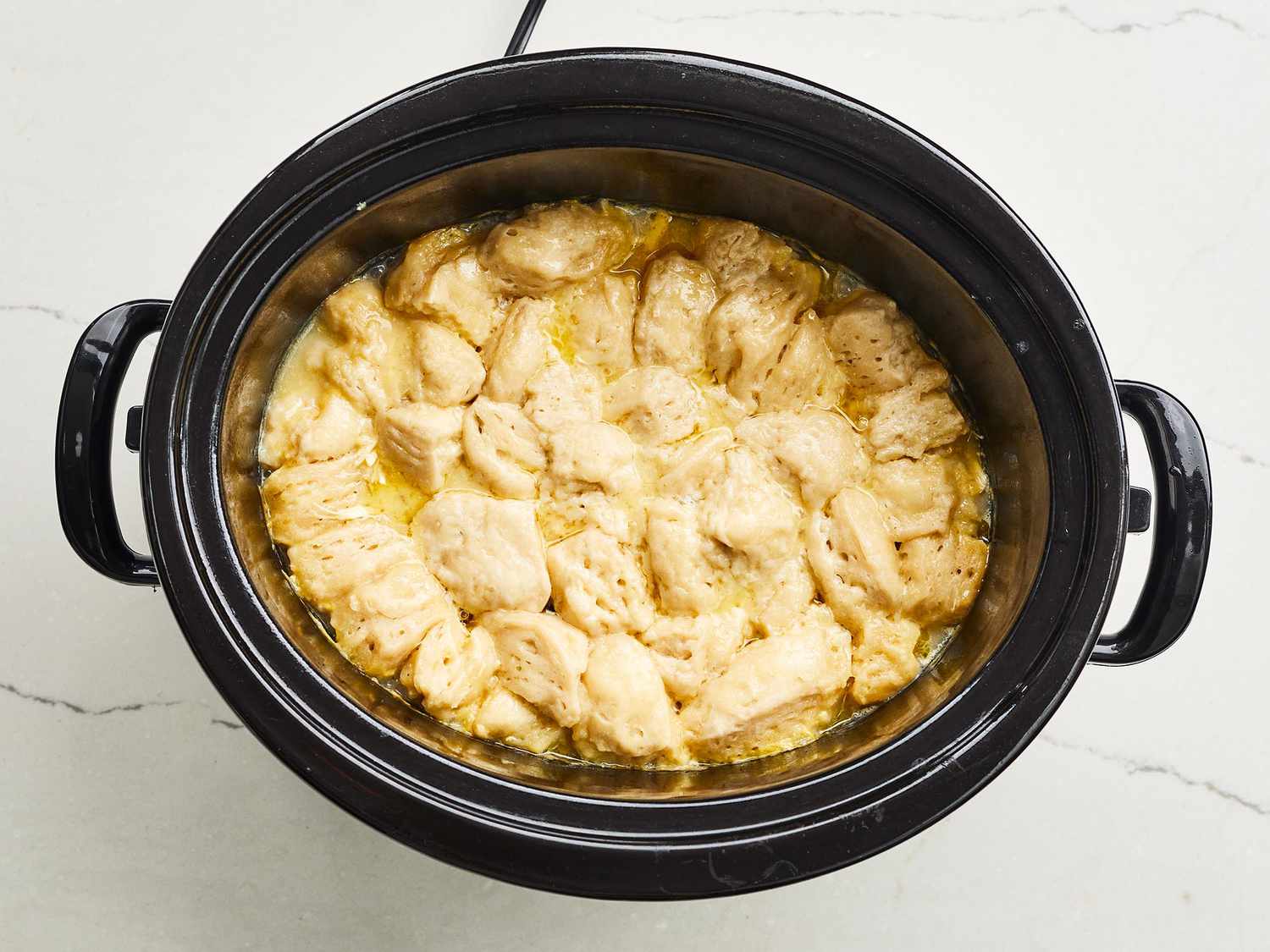
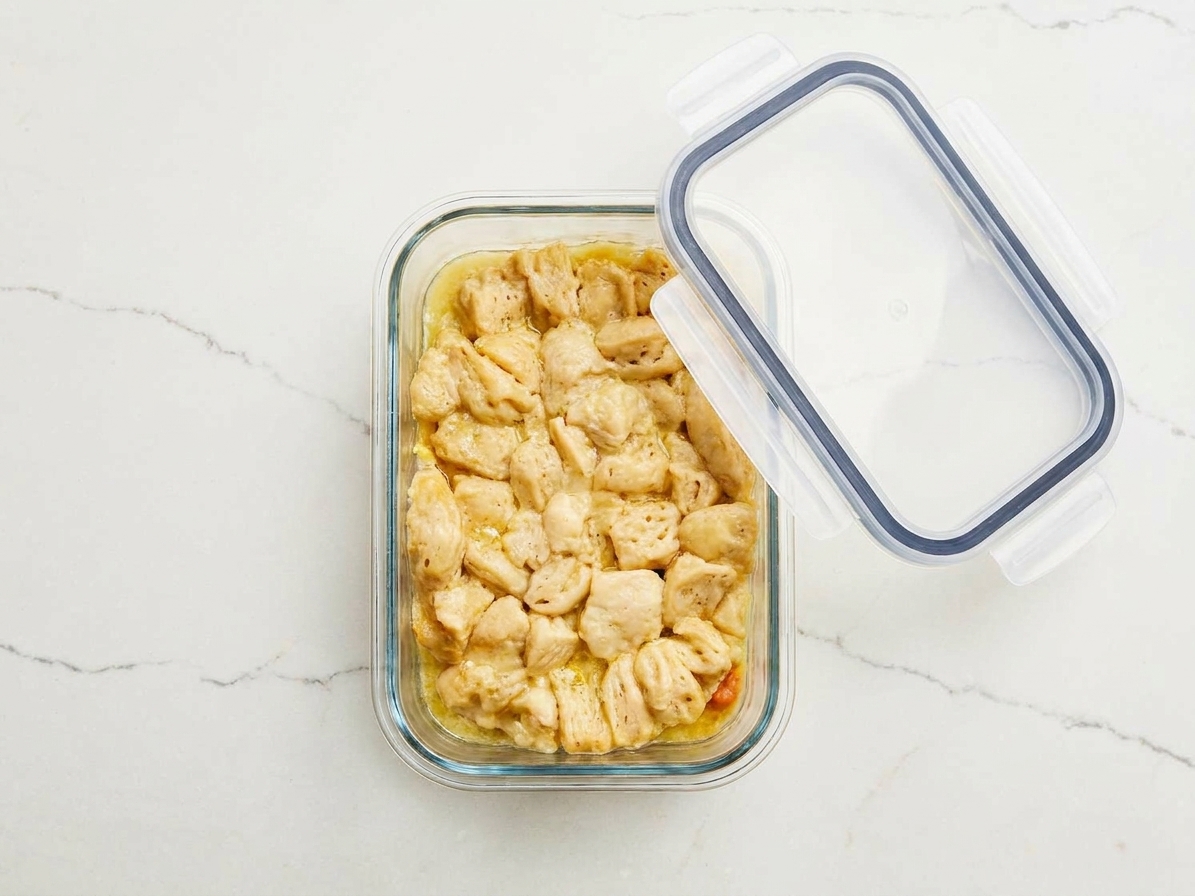
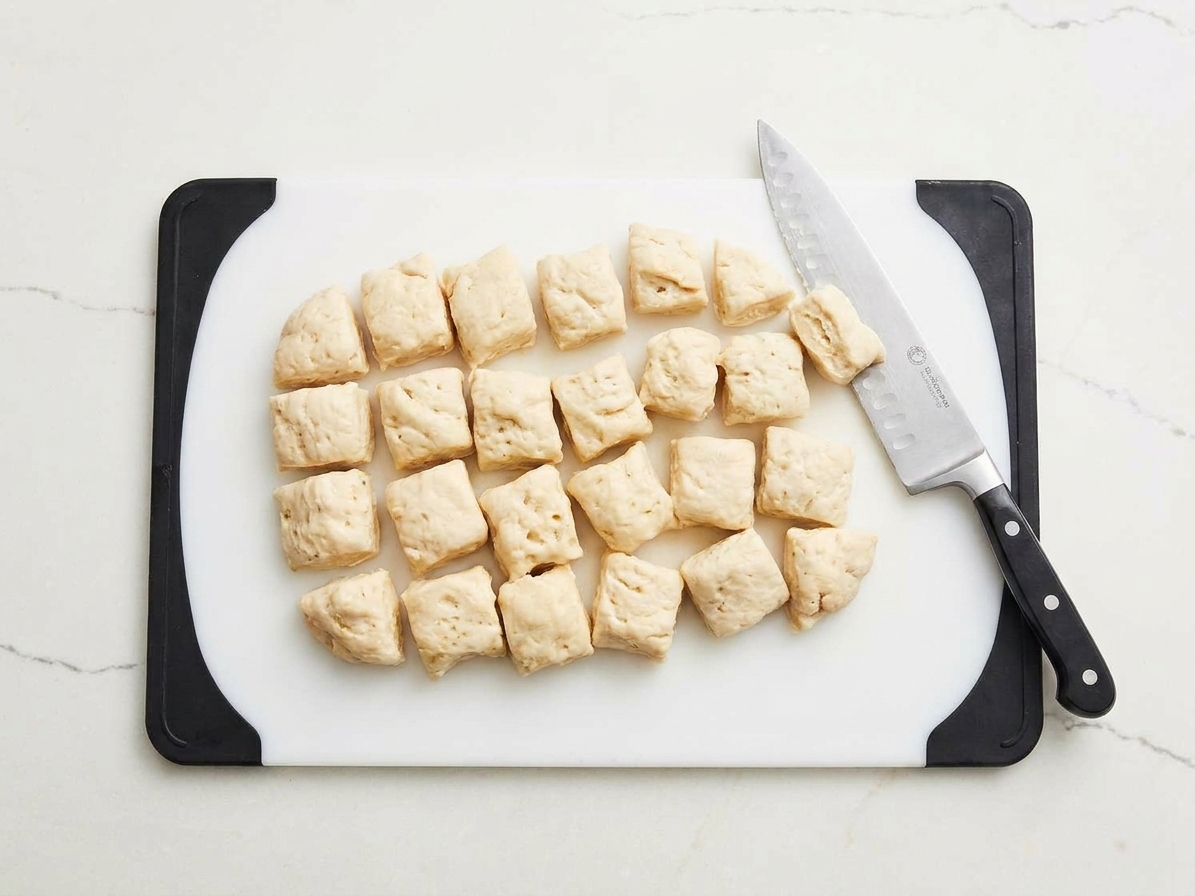
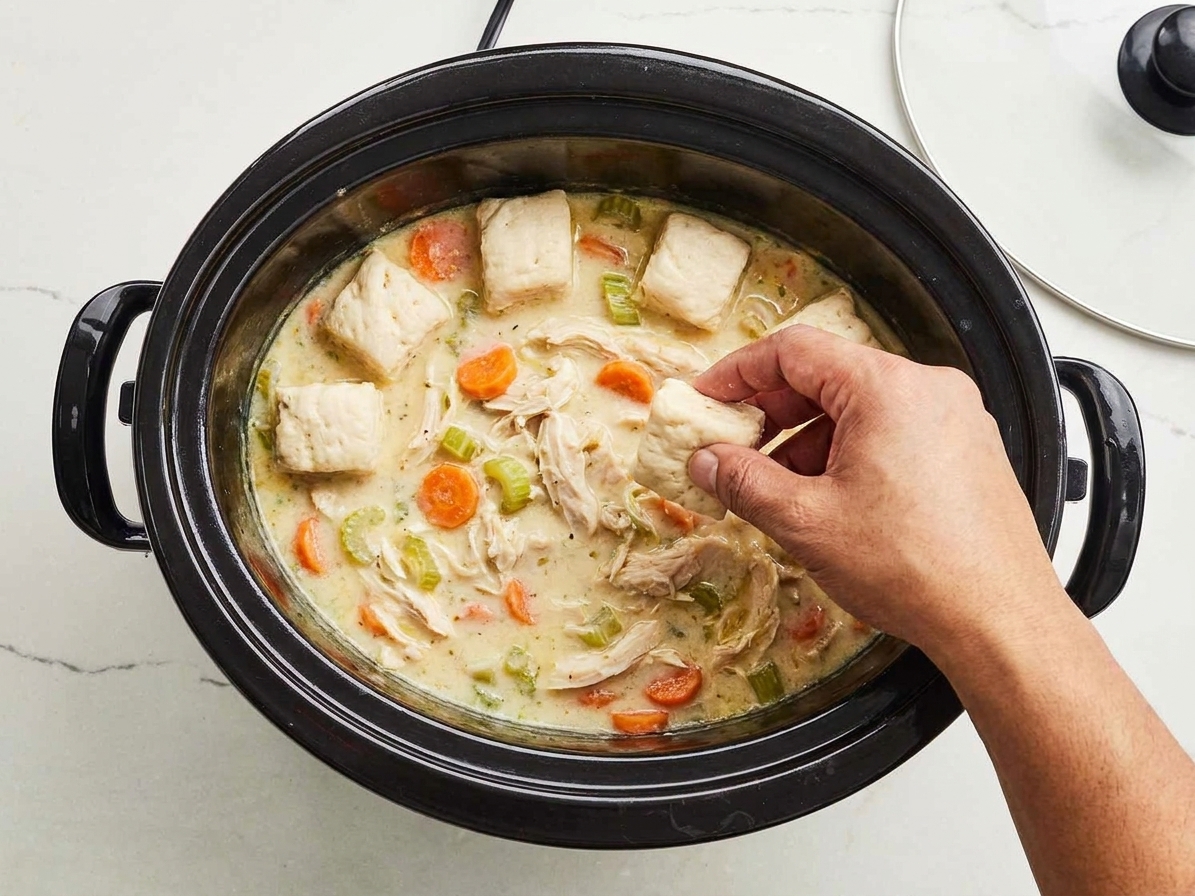
The usual culprit is stirring after adding dumplings or crowding them so they fuse together. Drop dough in small pieces with space between, keep the lid on, and resist the urge to poke. Also make sure the stew is at a steady simmering heat (HIGH setting) when the dumplings cook.
Do I have to cook the dumplings on HIGH?
For biscuit-style dumplings, yes, it helps a lot. The dumplings need strong steam heat to puff and cook through before they soak up too much liquid.
How do I know the dumplings are done?
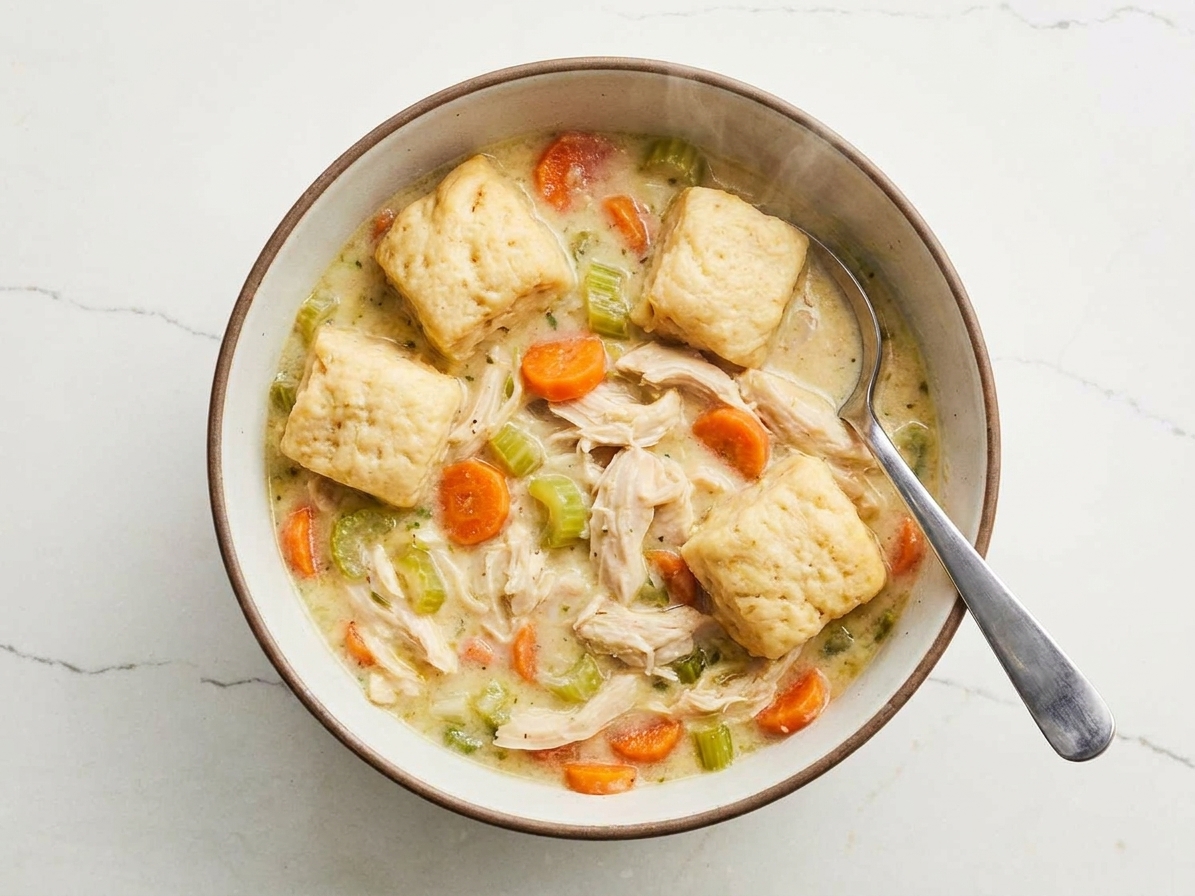
They should look puffed and no longer doughy. Pull one out and cut it in half. If you see a wet, raw center, cover and cook 10 to 15 minutes more on HIGH. Slow cookers vary, so do not be shy about adding time.
Can I use chicken breasts instead of thighs?
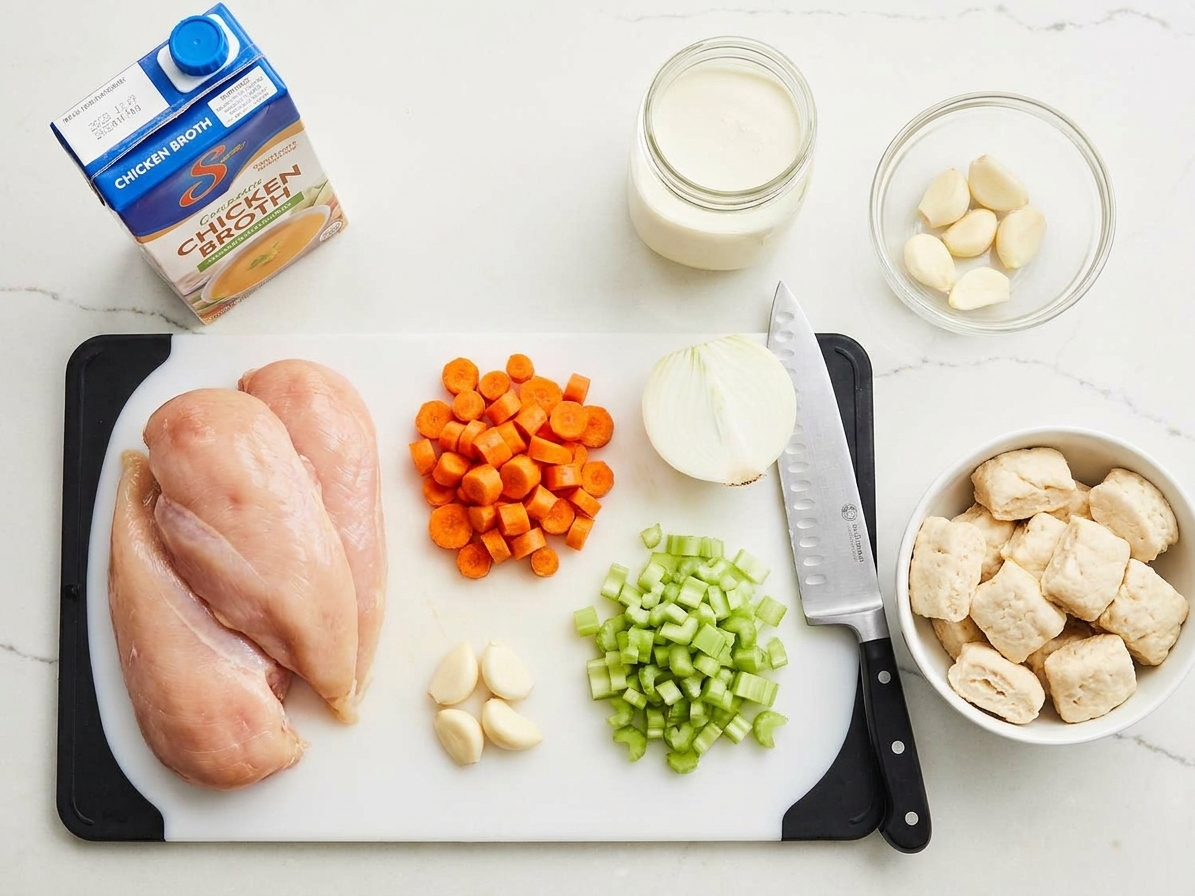
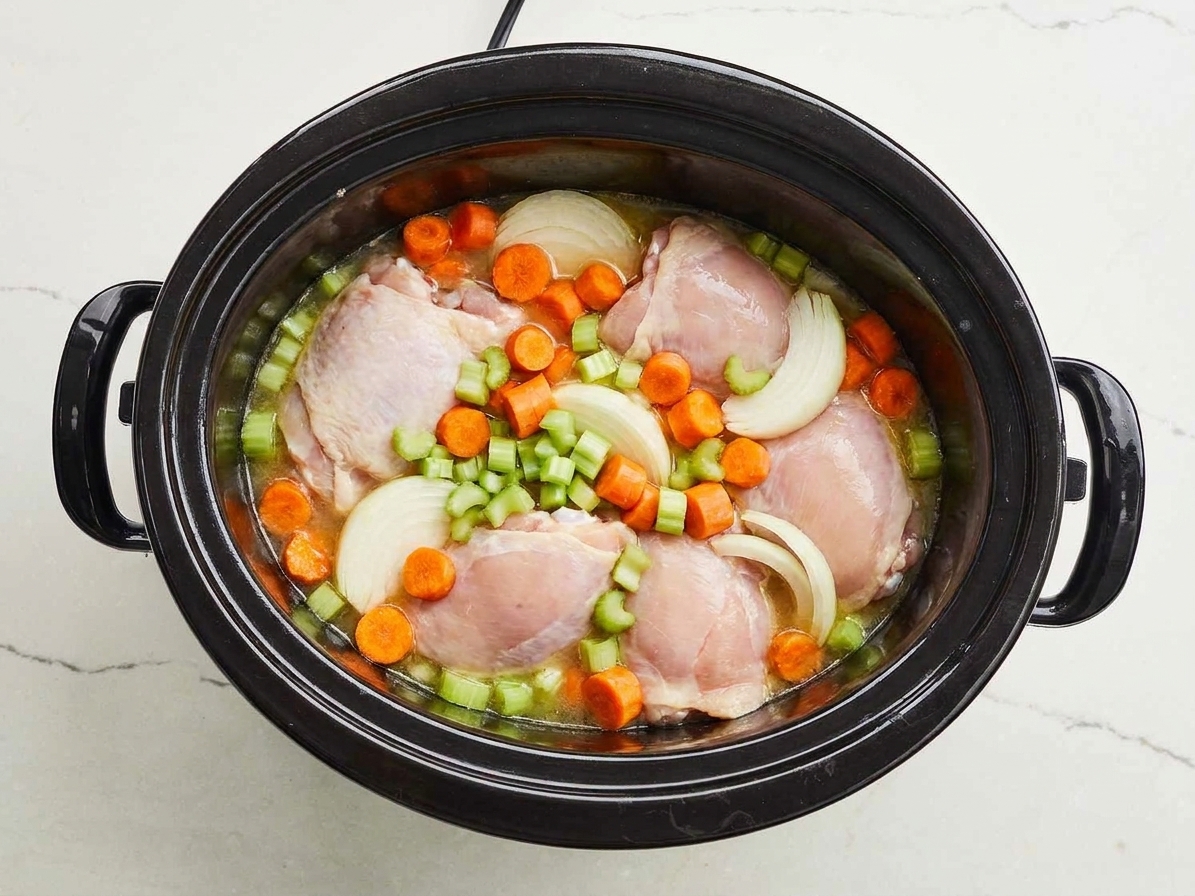
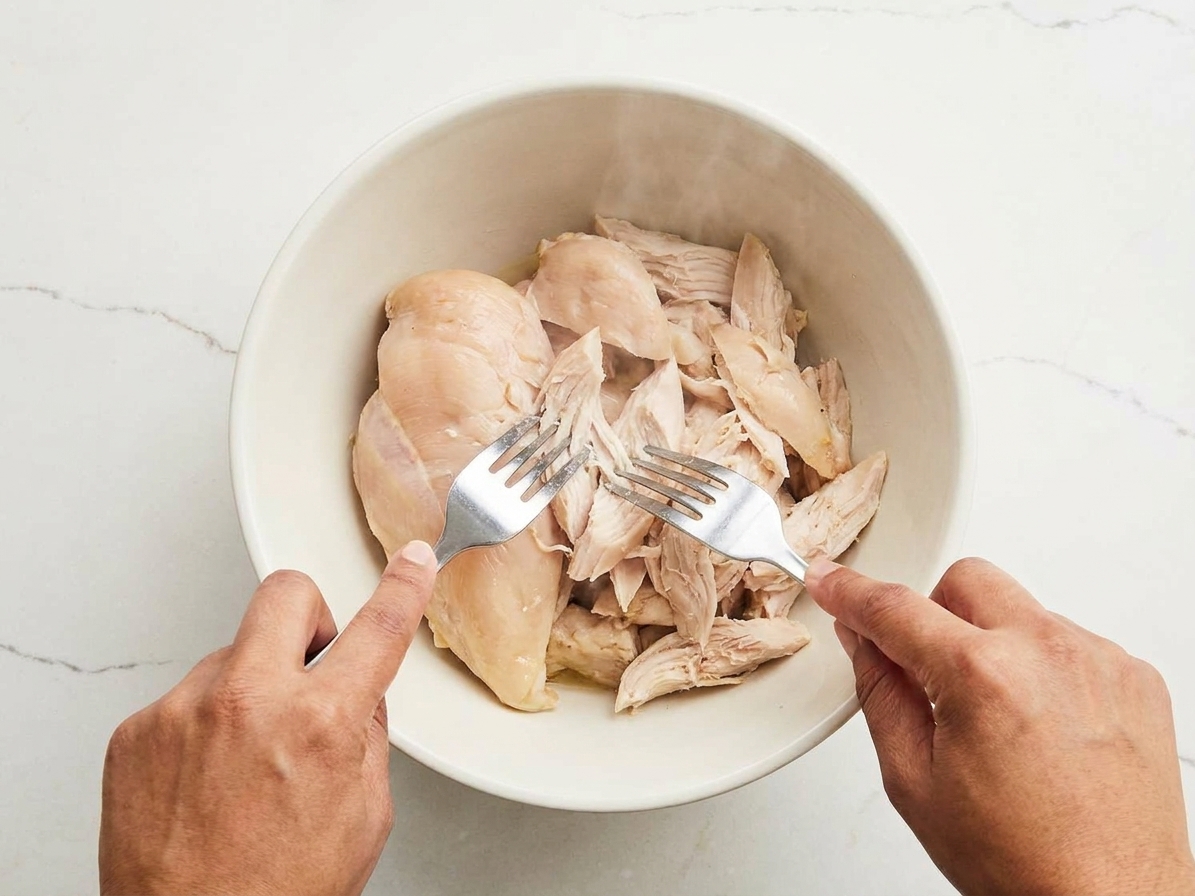
Absolutely. Breasts are leaner and can be slightly drier, but the creamy broth helps. They may finish earlier than thighs, so check for tenderness and shred as soon as they pull apart easily. (If you like a number, 165 F is the safe internal temp.)
Can I add peas or corn?
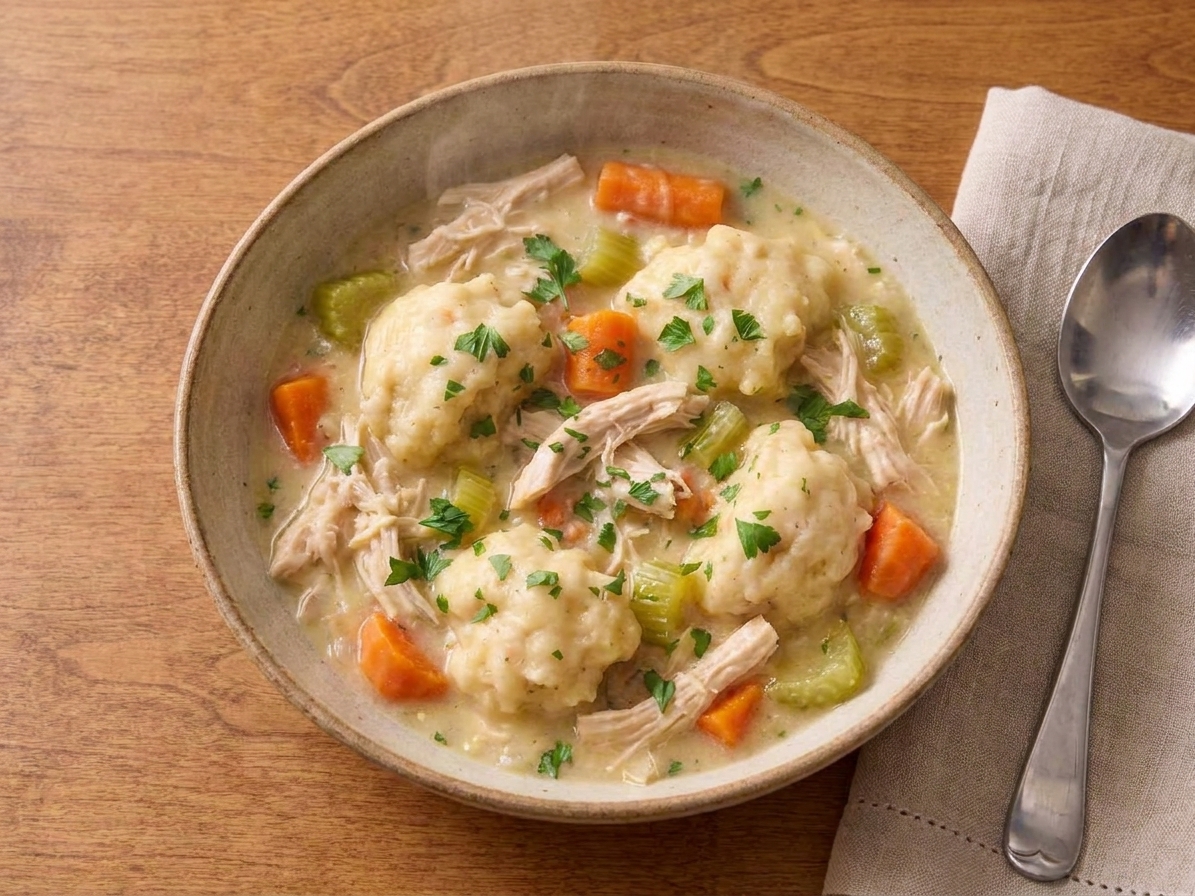
Yes. The easiest move is to stir in frozen peas or corn before the dumplings go on (right after thickening). That way you get the pop of sweet veggies without disturbing the dumplings.
How do I make it less salty?
Use low-sodium broth and unsalted butter. Taste at the end and adjust. If it is already salty, the most reliable fix is to dilute with more unsalted liquid (broth, water, or a splash more cream), then re-warm. Optional old-school trick: simmer a peeled potato in the broth for 15 to 20 minutes, then discard it.