Mom's Best Recipes
Recipe

Decadent Challah

A rich, soft, chewy challah with a glossy braid and tender crumb. Easy enough for a weekend bake, special enough for French toast.

Author By Matt Campbell
4.9
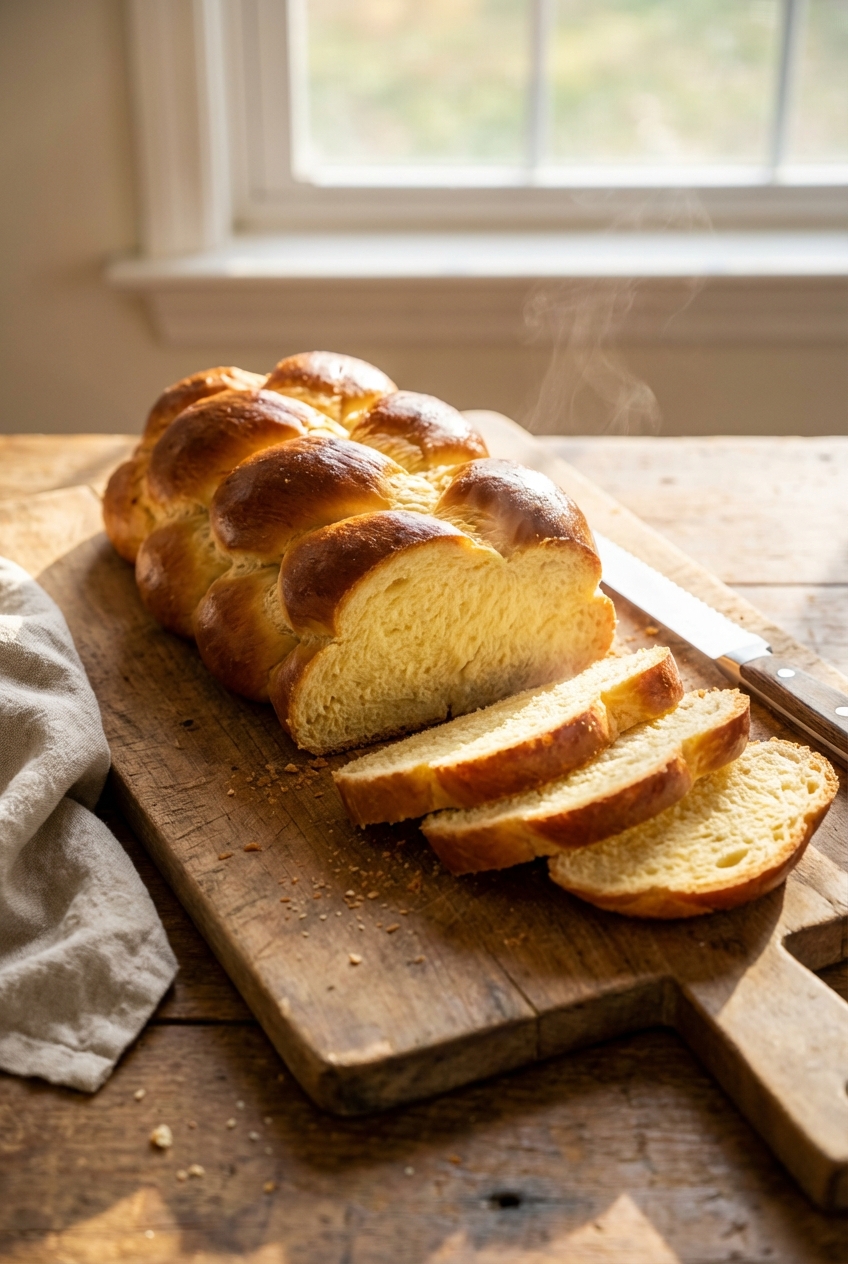
A freshly baked braided challah loaf on a wooden cutting board with a few slices cut and soft crumb visible in warm natural light

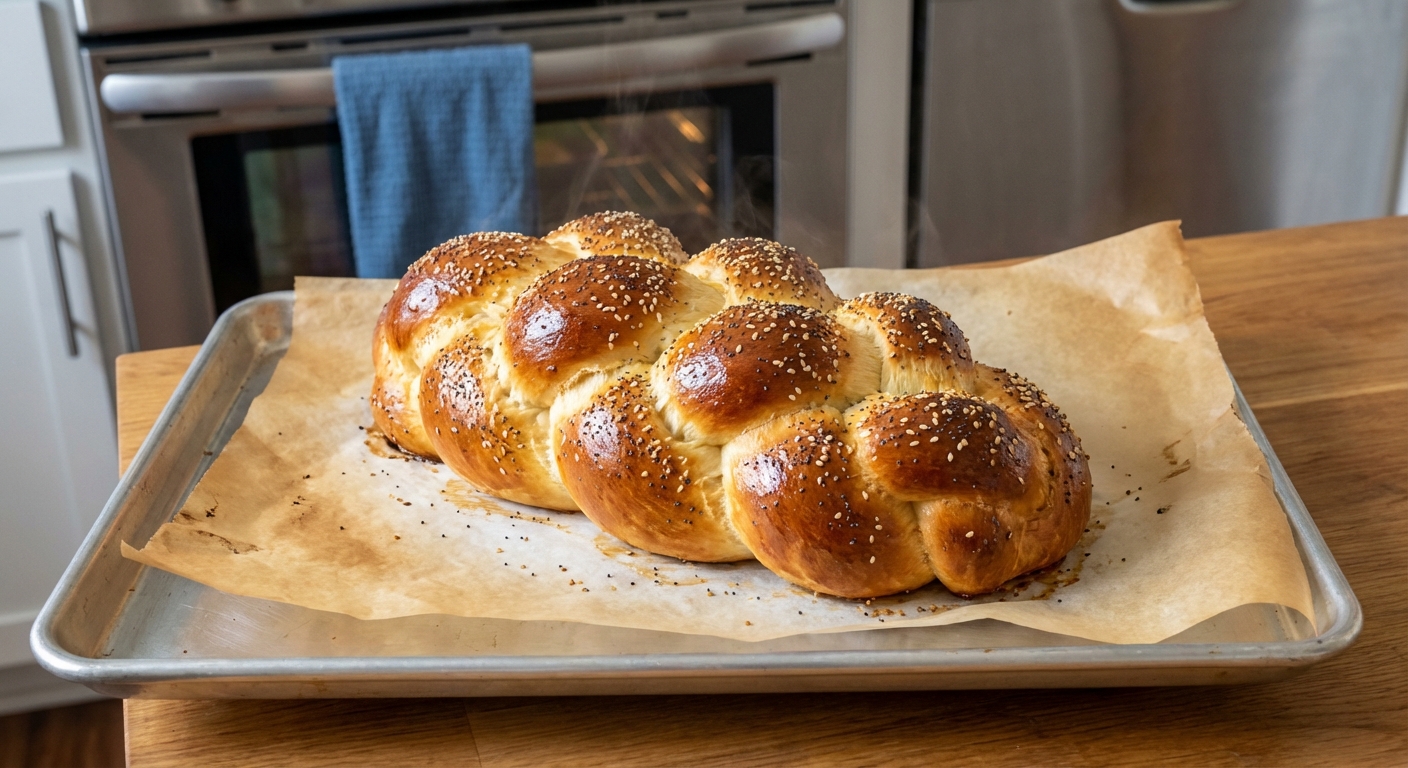
Challah is one of those breads that feels like it should be complicated, but it is mostly just a good dough, a little patience, and the confidence to braid something even if it looks a bit feral at first. This version is decadent in the best way: plenty of eggs for that custardy, tender bite, enough oil to keep it soft for days (especially if you wrap it well), and a touch of honey so the crust browns like it is showing off.

You will get a loaf that tears into pillowy strands, stays chewy instead of cakey, and bakes up with crisp edges where the braid peaks. It is perfect as-is with salted butter, but it also turns into elite French toast and the kind of sandwich bread that makes a Tuesday feel like a holiday.

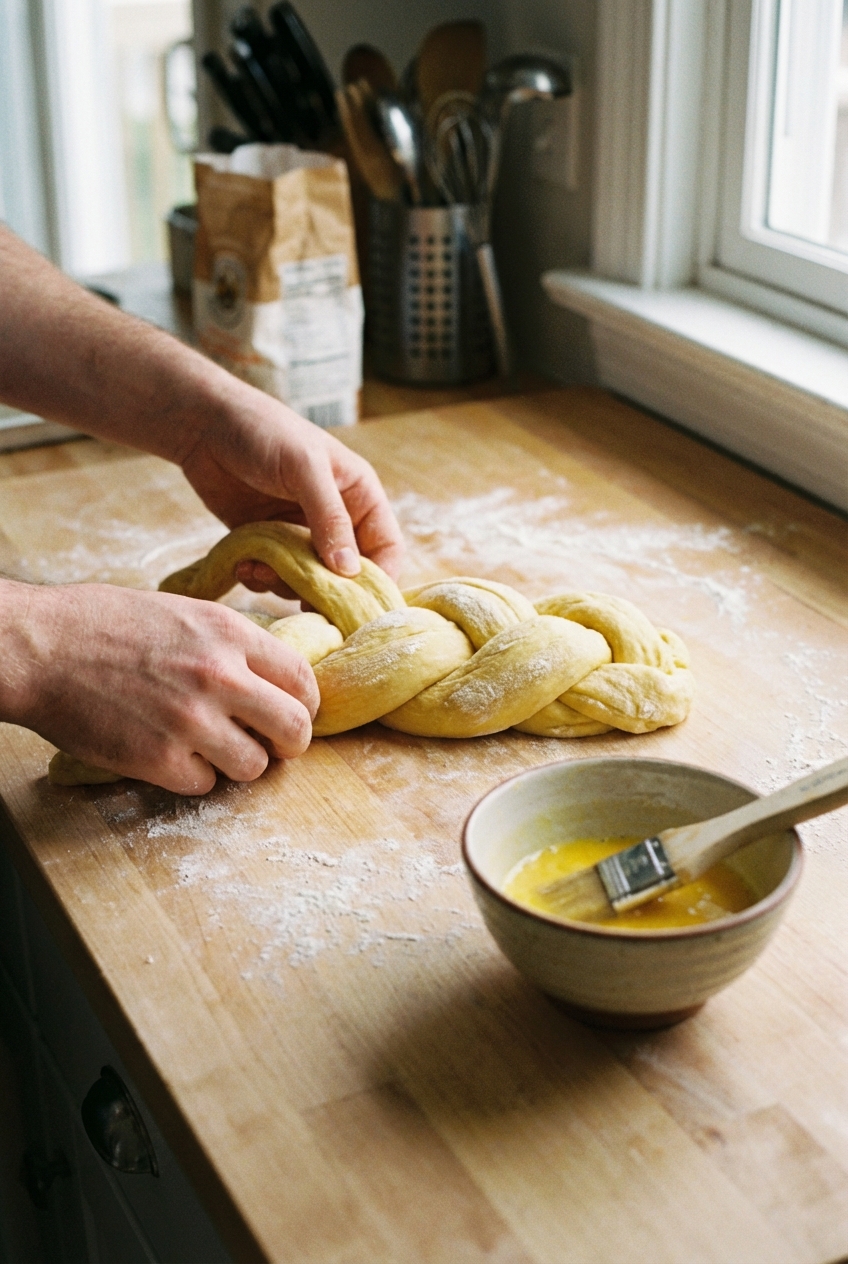
Hands braiding three ropes of challah dough on a lightly floured countertop with a small bowl of egg wash nearby

Why It Works

  • Soft and chewy texture: Bread flour plus a well-kneaded dough builds structure, while oil and eggs keep it tender.
  • Deep color and shine: A double egg wash gives you that bakery-level glossy crust.
  • Reliable rise: A warm, steady proof and a simple windowpane test help you avoid dense bread.
  • Flavor that pops: Honey adds warmth and better browning without making the loaf overly sweet.

Pairs Well With

  • Soft scrambled eggs with chives and a dollop of crème fraîche

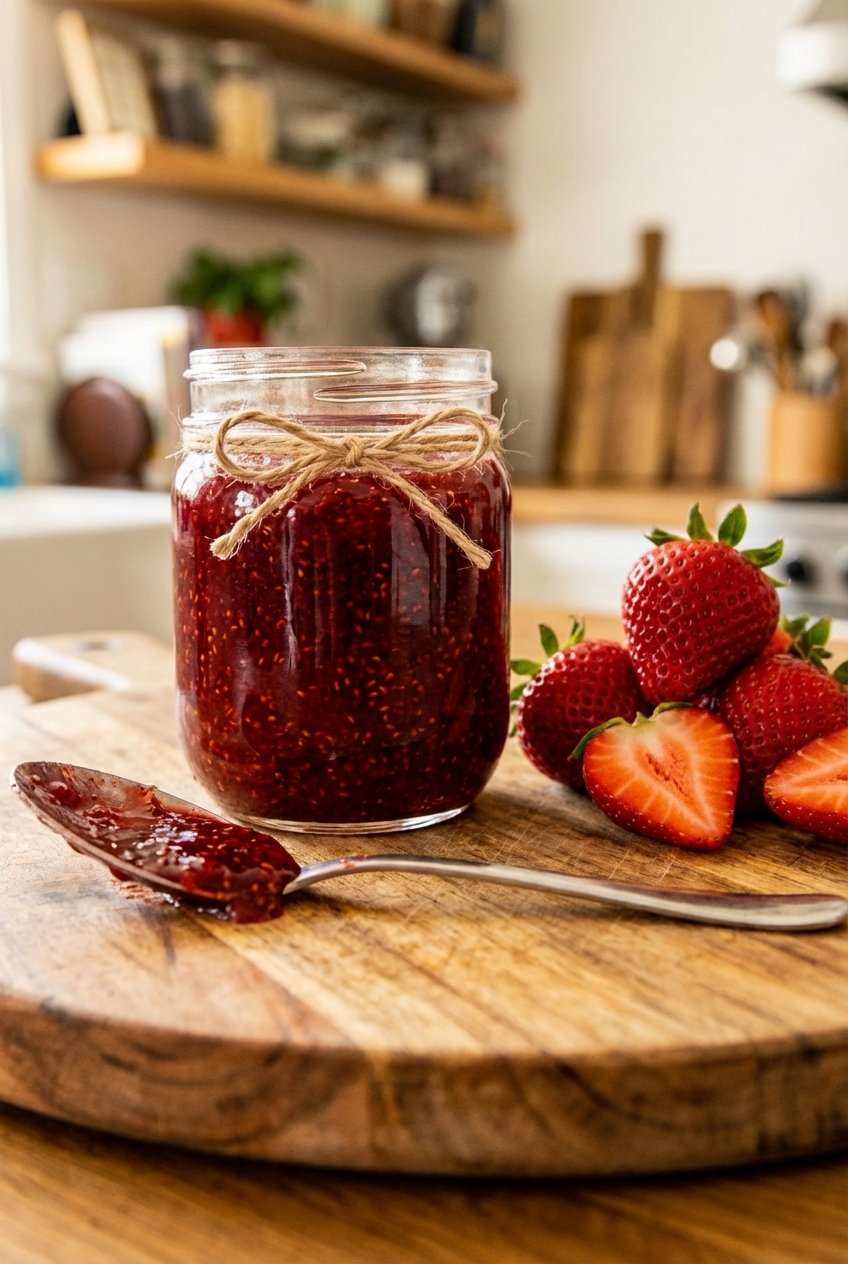
  • Roasted strawberry jam or any not-too-sweet fruit spread

  • Honey butter with flaky salt

  • Chicken salad with lemon, celery, and crunchy pickles

Storage Tips

Room temp: Let challah cool completely, then store in a bread bag or wrapped tightly. It stays soft for about 3 days.

Freeze: Slice the loaf, then freeze slices in a zip-top bag with as much air pressed out as possible for up to 2 months. Toast from frozen for best texture.

Revive day-old challah: A quick toast is great. For a whole or half loaf, wrap in foil and warm at 300°F for 10 to 15 minutes.

Leftover ideas: French toast, bread pudding, croutons, or a savory strata with cheese and greens.

Common Questions

Can I make challah without a stand mixer?

Yes. Mix with a wooden spoon until shaggy, then knead by hand for 10 to 12 minutes until smooth and elastic. If it feels sticky, resist dumping in lots of flour. Lightly oil your hands and the counter instead.

Why is my challah dense?

Usually one of three things: the dough needed more kneading, it did not proof long enough, or the yeast was weak. A fourth (sneaky) culprit is too much flour from heavy scooping. If you can, weigh your flour. Aim for a dough that passes the windowpane test, and proof until the dough is clearly puffy and slowly springs back when gently pressed.

Can I reduce the sweetness?

Totally. You can drop the honey to 2 tablespoons (about 40 g). The loaf will be slightly less golden, but still rich and delicious.

How do I know when it is baked through?

The top should be deep golden brown and the loaf should sound a little hollow when tapped. If you have a thermometer, the center should read about 195°F to 200°F. (A little lower can work, but this range helps avoid a gummy center in an enriched dough.)

Can I make it dairy-free?

This recipe is already dairy-free as written. Just avoid brushing with butter after baking, or use a dairy-free alternative if you want extra shine. If you are serving it dairy-free, skip the crème fraîche suggestion below and go for olive oil, jam, or honey butter made with plant butter.

Can I make it ahead?

Yes, and it is a lifesaver. After the first rise starts, you can cover the dough and refrigerate it overnight (8 to 16 hours). The next day, let it sit at room temp until it is soft, slightly puffy, and easy to shape (usually 45 to 90 minutes), then proceed with dividing, braiding, and the second rise.

Can I use instant yeast?

Yes. Use the same amount (2 1/4 tsp). You can still bloom it for convenience, or whisk it into the flour and skip the foaming step. Proof times may be a bit faster, so watch the dough, not the clock.

I wanted a culinary degree once, then I realized the best classroom is a busy kitchen and an even busier home one. Challah is where that clicks for me. It looks fancy, but it is basically an invitation to get flour on your shirt and learn with your hands. The first time I braided it, my “loaf” looked like it lost a fight. Still tasted incredible. Now I treat challah like a weekend ritual: make the dough, let it rise while I clean up the chaos, then pull a shiny braid out of the oven and immediately tear off the end piece like I have no self-control. Because I do not.