Mom's Best Recipes
Recipe

Homemade Chicken Noodle Soup

Cozy, golden broth with tender chicken, slippery noodles, and a bright lemony finish. Weeknight-friendly and freezer-smart.

Author By Matt Campbell
4.8
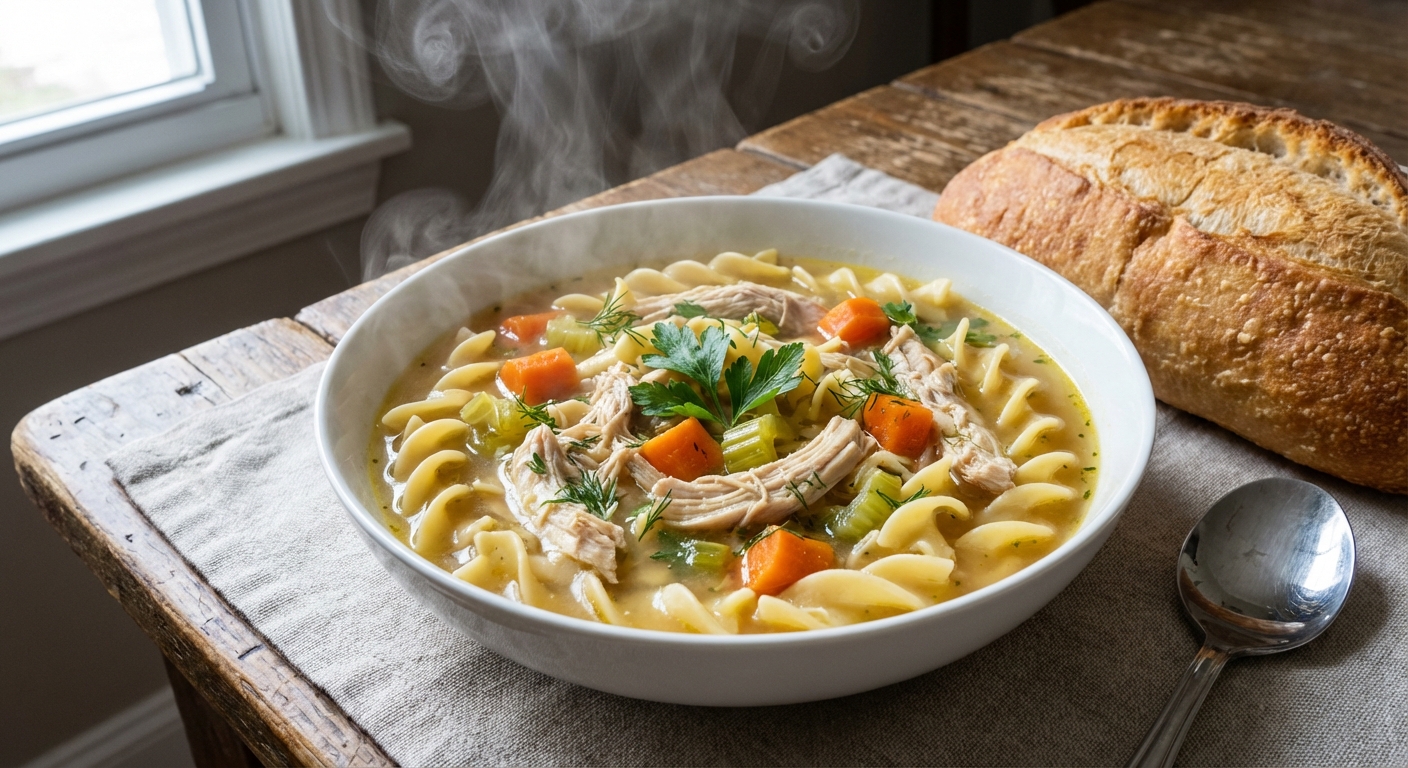
A steaming bowl of homemade chicken noodle soup with egg noodles, shredded chicken, carrots, celery, and fresh parsley on a wooden table

There are two kinds of chicken noodle soup: the one that tastes like warm water with a chicken rumor, and the one that makes you stop mid-spoonful and reconsider every sad soup you’ve ever accepted. We’re making the second one.

This is delicious homemade chicken noodle soup built on real-deal flavor, but without asking you to roast bones for nine hours while whispering to a stockpot like it’s a houseplant. You’ll get a savory broth with a little body, tender chicken, noodles that know their place, and a bright finish that keeps everything tasting alive.

Also, permission granted to improvise. If you’ve got leftover roast chicken, use it. If you’ve only got one lonely carrot, we’ll make it work. If you catch me in the fridge at midnight, I’m probably stirring this into a “new soup” situation with whatever needs saving.
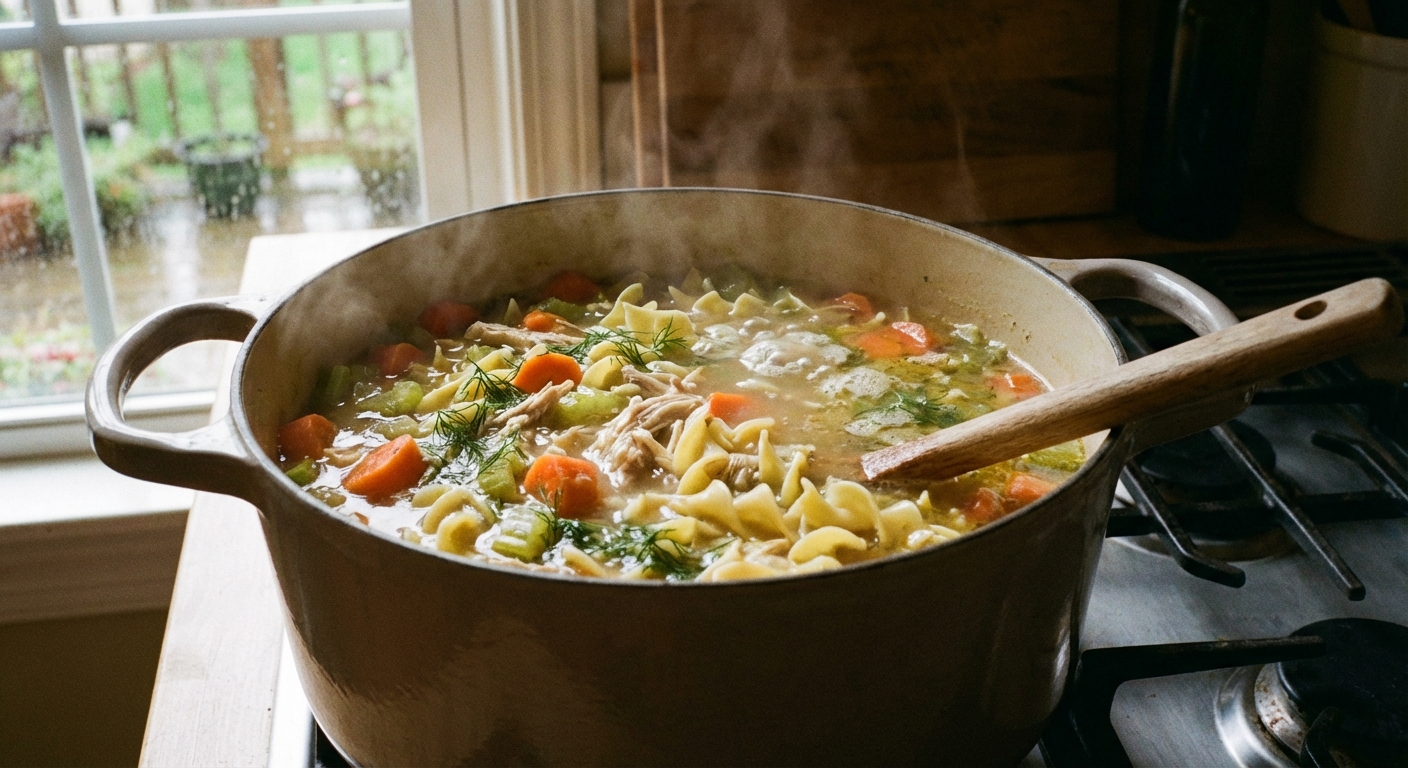
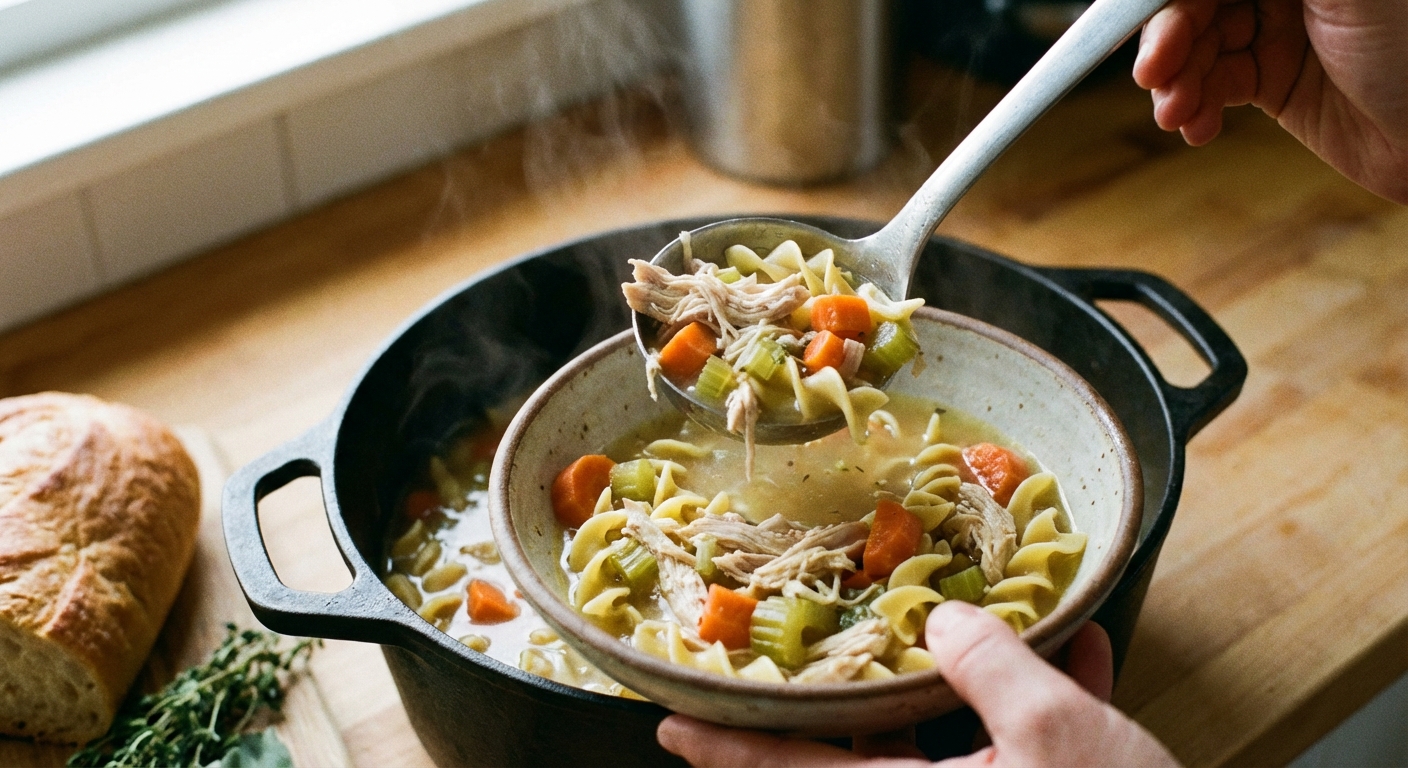
A pot of chicken noodle soup simmering on a stovetop with visible carrots, celery, and noodles

Why It Works

  • Big, cozy flavor fast: Searing the chicken and sweating the veggies builds a base that tastes like you tried harder than you did.
  • Broth with personality: A small hit of tomato paste, bay, and thyme adds depth without turning it into “mystery stew.”
  • Noodles that don’t bloat into chaos: Cook them separately so leftovers stay actually good.
  • Bright finish: Lemon and fresh herbs make the whole pot taste clean and craveable, not flat.

Storage Tips

How to Store Leftovers

Chicken noodle soup is famous for one thing besides comfort: noodles guzzling broth like it’s their job. Here’s how to keep it great.

Fridge

  • Best method: Store soup and noodles separately in airtight containers. Keeps 3 to 4 days.
  • If already combined: Still totally edible, just thicker. Add a splash of broth or water when reheating.

Freezer

  • Freeze the soup base without noodles for best texture. Cool completely, then freeze up to 3 months.
  • Thaw overnight in the fridge, reheat gently, then add freshly cooked noodles.

Reheating

  • Warm on the stovetop over medium-low until steaming. Taste and adjust salt and lemon after reheating.
  • Microwave works too. Stir halfway through so the chicken warms evenly.

Common Questions

Common Questions

Can I use rotisserie chicken?

Yes, and I support that choice. Skip the sear step. Add shredded rotisserie chicken in the last 5 to 10 minutes, just long enough to warm through so it stays tender.

What noodles are best for chicken noodle soup?

Egg noodles are the classic because they cook quickly and feel cozy. Ditalini, small shells, or broken spaghetti also work. For leftovers, cook noodles separately and add per bowl.

How do I make the broth taste richer without hours of simmering?

Three quick wins: sear the chicken, add a little tomato paste, and use a mix of broth and water so it doesn’t taste overly boxed. A parmesan rind is also excellent if you have one.

My soup tastes bland. What should I do?

Add salt first, then a squeeze of lemon. If it still feels sleepy, add a tiny splash of soy sauce or fish sauce. In small amounts, it won’t taste soy-forward or fishy, it’ll just taste more savory.

Can I make this gluten-free?

Absolutely. Use gluten-free pasta cooked separately, or swap in rice. Double-check your broth label. If you’re using a parmesan rind, check labels there too if you’re sensitive.

Can I make it creamy?

Yes. Stir in 1 to 2 tablespoons of butter at the end, or add a small splash of cream. Keep the lemon modest if you go creamy.

How do I know the chicken is done?

It’s done when it reaches 165°F/74°C, or when it shreds easily and there’s no pink in the thickest pieces.

The first time I made chicken noodle soup as an adult, I did what many of us do: I tossed everything in a pot and hoped for a miracle. The result tasted like a wellness blog told it to be comforting. Since then, I’ve learned two things. One, soup needs a little browned flavor at the beginning. Two, lemon at the end is basically turning the lights on. Now this is my “someone is sick” soup, my “it’s raining sideways” soup, and my “I have three sad celery stalks and a plan” soup.