Mom's Best Recipes
Recipe

Classic Meatloaf

Rich, savory, and glazed just right, this classic meatloaf stays tender inside with crisp edges and big, cozy flavor.

Author By Matt Campbell
4.9
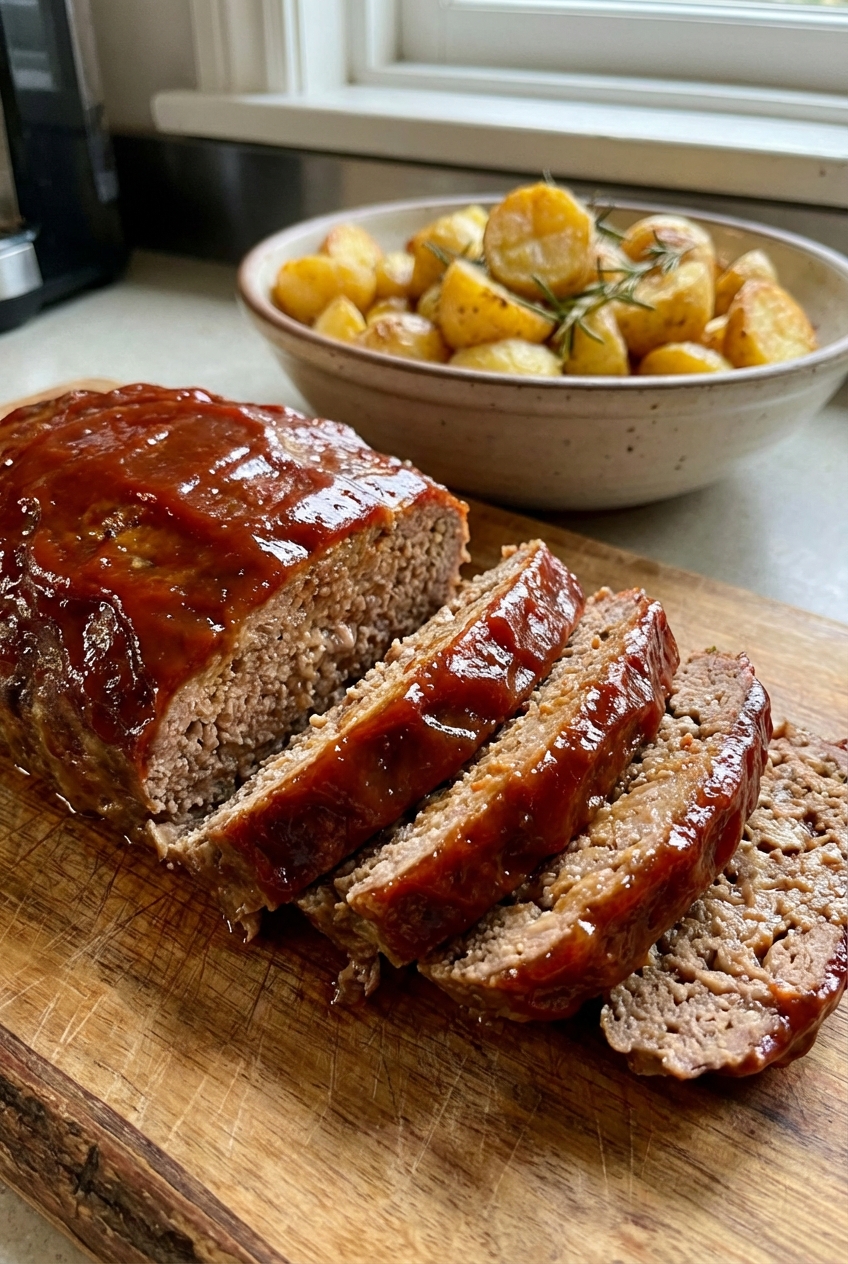
A sliced meatloaf with a glossy ketchup-brown sugar glaze on a cutting board, with roasted potatoes in the background

Meatloaf gets a bad rap because we have all had the dry, gray brick version that tastes like it was seasoned with regret. This is not that meatloaf.

This is the rich and savory kind with a tender, juicy center, little pockets of oniony goodness, and those crisp, caramelized edges that make you “quality control” a slice before it even hits the table. And the glaze? Sweet-tangy, glossy, and just thick enough to cling.

It is built for real life: ingredients you can find anywhere, steps that are clear, and a result that feels like you cooked with intention even if you were half listening to a podcast the whole time.
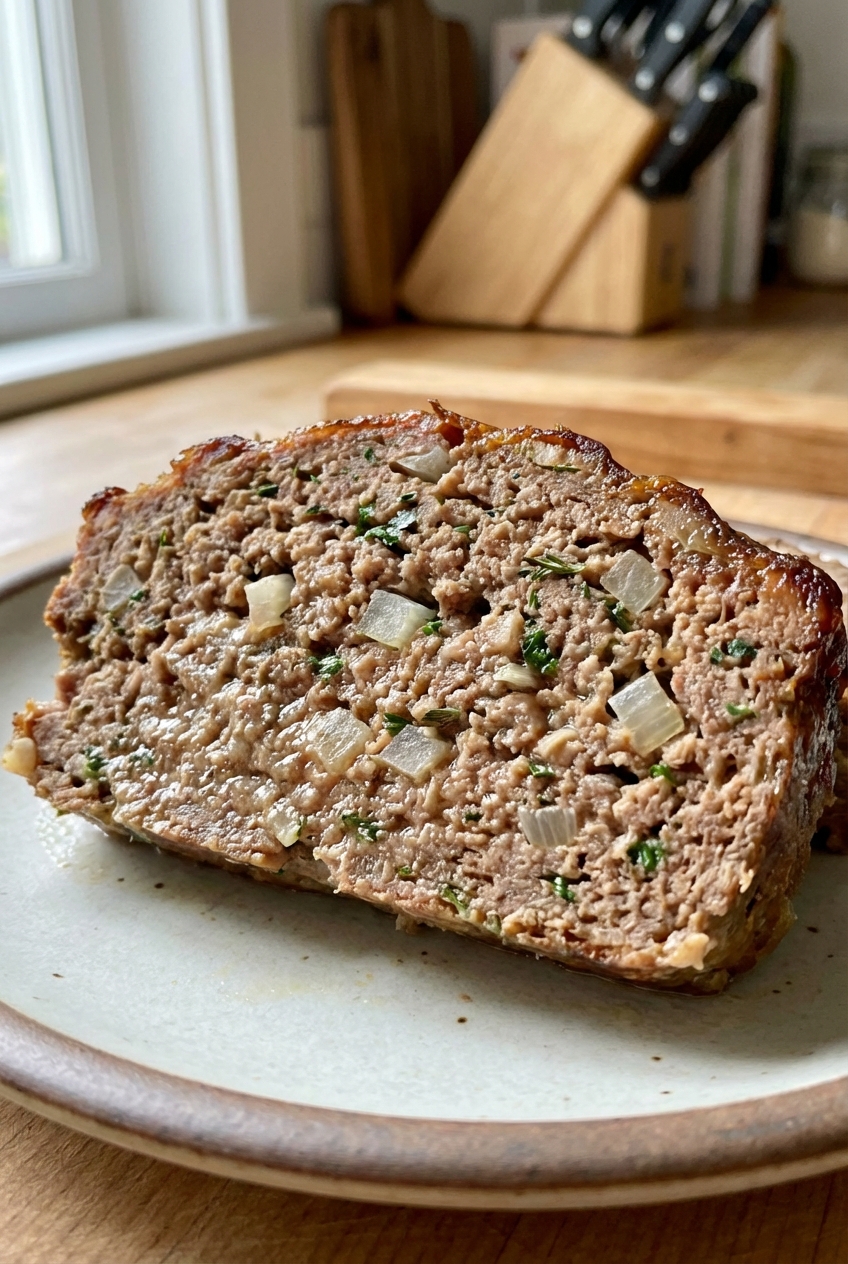
A close-up photograph of a meatloaf slice showing a moist interior with visible onion and herbs

Why It Works

  • Moist texture, not mushy: A panade made from breadcrumbs and milk keeps the loaf tender without turning it into meat paste.
  • Big flavor fast: Worcestershire, garlic, onion, and a little Dijon build that deep, savory backbone.
  • Glaze that actually matters: Ketchup plus brown sugar plus vinegar gives you sweet, tangy, and caramelized all at once.
  • No sad crumbling: Eggs and the right mixing method hold it together while still staying sliceable and juicy.
  • Crisp edges: Baking on a sheet pan (instead of a loaf pan) gives you better browning.

Pairs Well With

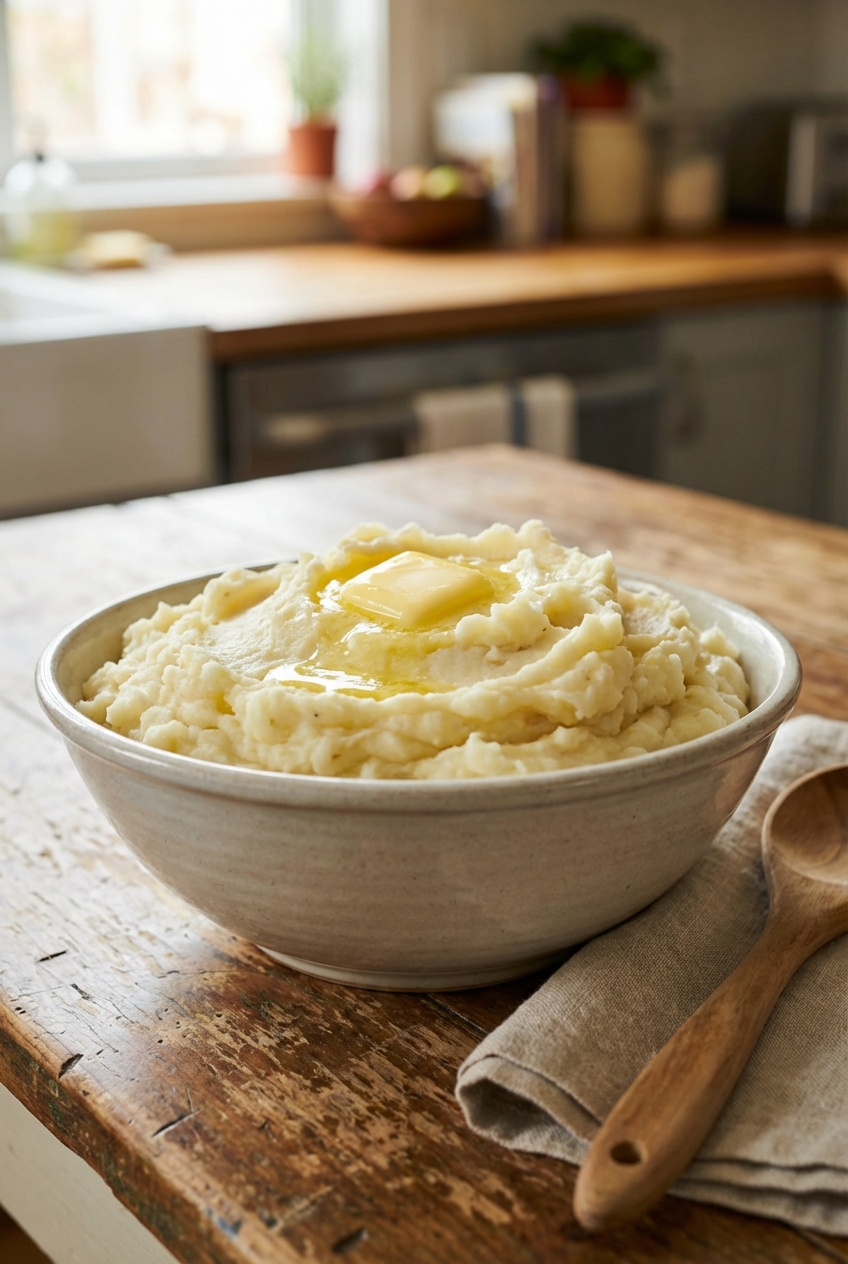
  • Creamy mashed potatoes in a bowl with butter melting on top

    Buttery mashed potatoes

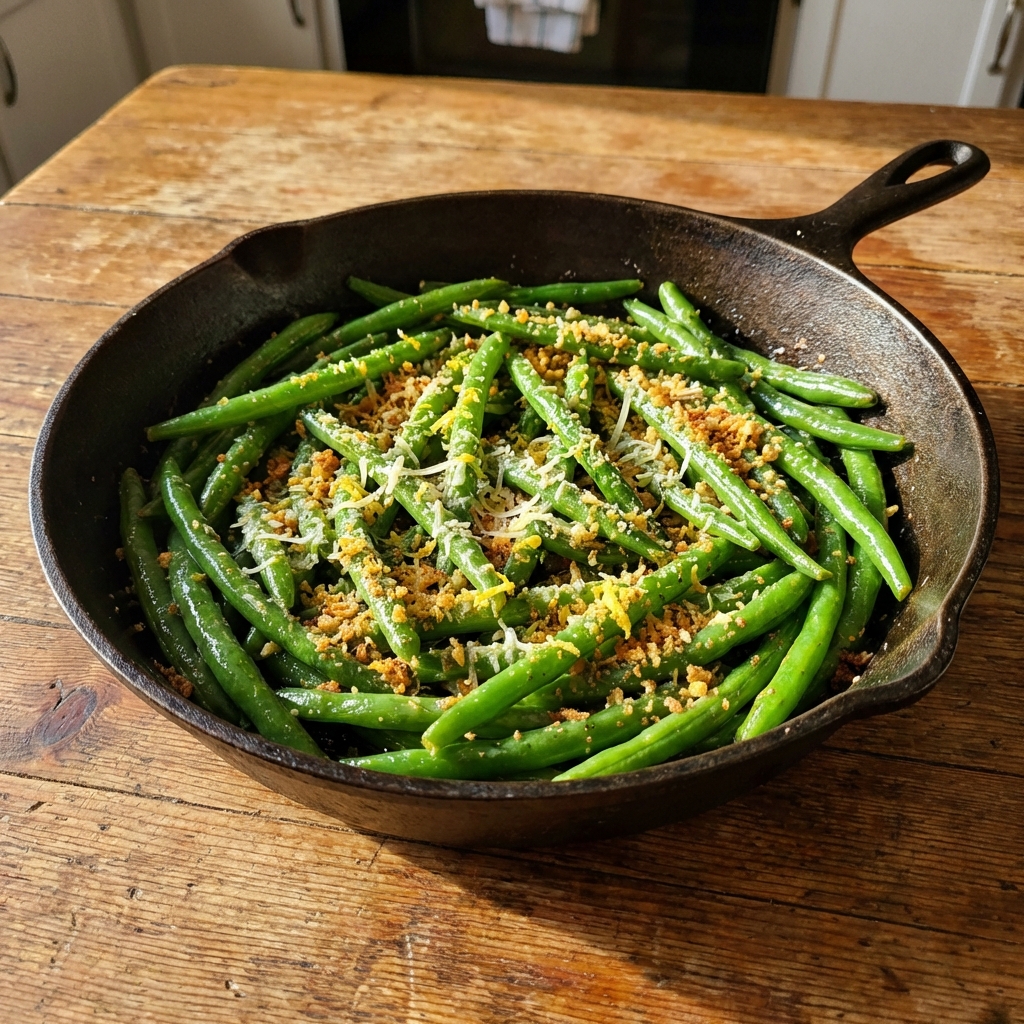
  • Roasted green beans on a baking sheet with browned blistered spots

    Roasted green beans

  • Macaroni and cheese in a casserole dish with a golden toasted breadcrumb top

    Mac and cheese

  • A simple side salad in a large bowl with cucumbers and vinaigrette

    Crunchy side salad

Storage Tips

How to Store Meatloaf Leftovers

Meatloaf is secretly a meal prep legend. It slices clean, reheats well, and somehow tastes even more “together” the next day.

Food safety note: Refrigerate leftovers within 2 hours.

Refrigerator

  • Cool completely, then store in an airtight container.
  • Keeps well for 3 to 4 days.
  • Tip: Store as slices so you can reheat only what you need.

Freezer

  • Wrap individual slices in plastic wrap, then place in a freezer bag.
  • Freeze for up to 3 months.
  • Thaw overnight in the fridge for best texture.

Best ways to reheat

  • Oven (best): 325°F, covered with foil, 15 to 25 minutes depending on thickness. Add a spoonful of water or broth to the pan to keep it juicy. Heat until the center reaches 165°F.
  • Microwave (fast): Cover and heat in 45-second bursts. A tiny splash of water helps prevent dryness. Heat to 165°F if you are checking with a thermometer.
  • Skillet (crisp edges): Sear slices in a little butter or oil over medium heat, then cover for a couple minutes to heat through.

Common Questions

Meatloaf FAQ

What makes meatloaf dry?

Usually one of three things: overbaking, using meat that is too lean, or skipping the moisture helpers (milk-breadcrumb panade and enough seasoning). This recipe uses 80/20 ground beef and a panade to keep it tender.

Should I bake meatloaf in a loaf pan or on a sheet pan?

For the best browning and texture, bake it free-form on a sheet pan. A loaf pan can trap grease and steam, which can soften the edges. That said, a loaf pan does give you a more uniform shape. If it is what you have, drain excess fat halfway through and bake uncovered for the final 15 minutes.

Do I need to cook the onion first?

Not required. Finely diced onion softens as it bakes and gives you little savory pockets. If you prefer a smoother texture, sauté the onion (and garlic) in a teaspoon of oil for 3 to 5 minutes until softened, then cool before mixing in.

How do I know when meatloaf is done?

Use an instant-read thermometer. For this recipe, pull the loaf when the center hits 155°F. The final glaze-set bake plus resting will bring it to the safe 160°F target without drying it out.

Can I make it ahead?

Yes. Mix and shape the loaf, then cover and refrigerate up to 24 hours. Add glaze during baking as written.

Can I swap the meat?

Totally. Ground turkey works. 93/7 is fine, but it can be lean, so add 1 tablespoon olive oil to the mix for richness. You can also do half beef, half pork for extra juiciness.

Why rest meatloaf before slicing?

Because slicing too soon lets the juices run out. Resting makes it cleaner to slice and noticeably juicier on the plate.

Meatloaf was one of the first “grown-up” dinners I learned to make when I stopped relying on whatever was quickest and started chasing that feeling of feeding people well. The first time I nailed it, it was honestly an accident. I added a little extra Worcestershire, tasted the glaze, thought “that’s loud,” and went with it anyway. It came out rich, glossy, and ridiculously comforting. Now it is my go-to when I want something that feels like a hug but still has crisp edges and real seasoning. Also, I fully support the sacred tradition of eating a leftover slice cold, straight from the fridge, like a little kitchen goblin.