Mom's Best Recipes
Recipe

Earthquake Cake

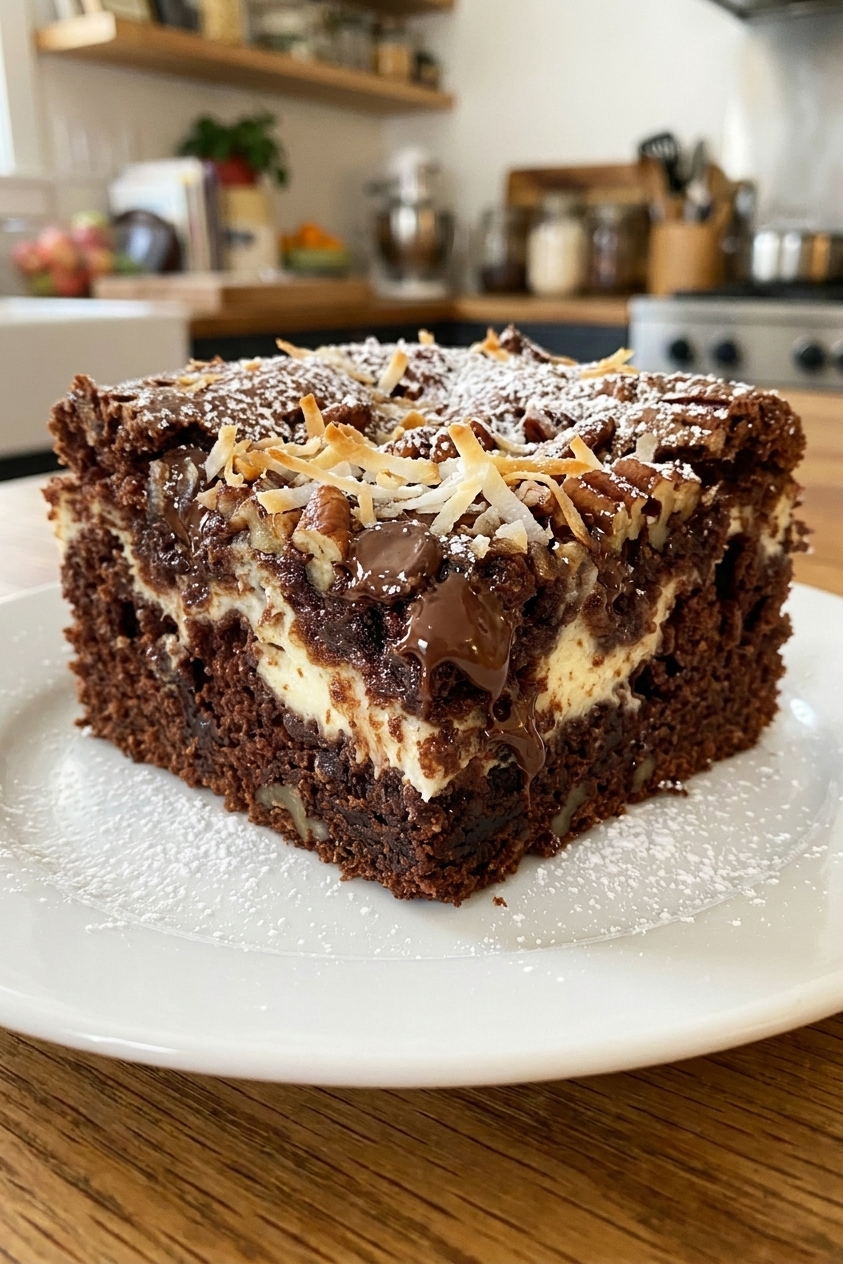
A chocolate coconut pecan sheet cake with cream cheese fault lines that crack and ripple as it bakes, turning into a gooey, marbled pan of comfort.

Author By Matt Campbell
4.8
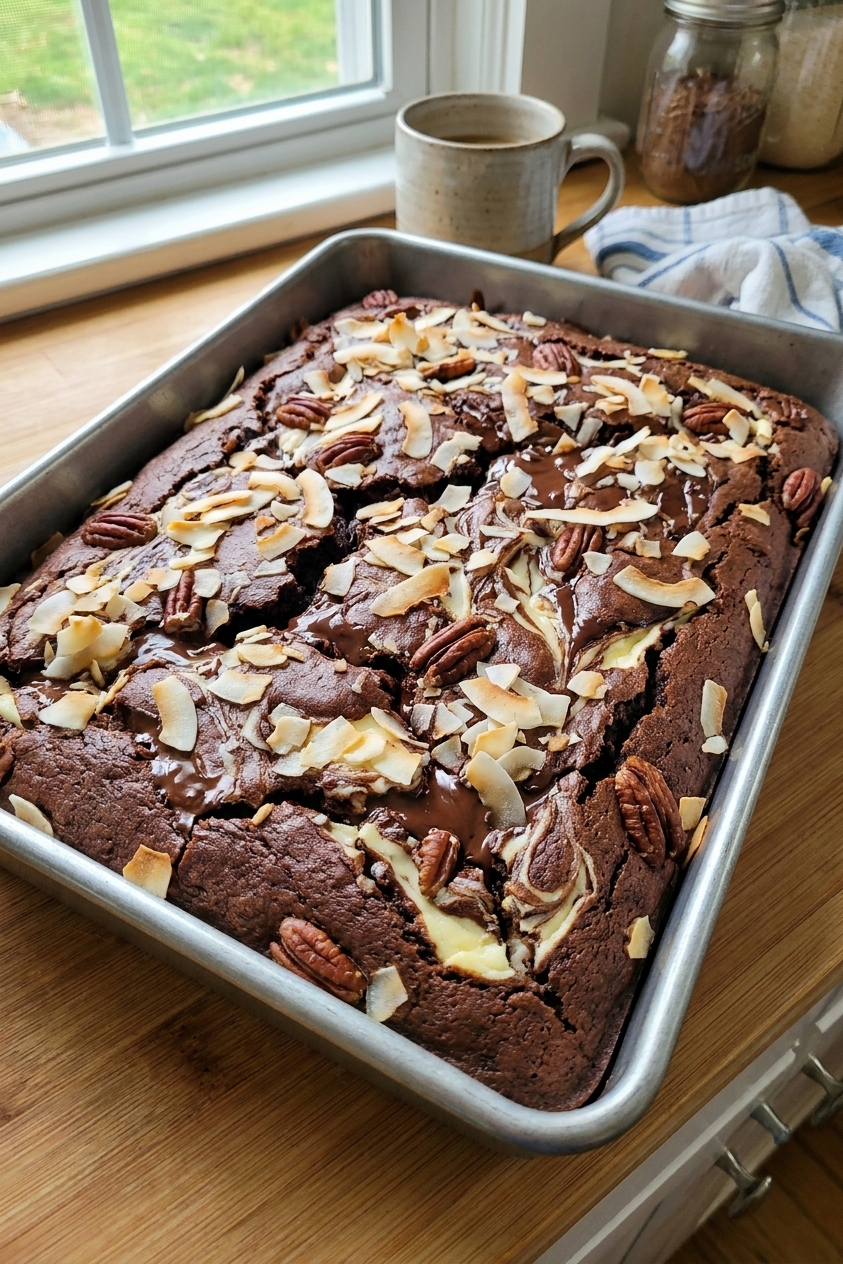
A freshly baked chocolate earthquake cake in a metal 9x13 pan with visible cracks, coconut and pecans on top, and creamy white cream cheese swirls peeking through, photographed on a kitchen counter in natural light

If you have never made an Earthquake Cake, here is the vibe: you layer a few pantry staples, pour in chocolate cake batter, scatter cream cheese-sugar dollops on top, then let the oven do the messy art project. It comes out with cracks, craters, and creamy pockets that look like the ground shifted. That is the point.

This version is the classic combo I keep coming back to: pecans + coconut + chocolate, with a sweet cream cheese swirl that stays soft and slightly gooey. It is the kind of cake you cut into “squares” but somehow they turn into generous rectangles because no one has time for restraint.

Chocolate cake batter in a 9x13 pan with spooned dollops of sweetened cream cheese on top, ready to swirl lightly before baking

Why It Works

  • Layers that bake into texture: pecans toast on the bottom, coconut gets chewy, and the cake stays fudgy around the cream cheese pockets.
  • The earthquake cracks are built in: cream cheese dollops melt and sink, steam lifts the cake, and the top splits into dramatic fault lines as the center sets last.
  • Gooey without being raw: you will use a doneness test that checks the cake portion while respecting that the cream cheese will always look softer.
  • Low drama ingredients: a boxed chocolate cake mix is totally welcome here and honestly perfect for weeknight baking energy.

Pairs Well With

Storage Tips

How to Store Earthquake Cake

This cake is happiest when you keep it from drying out. The edges are the first thing to go from fudgy to “sad brownie corner,” so cover it well.

Refrigerator

  • Because of the cream cheese, store leftovers covered in the fridge.
  • Best container: keep it in the pan, press plastic wrap or foil directly over the cut surface, then add a second layer over the top.
  • Good for 4 to 5 days.

Freezer

  • Slice into portions, wrap each piece in plastic wrap, then place in a freezer bag.
  • Freeze up to 2 months.
  • Thaw overnight in the fridge or on the counter for about 45 to 60 minutes.

Reheating

  • For gooey vibes: microwave a slice in 10 to 20 second bursts.
  • If you like cleaner slices: eat it chilled, straight from the fridge.

Common Questions

Common Questions

Why is it called Earthquake Cake?

Because it looks like the cake experienced minor geological activity in your oven. As it bakes, the cream cheese dollops soften and sink, the cake rises around them, and moisture and steam push upward. That combination creates cracks, ripples, and uneven swirls across the top, like fault lines.

Do I need to swirl the cream cheese in?

Nope. A gentle drag with a knife is plenty, and even that is optional. If you aggressively swirl, you lose the best part: distinct creamy pockets that stay soft and tangy-sweet.

How do I test doneness without overbaking the edges?

Use a two-part check:

  • Toothpick test, but aim smart: Insert a toothpick about 2 inches from the edge and in a spot that looks like mostly cake (not a bright white cream cheese pocket). It should come out with moist crumbs, not wet batter.
  • Center jiggle test: Gently shake the pan. The center should jiggle slightly like a soft brownie, not slosh like liquid. Cream cheese areas will look softer and that is normal.

Pro move: if the edges are set and pulling just a hair from the pan but the middle still looks glossy, give it 3 to 5 more minutes and check again. This cake is meant to be gooey, not dry.

Can I use different cake mix flavors?

Yes. Devil’s food is the classic, but chocolate fudge is even richer. German chocolate mix also plays nicely with the coconut-pecan thing.

Do I have to toast the pecans?

No. They toast in the oven while the cake bakes. If you want extra-nutty flavor, toast them for 5 to 7 minutes at 350°F first, then cool before using.

Why did my cream cheese disappear into the cake?

A little sinking is normal. If it fully melted in, a few things could be happening: the cream cheese was too warm or melty, the mixture was too loose, or the dollops were too small. For thick, obvious pockets, use softened (not melted) cream cheese and powdered sugar, then keep the dollops generous.

Can I use granulated sugar instead of powdered?

You can, but it is not my favorite here. Granulated sugar can stay gritty and tends to make the cream cheese layer looser, which can bake down into the cake instead of sitting in those creamy pockets. If you only have granulated, beat it longer, let it sit 5 minutes, then beat again, and expect a softer swirl.

I love desserts that feel like they are giving you permission to relax. Earthquake cake is that friend. You do not have to frost anything, nothing needs to look perfect, and it still comes out wildly impressive in a “how is this so good?” kind of way. The first time I made it, I kept poking the cracks like a kid because the top looked dramatic, but the inside was basically molten chocolate cake meets cheesecake. Now it is one of my go-to potluck desserts, mostly because it travels well and it disappears fast.