Can I use chicken breasts instead of thighs?
Yes. Cut breasts into large chunks or use small breasts. Sear the same way, but start checking for doneness earlier. Chicken breast dries out faster, so pull it when it hits 165°F and let it rest.
What kind of rice is best?
Long-grain white rice is the most reliable here. Basmati is great. Jasmine works too but will be a little softer and more fragrant.
Do I need to rinse the rice?
Optional. If you want slightly less starch, rinse until the water runs mostly clear, then drain well before you toast it. If you skip rinsing, the rice will still be delicious, just a bit more plush.
Can I use brown rice?
You can, but it needs more liquid and time. Plan on about 45 to 50 minutes of covered simmering and add an extra 3/4 to 1 cup broth as needed. If you want an easy win, stick with white rice the first time.
My rice turned out mushy. What happened?
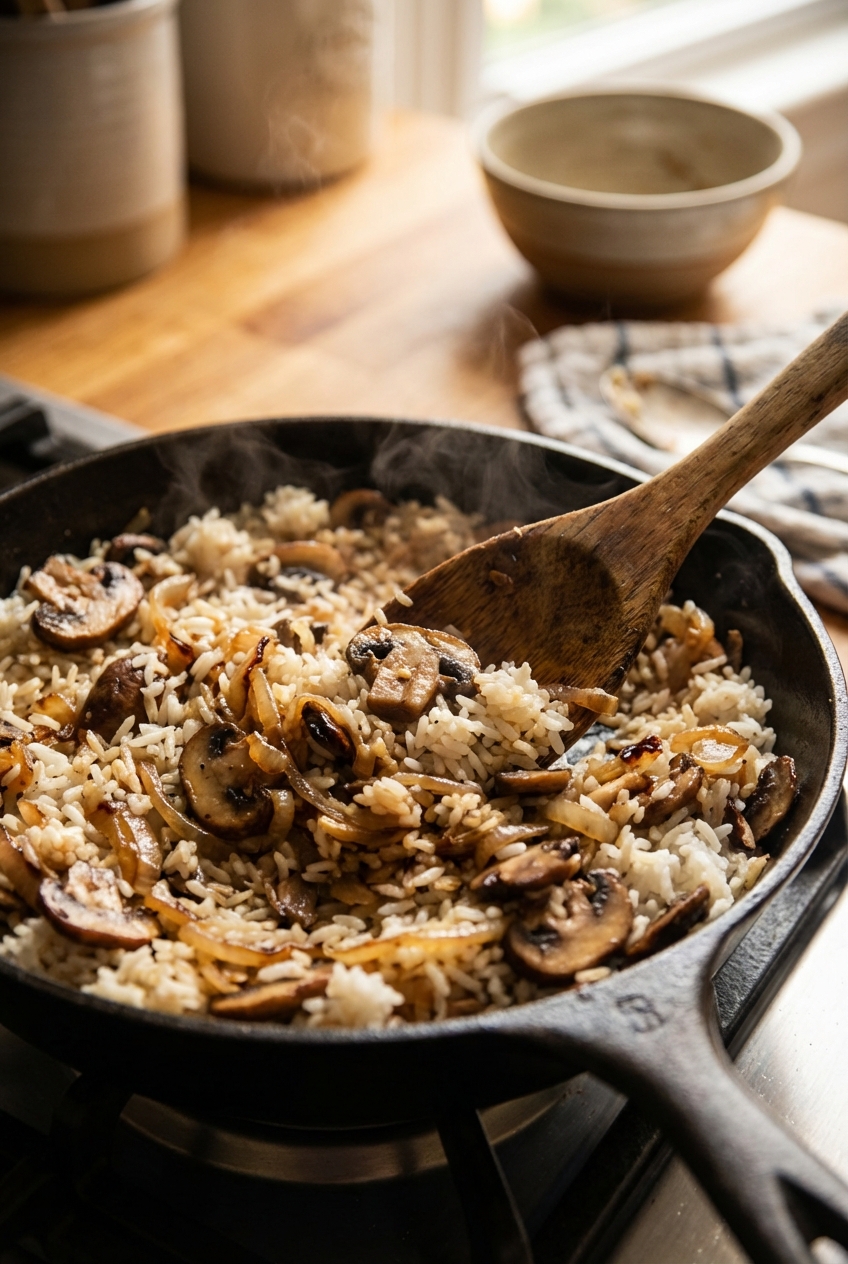
Usually one of three things: the simmer was too high, the lid was lifted too often, or the pan was too small and crowded. Keep it at a barely-there simmer and do not stir once it is covered. If your pan runs hot or your mushrooms are extra juicy, start with 2 3/4 cups broth next time.
I do not like mushrooms. What can I swap?
Diced zucchini, chopped kale, or frozen peas (stirred in at the end) all work. You will lose some earthy depth, so consider adding a little extra thyme or a teaspoon of tomato paste when you sauté the onions.
Will the chicken skin stay crispy?
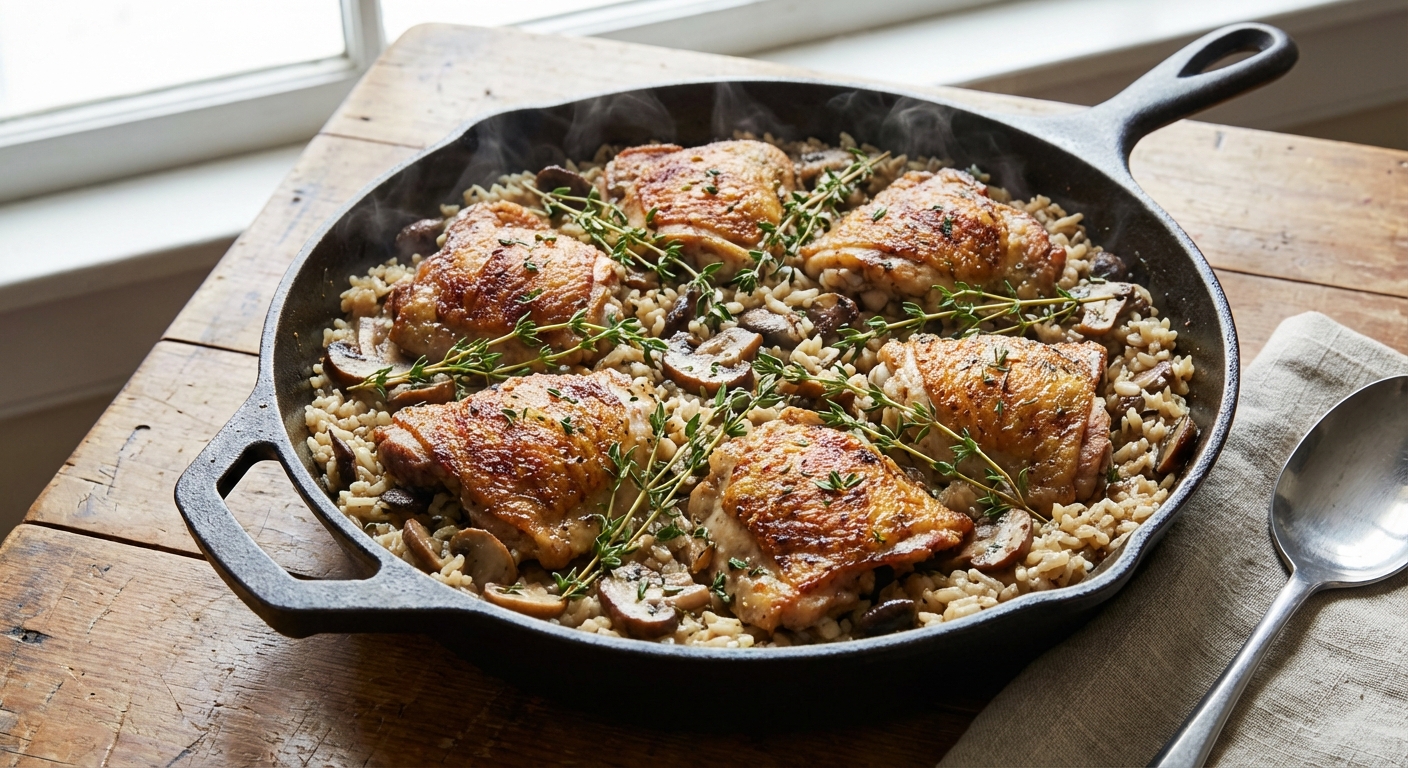
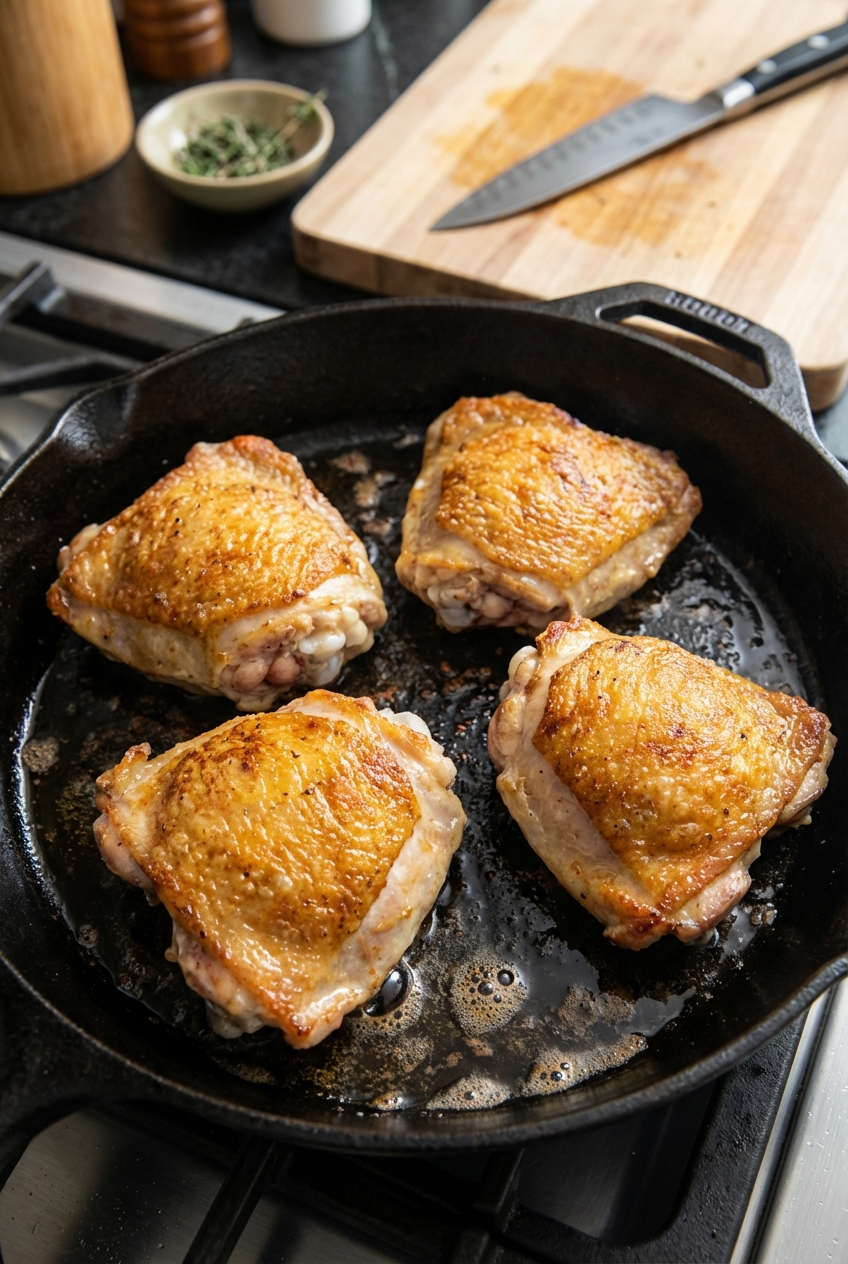
You get the best crisp in the initial sear. Once the pan is covered, the skin turns more tender (still tasty). If you want it crisp again, place thighs on a sheet pan and broil for 2 to 3 minutes at the end, or re-crisp skin-side down in a hot skillet for a minute.