How long should I brine chicken?
It depends on the cut and how salty your brine is. With the ratio in this recipe, use these reliable ranges: boneless pieces 2 to 4 hours, bone-in pieces 4 to 8 hours, and a whole chicken 8 to 12 hours. If you brine toward the high end, plan to skip additional salt in your final seasoning. Try not to push past 24 hours or the texture can turn a little hammy.
Do I rinse chicken after brining?
Usually, no. Instead, remove it from the brine, pat very dry with paper towels, and season thoughtfully. If you are sensitive to salt or brined for the longer end, you can do a quick rinse, then dry extremely well.
Can I brine and then air-dry for crisp skin?
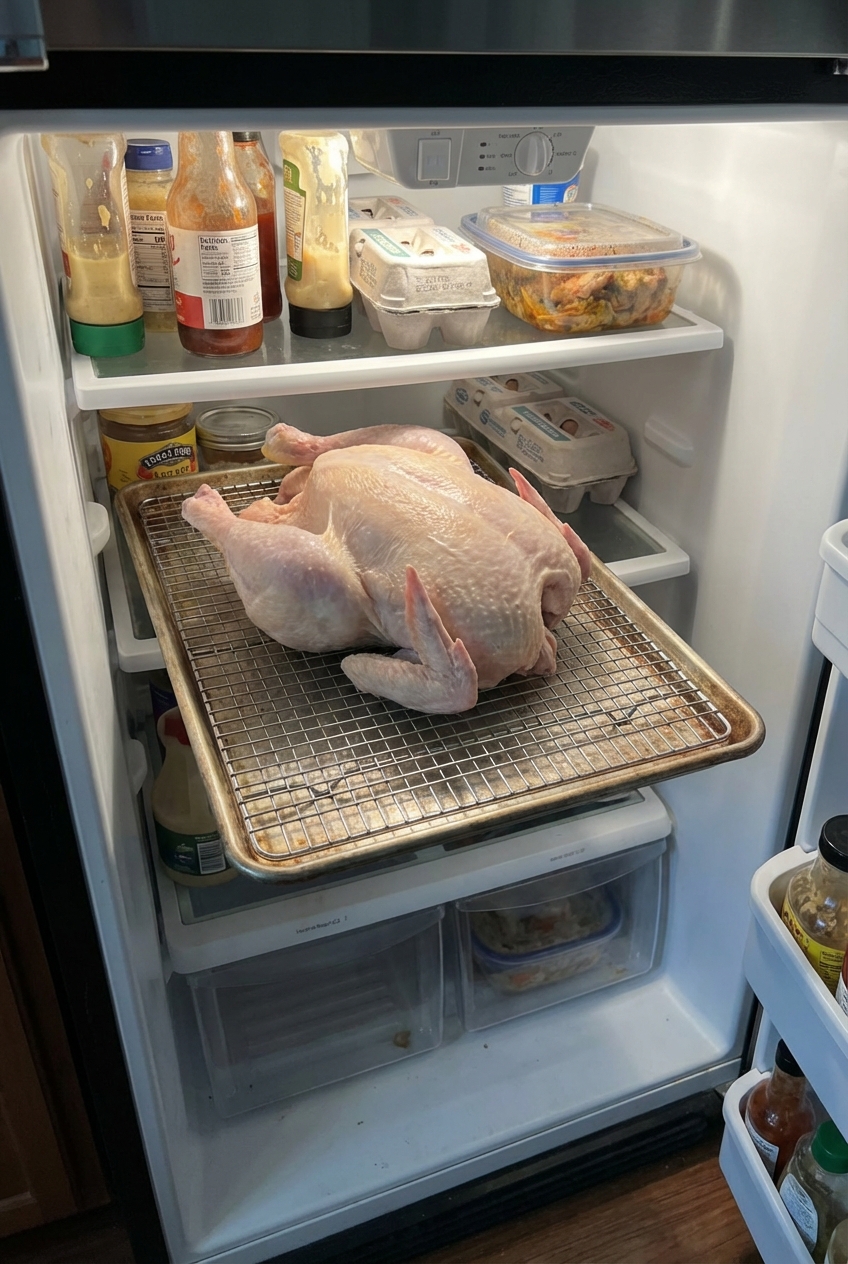
Yes, and it is my favorite move. After brining, pat dry and place the chicken on a rack over a sheet pan, uncovered in the fridge for 2 to 12 hours. This dries the surface so the skin crisps up faster.
Is this a wet brine or dry brine?
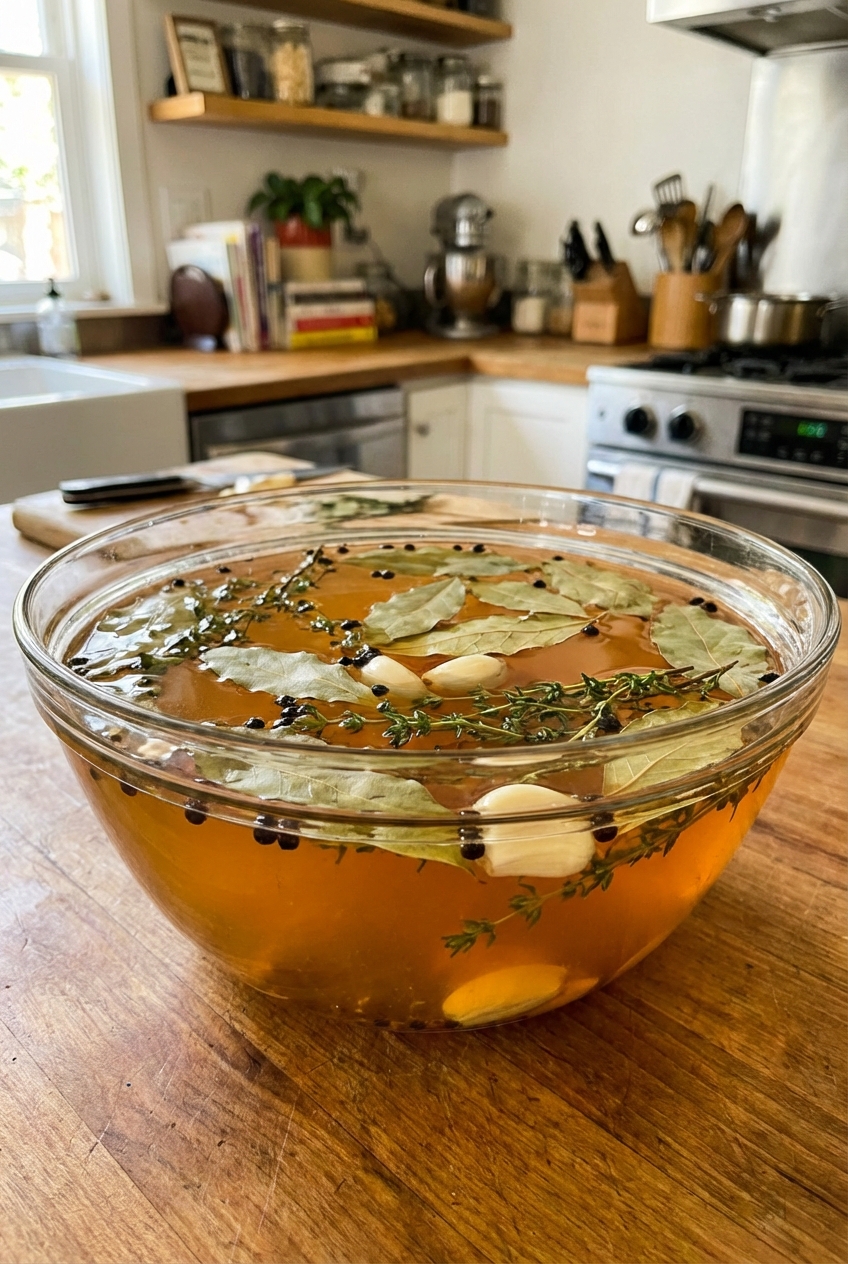
This is a wet brine, meaning salt plus water. A dry brine (salt rubbed directly on the chicken) also works great, but the flavor profile here comes from aromatics infusing the liquid.
Can I use table salt instead of kosher salt?
You can, but measure differently. Table salt is denser. If you are measuring by volume, use about half the amount. Better yet, use the gram measurement in the ingredients so the brine stays consistent.
Does the brand of kosher salt matter?
Yes. Diamond Crystal and Morton measure differently by volume. This recipe includes a weight so you can get the right salinity no matter what brand you have. (If you want to be extra precise, check your box for the brand’s published weight-per-volume.)
What if my brine is still warm?
Do not add chicken to warm brine. Chill it first with ice and cold water, or refrigerate until fully cold. Warm brine can put chicken in the temperature danger zone.
Can I brine at room temperature?
No. Keep the chicken fully refrigerated while brining for food safety.