Mom's Best Recipes
Recipe

Earthy Corned Beef and Cabbage (Slow Cooker)

A smooth, silky, all day slow cooker take with tender corned beef, buttery potatoes, sweet carrots, and cabbage that stays pleasantly crisp at the edges.

Author By Matt Campbell
4.8
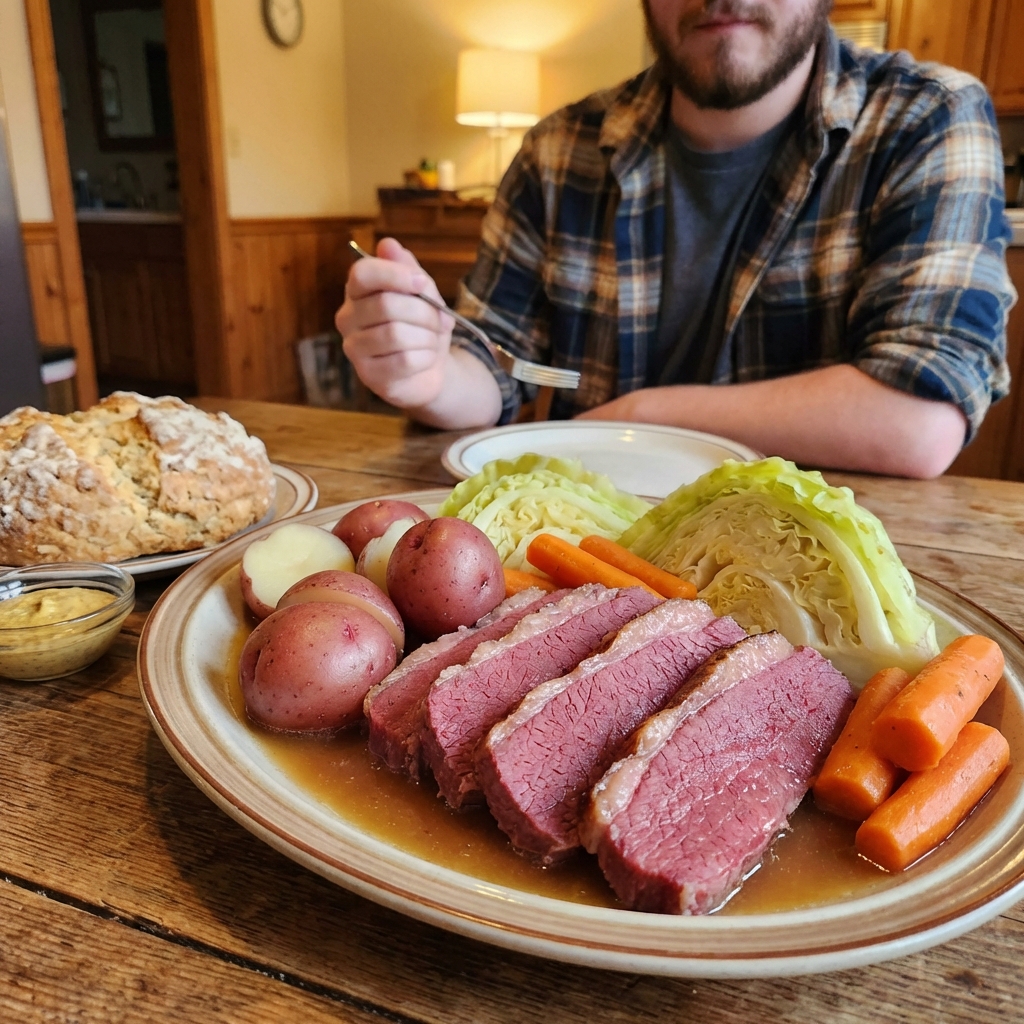
A real photograph of sliced corned beef on a platter with cabbage wedges, carrots, and baby potatoes, glistening with broth on a wooden table

I love a recipe that basically cooks itself but still tastes like you were in there doing chef things all day. Slow cooker corned beef and cabbage is exactly that. You get tender, sliceable brisket, vegetables that soak up all that seasoned broth, and a pot of silky, savory cooking liquid you will want to ladle over everything like it is your job.

This version leans earthy and cozy with onions, garlic, and a small hit of mustard and apple cider vinegar to brighten things up. The goal is classic comfort with a little extra depth, and instructions that do not require a culinary degree or a day off work.
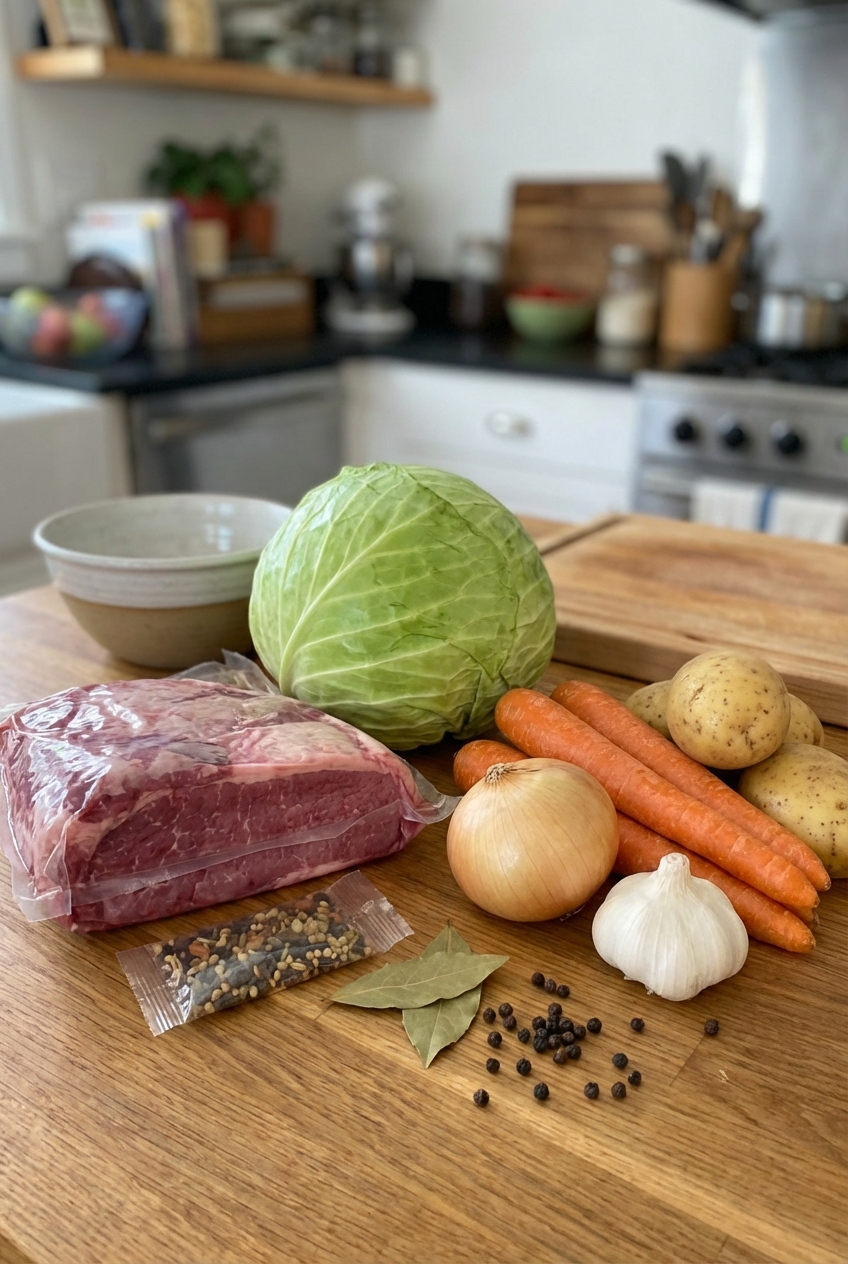
A real photograph of corned beef brisket, cabbage, carrots, potatoes, onion, garlic, and spices arranged on a kitchen counter

Why It Works

  • Silky broth, not bland water: A quick flavor boost from onion, garlic, mustard, and a touch of vinegar turns the cooking liquid into something you actually want to serve.
  • Vegetables that hold their shape: Potatoes and carrots go in early, cabbage goes in late so it stays tender with crisp edges instead of turning into mush.
  • Sliceable corned beef: Low heat plus a rest after cooking helps the brisket stay juicy and easy to carve.
  • Accessible ingredients: Everything is grocery store simple, no special tools beyond the slow cooker.

Pairs Well With

Storage Tips

Cool it fast: Get leftovers into containers within 2 hours. Store meat and vegetables with a little broth to keep everything juicy.

  • Refrigerator: 3 to 4 days in airtight containers.
  • Freezer: Corned beef freezes well for up to 2 months. Cabbage gets softer after freezing, so freeze meat (and maybe carrots and potatoes) separately if you can.

Best reheat move: Warm gently in a saucepan with a splash of broth over low heat. Microwave works too, but go in short bursts so the beef stays tender.

Bonus use: Chop the beef and crisp it in a skillet for hash. Add leftover potatoes and carrots, then top with an egg and call it a win.

Common Questions

Do I need to rinse corned beef before cooking?

Optional. Rinsing can mellow the saltiness, especially if you are sensitive to salty foods. I usually do a quick rinse and pat dry, then rely on the spice packet plus my aromatics to build flavor back up.

When should I add the cabbage so it does not turn mushy?

Add it in the last 60 to 90 minutes on LOW (or 30 to 45 minutes on HIGH). That is the sweet spot for tender leaves with a little bite.

Can I cook it on HIGH the whole time?

You can, but LOW gives you a better texture and a more sliceable brisket. If you must use HIGH, plan on about 4 to 5 hours, then add cabbage near the end.

How do I know the corned beef is done?

It should be very tender when pierced with a fork. If you use a thermometer, aim for around 190°F to 205°F internal for that pull apart tenderness.

Why is my corned beef tough?

It usually just needs more time. Brisket gets tender when the connective tissue breaks down. Keep cooking on LOW and check every 30 to 45 minutes until it relaxes.

How do I slice it so it stays tender?

Rest the meat for 10 to 15 minutes, then slice against the grain. If you are unsure which way the grain runs, look for the lines in the meat and cut across them.

The first time I made corned beef and cabbage in a slow cooker, I treated the cabbage like it was just another root vegetable and let it ride all day. The flavor was there, but the texture was giving overcooked gym sock. Lesson learned. Now I cook the brisket low and slow with potatoes and carrots, then drop the cabbage in late so it stays lively. The result is that perfect weeknight magic trick: you walk back into the kitchen and it smells like you know what you are doing.