Common Questions
How ripe should the bananas be?
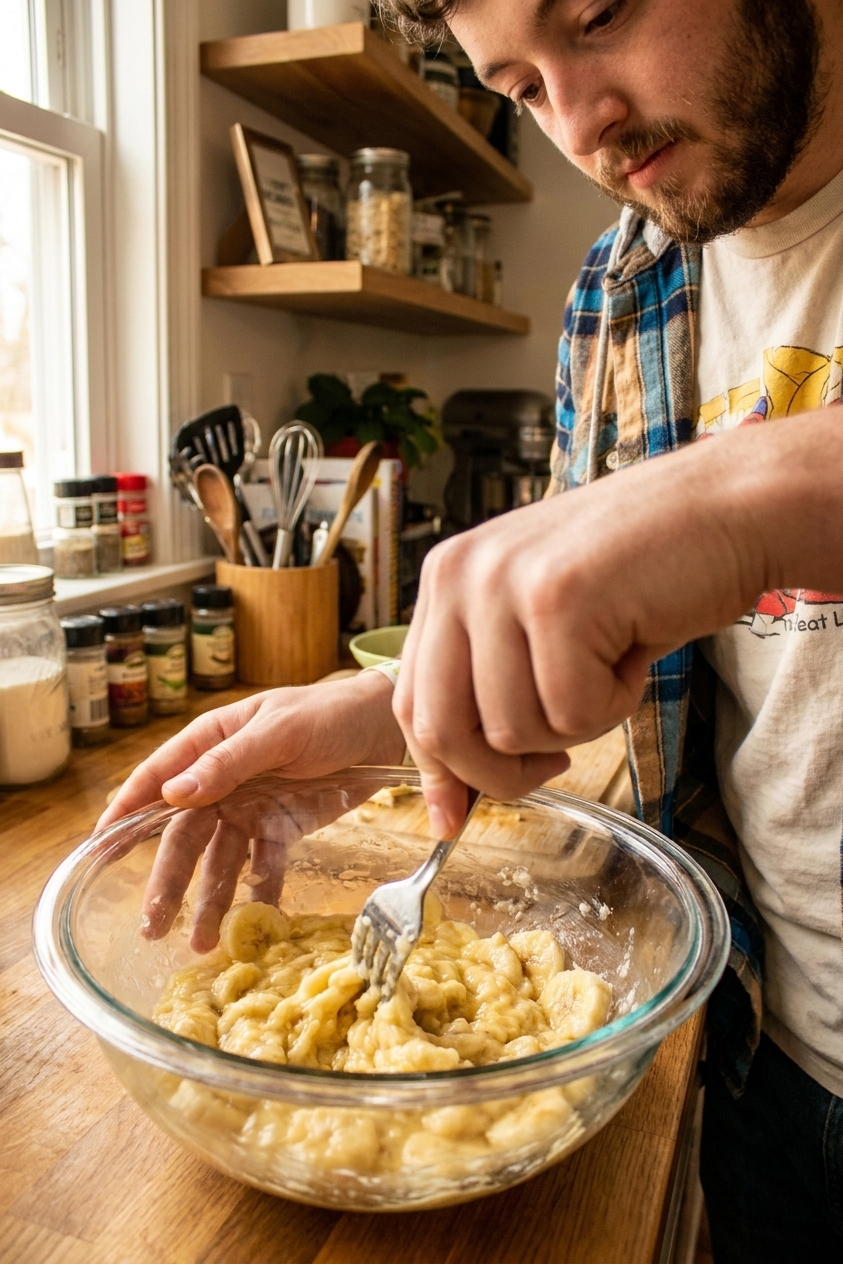
Very ripe. Think lots of brown spots, strong banana smell, and soft enough to mash easily. Yellow bananas will work, but the flavor will be milder and the loaf less sweet.
Can I make this banana bread without baking soda?
Baking soda is the main leavener here, and it also affects flavor and browning. If you only have baking powder, it can work in a pinch: use 3 teaspoons baking powder in place of the baking soda. Because baking powder does not neutralize acidity the same way, the loaf may rise differently and taste a little different. For better balance, add 1 to 2 teaspoons lemon juice or vinegar (or swap a couple tablespoons of milk for buttermilk or yogurt) if you have it.
Why did my banana bread sink in the middle?
- Underbaked: The center needs to fully set, not just look brown. Use the toothpick test and check a couple spots. For extra certainty, aim for an internal temp of 200 to 205°F (93 to 96°C).
- Too much banana or liquid: Extra-large bananas can throw off the balance. Stick close to the measured amount.
- Overmixing: Overworked batter can weaken structure and lead to sinking.
Can I add chocolate chips or nuts?
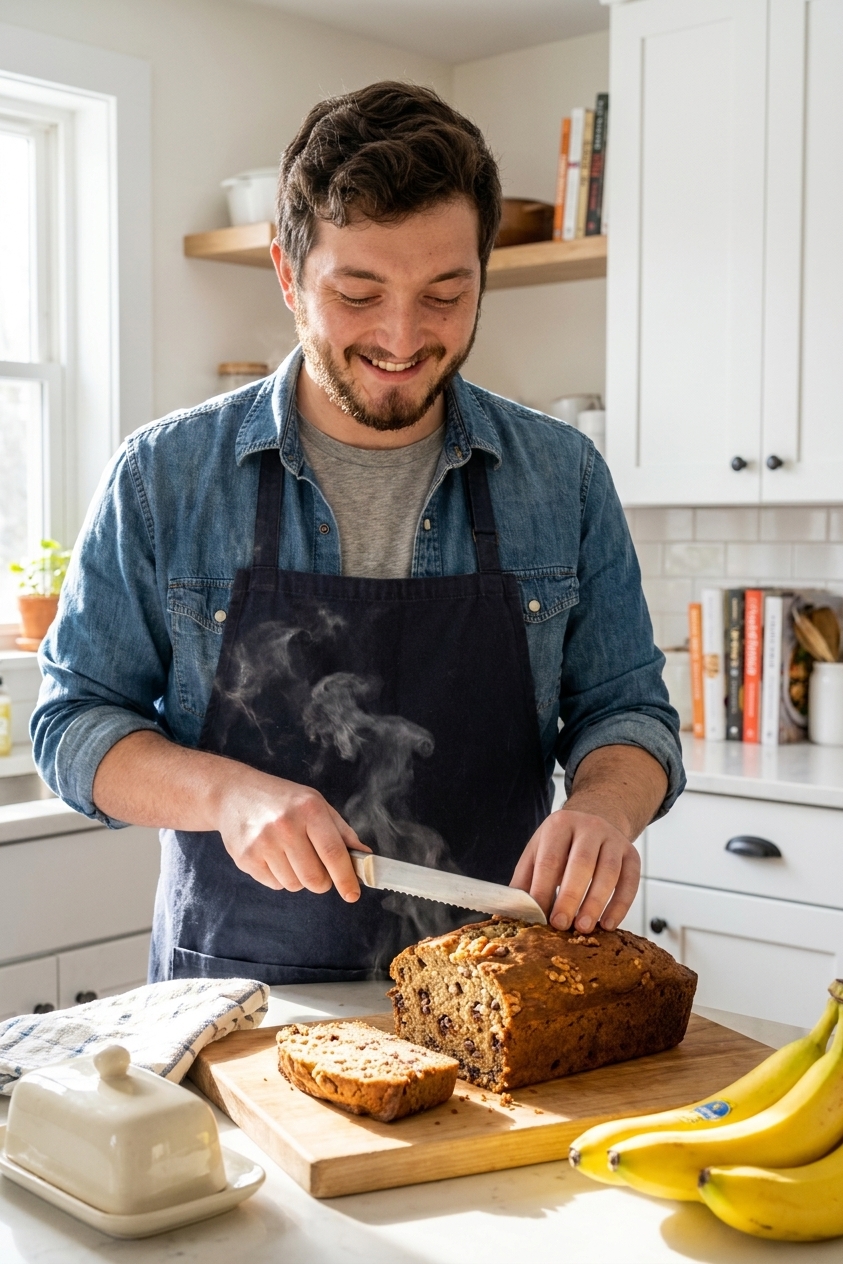
Yes. Fold in 3/4 cup chocolate chips or chopped walnuts or pecans. If you do both, use 1/2 cup of each so the loaf still holds together.
Allergen note: Nuts are optional, but if you add them, label it for anyone with allergies.
How do I keep the top from getting too dark?
If the top is browning too fast, loosely tent the loaf with foil for the last 15 to 20 minutes of baking.
Do I need to change anything for convection?
This recipe is written for a conventional (non-convection) oven. If you bake with convection, try 325°F and start checking a few minutes early.
Can I use a smaller loaf pan?
Yes. An 8.5 x 4.5-inch pan will bake up taller and may need a little longer. Start checking at 55 minutes and go from there. If it is getting too brown on top, use the foil tent trick.