Common Questions
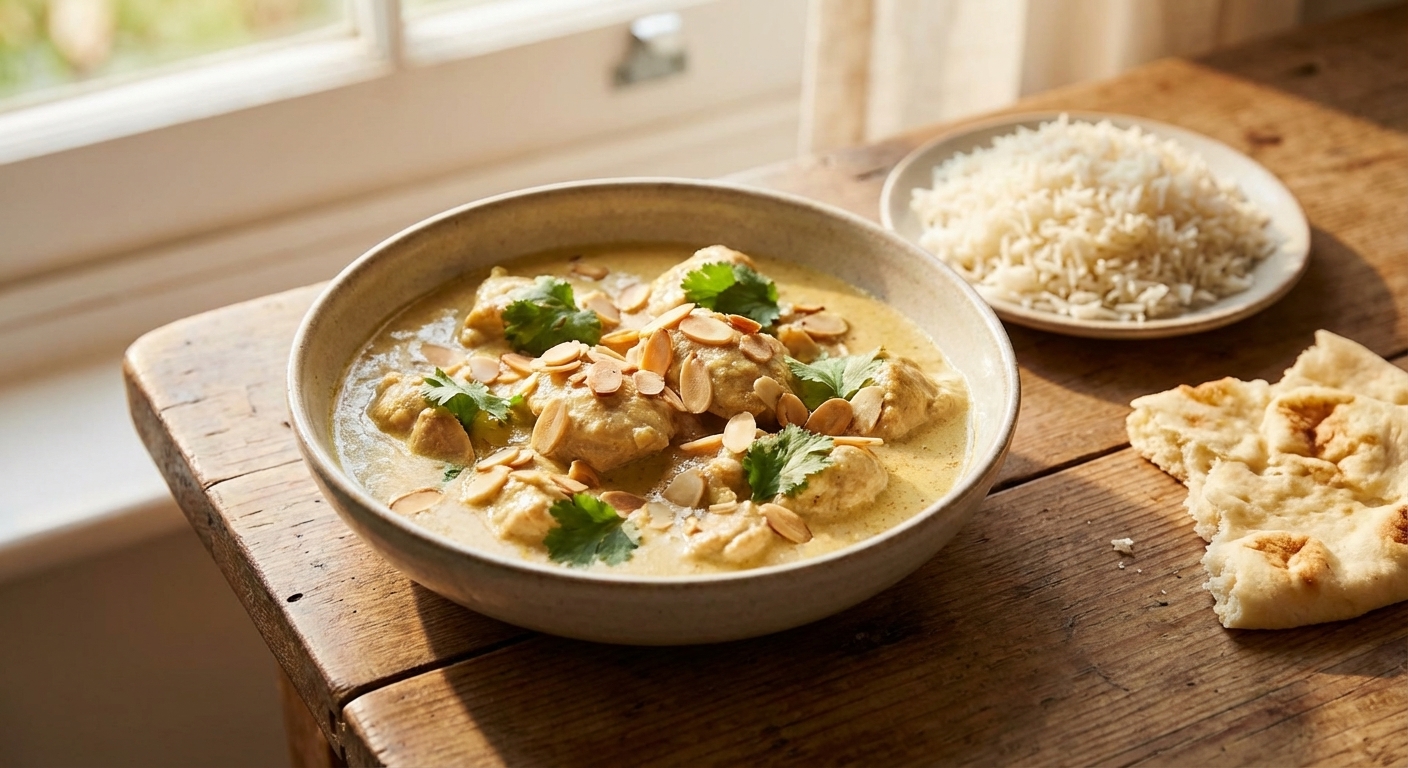
Is chicken korma spicy?
Korma is often served as a mild curry, especially in many restaurants and home-style versions. This recipe uses warm spices for flavor, not heat. If you want it completely kid-level, skip the black pepper. If you want a tiny kick, add a pinch of cayenne at the end.
Can I use chicken breast instead of thighs?
Yes. Breast cooks faster and can dry out, so keep the simmer gentle and start checking around 6 to 8 minutes after adding it back to the sauce. Pull it when it hits 165°F (74°C).
What kind of yogurt should I use?
Use plain whole milk yogurt or Greek yogurt. If using Greek yogurt, loosen it with a tablespoon or two of water before adding so it blends smoothly. Avoid sweetened or flavored yogurt.
How do I keep yogurt from curdling in curry?
Three things help: use full-fat yogurt, add it off the heat or at low heat, and stir it in gradually. Also, keep the sauce at a gentle simmer, not a rolling boil.
Can I make this nut-free?
Almonds are a big part of korma’s classic texture. For nut-free, swap the ground almonds for sunflower seed butter (1 to 2 tablespoons) or use extra yogurt plus a splash of cream. Flavor will shift, but it will still be tasty and mild.
What is the difference between korma and tikka masala?
Korma is usually milder and leans creamy, nutty, and slightly sweet. Tikka masala tends to be bolder, tangier, and often tomato-forward with more heat.