Mom's Best Recipes
Recipe

Easy Classic Quiche

Flaky crust, creamy custard, and flexible fillings for a quiche that works for brunch or an easy dinner.

Author By Matt Campbell
4.8
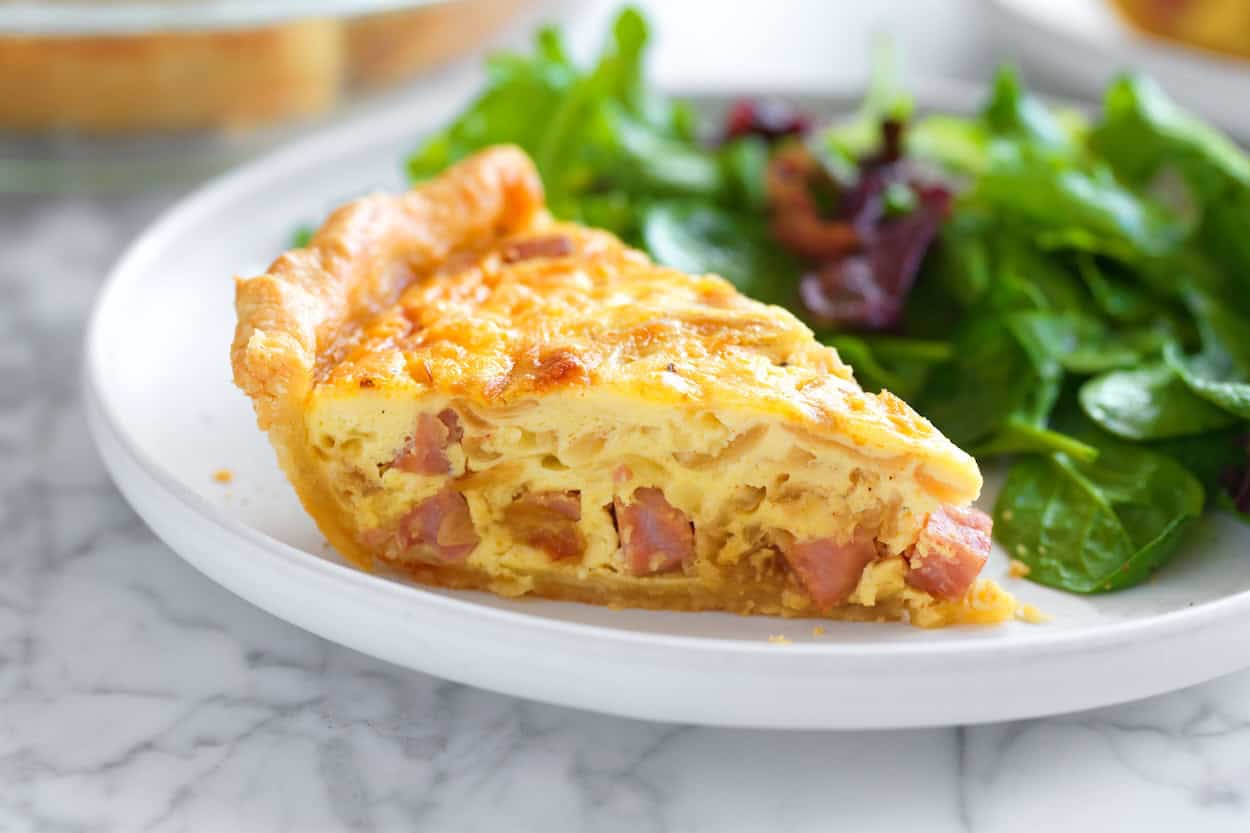
A single slice of classic quiche on a ceramic plate with a golden flaky crust and creamy egg filling, set on a sunlit kitchen table
Jump to Recipe

Quiche is one of those recipes that looks fancy, feels cozy, and secretly does you a huge favor on busy days. You mix a simple custard, toss in whatever you have, and the oven does the rest. The goal here is a crisp crust, a silky center, and enough flavor that you do not need to drown it in hot sauce to feel something. Not that I would judge.

This version is a classic: bacon and cheddar with a little onion and spinach for good measure. But the real win is the method. Once you nail the custard ratio and learn one very important trick, which is blind baking the crust, quiche becomes a reliable repeat meal you can riff on forever.
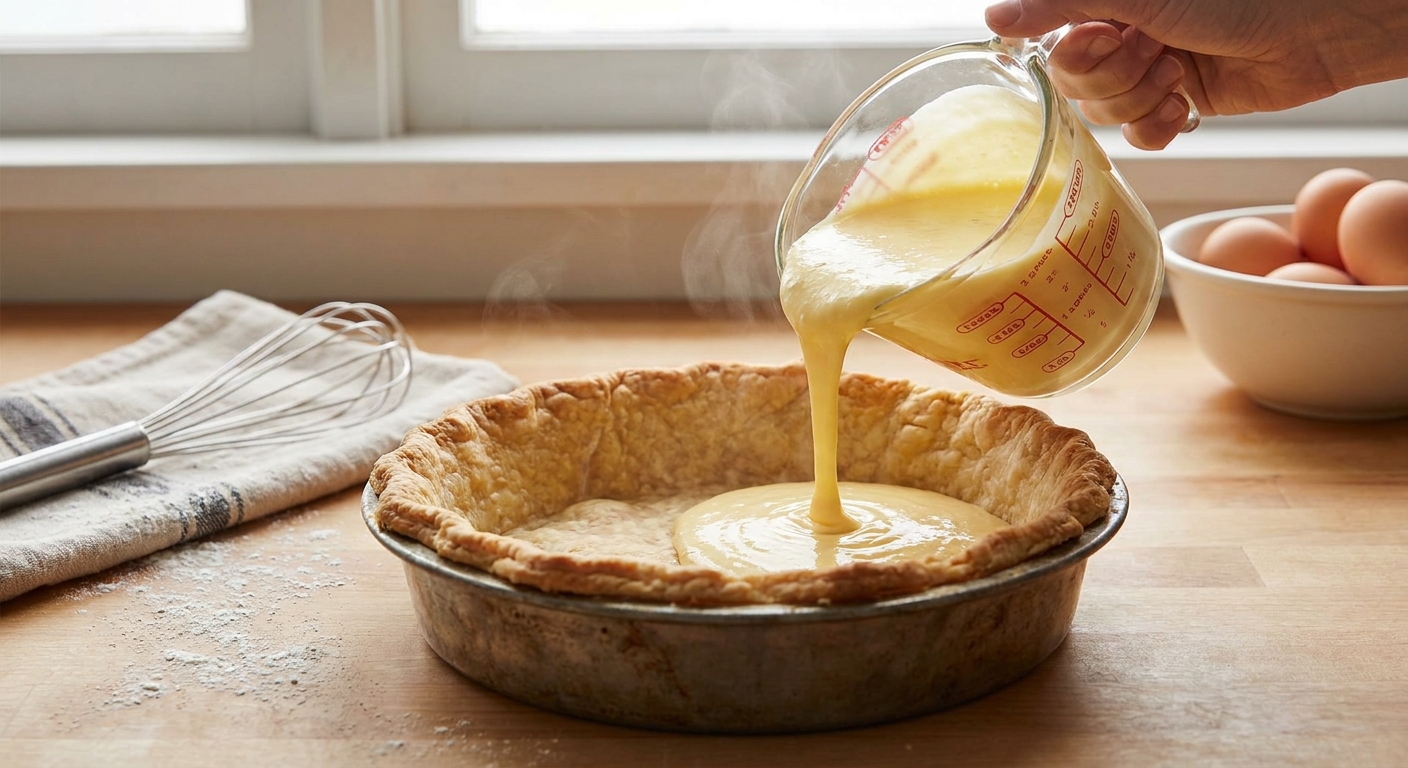
A hand pouring pale yellow egg and cream custard from a glass measuring cup into a warm, blind-baked pie crust in a metal deep-dish pie pan

Why It Works

  • Custard that sets, not scrambles: Using the right egg to dairy ratio keeps the filling creamy and sliceable.
  • No soggy bottom: Blind baking the crust gives you crisp edges and a sturdy base.
  • Make it your way: Swap the mix-ins based on what is in the fridge without wrecking the texture.
  • Great hot or room temp: Perfect for brunch spreads, lunchboxes, and those nights when dinner needs to be low drama.

Pairs Well With

Storage Tips

How to Store Quiche

  • Cool first: Let quiche cool 30 to 60 minutes so it finishes setting. Then refrigerate.
  • Refrigerator: Store tightly covered for up to 4 days.
  • Freezer: Wrap slices individually in plastic wrap, then foil. Freeze up to 2 months for best texture.

Best Reheating Methods

  • Oven (best): 325°F for 10 to 20 minutes (slices closer to 10, whole quiche closer to 20). Cover loosely with foil if the top browns too fast.
  • Microwave (fast): 45 to 90 seconds per slice, but the crust softens. If you have time, finish in a toaster oven for 3 to 5 minutes to crisp it back up.

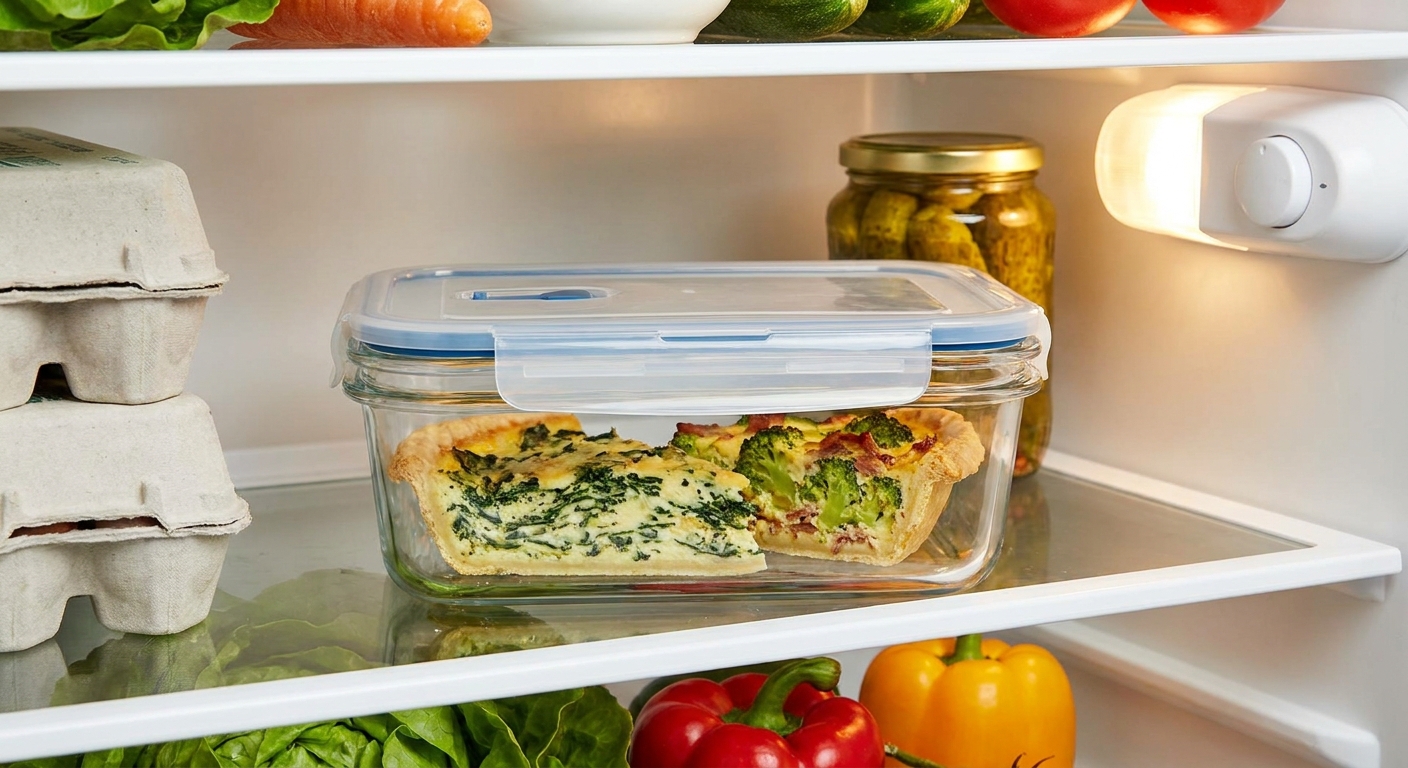
Two slices of quiche stored in a clear meal prep container on a refrigerator shelf

Common Questions

Common Quiche Questions

Do I have to blind bake the crust?

If you want a crisp bottom, yes. Blind baking is the difference between flaky and soggy. Even store-bought crust benefits from it.

How do I know when quiche is done?

The edges should look set and slightly puffed, and the center should jiggle like Jell-O, not slosh like a latte. If you have an instant-read thermometer, aim for 165°F to 175°F in the center.

Why did my quiche crack?

Usually it is overbaked or cooled too fast. Pull it when the center still has a gentle wobble, and let it cool at room temp.

Can I use milk instead of cream?

Yes, but the texture is a little less rich. Use half-and-half if you have it. If using whole milk, keep the add-ins modest and avoid super watery vegetables.

Can I make quiche ahead?

Absolutely. Bake it, cool it, refrigerate overnight, and reheat at 325°F until warmed through. It is one of the best brunch make-ahead moves.

How do I keep veggies from making the filling watery?

Cook them first. Sauté mushrooms, onions, spinach, and zucchini until their moisture cooks off, then cool slightly before adding.

The first time I made quiche, I treated it like an omelet that happened to be in a pie crust. I cranked the oven, stuffed in a mountain of fillings, and then acted shocked when it came out watery with a crust that tasted like wet cardboard. Classic.

Now I keep it simple: blind bake, respect the custard ratio, and cook off veggie moisture like it owes me money. The result is the kind of dinner that feels like you tried harder than you did, which is honestly a beautiful thing.