Do I cook salmon skin-side down or flesh-side down first?
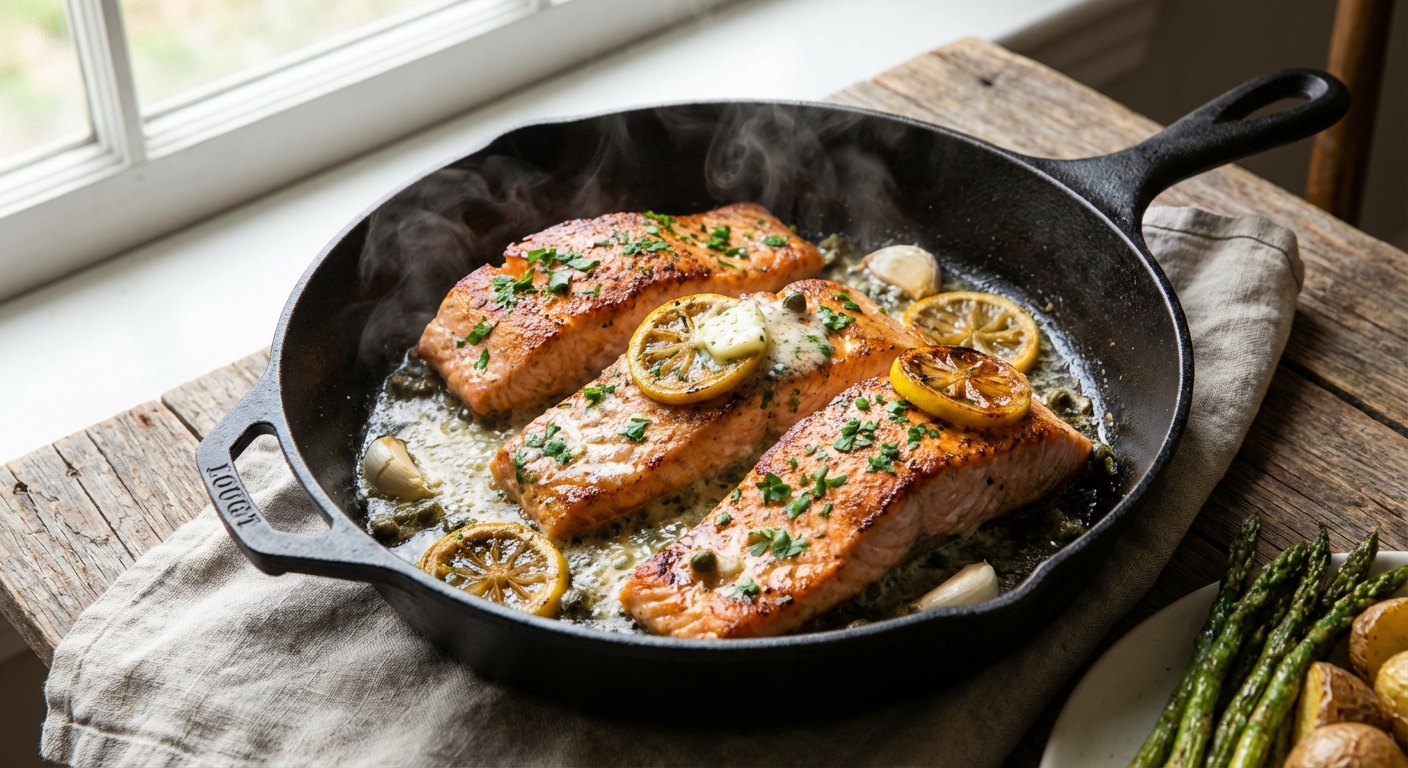
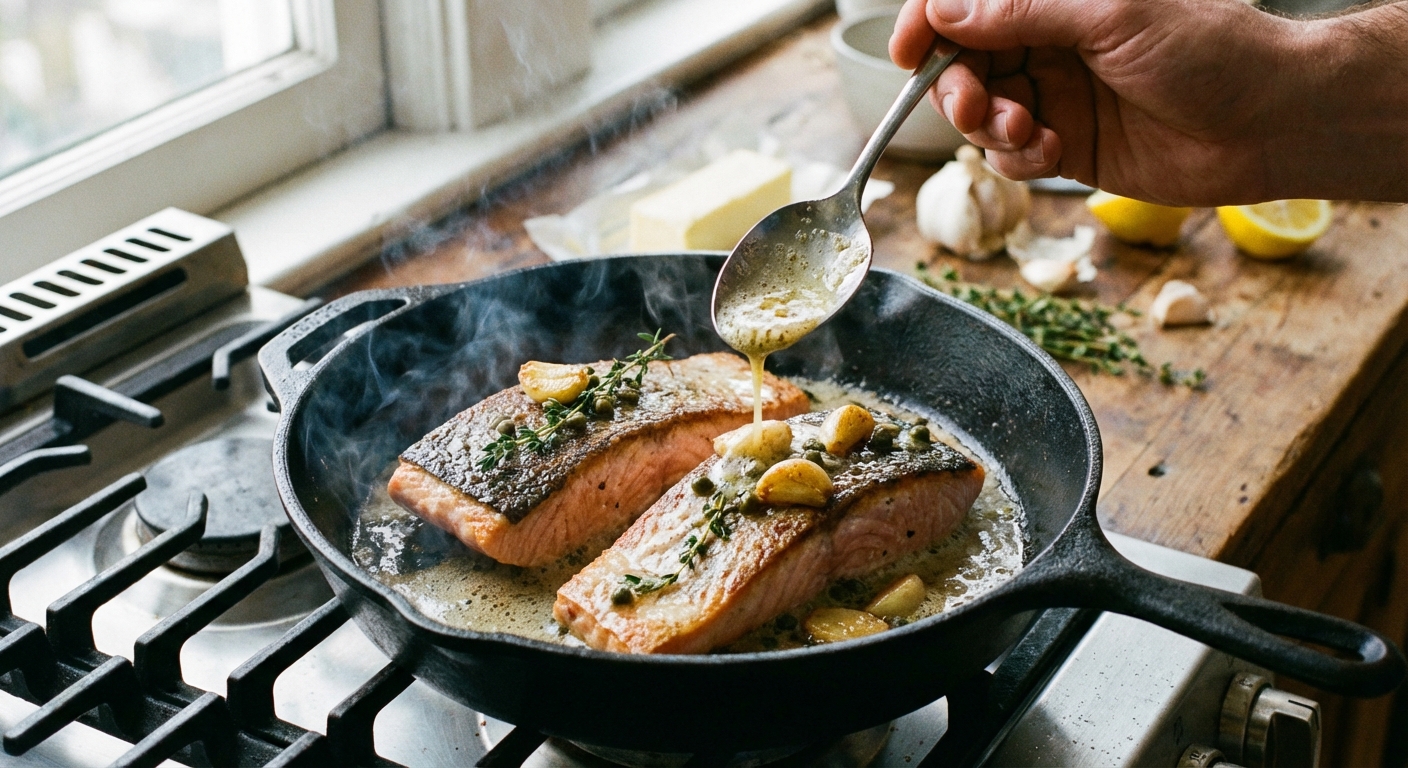
If your fillets have skin, start skin-side down to render and crisp it. If there is no skin, start on the side that was skin-side originally, which is often flatter, for the best sear and easier flipping.
How do I know when salmon is done?
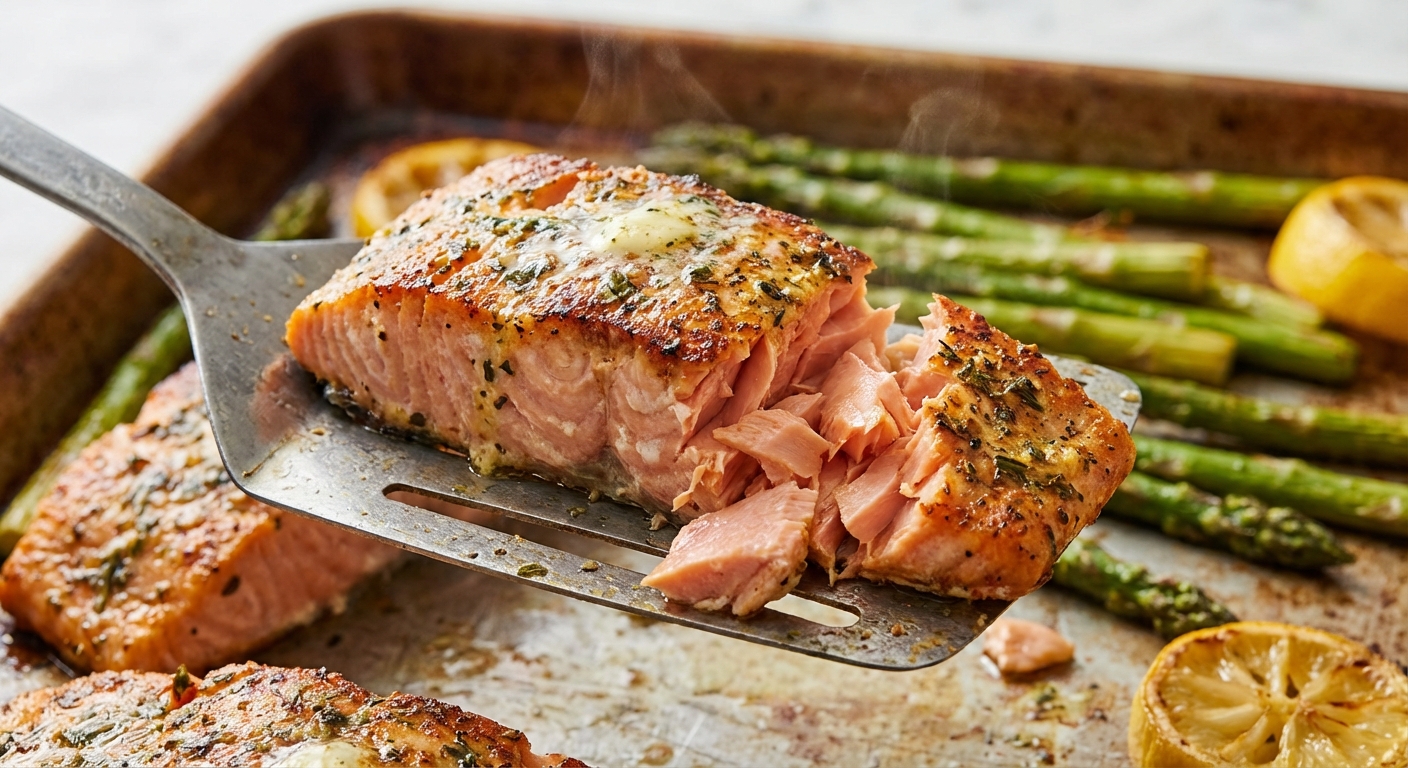
Look for salmon that is opaque on the sides and flakes easily, with a slightly translucent center if you like it juicy. If you like numbers, aim for 125°F to 130°F in the thickest part for medium, or around 135°F for more done. Food safety note: the USDA recommends cooking fish to 145°F. Many people prefer lower temps for a more tender texture, but choose what you are comfortable with, and remember it keeps cooking for a minute after you pull it off the heat.
Can I use frozen salmon?
Yes. Thaw it overnight in the fridge, then pat it very dry. Surface moisture is the enemy of browning, and we are here for crisp edges.
What if my garlic burns?
Turn the heat down and add the butter after the salmon is mostly cooked, not at the beginning. Garlic cooks fast. If it goes too far, wipe out the pan carefully and start the sauce fresh. You deserve nice garlic, not bitter regret.
What should I serve with garlic butter salmon?
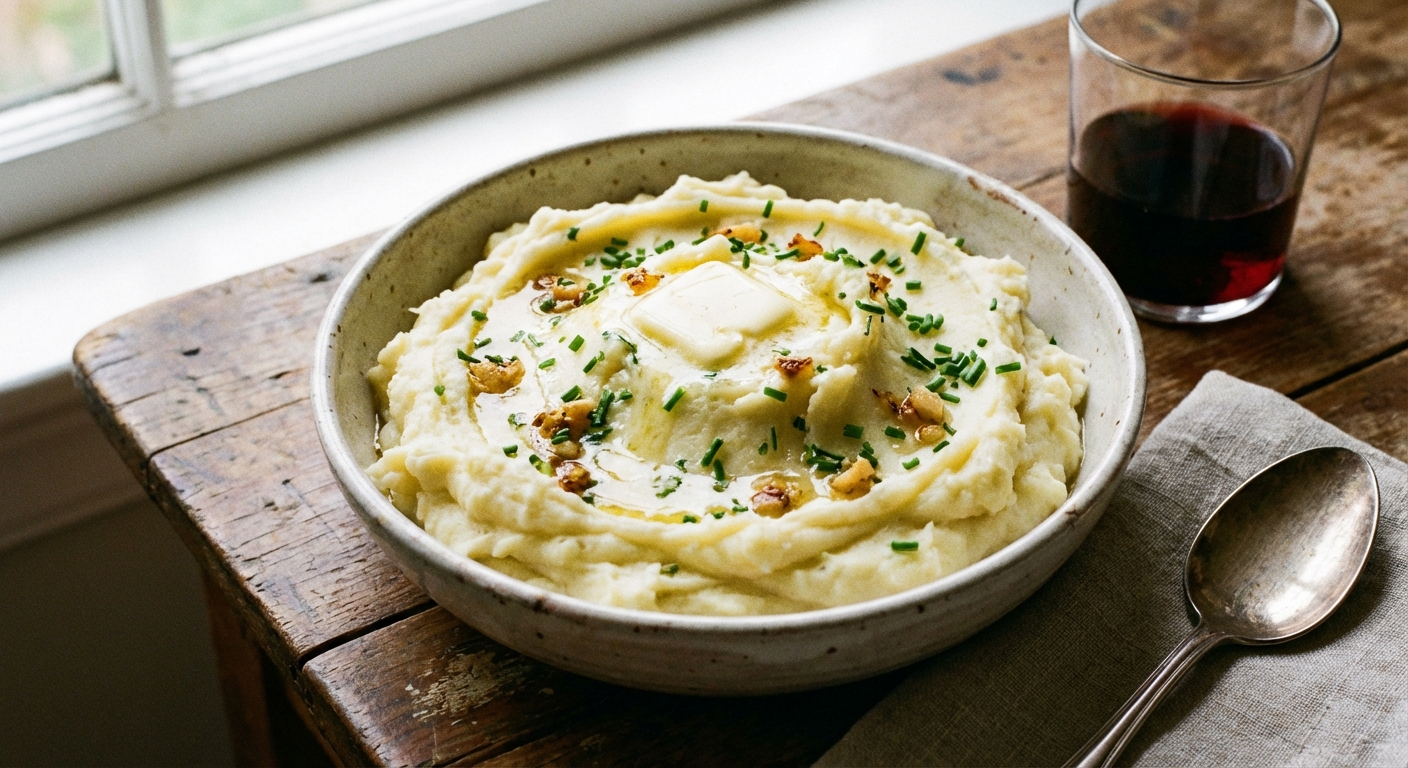
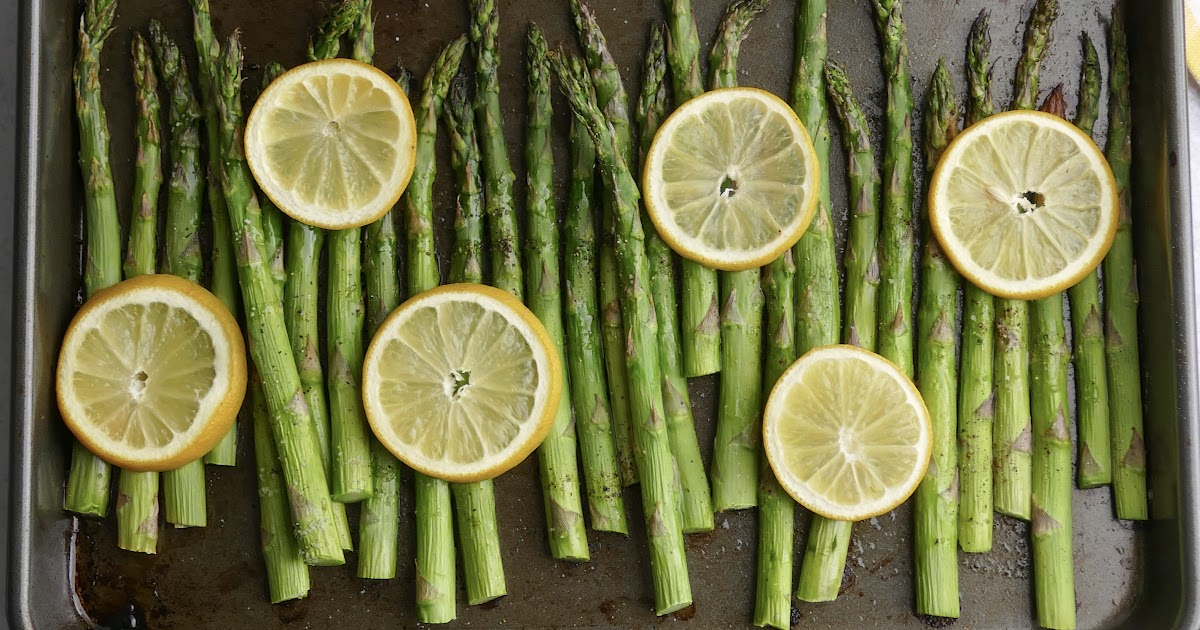
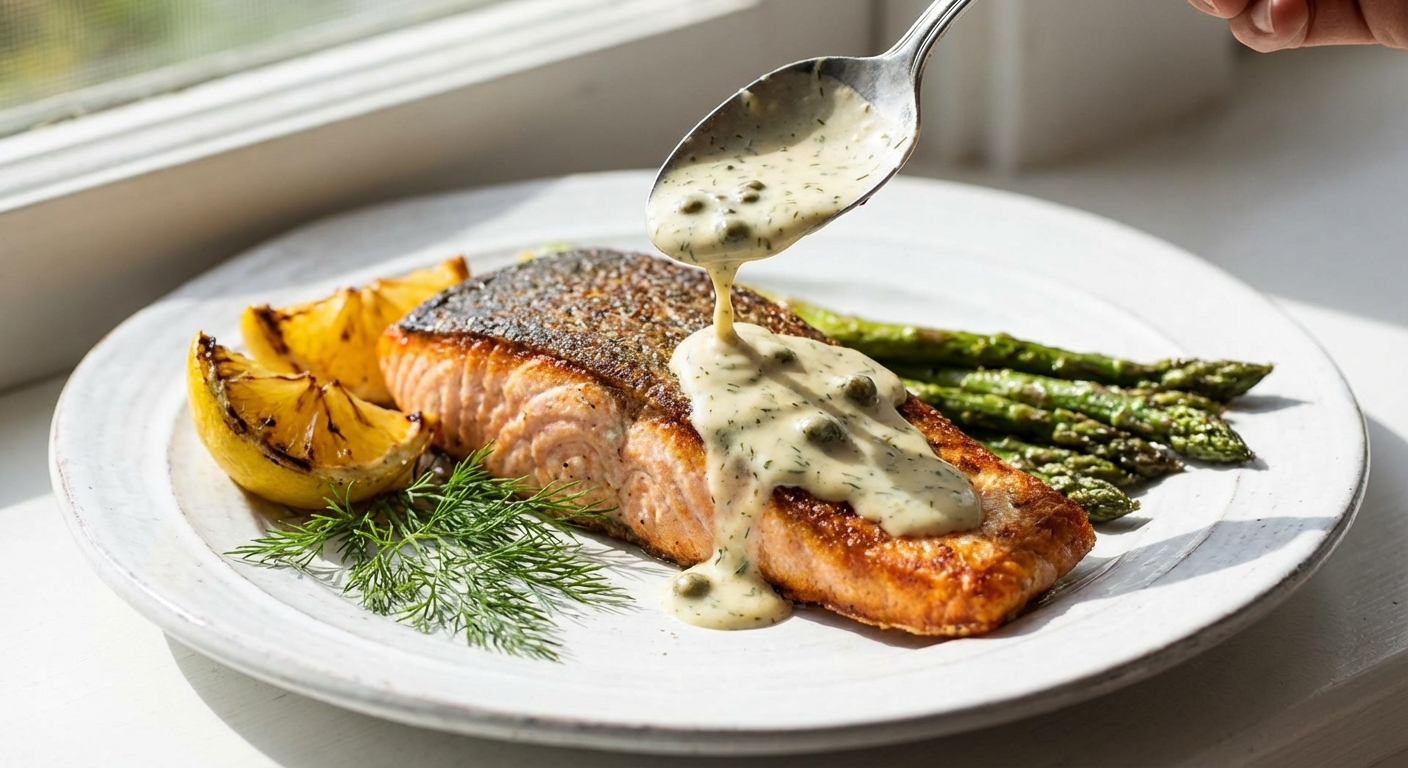
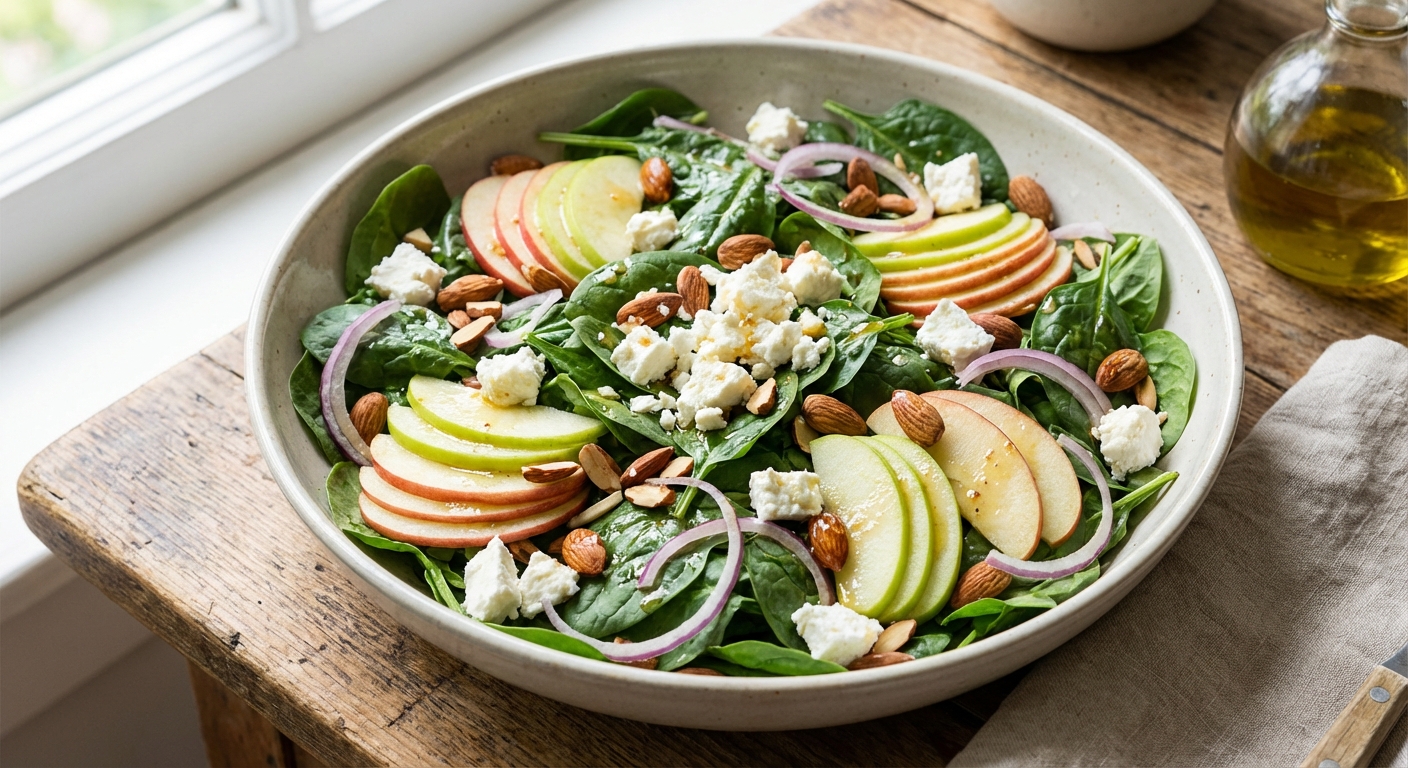
Rice, mashed potatoes, roasted baby potatoes, pasta, or crusty bread for sauce-dunking. Add a green thing like asparagus, broccoli, green beans, or a sharp little salad.
What about thick fillets?
If your salmon is extra thick (around 1 1/2 inches), sear as written, then lower the heat to medium or finish in a 400°F oven for a few minutes to get the center done without scorching the outside. The goal is crisp edges, not smoke alarms.