Mom's Best Recipes
Recipe

Easy Pad Thai Recipe

Saucy, tangy-sweet, and loaded with crisp edges, this 30-minute Pad Thai is weeknight-friendly and seriously satisfying. No weird ingredients, no stress, just takeout-style flavor at home.

Author By Matt Campbell
4.9 (312)
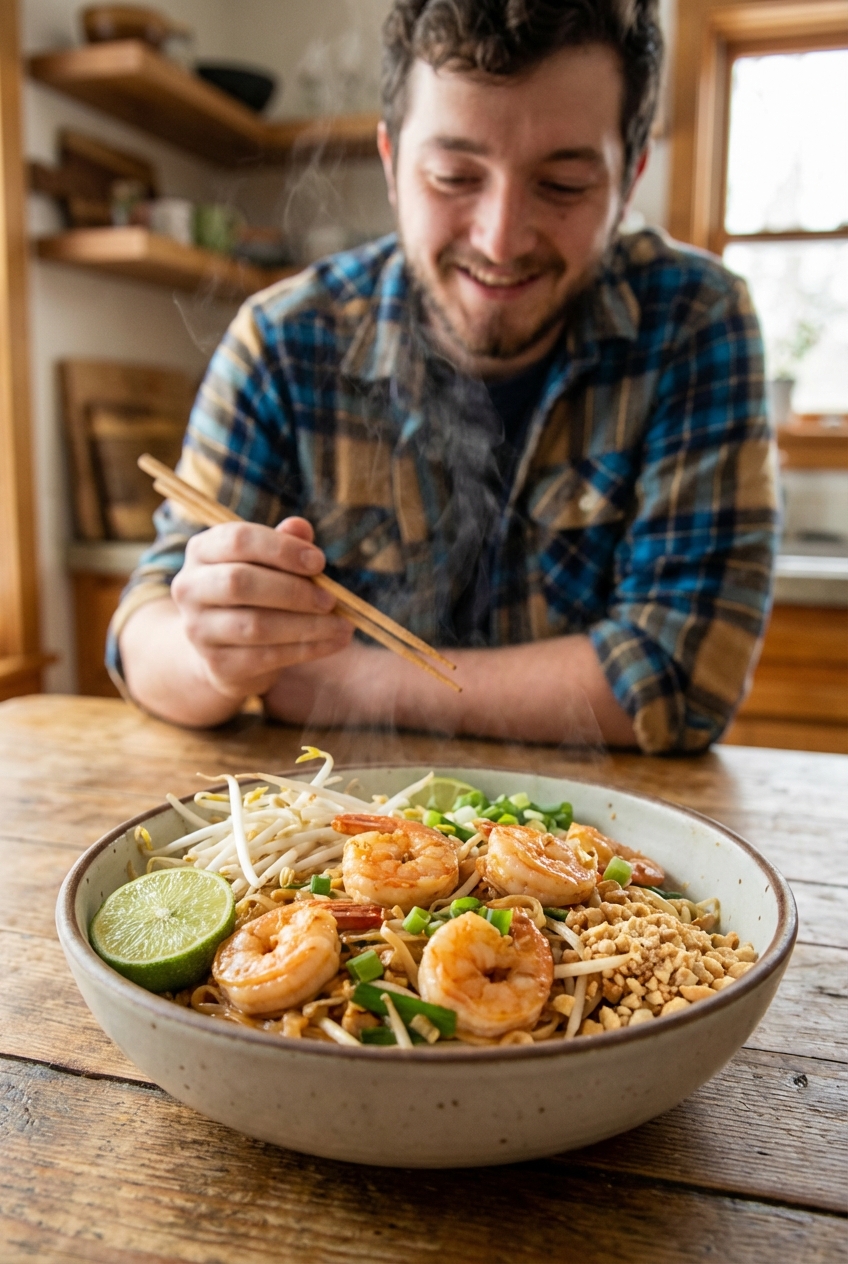
A steaming bowl of homemade Pad Thai with shrimp, bean sprouts, chopped peanuts, lime wedges, and green onions on a wooden table

Pad Thai is one of those dishes that feels like a magic trick: slippery rice noodles, a glossy sauce that hits sweet, sour, and salty all at once, and a shower of crunchy toppings that makes every bite feel alive.

Takeout Pad Thai can be great. It can also be a sugar bomb with mushy noodles and exactly three sad sprouts. This version is my weeknight upgrade: big flavor, fast moves, and a sauce you can memorize after a couple tries. You do not need a wok, you do not need to hunt down specialty items, and you definitely do not need to be perfect. You just need a hot pan and the confidence to keep things moving.

Pro tip before we start: Pad Thai is a high-speed recipe. Measure your sauce, chop your aromatics, and have your noodles ready, then cook. Once the pan is hot, it’s basically a three-minute sprint.
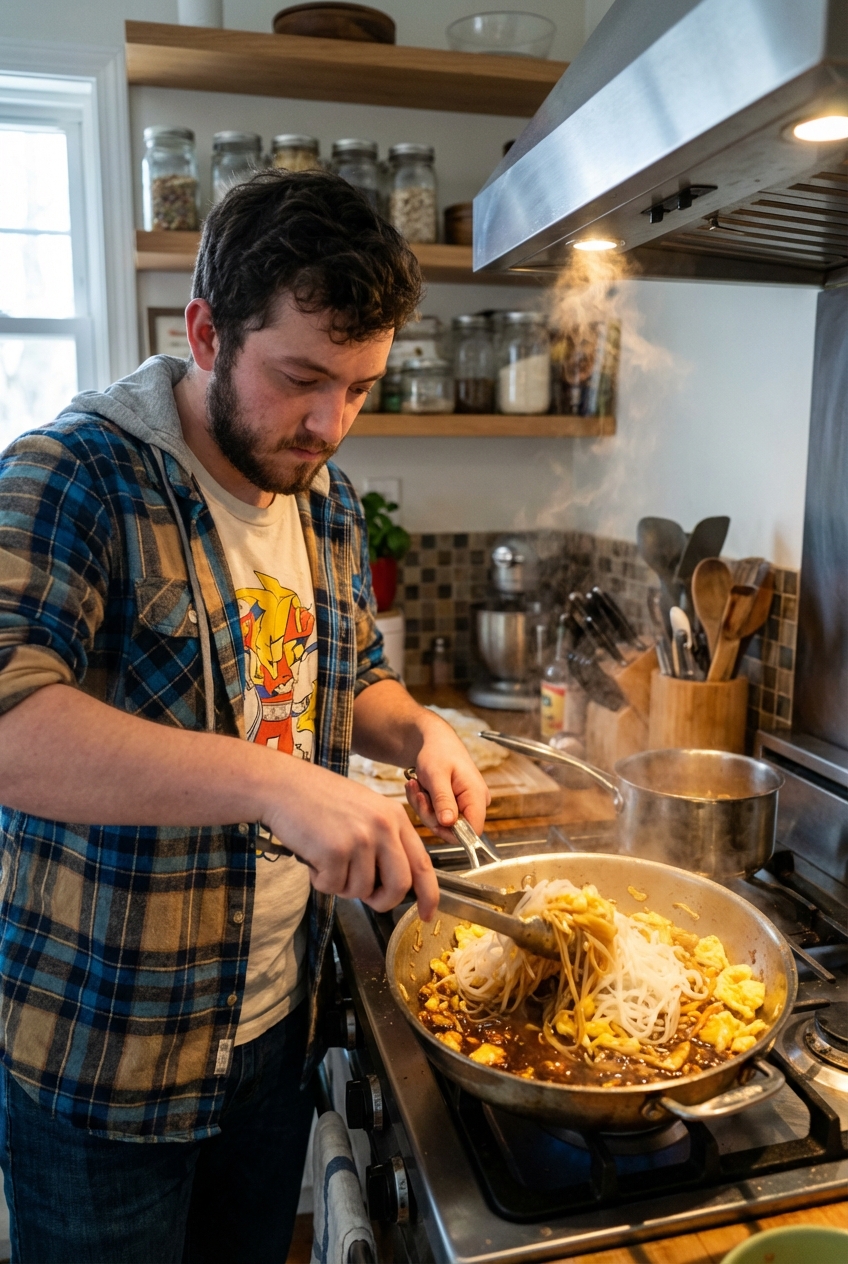
A skillet on the stove with rice noodles being tossed with Pad Thai sauce and scrambled egg

Why It Works

  • Bright, balanced sauce with pantry ingredients: Lime juice plus a touch of brown sugar gives you that tangy-sweet vibe without making you chase specialty items.
  • No gummy noodles: We soak and finish-cook the noodles in the sauce so they stay springy, not bloated.
  • Real texture: Quick-seared protein, scrambled egg ribbons, and a cold-crunch finish from sprouts, peanuts, and herbs.
  • Flexible and forgiving: Swap shrimp for chicken or tofu, dial the heat up or down, and use what vegetables you have.

Pairs Well With

Storage Tips

Pad Thai is best fresh, but leftovers can still be really good if you reheat it gently and add a little moisture.

Fridge

  • Store in an airtight container for up to 3 days.
  • Keep toppings like peanuts, sprouts, and herbs separate if you can.

Reheat

  • Skillet method (best): Add a splash of water, chicken stock, or even a tiny squeeze of lime to loosen the noodles. Warm over medium heat, tossing often.
  • Microwave method: Sprinkle with water, cover loosely, and heat in 30-second bursts, tossing between rounds.

Freezer

  • I do not recommend freezing Pad Thai. Rice noodles tend to go grainy and break when thawed.

Common Questions

Can I make Pad Thai without fish sauce?

Yes. Fish sauce brings funky, savory depth, but you can swap it with soy sauce or tamari. Do not go 1:1 automatically. Start with 2 tbsp, taste at the end, and add more only if it needs it. If you have it, a small spoonful of miso (or a pinch of crumbled nori) helps replace some of that savory punch.

What noodles should I use?

Look for flat rice noodles labeled “Pad Thai” or rice stick noodles. Something in the medium range is ideal, often around 3 to 5 mm, but brands vary. If yours are thinner, they will hydrate and cook faster, so keep an eye on them. Vermicelli works in a pinch, but it can get mushy if you blink.

How do I stop rice noodles from sticking together?

Do not fully boil them into submission. Soak until pliable, then finish in the sauce. Also, keep the pan moving and add a splash of water if the noodles look dry or clumpy. If your noodles seem extra starchy after soaking (brand-dependent), you can rinse quickly, then drain really well.

Is this authentic?

It’s Pad Thai-inspired and built for home kitchens with accessible ingredients. Traditional versions often use tamarind and may include dried shrimp and preserved radish. This one nails the balance and the texture, which is what you really want on a Tuesday.

I have tamarind. Can I use it?

Absolutely. If you have tamarind paste or concentrate, use 2 to 3 tbsp in the sauce and reduce the lime juice to about 1 tbsp. Taste and adjust. Tamarind brands vary wildly, so sneak up on it.

Can I make it vegetarian?

Absolutely. Use tofu, swap fish sauce for soy sauce (start with less and adjust), and add extra vegetables like bell pepper, shredded carrots, or snap peas. Finish with lots of lime and peanuts.

Any allergy notes?

Heads up: this recipe contains peanuts and typically fish (fish sauce, shrimp). If needed, swap peanuts for cashews or toasted sunflower seeds, and use the no-fish sauce option above.

The first time I tried to make Pad Thai at home, I treated it like a cozy simmering pasta sauce situation. Wrong energy. Everything happens fast, and if you are still chopping scallions while the noodles are in the pan, they will absolutely glue themselves into a single noodle brick just to humble you.

Now I make it like a little kitchen dance. Sauce mixed. Garnishes ready. Pan hot. I cook the protein, scramble the eggs, toss the noodles, then finish with a cold-crunch pile of sprouts and peanuts that makes it feel like takeout, only brighter. It’s the kind of meal that makes you pause mid-bite and think, okay, wow. I did that.