How long does it take to make a sourdough starter?
Most beginners get an active starter in 7 to 14 days. Warm kitchens (72 to 78 F) move faster. Cool kitchens take longer. Your job is consistency.
Why did my starter bubble on day 2 then stop?
Classic. Early bubbles are often from a wave of bacteria that shows up first. It is normal for activity to dip for a few days while the yeast and good lactic acid bacteria take over. Keep feeding on schedule.
How do I know my starter is ready to bake with?
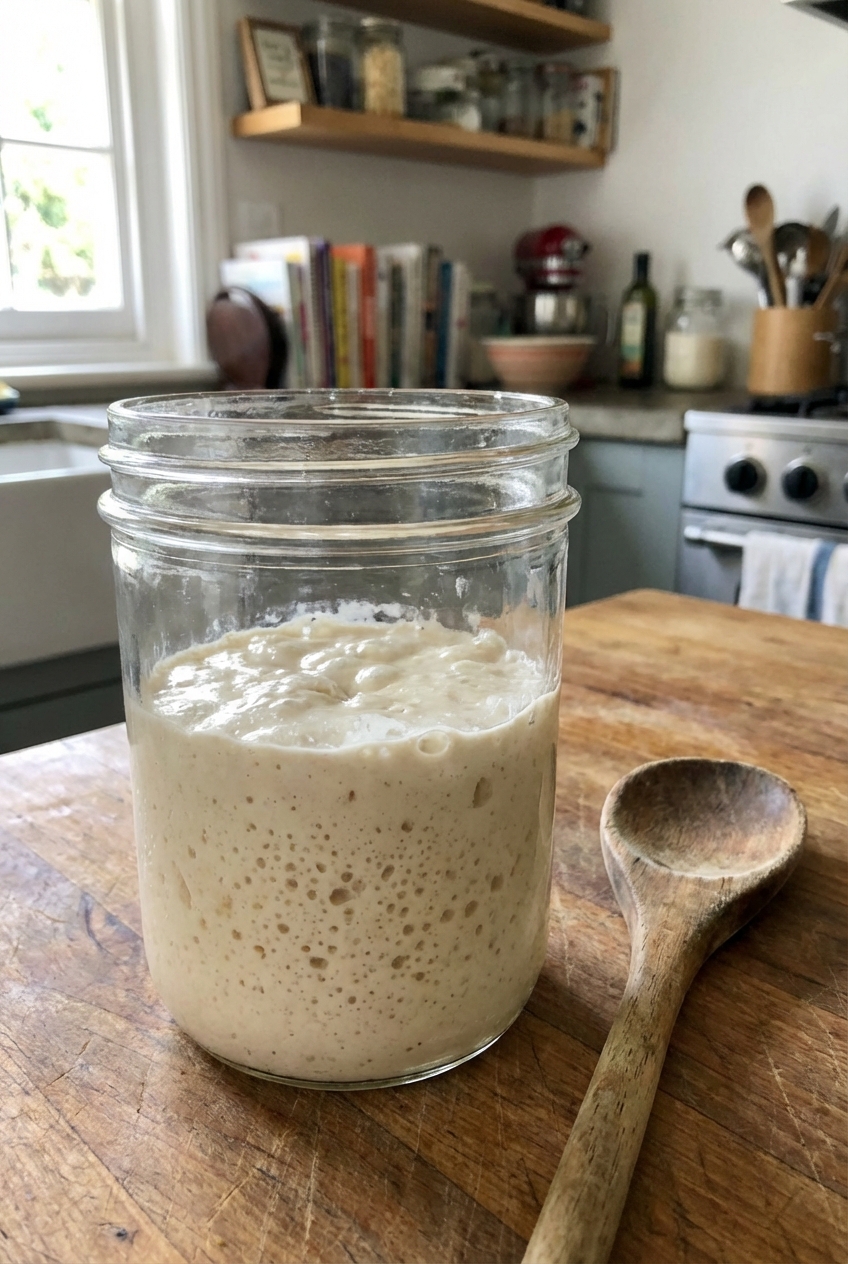
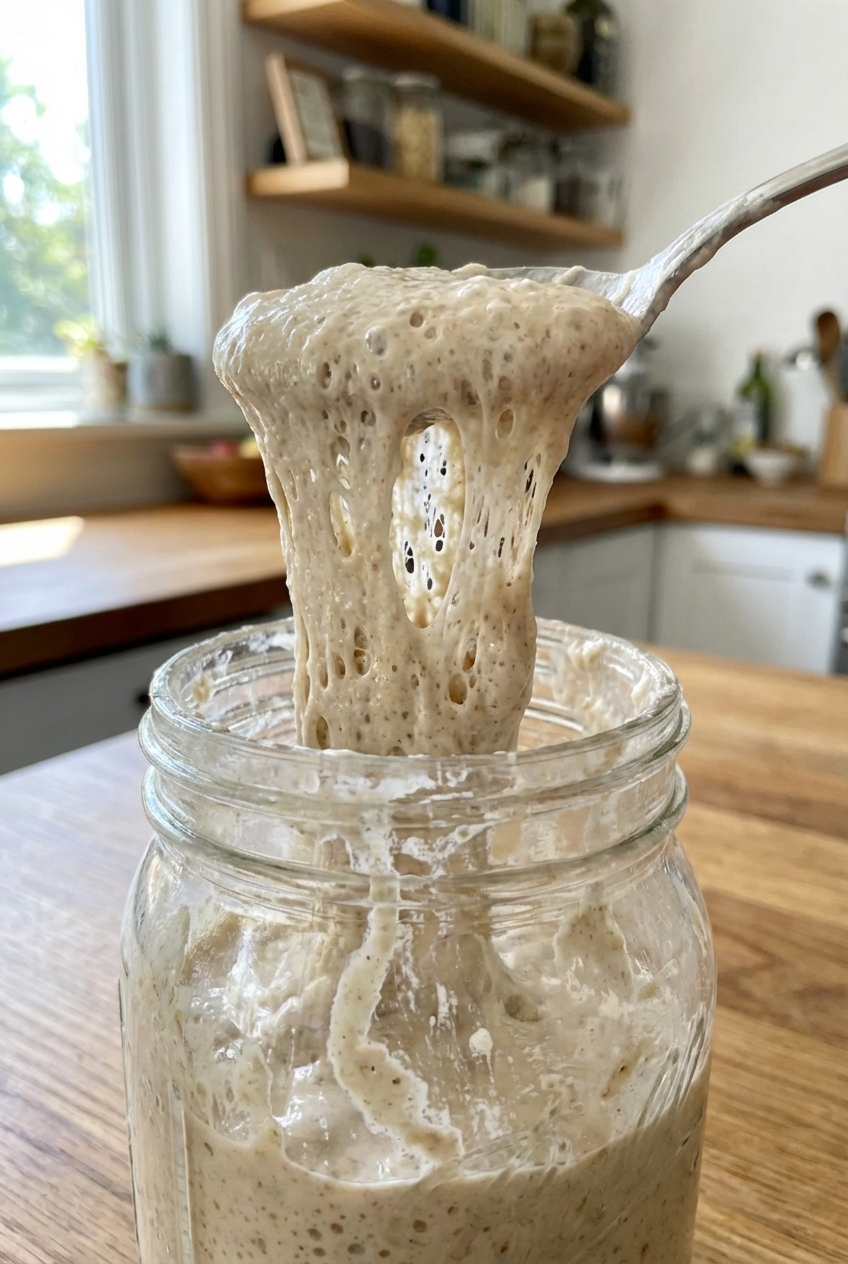
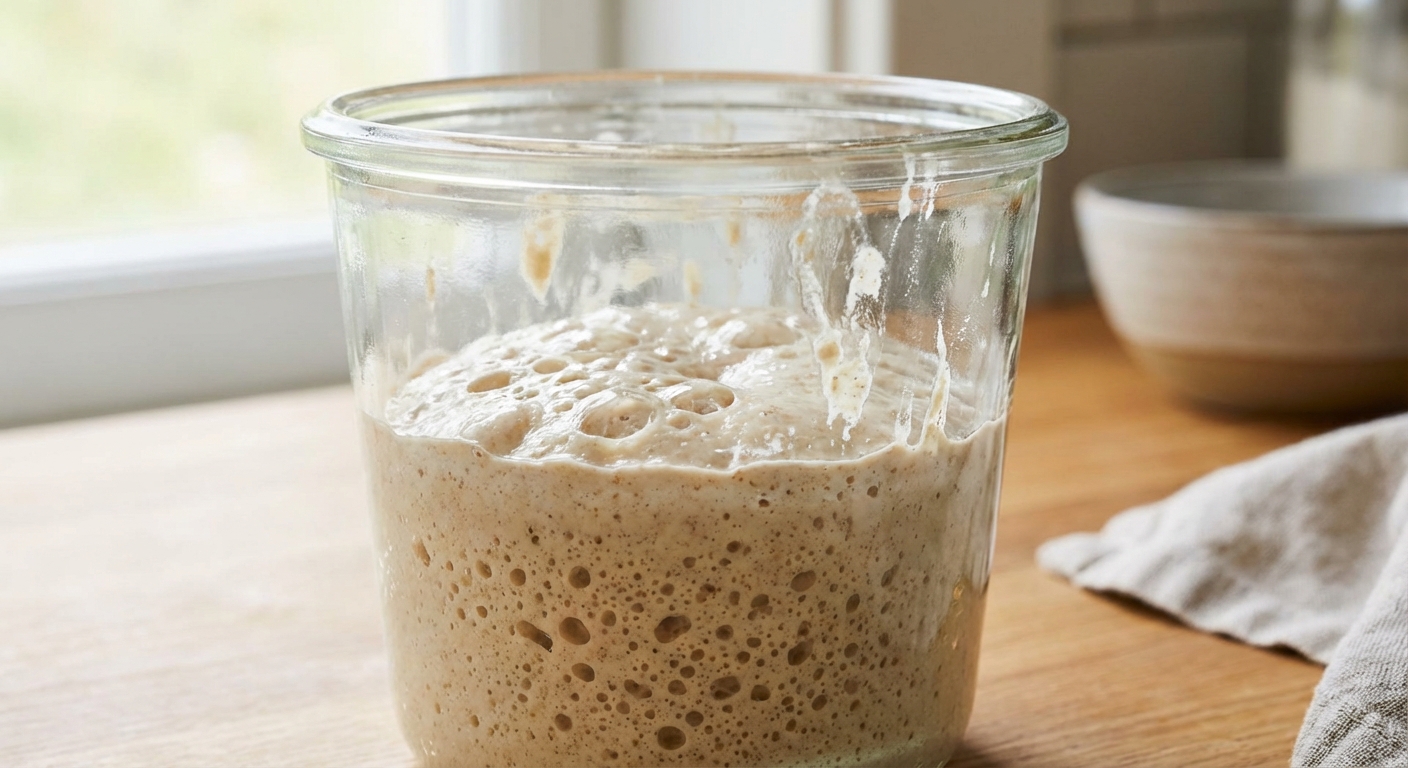
It should reliably double in volume within about 4 to 8 hours after a feeding (timing depends on temperature and flour). It should smell pleasantly tangy, like yogurt, ripe fruit, or fresh bread dough. It should look webby and bubbly throughout, not just on top.
Do I have to use a scale?
No, but it makes life easier. If you do not have one, do about 2 parts flour to 1 part water by volume. That is why this recipe estimates 1/2 cup flour to 1/4 cup water per feeding. You are aiming for thick pancake batter. If it is soupy, add a bit more flour. If it is dry and pasty, add a splash more water.
Is mold normal?
No. If you see fuzzy growth, pink streaks, or an orange tint, discard and start over. It happens. Clean your jar well and try again.
What flour works best?
Unbleached all-purpose works great. A little whole wheat or rye can boost activity early on because it has more nutrients and natural yeast. If you are struggling, do a few feeds with 25 to 50 percent whole wheat or rye.
My starter smells like nail polish. Did I mess up?
That sharp acetone smell usually means it is hungry. Feed it more often or use a higher feed ratio (more fresh flour and water). After 1 to 2 good feeds, it usually calms down.