Mom's Best Recipes
Recipe

Effortless Chicken Katsu

Crispy panko chicken with a nutty, sweet sesame-tonkatsu-style sauce. Weeknight-friendly, crunchy-edged, and dangerously dip-able.

Author By Matt Campbell
4.8
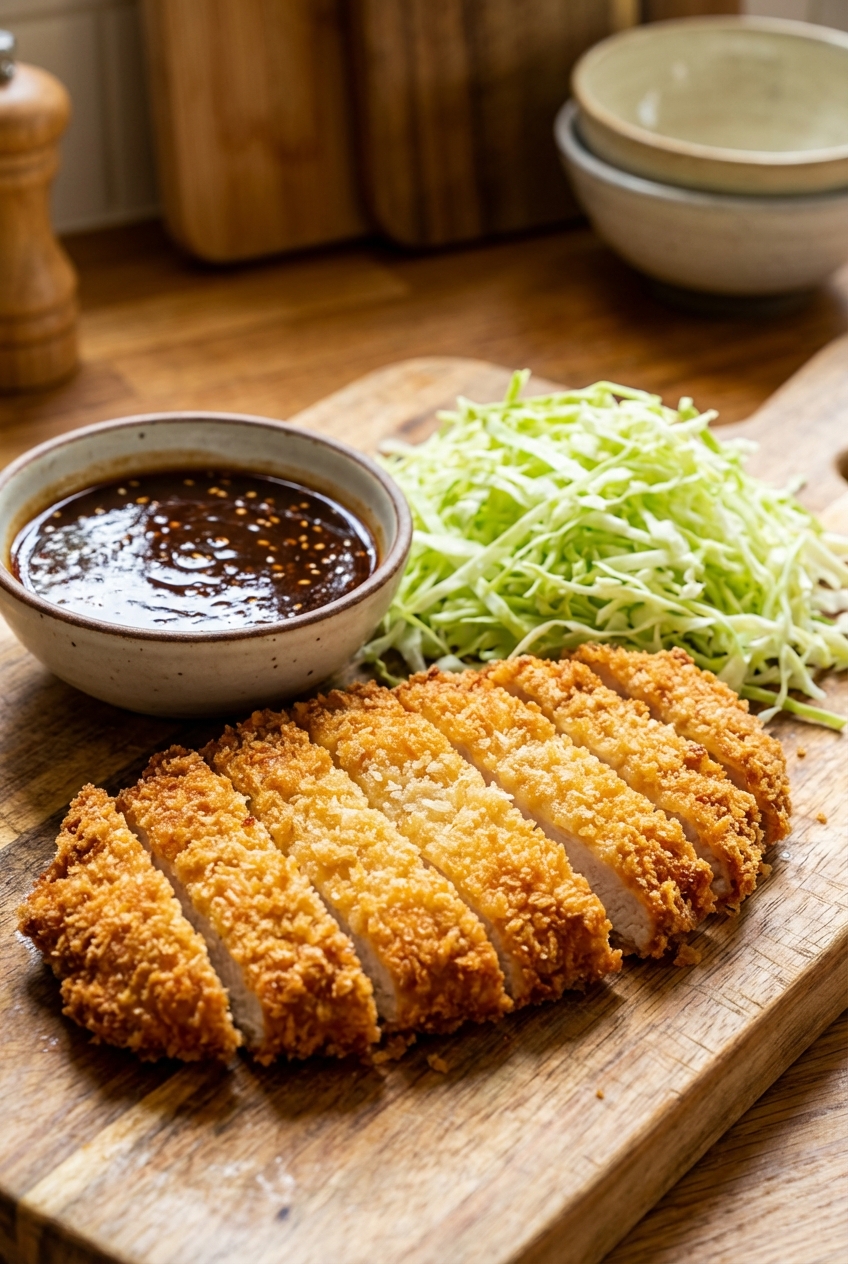
A golden, crispy chicken katsu cutlet sliced on a cutting board with a small bowl of glossy sesame-tonkatsu sauce and shredded cabbage

Chicken katsu is one of those meals that feels like a restaurant treat, but it is basically just crispy chicken + smart sauce. And I am here for that kind of math. This version keeps the ingredients easy to find, the steps low-drama, and the payoff huge: shatter-crisp panko, juicy chicken, and a sauce that hits sweet, savory, and nutty all at once.

The trick is not fancy technique. It is a few small choices that stack the odds in your favor: thin cutlets so they cook fast, panko for the crunchy edges, and a sesame-kissed tonkatsu-style sauce that makes you want to dip everything in sight. Serve it with rice, a pile of crunchy cabbage, and call it a weeknight win.
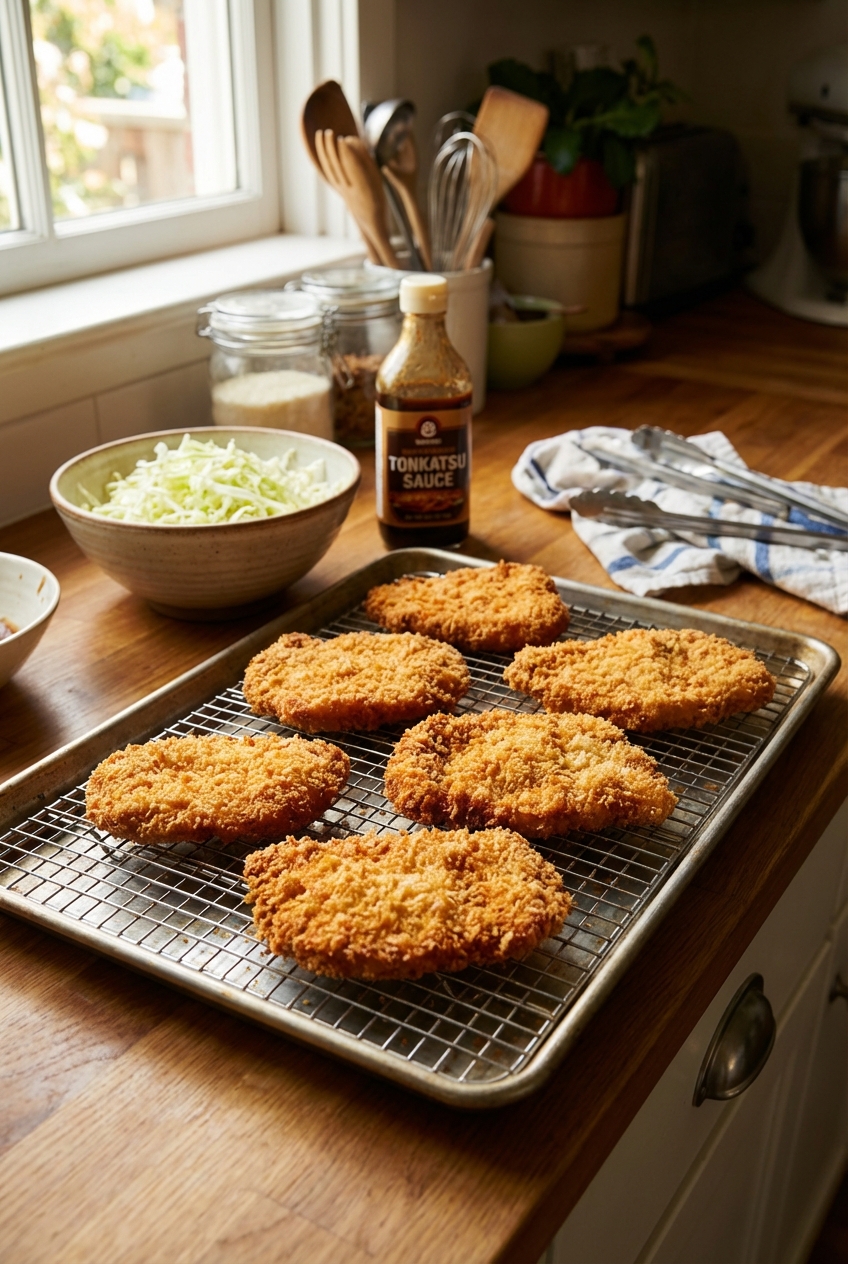
Chicken katsu cutlets cooling on a wire rack over a baking sheet in a home kitchen

Why It Works

  • Crisp edges, not greasy. A moderate oil temperature and a quick drain on a rack keep the crust light and crunchy.
  • Fast cooking, juicy chicken. Thin cutlets cook through in minutes, which means less time for the breading to darken before the center is done.
  • Nutty and sweet sauce. Classic tonkatsu vibes plus toasted sesame and a touch of honey for that “wait, what is in this?” flavor.
  • Easy to scale. Double the sauce and you suddenly have a dipping situation for veggies, fries, and leftover chicken nuggets.

Pairs Well With

Storage Tips

Keep It Crispy Later

Katsu is best right after frying, but leftovers can still be seriously good if you store it like you mean it.

Food safety note: Refrigerate leftovers within 2 hours.

Refrigerate

  • Store cutlets in an airtight container for up to 3 days. If possible, place a paper towel under or over the chicken to absorb moisture.
  • Store sauce separately in a sealed jar for about 5 to 7 days.

Reheat (best methods)

  • Oven: 400°F for 10 to 14 minutes on a wire rack until hot and recrisped. For best accuracy, heat until the center reaches 165°F.
  • Air fryer: 375°F for 6 to 9 minutes, flipping halfway, until hot (165°F in the center if you want to be extra sure).
  • Skip the microwave unless you are okay with soft breading. If you do microwave, finish in a hot skillet for a minute per side to bring back some crunch.

Freeze

  • Freeze cooked, cooled cutlets on a sheet pan until firm, then transfer to a freezer bag. Keep up to 2 months.
  • Reheat from frozen at 400°F for 18 to 22 minutes on a rack, or until the center hits 165°F.

Common Questions

Common Questions

What makes this katsu “nutty and sweet”?

The sauce. Classic tonkatsu sauce is already sweet and tangy, so we lean into it with toasted sesame oil and sesame seeds for nuttiness, plus a little honey for rounded sweetness. It tastes like you bought it from somewhere that has a line out the door.

Can I bake it instead of frying?

Yes. It will be slightly less shatter-crisp, but still very good. Toast the panko first for color and crunch: spread panko on a sheet pan, spray with oil, bake at 400°F for 3 to 5 minutes until lightly golden. Then bread the chicken, place on a rack, spray the tops, and bake at 425°F for 18 to 22 minutes, flipping once. Aim for 165°F internal.

Do I have to use chicken breasts?

Nope. Boneless, skinless thighs are fantastic and forgiving. Pound them to an even thickness so the breading browns at the same pace the chicken cooks.

Why is my breading falling off?

  • Pat the chicken dry before seasoning and breading.
  • Press panko firmly into the cutlet.
  • Let breaded chicken rest 5 to 10 minutes before frying so the coating hydrates and sticks.
  • Do not flip constantly. One flip is the goal.

What oil is best for frying katsu?

Use a neutral, high-heat oil like canola, vegetable, avocado, or peanut oil. Avoid extra-virgin olive oil here, it can taste bitter at frying temps.

How do I know the oil is hot enough without a thermometer?

Drop in a few panko crumbs. They should sizzle immediately and turn light golden within about 15 seconds. If they brown instantly, the oil is too hot. If they just sit there sadly, it is too cool.

I love recipes that feel like you tried harder than you did. Katsu is my favorite kind of kitchen chaos: three bowls, a little splatter, and then suddenly you are slicing into a cutlet that crackles like a potato chip. The first time I made it at home, I realized the real magic was the sauce. Once I started adding sesame and a touch of honey, it turned into the kind of dip that makes people hover near the stove “just to taste.” Which is also how I cook, so it all works out.