How do I know when swordfish is done?
Avoid guessing. The most reliable way is a thermometer. For a slightly translucent center, pull the fish at 130°F to 135°F and let it rest a couple minutes. For a fully opaque, firmer center, go closer to 140°F, but it can dry out fast past that.
Food safety note: Some guidelines recommend 145°F for finfish. If you are cooking for anyone who is pregnant, immunocompromised, older, or very young, consider cooking to that temperature.
No thermometer? Look for opaque edges with a just-barely translucent center, and the fish should flake with gentle pressure.
Can I grill this instead of pan-searing?
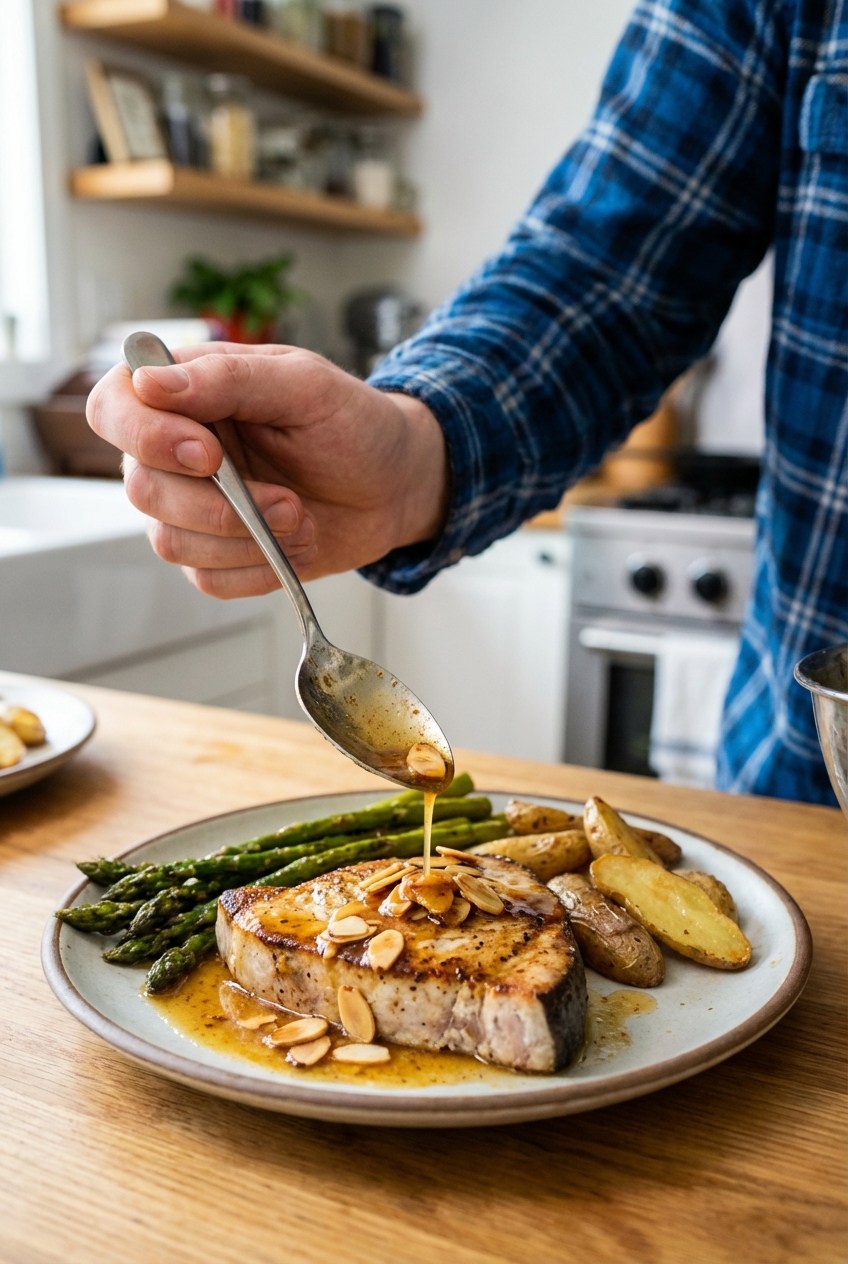
Yes. Oil the grates, grill over medium-high heat about 3 to 5 minutes per side depending on thickness and your grill’s heat, then make the browned butter almond glaze in a small saucepan and spoon it over at the end. Use temperature as your north star when you can.
What if my swordfish is very thick?
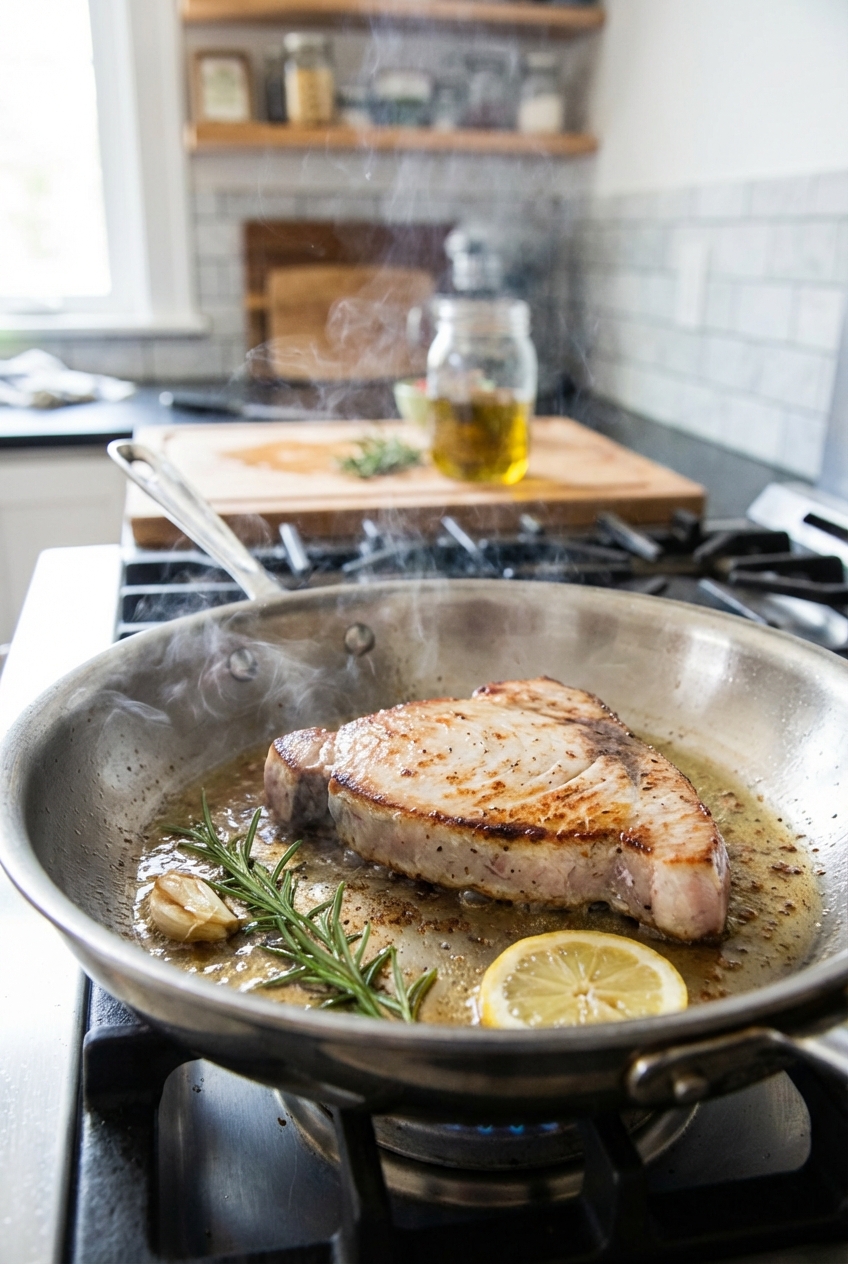
Sear both sides, then finish in a 400°F oven for a few minutes until it hits your target temperature. This prevents burnt edges with an undercooked center.
Is swordfish safe to eat regularly?
Swordfish is higher in mercury than many other fish. Many health guidelines suggest limiting it, especially for pregnant people and young children. For frequent seafood nights, rotate in lower-mercury options like salmon, trout, cod, or shrimp.
Can I make it dairy-free?
Yes. Swap butter for olive oil and add the almonds once the oil is hot. You will lose the browned-butter flavor, but the nutty crunch and sweet citrus glaze still deliver.
What should I look for when buying swordfish?
Look for firm, moist (not slimy) flesh with a clean ocean smell. Fresh and previously frozen both work great. If you can, choose sellers and fisheries with strong sustainability practices since swordfish sourcing varies by region.