Mom's Best Recipes
Recipe

Elegant Baked Ham Recipe

Juicy spiral ham with a glossy brown sugar maple glaze, brightened with Dijon and orange for that warm, cozy, holiday-at-home vibe.

Author By Matt Campbell
4.9
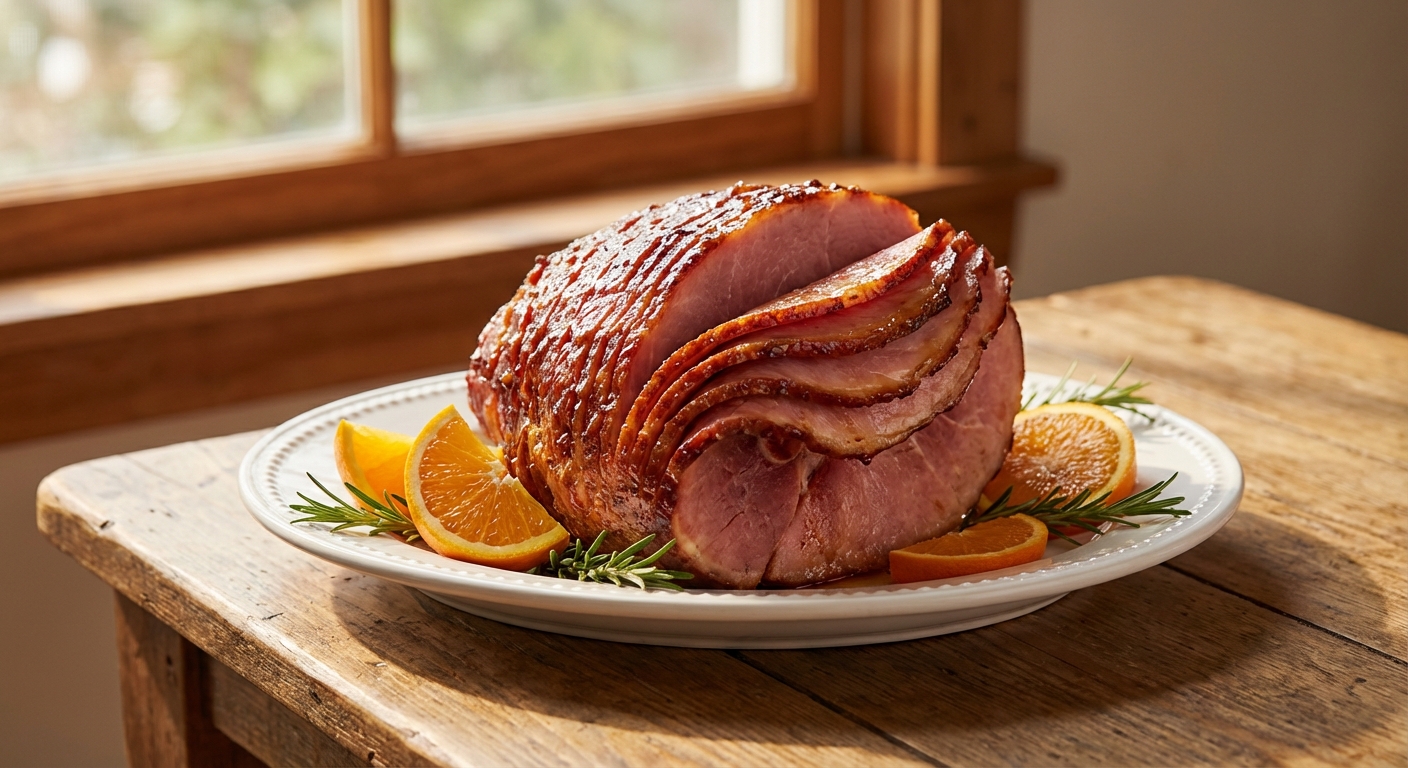
A glazed spiral-cut baked ham on a white platter with orange slices and rosemary on a wooden table in warm window light

There are two kinds of baked ham energy. The kind that tastes like you warmed up something from the store and called it dinner, and the kind that makes the whole house smell like you definitely have your life together. This is the second one, and it is way easier than it looks.

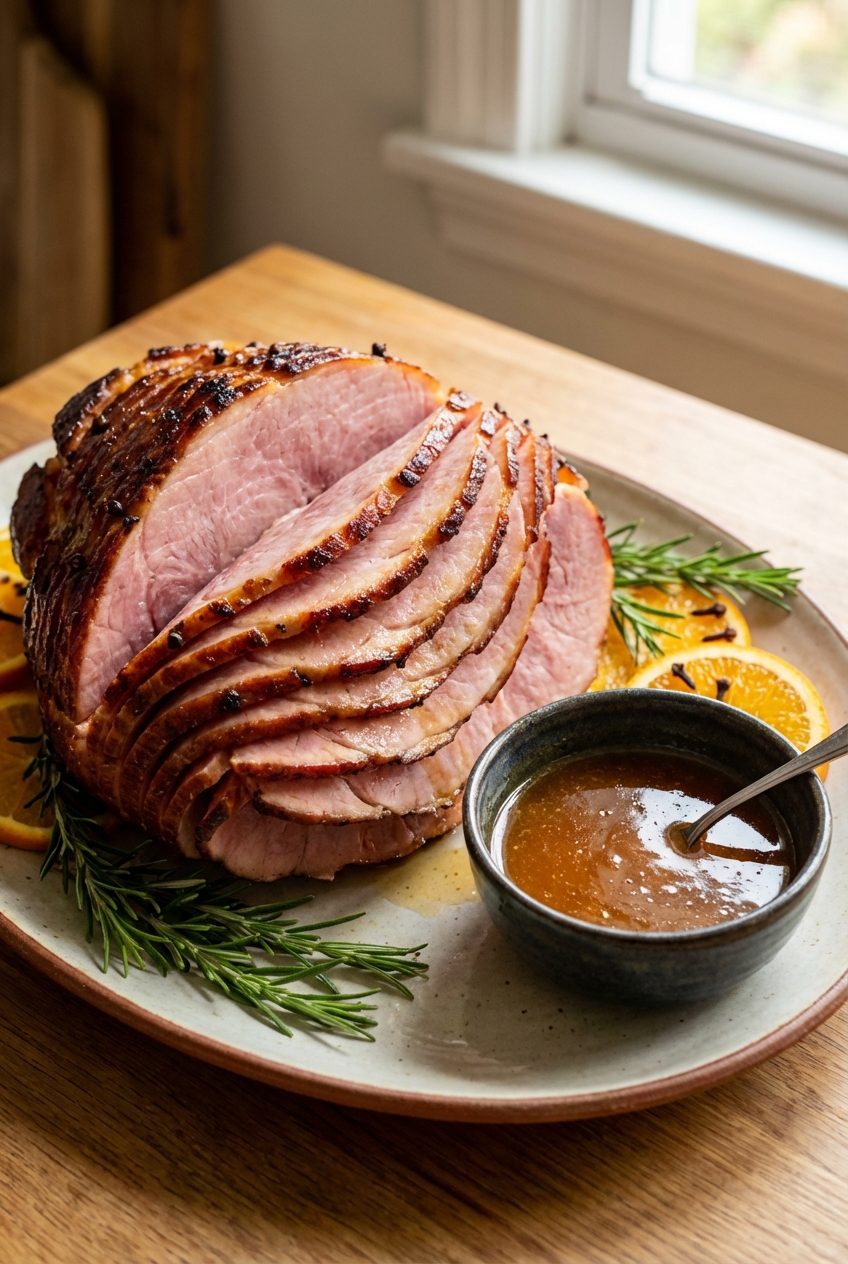
We’re starting with an accessible spiral sliced ham, then building a glaze that hits all the right notes: sweet (brown sugar and maple), tangy (Dijon), and citrusy (orange) with a little gentle spice to keep it interesting. The goal is a ham that stays juicy, gets those crisp little edges at the cuts, and wears a shiny lacquer like it’s going to a winter party.

Whether it’s a holiday centerpiece, Sunday dinner, or a cozy weeknight flex with leftovers for days, this is the baked ham recipe that shows up and delivers.
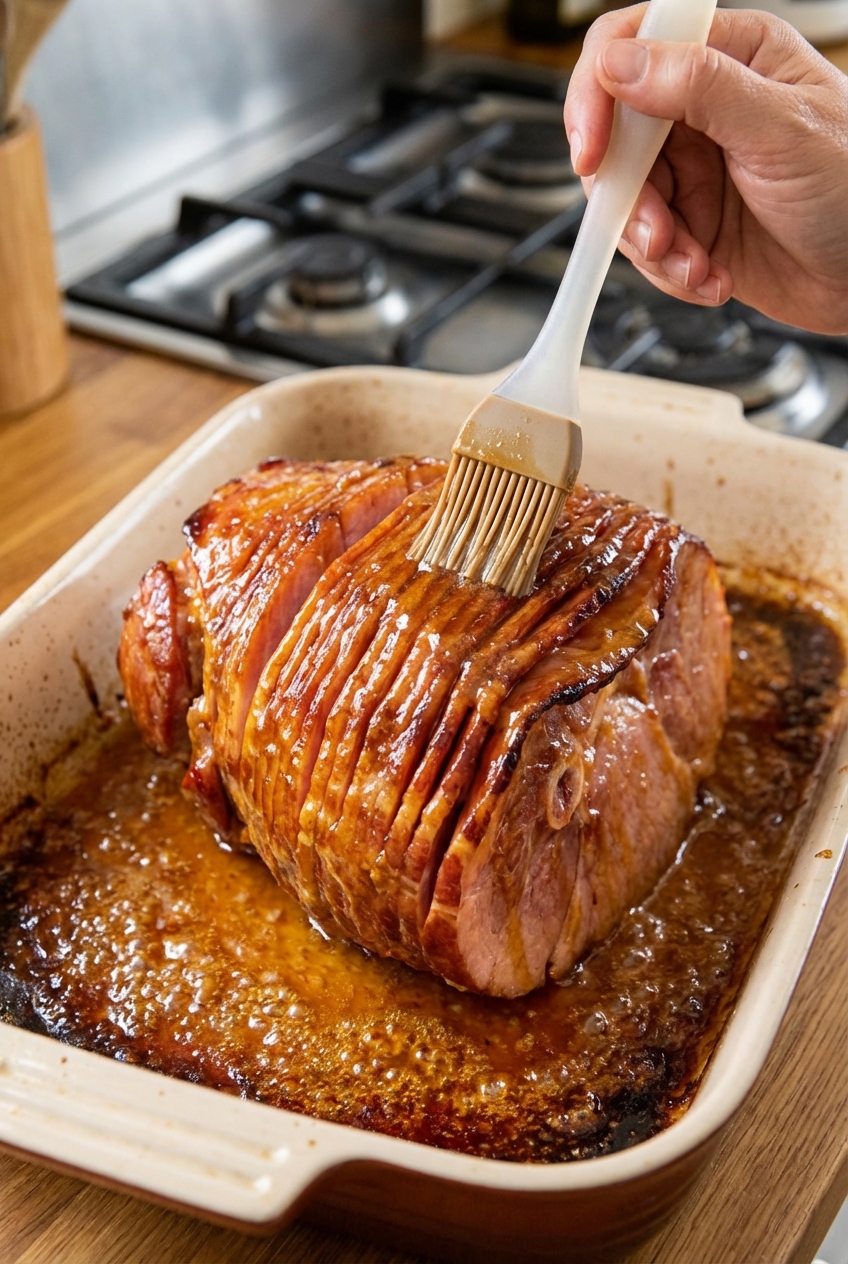
A close-up photo of a brush glazing a spiral ham in a roasting pan with bubbling amber glaze

Why It Works

  • Juicy, not dry: We warm the ham gently, covered, then finish uncovered for caramelized edges.
  • Glaze that actually tastes like something: Maple and brown sugar for cozy sweetness, Dijon for balance, orange for brightness, and a small pinch of spice for depth.
  • Low stress timing: Spiral hams are usually already cooked. You are mostly heating and glazing, not sweating over raw meat.
  • Leftovers that stay exciting: Think sandwiches, fried rice, quiche, and soup. This ham is a gift that keeps on giving.

Pairs Well With

Storage Tips

Cool it fast: Get leftover ham into the fridge within 2 hours. Slice what you think you will use soon so you are not repeatedly warming the whole piece.

Fridge

  • Store: Airtight container or tightly wrapped.
  • Lasts: 3 to 5 days.
  • Keep it juicy: Spoon a little extra glaze over slices before storing.

Freezer

  • Store: Portion into freezer bags, press out air.
  • Lasts: Up to 2 months for best flavor.
  • Pro move: Freeze some diced ham for soups and breakfast scrambles.

Reheating

  • Oven: Put slices in a baking dish with a splash of water or broth, cover with foil, warm at 300°F for 10 to 15 minutes.
  • Skillet: Crisp slices in a pan, then add a spoon of glaze at the end to lacquer them.
  • Microwave: Works, but cover and use short bursts so it does not turn rubbery.

Common Questions

Is spiral ham already cooked?

Most spiral hams are fully cooked, yes. You are reheating it to a safe serving temperature and adding flavor with the glaze. Check the package. If it says “fully cooked,” you are good.

What temperature should I heat the ham to?

For a fully cooked ham, aim for 140°F in the thickest part without touching bone. If your ham is labeled “cook before eating,” follow the package directions. (Many brands direct you to cook to 160°F.) Either way, a thermometer is your best friend here.

How much ham do I need per person?

Plan for 1/2 pound per person for a boneless ham, or 3/4 pound per person for bone in, especially if you want leftovers.

Why is my glaze burning?

Sugar glazes can scorch if applied too early or if the oven runs hot. Keep the ham covered for most of the heating, then glaze during the last 30 to 40 minutes. If it is darkening too quickly, tent with foil and lower the oven temp by 25°F.

Can I make the glaze ahead?

Yes. Make it up to 5 days ahead and refrigerate. Warm gently before brushing so it spreads easily.

Do I need to baste the ham?

Not constantly. A couple glaze applications near the end gives you that glossy finish without drying the meat.

Where do I put the thermometer in a spiral ham?

Go for the thickest part and avoid touching bone. Aim the tip into solid meat, not a fat pocket between slices.

The first time I made a “fancy” baked ham on my own, I treated the glaze like paint and the ham like a wall, just slapping it on from the very beginning and hoping for the best. The result tasted fine, but the outside was doing a little too much in the caramelization department. Now I do it the calm way: warm the ham gently under foil, then glaze late and often enough to build that shiny, sticky coat. It feels like a small kitchen magic trick, and it makes me irrationally happy every time the slices fan out and those crisp edges show up like they planned it.