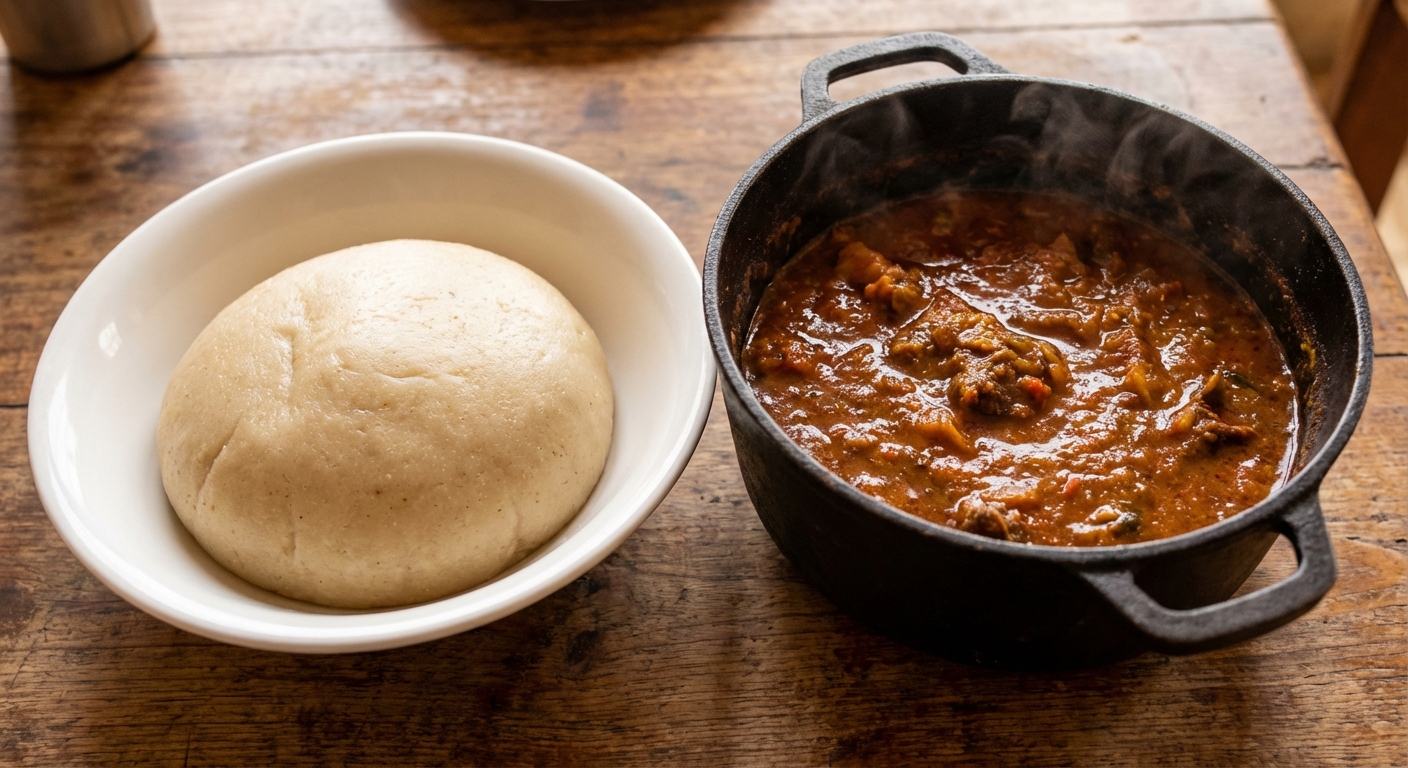
What is fufu made of?
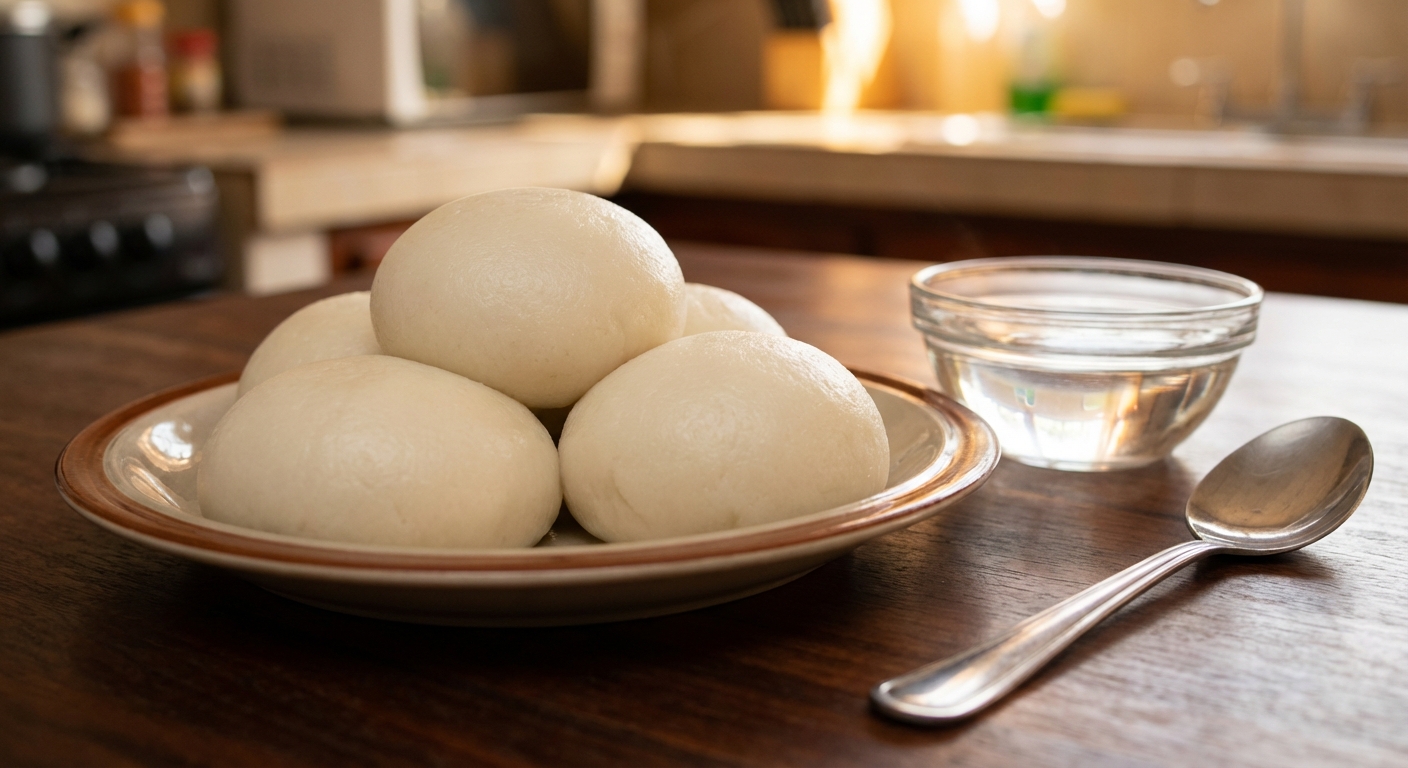
Traditional fufu is often made from cassava, plantain, yam, or cocoyam, cooked and pounded until smooth and stretchy. This recipe uses cassava flour and plantain flour for a fast, home-friendly version with a classic texture.
Is cassava flour the same as tapioca flour?
No. Cassava flour is made from the whole cassava root and behaves more like a fine flour. Tapioca starch is a starch extraction and gets very glossy and stretchy in a different way.
What to buy: Look for 100% cassava flour (not tapioca starch). If the bag says fufu flour, check the ingredients. Some brands are cassava-only, others are blends or starch-heavy. Either can work, but you may need to adjust the water.
How do I make fufu smooth with no lumps?
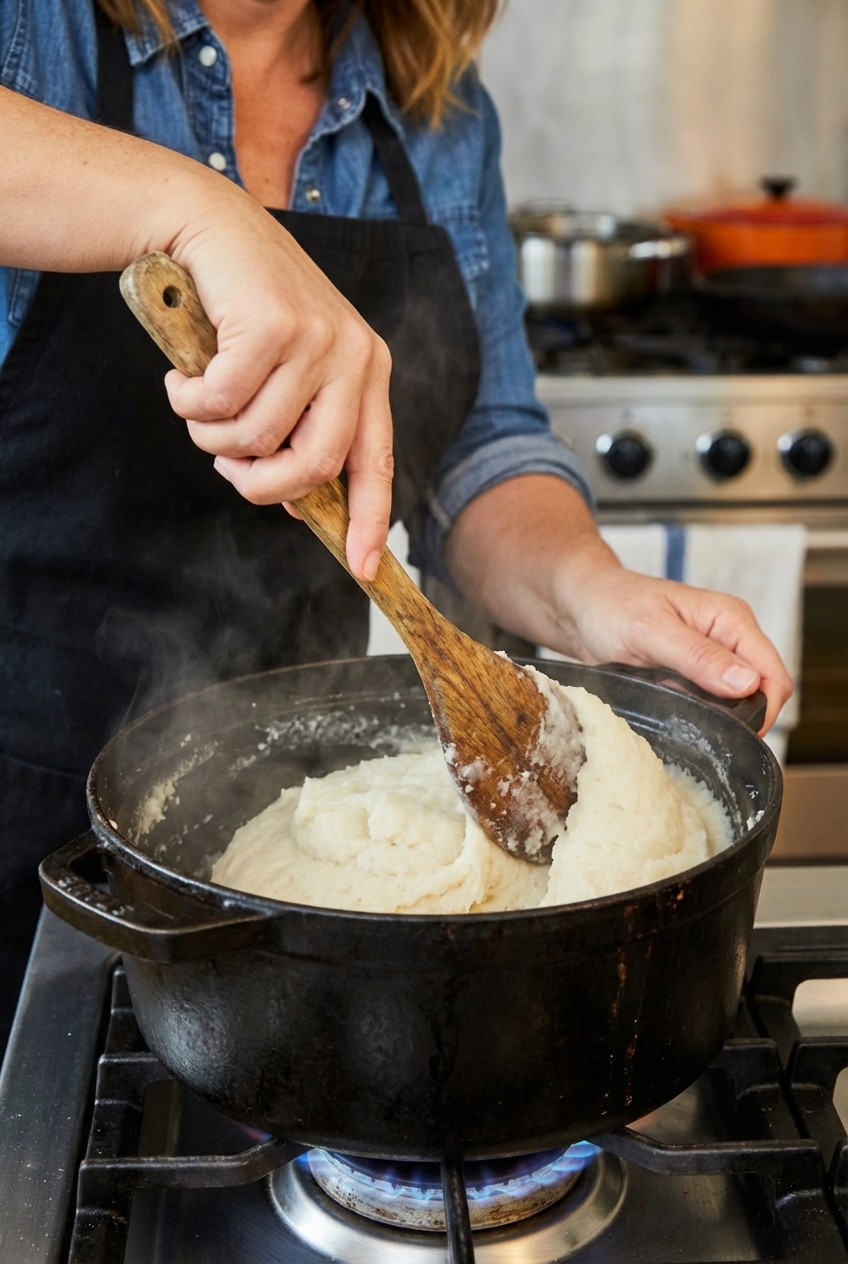
Whisk your flours into cool or warm water first to make a smooth, pourable mixture, then heat it while stirring. If you dump flour into boiling water, it will clump fast.
Can I make it less spicy?
Absolutely. Use the smoked paprika only and skip cayenne. You will still get that elegant smoky vibe.
Why add smoke to fufu at all?
Because it makes the whole meal taste more complete. The fufu stays subtle, but that hint of smoke plays really well with tomato-forward stews and pepper soups.
My fufu is too soft. What now?
Keep it on low heat and stir for another 2 to 4 minutes. If it still will not set, sprinkle in 1 tablespoon cassava flour at a time and stir hard until it firms up.
My fufu is too stiff.
Stir in hot water 1 tablespoon at a time over low heat until it loosens and turns glossy again.
How do you eat fufu?
Pinch off a small piece, roll it into a ball, make a little dip with your thumb, then scoop up stew or soup. It is a hands-on food, so keep a small bowl of water nearby for clean fingers. Etiquette varies by culture and household, so follow the vibe at the table.