What is the basic vinaigrette ratio?
A classic starting point is 3 parts oil to 1 part acid (like lemon juice or vinegar). From there, adjust. If your salad is hearty (kale, roasted veg, grains), you can go a little more acidic. For delicate greens, keep it gentler.
How do I keep vinaigrette from separating?
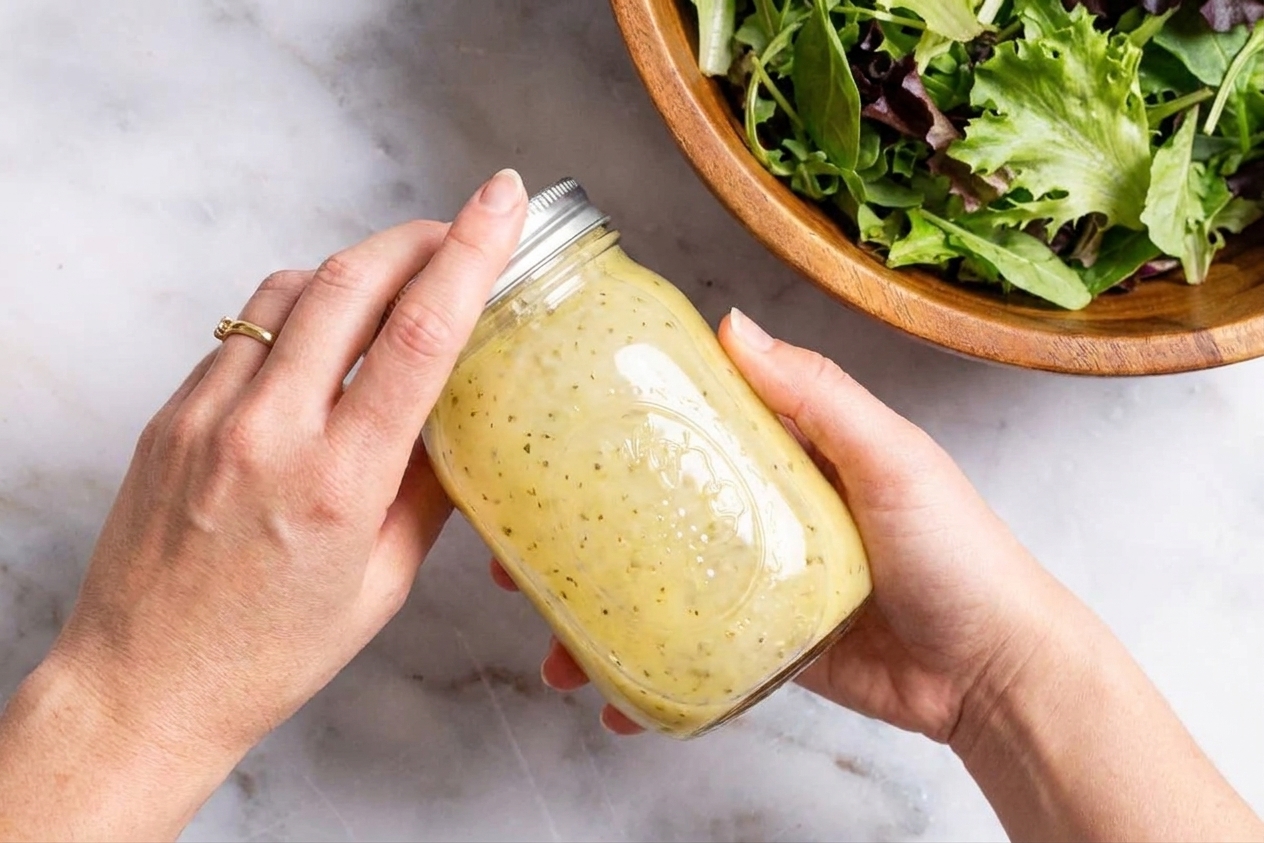
You can’t stop it forever. Most vinaigrettes will separate as they sit. But you can slow it down with an emulsifier like Dijon mustard or a little mayo, and by whisking hard or shaking in a jar. If it separates, it isn’t “bad,” it just needs another shake right before serving.
Why does my vinaigrette taste too sour?
Add more oil a tablespoon at a time, then add a pinch of salt and a small drizzle of honey. Sourness often needs balance, not just dilution.
What oil is best for vinaigrette?
Extra virgin olive oil gives you flavor and richness. If you want something more neutral, use avocado oil, grapeseed oil, or a mild “light” olive oil. Save strongly flavored oils (like toasted sesame) for specific dressings.
Can I make vinaigrette without mustard?
Yes. It’ll separate faster, but it’s still delicious. Whisk or shake right before serving, or add a small spoon of mayo to help it stay blended.
Is vinaigrette safe to keep if it has garlic?
Because this dressing has plenty of acid (lemon) and is meant to be refrigerated, it’s generally fine for home use, but garlic storage can be a little nuanced. For best quality and peace of mind, keep it refrigerated and use within 3 to 5 days. Never store it at room temperature. If you want to play it extra safe (or you’re making it well ahead), use garlic powder instead of fresh garlic for a similar vibe with less bite.