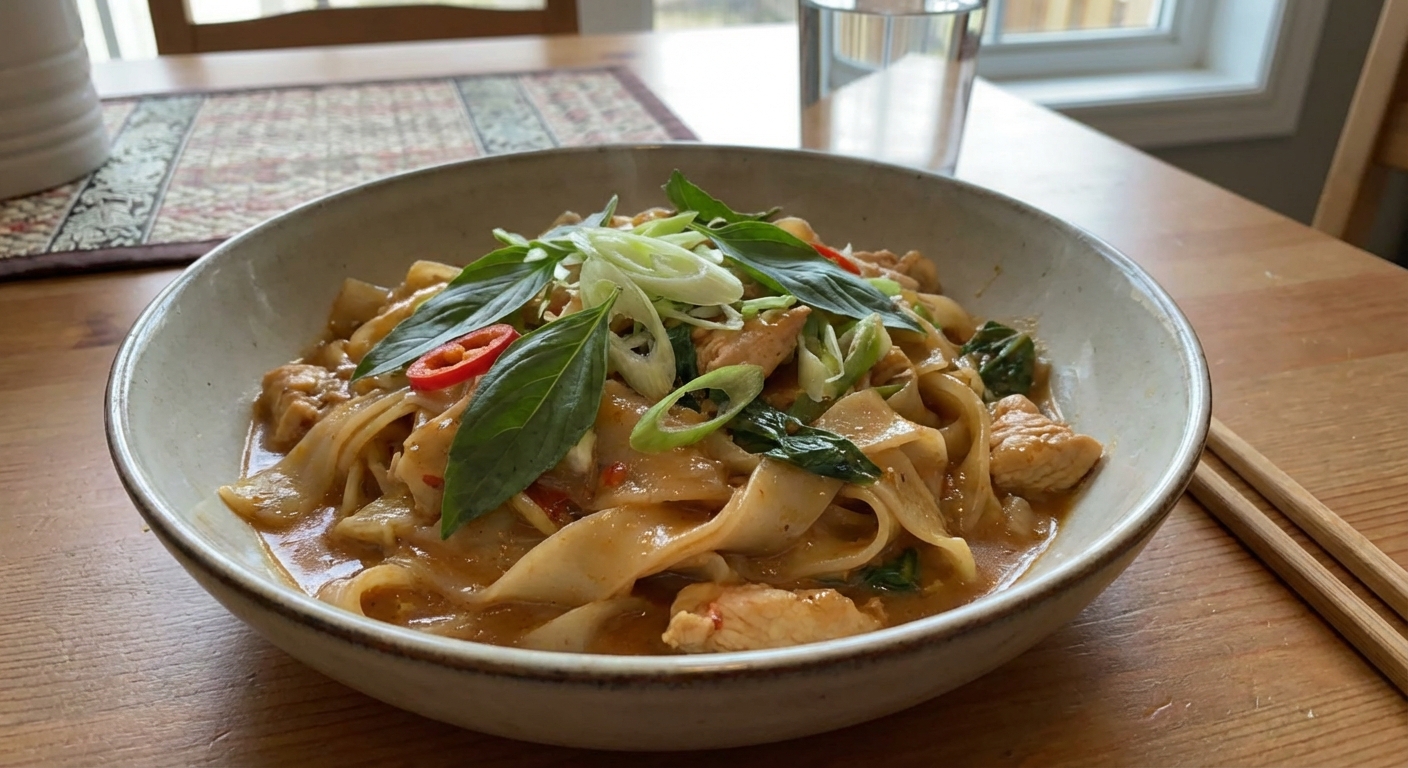
Why is it called “drunken” noodles?
Despite the name, the dish is typically alcohol-free. One popular explanation is that it is the kind of spicy, bold stir-fry that pairs well with a cold drink or tastes great as a late-night, post-party meal. The exact origin story is debated, but the vibes are consistent: big flavor, a little heat, and a lot of basil.
What noodles should I use?
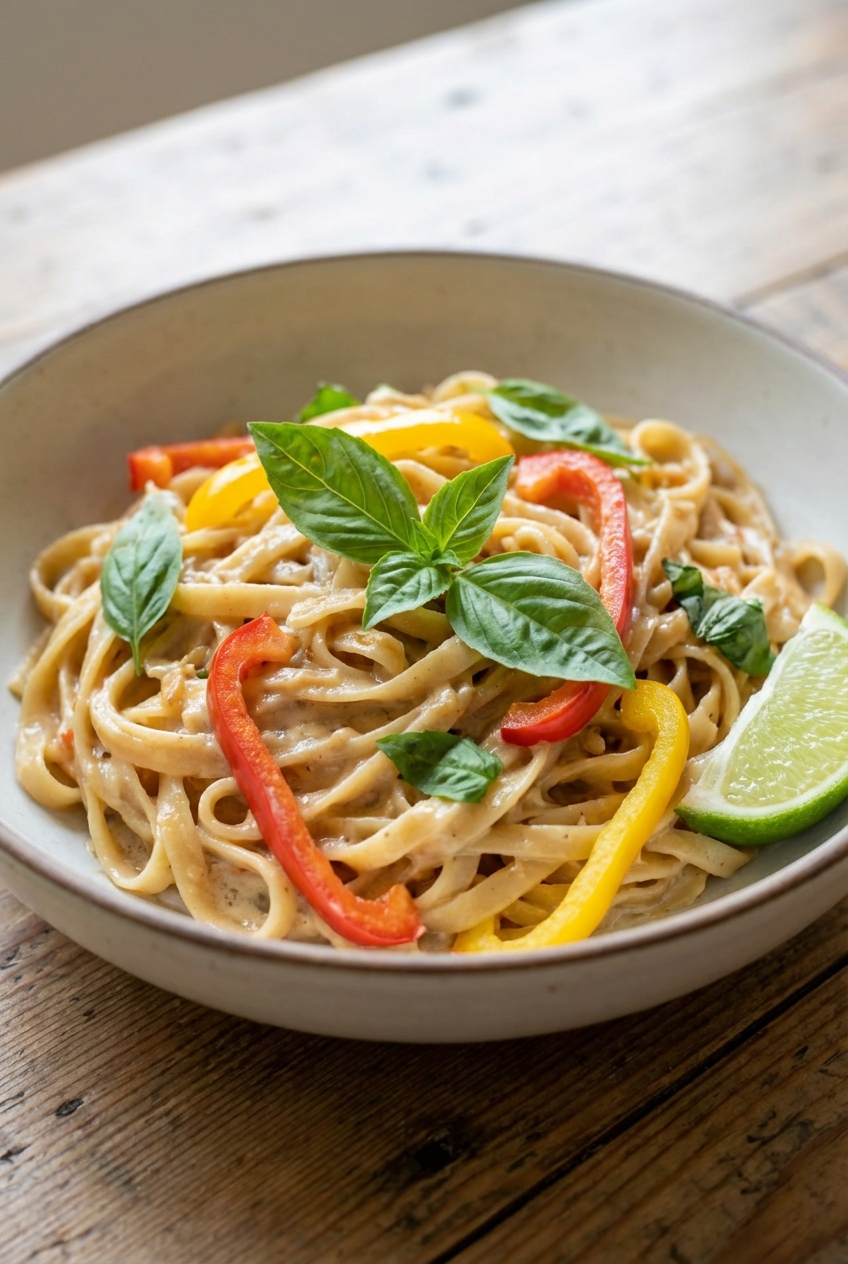
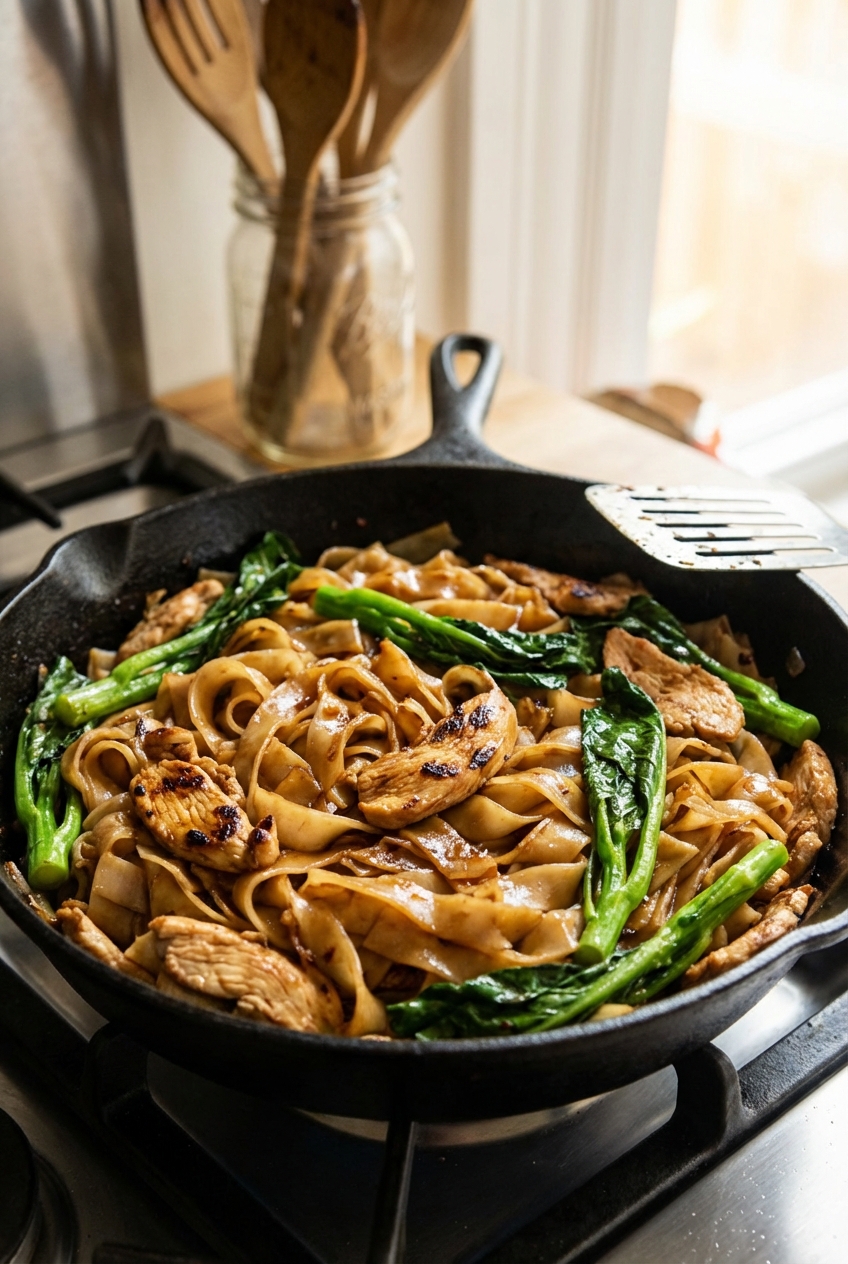
Traditional versions use wide rice noodles (often called sen yai). Look for fresh wide rice noodles, refrigerated wide rice noodles, or dried wide rice noodles (sometimes labeled “pad see ew noodles” in some stores). In a pinch, fettuccine or lo mein noodles work with the same sauce.
How do I keep rice noodles from sticking?
Do not over-soak them. Rinse briefly after soaking, then toss with a tiny bit of oil if they are sitting around. Most importantly, get them into the hot pan and sauce quickly.
My noodles got too soft. Can I fix it?
A little softness happens fast with rice noodles. If they are over-soaked, skip extra simmer time and toss gently once they hit the sauce. If they are very soft, add them at the very end and just warm through. Next time, soak until pliable but still a little firm in the center since they finish cooking in the pan.
Can I make it less spicy?
Yes. Start with a smaller amount of chili garlic sauce, and keep black pepper modest. You will still get great flavor from garlic, basil, and the sweet-savory sauce. If you want more heat, you can always stir in extra at the end.
Can I make it dairy-free?
Absolutely. Use coconut milk (light or full-fat). It makes the sauce silky and festive without dairy.
Any easy allergen swaps?
This recipe includes soy, and oyster sauce often contains shellfish. For a shellfish-free option, use vegetarian mushroom “oyster” sauce and skip the fish sauce (or swap in a little extra soy sauce to taste).
What basil is best?
Thai basil is classic, but regular Italian basil is totally fine and widely available. If you can find Thai basil, use it. If not, do not let that stop you.