Mom's Best Recipes
Recipe

Filipino Chicken Adobo

A classic soy-vinegar braise with lots of garlic, bay leaves, and peppercorns, finished with a glossy reduction that was basically invented for rice.

Author By Matt Campbell
4.8
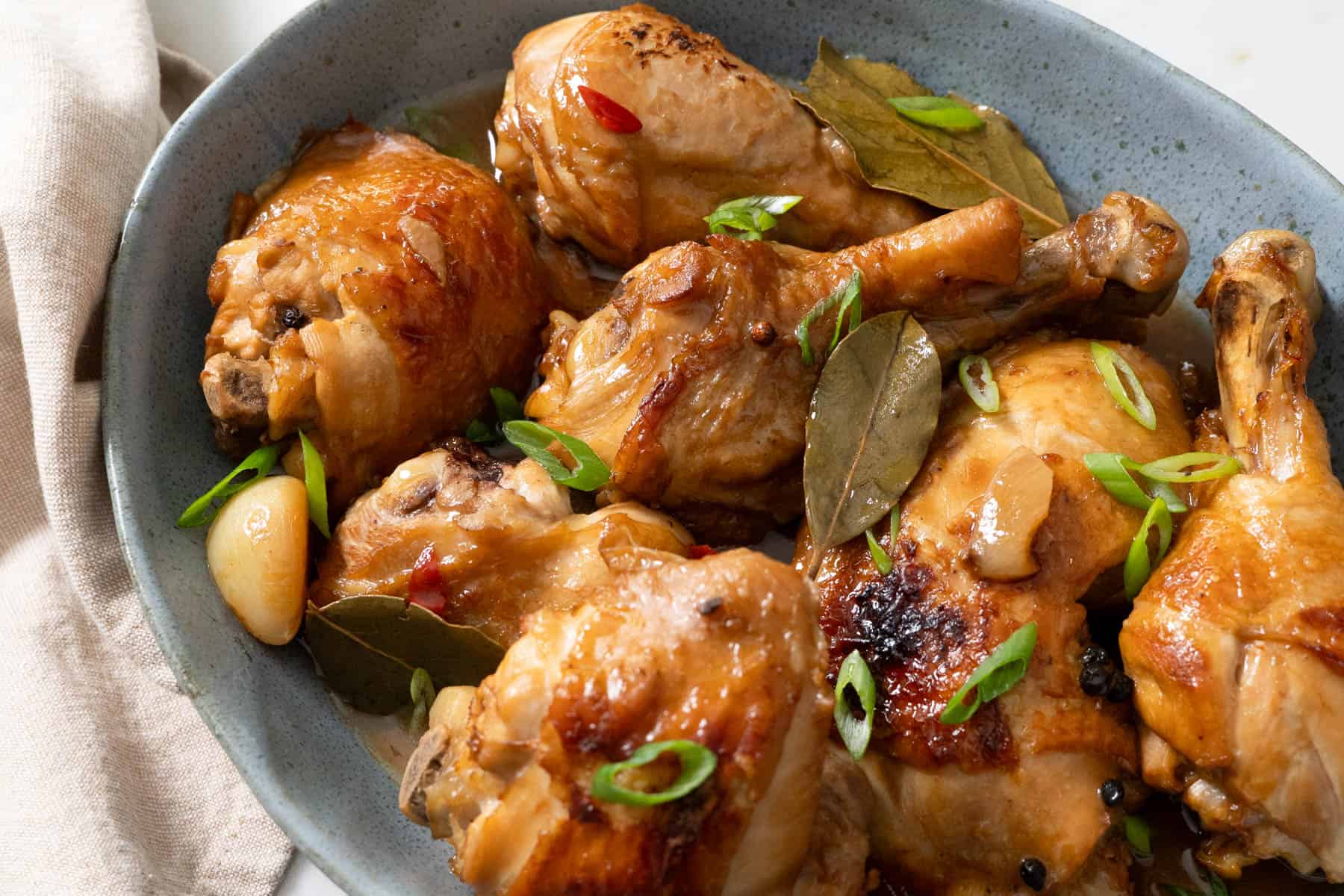
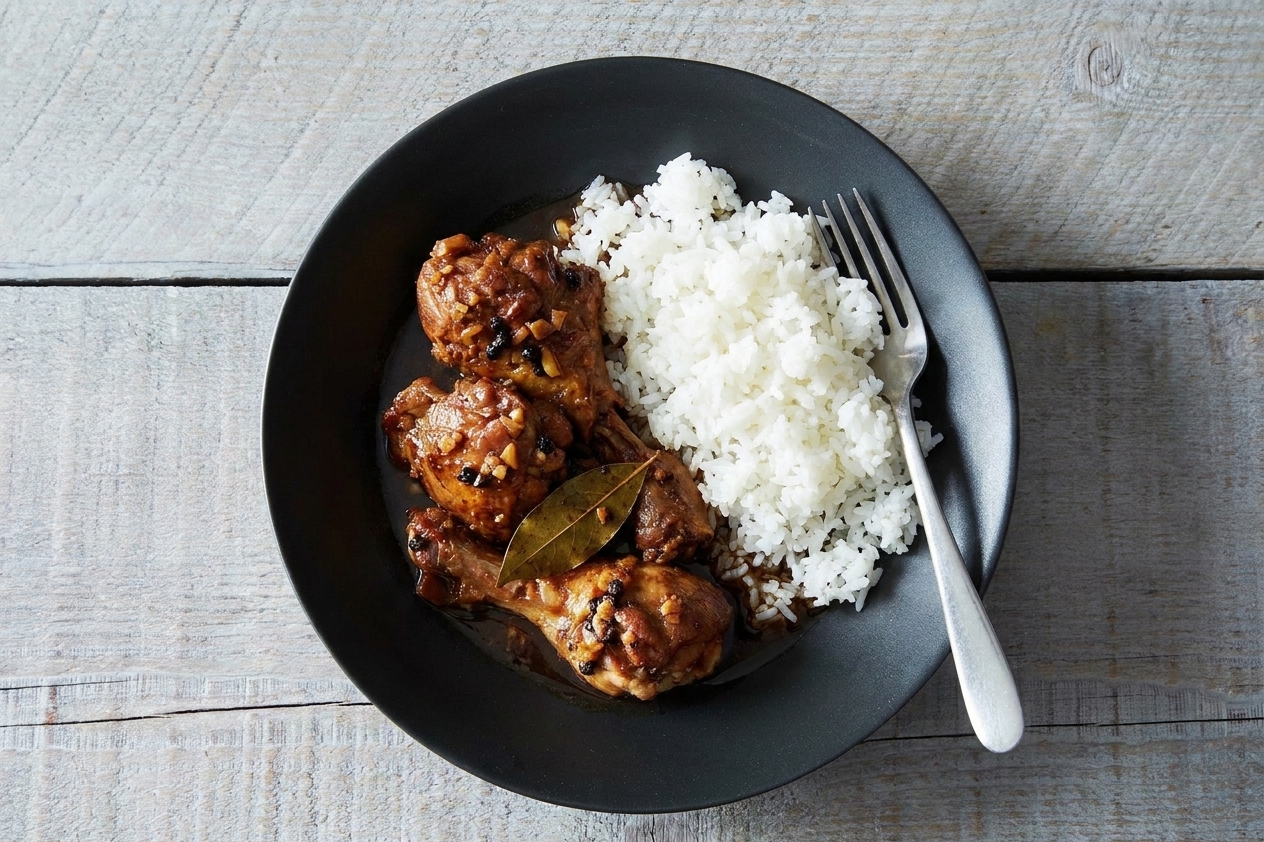
A bowl of Filipino chicken adobo with glossy dark sauce, bay leaves, and cracked pepper over steamed white rice on a warm-toned kitchen table

Adobo is one of those dishes that feels like a magic trick the first time you make it. You put a handful of everyday pantry staples in a pot, walk away for a bit, and come back to chicken that tastes like you have been doing something impressive on purpose.

This version keeps it classic: chicken braised in soy sauce and vinegar with lots of garlic, bay leaves, and whole peppercorns. The real move is at the end, when you reduce the braising liquid into a shiny, punchy sauce that clings to every bite and makes rice non-negotiable.

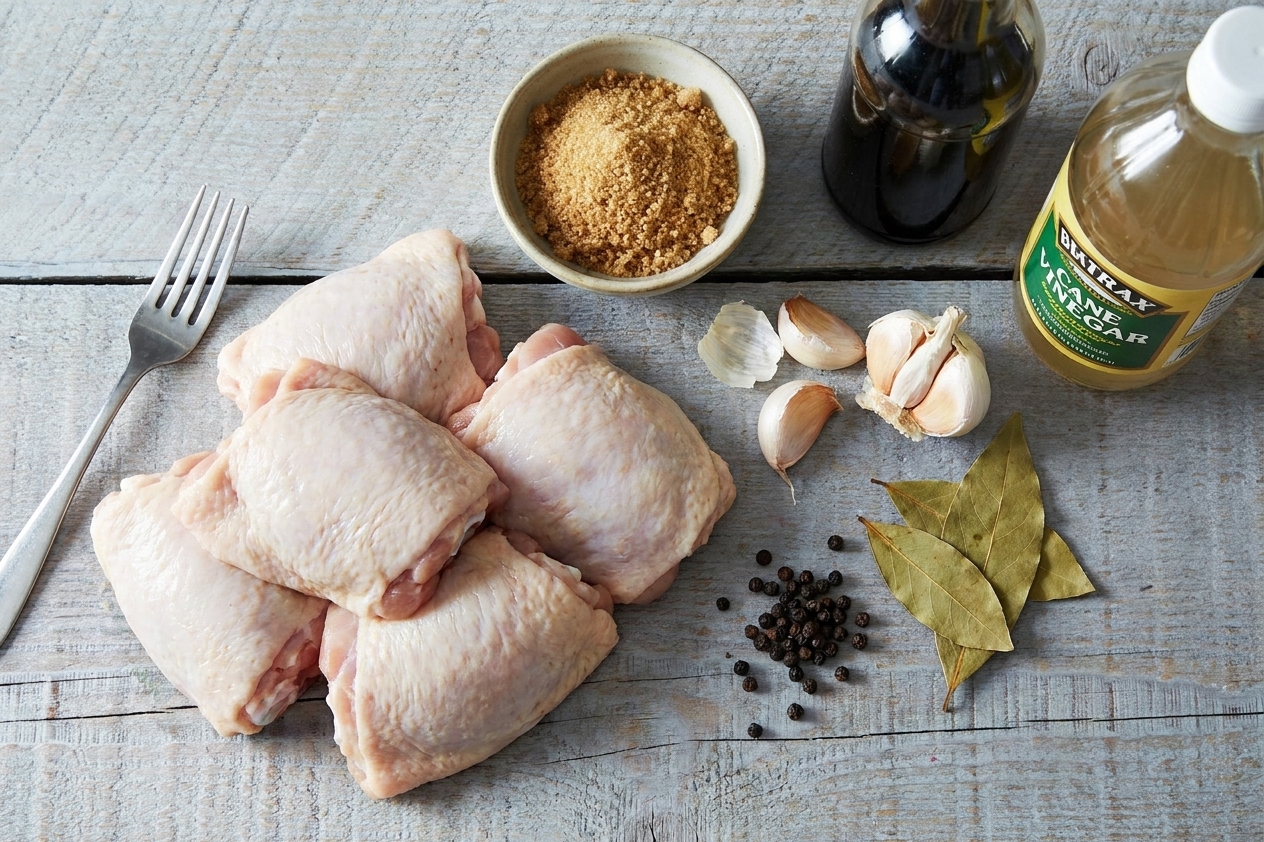
Raw chicken thighs, soy sauce, cane vinegar, garlic cloves, bay leaves, whole peppercorns, and a bowl of brown sugar arranged on a clean kitchen counter

Why It Works

  • Big flavor from small effort: Soy sauce brings savory depth, vinegar brings tang, and garlic does what garlic always does.
  • Forgiving cooking method: A gentle simmer keeps the chicken juicy while the sauce builds.
  • That glossy finish: Reducing the liquid at the end turns it from broth-y to lacquered and spoonable.
  • Meal prep friendly: Like many braises, it tastes even better the next day.

Pairs Well With

Storage Tips

Refrigerate: Store cooled adobo (chicken plus sauce) in an airtight container for up to 4 days.

Freeze: Freeze in freezer-safe containers for up to 3 months. Thaw overnight in the fridge.

Reheat: Warm gently on the stove over medium-low with a splash of water if the sauce is very thick. Microwave works too, but stovetop keeps the sauce glossy.

Pro tip: If the sauce tastes a little sharp straight from the fridge, give it a proper reheat and a stir. The flavors wake up as it warms.

Common Questions

Do I have to sear the chicken first?

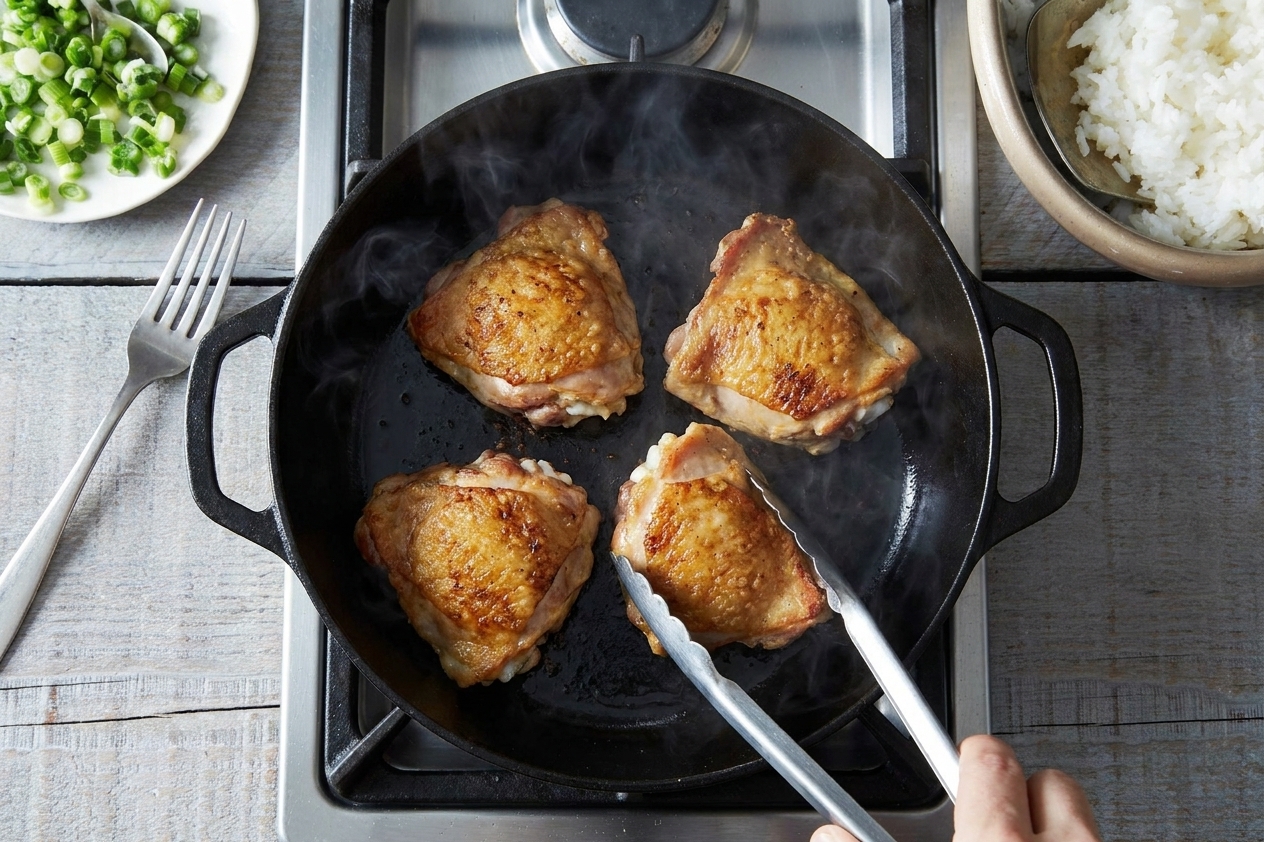
No, but I like it. Searing adds browning and a little extra depth. If you are in a hurry, skip it and go straight to the simmer. It will still be delicious.

What vinegar should I use?

Traditional options include cane vinegar and coconut vinegar. If you cannot find either, distilled white vinegar works well and keeps the adobo bright. Apple cider vinegar gives a slightly fruitier tang. Balsamic is not traditional here and will noticeably change the flavor and darken the sauce.

Is adobo supposed to be sweet?

It can be, depending on the family. I keep it lightly sweetened to round out the vinegar. You can leave the sugar out, or add a bit more if you like a sweeter sauce.

Can I use chicken breast?

You can, but thighs and drumsticks stay juicier during a simmer. If using breast, keep the simmer gentle (just a few small bubbles) and start checking for doneness earlier.

Why are there whole peppercorns?

They perfume the sauce and give little pops of heat. If you are peppercorn-averse, use cracked black pepper instead and strain the sauce if needed.

My sauce tastes too salty or too sharp. How do I fix it?

Too salty: Add a splash of water and simmer a minute. You can also add another piece of chicken (or a couple of hard-boiled eggs) to soak up some seasoning. A peeled potato simmered briefly can help too, then remove it before serving.

Too sharp: Add a pinch more sugar and simmer, or add a small splash of coconut milk for a softer edge. A knob of butter at the end makes it glossy and mellow, but it is a modern, non-traditional move.

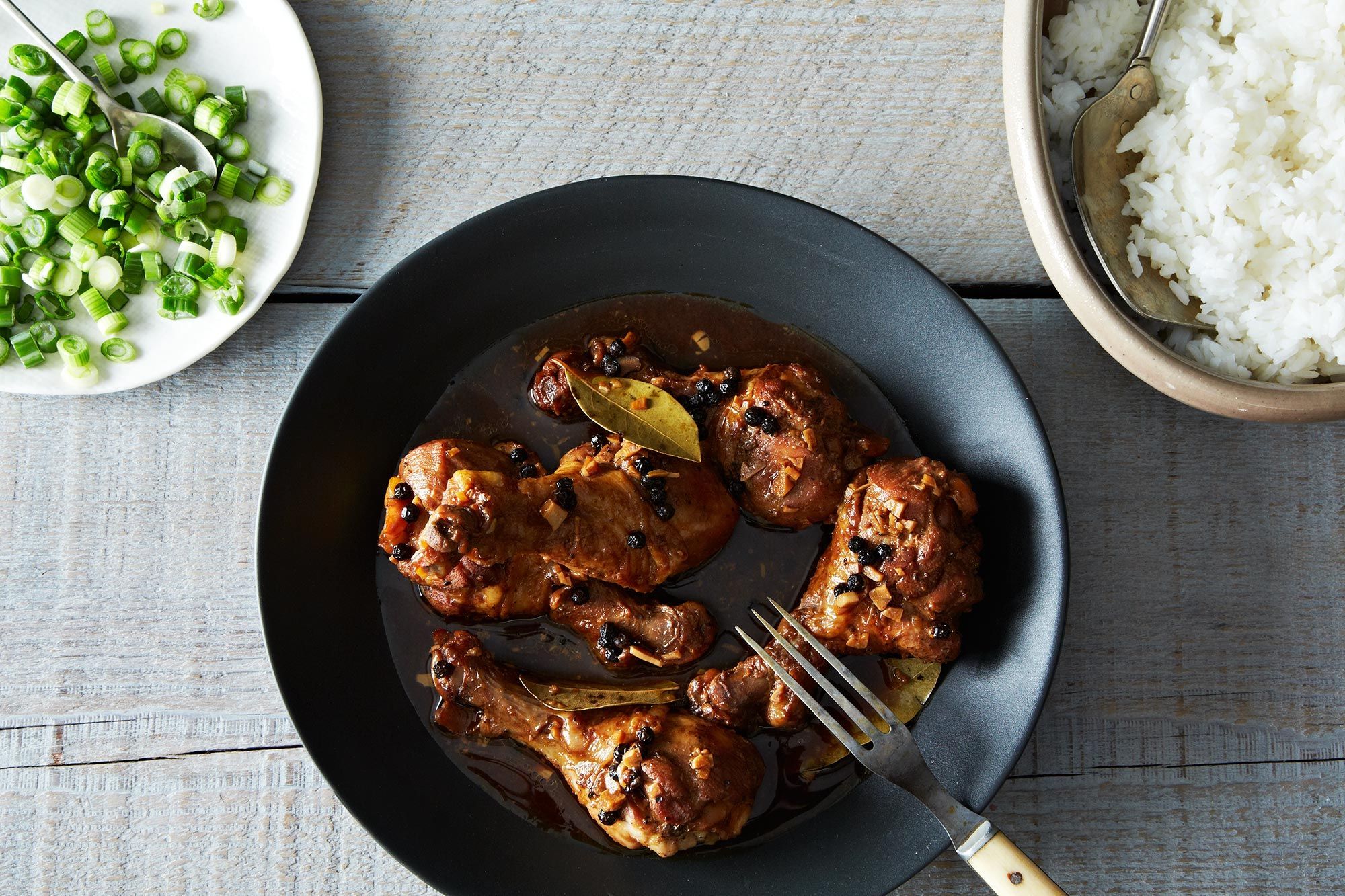
The first time I cooked adobo, I kept hovering over the pot like I was waiting for it to fail. It never did. The sauce got darker, the garlic mellowed out, and suddenly the kitchen smelled like comfort and confidence. Now it is one of my favorite “I need dinner to taste like I tried” recipes, even when I absolutely did not try that hard.