Mom's Best Recipes
Recipe

Fresh and Vibrant Asparagus

Crisp-tender asparagus roasted fast, then finished with a punchy lemon garlic sauce, a little heat, and salty Parmesan. Simple, bright, and weeknight-friendly.

Author By Matt Campbell
4.8
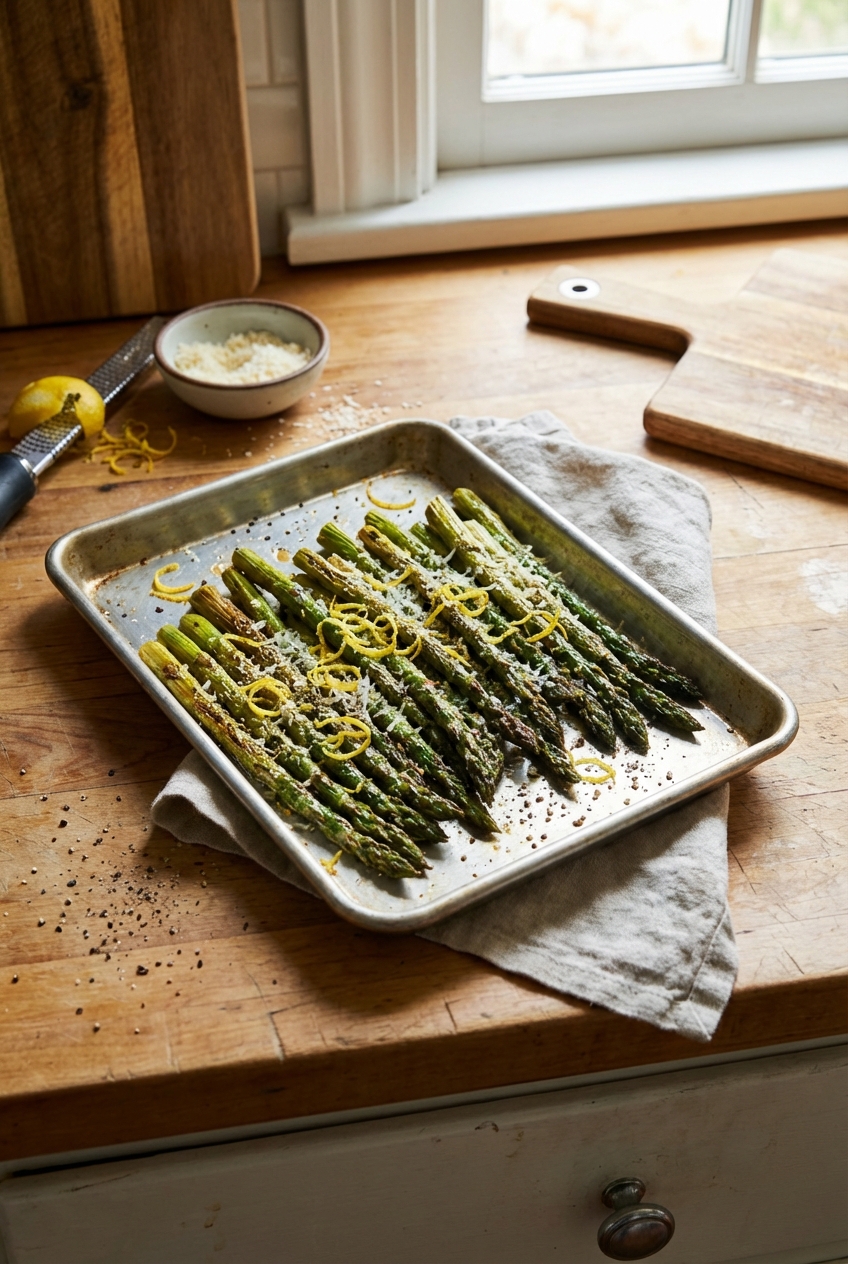
A baking sheet of roasted asparagus spears finished with lemon zest, grated Parmesan, and cracked black pepper on a wooden kitchen counter

Asparagus is one of those vegetables that can taste fancy with almost zero effort, as long as you do two things: get it really hot and finish it with something bright. This recipe is my go-to when I want crisp edges, juicy stalks, and a sauce that makes you keep “just tasting” straight from the pan.

We roast the asparagus until it’s tender but still snappy, then hit it with a lemony garlic sauce that actually clings to the spears instead of sliding off. It’s fresh, zippy, and forgiving if your weeknight energy is running on fumes.
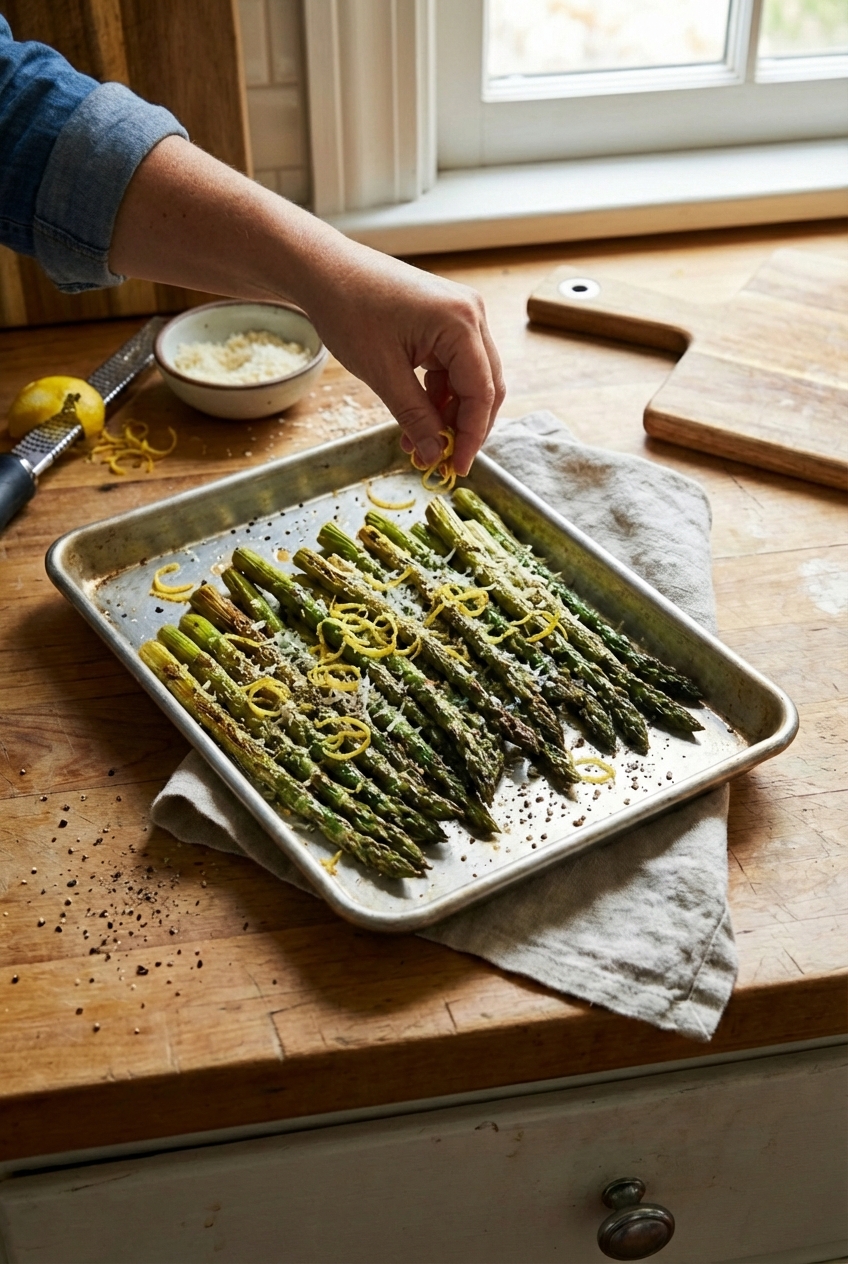
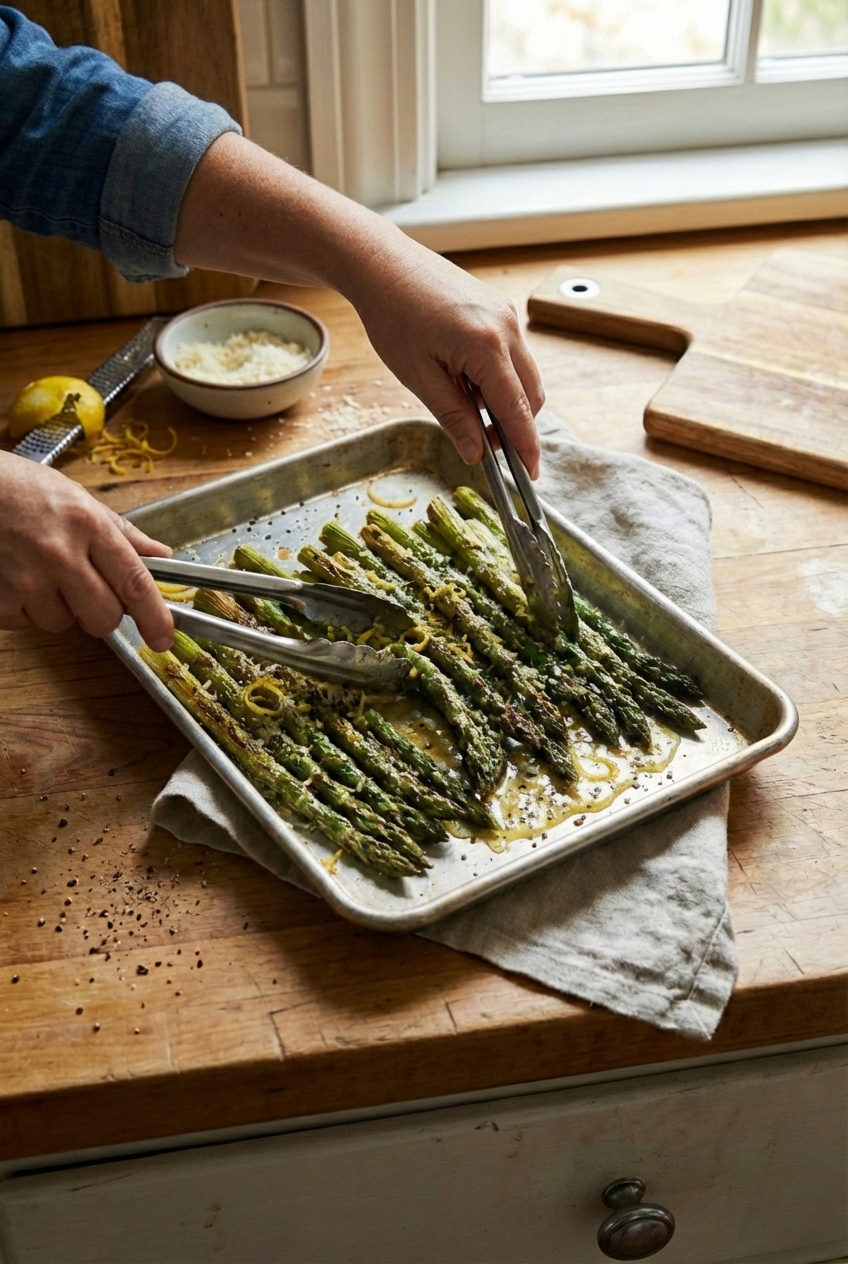
A hand sprinkling lemon zest over roasted asparagus on a sheet pan

Why It Works

  • Crisp edges, not limp spears: high heat plus a single layer helps moisture evaporate quickly and adds color fast.
  • Big flavor from pantry staples: lemon, garlic, olive oil, and a touch of Dijon build a quick glossy sauce.
  • Balanced finish: Parmesan adds salty depth, while lemon zest keeps everything citrusy and lively.
  • Easy to scale: double it on two sheet pans for a crowd, or make a small batch for meal prep.

Pairs Well With

Storage Tips

How to Store Leftovers

Refrigerate: Store in an airtight container for up to 3 days. Since the asparagus gets tossed with sauce while it’s hot, leftovers will be a bit softer (still delicious).

Meal prep tip: If you want the best texture later, roast the asparagus and store it plain. Keep the sauce in a separate small container, then toss together right before eating.

Reheat: For the best texture, reheat on a sheet pan at 400°F for 5 to 7 minutes or in a skillet over medium heat until warmed through. The microwave works, but you’ll lose the crisp edges.

Eat it cold: Honestly, chilled leftover asparagus is great chopped into salads, tossed into pasta, or piled onto toast with a fried egg.

Freezing: Not my favorite for this recipe. Asparagus tends to get watery after thawing. If you must freeze it, chop it first and plan to use it in soups, frittatas, or casseroles.

Common Questions

Common Questions

Do I need to peel asparagus?

Usually, no. If your spears are very thick and the bottom inch looks tough or fibrous, you can peel the lower third with a vegetable peeler. Most grocery store asparagus just needs the woody ends trimmed.

What is the best way to trim asparagus?

Snap one spear near the bottom and it’ll naturally break where the tender part starts. Use that as your guide and cut the rest to match, usually 1 to 2 inches off the bottom.

How do I keep asparagus from getting soggy in the oven?

Use a hot oven, don’t overcrowd the pan, and dry the spears well after washing. If they’re piled up, they steam instead of roast.

Can I make this without Parmesan?

Yes. Swap in crumbled feta, shaved pecorino, or toasted breadcrumbs for crunch. For dairy-free, try a sprinkle of nutritional yeast plus extra lemon zest.

Can I cook this on the grill?

Absolutely. Grill over medium-high heat for about 6 to 10 minutes, turning once, then toss with the lemon garlic sauce off the heat.

What thickness of asparagus is best?

Medium-thick spears are the sweet spot. Thin spears can overcook quickly, and very thick ones may need an extra couple minutes.

How do I know when it’s done?

Look for lightly wrinkled, crisped tips and stalks that are easy to pierce with a fork but still feel snappy. If they bend and flop, they’ve gone a little too far (still tasty, just softer).

I used to treat asparagus like a polite side dish. Toss it in oil, roast it, call it a day. Then I realized it’s way more fun when you finish it like you would pasta or a good sandwich: with something bright, a little sharp, and a little salty. The first time I added Dijon to the lemon and garlic, the sauce went from “nice” to “wait, what did you put in this?” and that’s exactly the energy I want at the dinner table.