How do I make scrambled eggs fluffy?
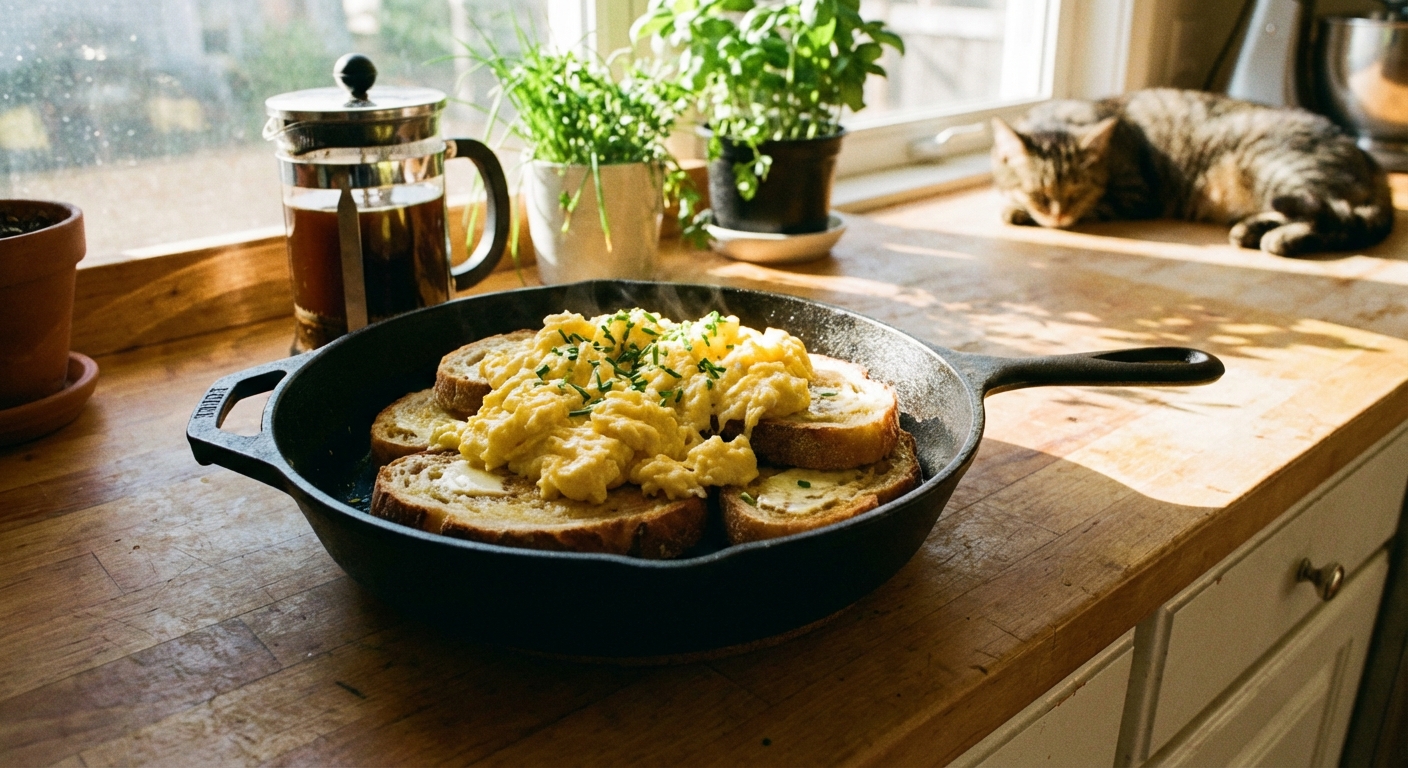
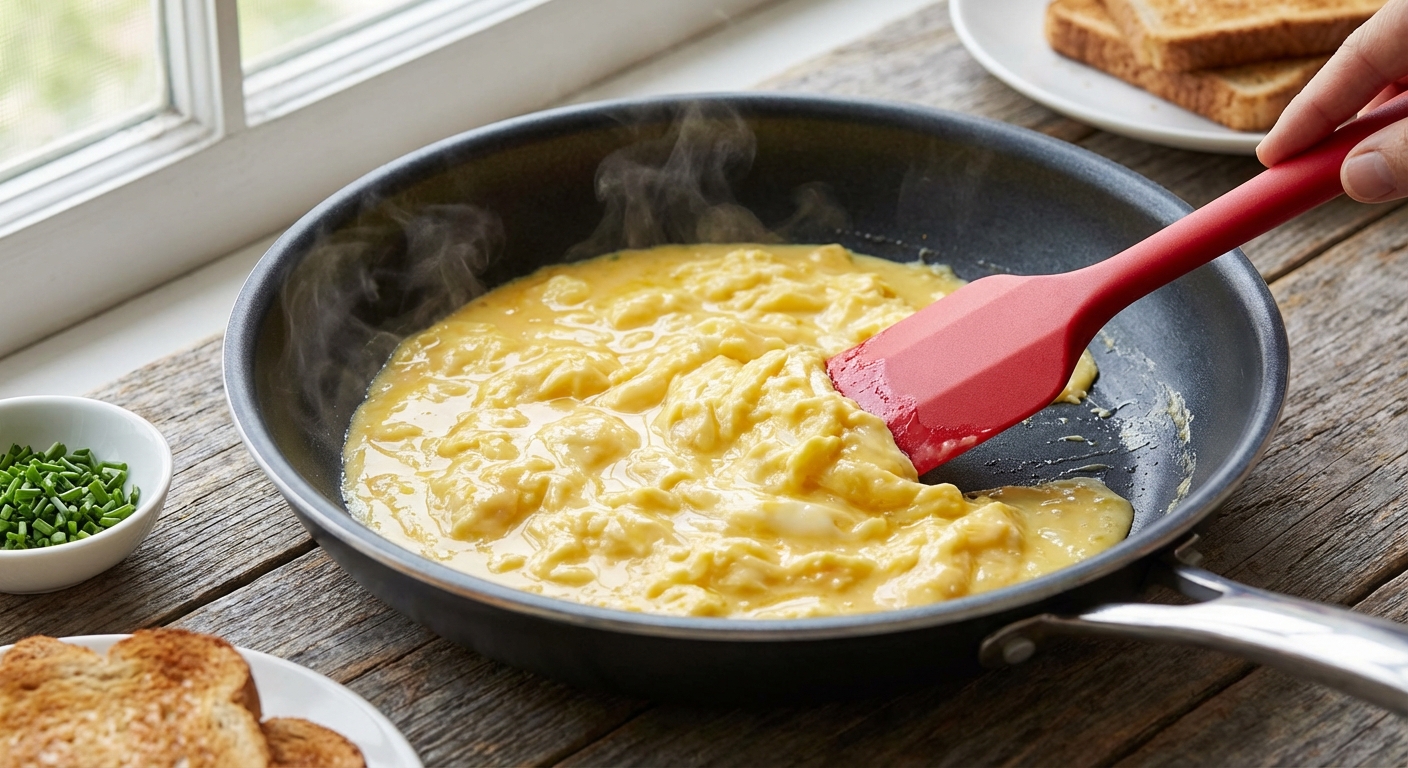
Whisk well to incorporate a little air, add a small splash of dairy for tenderness, cook over low heat, and stir with slow, sweeping motions. The biggest “fluff killer” is overcooking, so pull them while they still look a touch glossy.
Should I add milk or water to scrambled eggs?
Milk or cream can make eggs richer and softer, and it can also make the proteins set a bit more gently. Water can create steam and lift, but the texture can be a little more bouncy than creamy. If you want classic fluffy and tender, use milk. If you want lighter and you are out of milk, water works.
Why are my scrambled eggs watery?
Usually it is one of three things: heat too high, eggs cooked too long (they squeeze out liquid), or too much dairy. Stick to low heat, keep the dairy small, and stop cooking while they still look slightly glossy. You want a wet sheen, not liquid pooling in the pan.
When should I salt scrambled eggs?
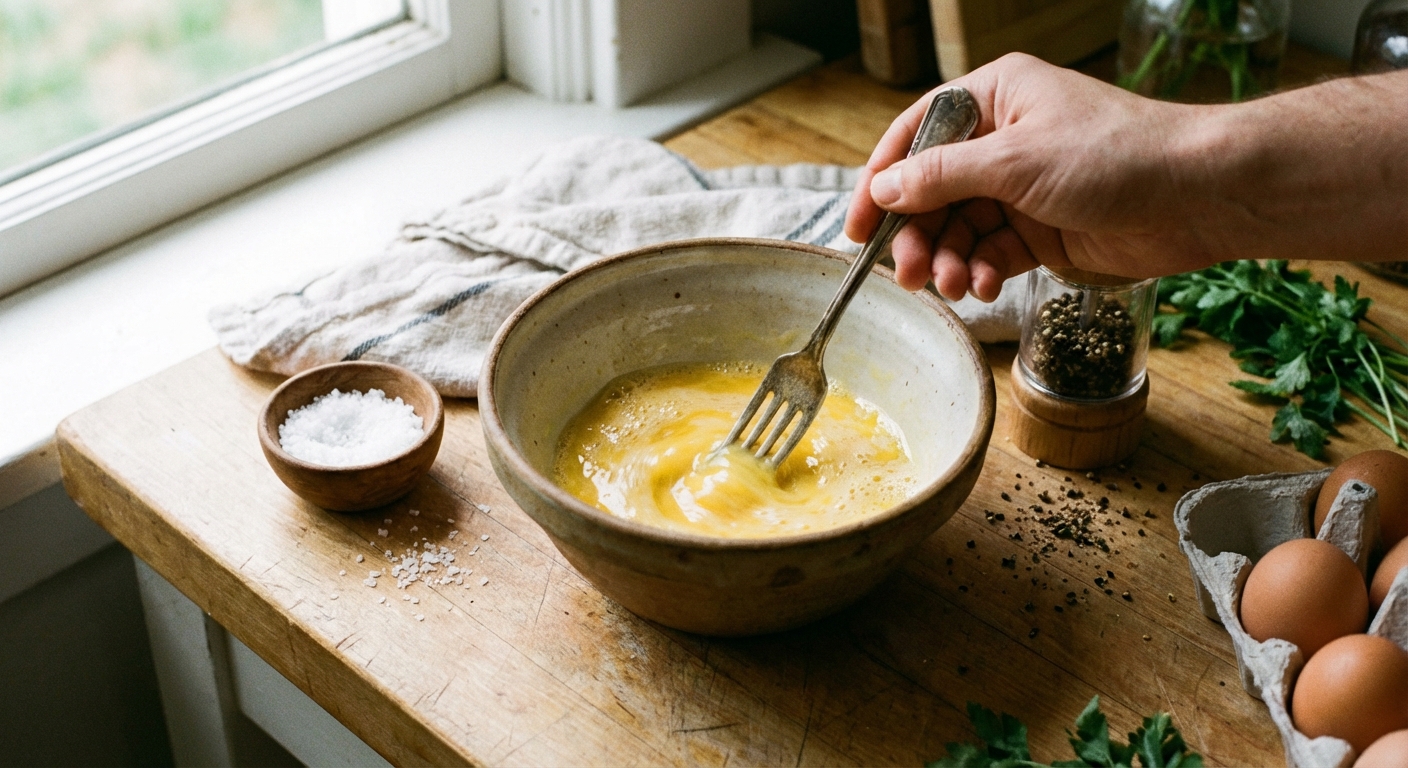
Salt them in the bowl right after whisking. Early salting can help eggs stay tender by relaxing the proteins a bit (a classic tip you will see echoed by food science folks like Harold McGee). Then taste at the end and adjust.
What pan is best for scrambled eggs?
A small nonstick skillet is easiest for soft eggs. Stainless steel works, but it is less forgiving. If you are using stainless, use enough butter and keep the heat low.
Can I make these eggs for a crowd?
Yes, but cook in batches. Too many eggs at once can cool the pan and lead to uneven cooking, which can mean softer spots and more watery eggs. If you need a big batch, use a wide nonstick skillet and keep everything moving.
Can I make them dairy-free?
Yes. Skip the milk or cream and cook the eggs in butter, olive oil, or a dairy-free butter. You will still get soft, fluffy curds if you keep the heat gentle and pull them early.