Mom's Best Recipes
Recipe

Fluffy Sourdough Dinner Rolls

Pillowy pull-apart rolls with a subtle sourdough tang, a golden crust, and a soft, buttery interior. Includes an overnight rise option for easy weeknight baking.

Author By Matt Campbell
4.8
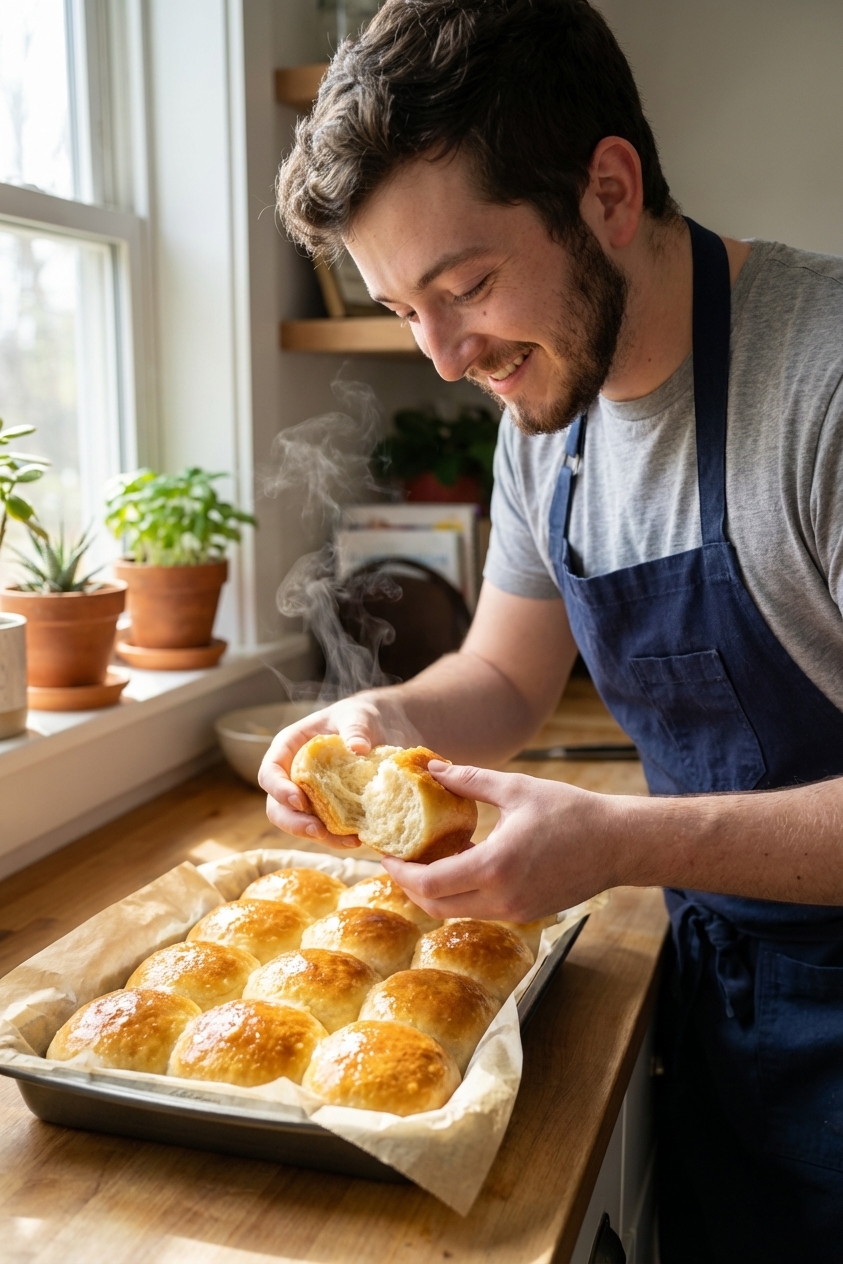
A real photograph of a parchment-lined baking pan filled with golden pull-apart sourdough dinner rolls, tops glossy from melted butter, with one roll being gently pulled away to show the fluffy interior, warm kitchen window light

These sourdough dinner rolls are the kind of bread that makes you hover near the oven like it owes you money. They bake up puffy and plush, with that light sourdough tang that tastes like you tried harder than you actually did. The crust turns deep golden, the tops get a buttery sheen, and the insides do that perfect pull-apart, steam-soft thing that store-bought rolls can only dream about.

They are also very weeknight-friendly if you use the overnight option. Mix the dough, let it rise in the fridge, shape the next day, and bake while you are doing literally anything else. No panic. No weird ingredients. Just a tray of warm rolls that disappear fast. (If your starter is having an off day, the timeline can stretch a bit, so use the dough cues over the clock.)

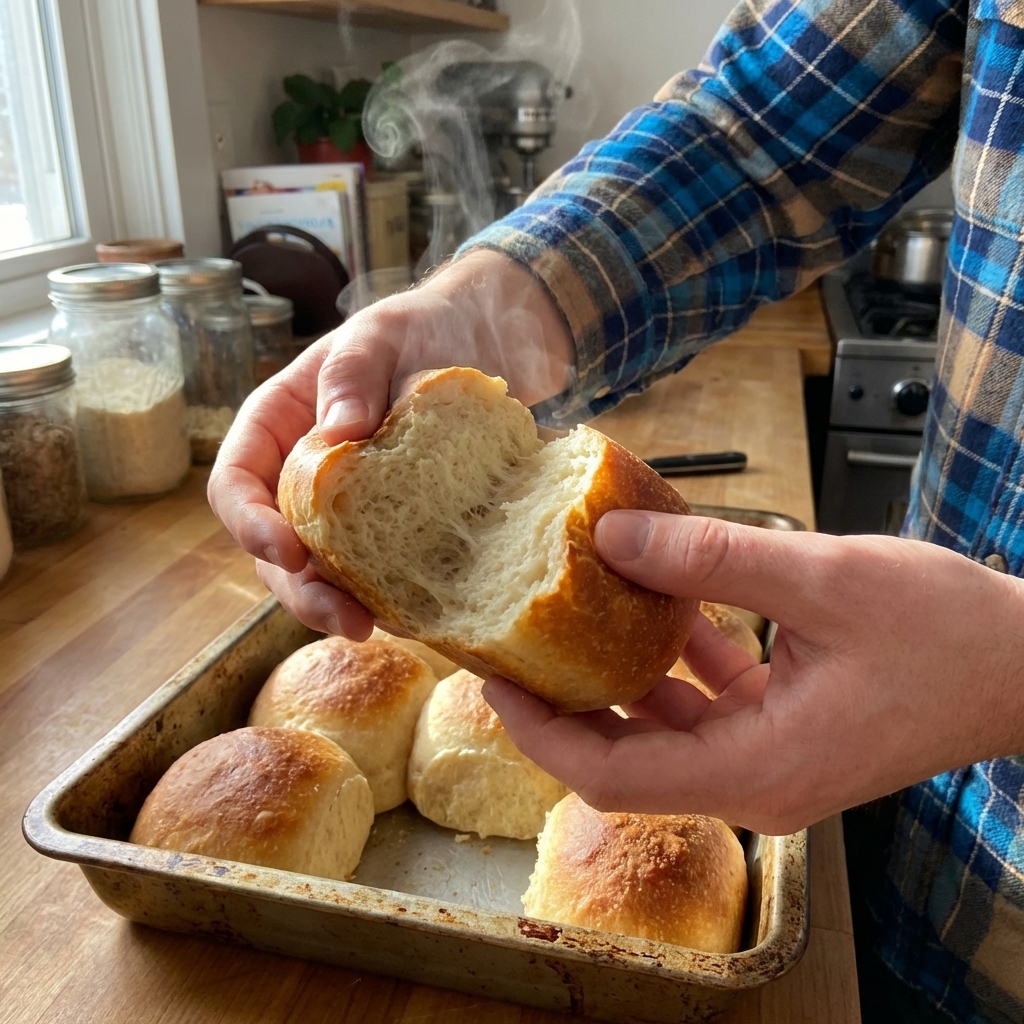
A real photograph of two hands pulling apart a warm sourdough dinner roll over a baking pan, showing stretchy tender crumb and a lightly browned top, cozy home kitchen lighting

Why It Works

  • Soft and fluffy texture: Milk, butter, and an enriched dough give you that pillowy interior without being cakey.
  • Subtle tang, not sour: This method typically aims for a balanced flavor that tastes like real bread, not vinegar, but it will vary with starter acidity and fermentation time.
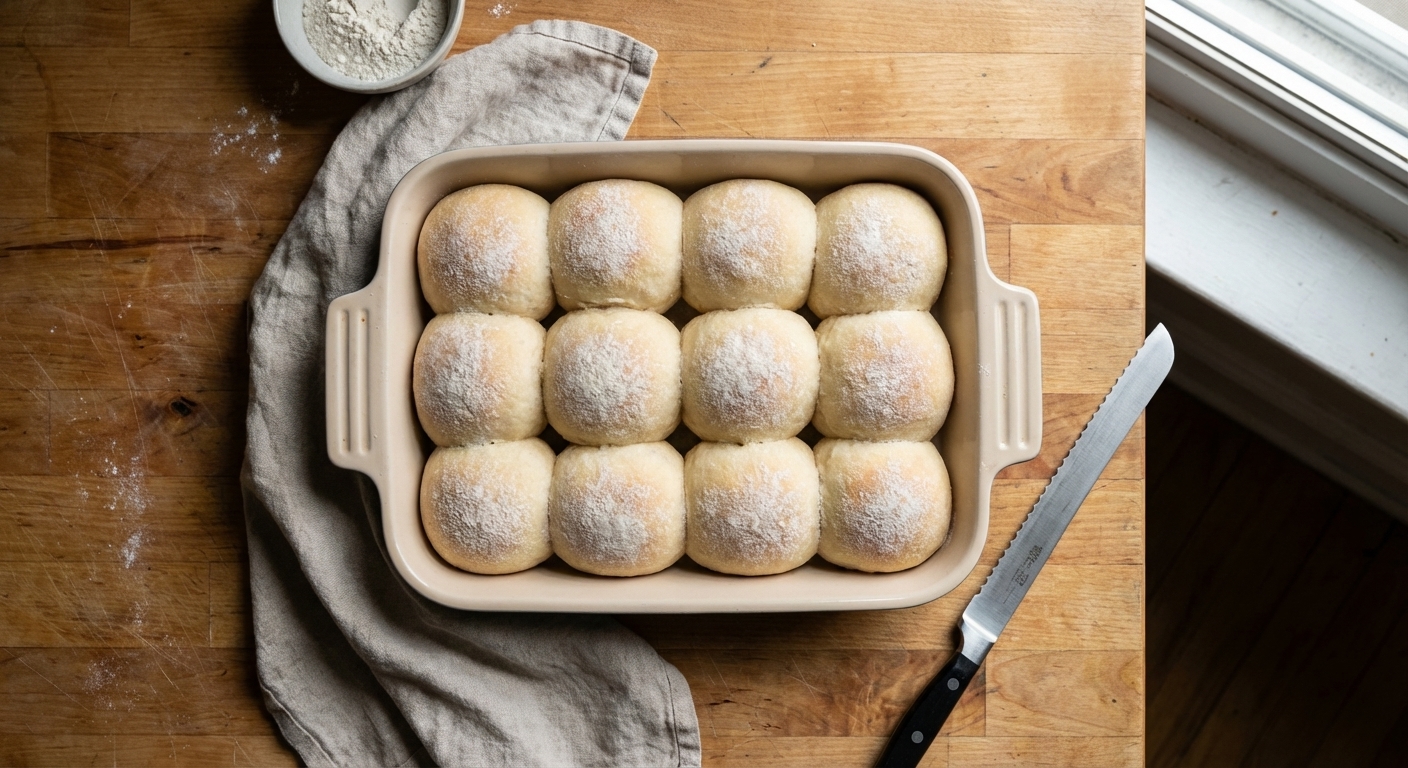
  • Golden crust and crisp edges: Baking the rolls close together creates tender sides, while the outer rolls get those snacky browned corners.
  • Flexible schedule: Choose a same-day rise or an overnight cold ferment that can make timing easier and often boosts flavor.
  • Make-ahead friendly: You can bulk overnight or shape, chill, and bake when you are ready.

Pairs Well With

Storage Tips

Room temp: Store cooled rolls in an airtight container or zip-top bag for up to 2 days. If your kitchen is very warm, lean toward day 1 for best texture.

Freeze: Freeze rolls in a freezer bag for up to 2 months. For best results, freeze once fully cooled. Thaw at room temp.

Reheat: Wrap rolls in foil and warm at 325°F for 10 to 15 minutes. For a quicker fix, microwave a roll for 10 to 15 seconds, then toast cut-side down in a skillet for a little crisp edge.

Make leftover rolls amazing: Split, toast, and use for mini sandwiches, breakfast egg sliders, or quick garlic bread.

Common Questions

Do I have to use active sourdough starter?

Yes. You want starter that is active and bubbly, ideally used near peak. If your starter is sluggish, the dough can take forever and bake up dense.

My kitchen is cold. How long will the rise take?

Longer than the clock says. Rise times below assume a room temp around 72 to 75°F. For the bulk rise, look for the dough to grow by about 50 to 75% and feel lighter and slightly puffy. In a cool kitchen this can take 6 to 10 hours. A warm spot helps.

Should I let it double?

Not necessarily. Enriched sourdough dough (milk, butter, egg) can be sneaky and may not fully double on the first rise. Go by the cues: puffier, lighter, smoother, and about 50 to 75% larger.

Can I do this overnight?

Absolutely. After you mix and start the bulk rise, chill the dough in the fridge for 8 to 16 hours. Cold fermentation slows things down and boosts flavor. The next day, let the dough sit at room temp for 30 to 60 minutes before shaping if it is very stiff. If your starter is on the weaker side, expect the next day to move a little slower.

Can I refrigerate the rolls after shaping?

Yes, and it is a great make-ahead move. Shape and place in the pan, cover tightly, and refrigerate for 8 to 18 hours. When ready to bake, let them sit at room temp until noticeably puffy (often 2 to 4 hours, longer if your kitchen is cool), then bake as directed.

Why are my rolls not fluffy?

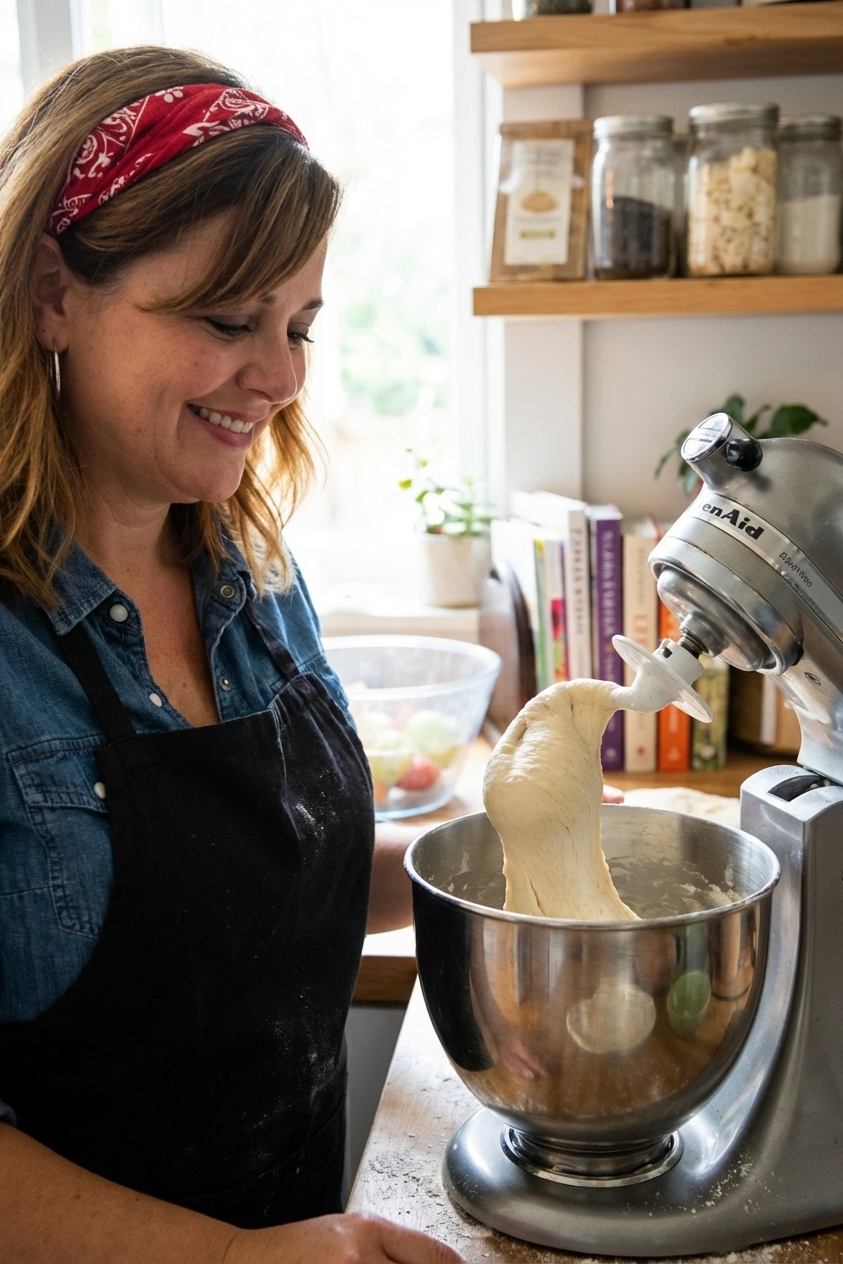
Common culprits: underproofed dough, weak starter, flour measured too heavily, or not enough kneading. The dough should be smooth and elastic, and the shaped rolls should look noticeably puffy before baking. When you press a roll gently, it should leave a slight indentation and spring back slowly.

Can I use all-purpose flour instead of bread flour?

Yes. Bread flour gives a slightly taller, chewier roll. All-purpose still works and stays soft. If using all-purpose, hold back a tablespoon or two of liquid at first and add only if the dough looks dry.

Can I make these dairy-free?

You can swap the milk for unsweetened oat milk and the butter for a plant-based butter. The rolls will still be soft, just a little less rich.

How do I know they are done baking?

They should be deeply golden on top, and the center rolls should read about 190 to 195°F on an instant-read thermometer.

I love a fancy sourdough project as much as the next bread-nerd, but dinner rolls are where I want maximum payoff with minimum drama. These started as my attempt to get that classic holiday roll vibe without commercial yeast, and now they are my year-round move. The first time I served them, people did that quiet thing where they stop talking because they are too busy tearing off another piece. That is the energy I am chasing.